


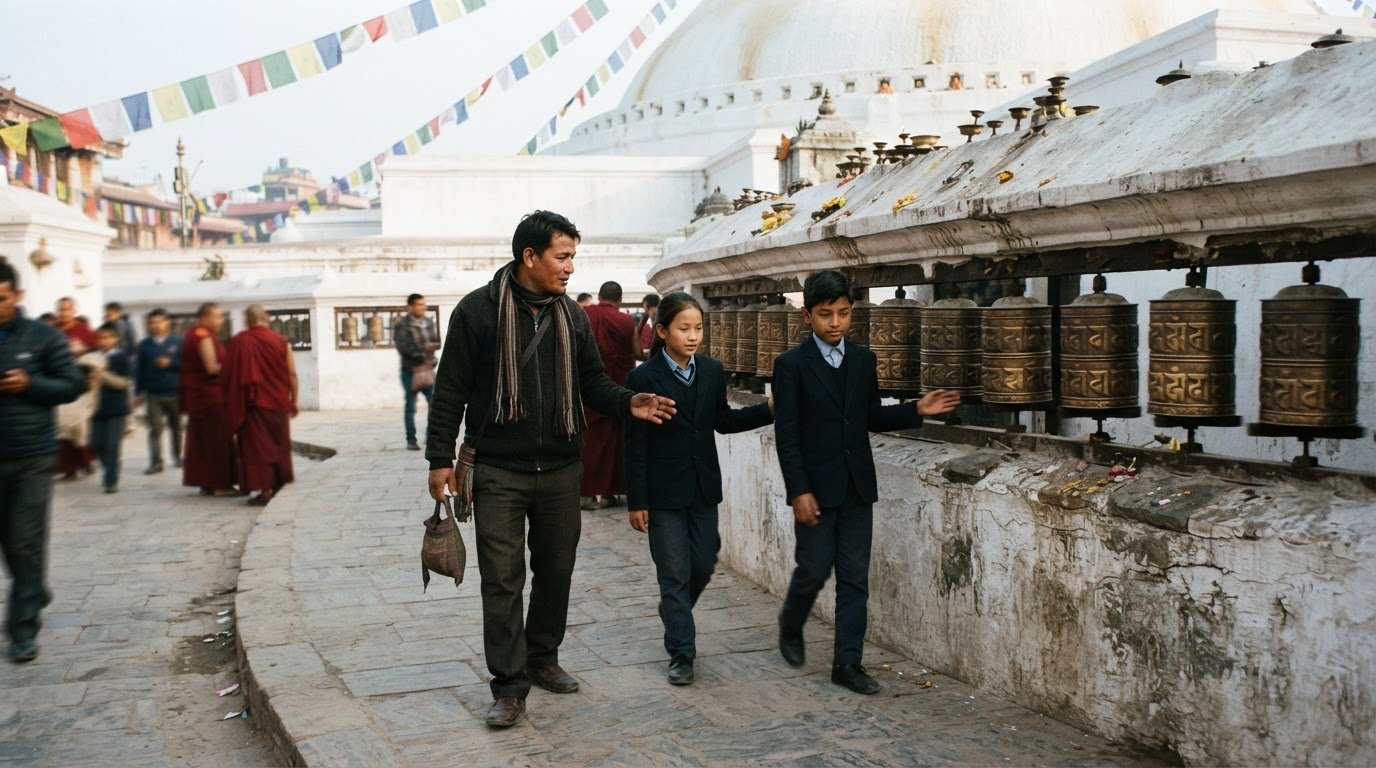
School Educational Trip Packages in the Himalayas: Nepal Costs and Support
The best school educational trip packages in the Himalayas are shaped by more than the destination: activities, learning goals and travel style matter too. Brothers International Tours & Trading Pte Ltd offers a School & College Trip in Nepal, with a programme tailored to the group’s priorities. Fees are provided after a quote request, and visa fees are separate from the quoted price.
For teachers and school planners, the challenge is balancing an engaging learning experience with practical arrangements. A well-planned programme can bring together mountain landscapes, cultural encounters and outdoor activities while reflecting the group’s needs.
Here, you’ll learn how Nepal trip costs are shaped and how accommodation, transport, medical support and local guides fit into the plan. You’ll also see how destination, activity and travel style influence the experience, so you can understand what to consider when planning an educational journey in the Himalayas.
Key Takeaways
- See what shapes the cost of an eight-day Nepal school trip, from itinerary choices to the arrangements your group needs.
- Learn how curriculum goals can guide choices between cultural visits, outdoor activities and mountain experiences.
- Understand how accommodation, transport, medical support and local guides fit into a school travel plan.
- Discover how destination, activity and travel style help shape a trip that suits your students and teachers.
How much does an eight-day school trip to Nepal cost?
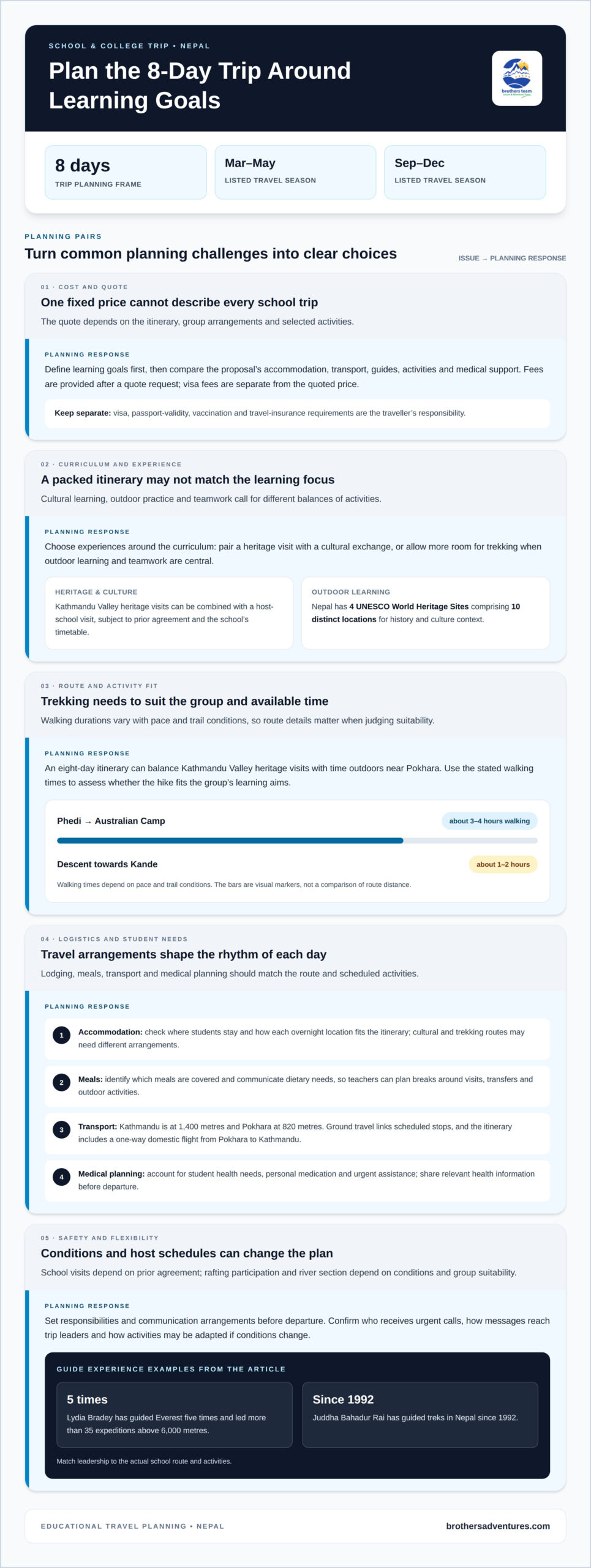
There is no single price for a Nepal school trip: the itinerary and arrangements shape the quote. Start by defining the learning goals, then decide which experiences belong in the programme and how to organise the days.
Package Price Inclusions and Exclusions
For school groups, a useful quote should separate planned arrangements from costs students handle personally. Compare the accommodation, transport, guides, activities and medical support described in the proposal, then note what is excluded. The price depends on the itinerary, group’s arrangements and selected activities, and is provided after a quote request.
Curriculum-led planning can connect classroom learning with cultural immersion, outdoor practice and teamwork. A Nepal programme might include a visit with a host school, where the schedule depends on the school’s timetable and prior agreement. Students can explore local communities and traditions, then reflect on the exchange as part of their learning.
An eight-day itinerary can balance Kathmandu Valley heritage visits with time outdoors near Pokhara. A guided hike from Phedi towards Australian Camp takes around three to four hours of walking; the descent towards Kande takes about one to two hours, depending on pace and trail conditions. These details help schools judge whether trekking suits their learning aims and group.
Visa, passport-validity, vaccination and travel-insurance requirements are the traveller’s responsibility and are handled separately from the tour price. Requirements vary by traveller and destination, so include these tasks in the school’s pre-trip planning.
Seasonal Booking Considerations
For Nepal, the listed travel seasons for the school trip are March to May and September to December. These windows can guide a school’s calendar planning, while the chosen activities and host-school timetable also shape the schedule. A visit to a school depends on prior agreement and the host’s timetable.
Build the eight-day plan around the group’s educational priorities. For example, pair a heritage visit with a cultural exchange, or give trekking more space when outdoor learning and teamwork are central. Nepal has four UNESCO World Heritage Sites comprising ten distinct locations, offering meaningful context for history and culture lessons. Customisable school trips can then match the learning focus with a practical mix of activities.
Accommodation, medical support and transport
For a Nepal school programme, lodging, meals, medical planning and travel between stops shape each day. Map these arrangements against the group’s itinerary, learning activities and comfort needs.
Accommodation and Meal Options
Accommodation should suit the route and planned activities. A cultural itinerary and a trekking programme may require different overnight arrangements. Make sure the proposed itinerary shows where students will stay and how each location fits into the day’s schedule.
Meal arrangements also affect the daily rhythm. The plan should identify which meals are covered and allow the school to communicate relevant dietary needs. That gives teachers a clearer view of meal breaks between visits, ground transfers and outdoor activities, without assuming every package follows the same arrangement.
Transport Options
Transport planning connects city visits, local communities and adventure activities. Kathmandu sits at an itinerary altitude of 1,400 metres, while Pokhara is at 820 metres, so the route determines how students move between distinct parts of Nepal. Ground travel can link scheduled stops, while the itinerary includes a one-way domestic flight from Pokhara to Kathmandu.
That flight can shape the final travel day, so schools should review how it fits with the group’s departure arrangements. For a programme that includes Everest-related learning or outdoor projects, the transport plan should also align with the activity sequence and time available at each destination.
Medical support needs to be considered alongside the route and activities. A school’s planning should set out how student health needs, personal medication and urgent assistance are handled during travel and trekking. Teachers can provide relevant health information before departure, helping the trip plan account for individual needs without treating the group as medically uniform.
For a Nepal-focused itinerary, explore how an 8Days Nepal Adventure Tour can fit a school’s travel plans and chosen activities.
Local guides, safety, and 24/7 support
Local guides bring context to Kathmandu visits, mountain routes and encounters with communities. Their role can connect classroom learning with the places students see, while helping the group follow the planned route. For an itinerary that refers to 24/7 support, the practical details matter: who receives urgent calls, how messages reach trip leaders, and what happens if plans change.
Safety planning works best when responsibilities are clear before departure. Schools should share relevant student health needs and group requirements, while the itinerary should set out how leaders communicate, manage transitions and adapt activities if conditions change. For example, rafting participation and the chosen river section depend on conditions and group suitability. Flexibility is part of responsible planning.
Guides and expedition leaders also shape the pace and learning value of a journey. Lydia Bradey has guided Everest five times and led more than 35 expeditions above 6,000 metres. Juddha Bahadur Rai has guided treks in Nepal since 1992. These examples show how guide experience can span high-altitude expeditions and Nepal trekking, though a school itinerary should match leadership to its actual route and activities.
Local governance and self-sufficiency begin with respect for host communities. A school visit in Nepal depends on the host school’s timetable and prior agreement, so the programme should leave room for local schedules. Students can prepare questions about community life, listen during the exchange and reflect afterward. Nepal’s more than 126 ethnic groups also make cultural learning richer when guides explain local context rather than treating communities as one uniform experience.
Sustainability can be made practical through small group habits: follow local guidance, respect community spaces and keep activities aligned with the agreed programme. In Kathmandu Valley, heritage visits can include listening to local explanations and moving respectfully through shared spaces. A clear support plan, experienced guides and considerate visits help students learn while keeping the group organised.
Tour search by destination, activity and travel style
For Singapore schools, choosing school educational trip packages in the Himalayas starts with matching destinations and activities to learning goals. Options include a Nepal-focused School & College Trip and trekking such as Annapurna Base Camp Trek via Poon Hill. The group’s aims and itinerary help determine which travel style fits.
Destination and Activity Filters
Start with the learning focus, then connect it to places and activities. Kathmandu can support heritage and religious studies, while a mountain itinerary can introduce trekking and environmental themes. For school educational trip packages in the Himalayas, ask the operator to link each stop with a clear purpose, such as connecting a heritage visit with lessons about local traditions.
Next, match the activity’s pace and physical demands to the group’s needs. Annapurna trekking differs from a cultural programme centred on Kathmandu. A useful proposal sets out the route, activities and transitions, helping teachers assess whether the experience supports classroom learning without overloading the schedule.
School Package Options
The School & College Trip is Brothers International Tours & Trading Pte Ltd’s educational option. It can be tailored to the group’s destination preferences and learning priorities. Schools can also consider the company’s Annapurna Base Camp Trek via Poon Hill when trekking is central, rather than treating it as interchangeable with a culture-focused itinerary.
Review how destination, activity and travel style work together. A Nepal programme might combine Kathmandu heritage visits with outdoor learning, while a trekking-led trip gives mountain environments greater emphasis. For school educational trip packages in the Himalayas, a clear link between activities and learning aims helps teachers assess the itinerary as a whole.
Share the school’s learning aims and preferred travel style to guide the Nepal itinerary discussion. Explore school trip options for a programme aligned with your group’s priorities.
Brothers International Tours & Trading Pte: School & College Trip
Brothers International Tours & Trading Pte Ltd offers a School & College Trip for schools planning an educational journey in Nepal. It’s a natural next step when your group has chosen its learning priorities and is ready to shape a suitable itinerary.
For a mix of sightseeing and adventure, consider the 8Days Nepal Adventure Tour. The 8Days Scenic Nepal Mini Trek offers a trekking-focused alternative, while the 5Day Nepal Luxury Tour provides another travel style to consider. Each option gives school planners a starting point for aligning destination, pace and activities with their group’s aims.
Share the school’s priorities and preferred travel style to begin discussing an itinerary. For a friendly conversation about your plans, contact Brothers International Tours & Trading Pte Ltd.
Shape the next step for your school
Turn your learning aims into a clear starting brief: describe the experiences you want students to have, the travel style that suits them and the priorities that should guide the itinerary. This gives your planning conversation direction beyond choosing a destination. To explore school educational trip packages in the Himalayas, contact Brothers International Tours & Trading Pte Ltd for a customised quote.
Brothers International Tours & Trading Pte Ltd offers the School & College Trip, alongside the 8Days Nepal Adventure Tour, 8Days Scenic Nepal Mini Trek and 5Day Nepal Luxury Tour. These options offer different starting points for shaping a school journey around its intended pace and style.
Bring your school’s ideas together and take the next planning step. Contact Brothers International Tours & Trading Pte Ltd to discuss your trip, and start imagining what students could discover in Nepal.
Frequently Asked Questions
Why Choose Nepal for School Group Tours?
Nepal gives school groups ways to connect classroom topics with experiences beyond the classroom. A service-learning programme can involve community projects at local schools, including hygiene education or environmental conservation. Students can see how project activities relate to local needs and discuss their observations with teachers. For groups seeking outdoor learning, trekking offers a different format from a cultural or service-focused itinerary.
Can Nepal tour packages for schools and colleges be customised?
Yes, itineraries can be shaped around a school’s learning aims, preferred activities, accommodation and meal arrangements. Brothers International Tours & Trading Pte Ltd, registration number 200800228H and travel agency registration number TA NO 02211, offers school trips and customised itineraries. Visa, vaccination, passport-validity and travel-insurance requirements remain the traveller’s responsibility; visa fees are separate. For community visits, students should dress modestly, remove shoes where required, ask before photographing children and avoid interrupting lessons.
What guiding and supervision arrangements are provided?
Tour arrangements include professional guide services, local transportation and accommodation. Teachers remain responsible for supervising students and coordinating school-specific needs during the trip. Before departure, schools can share relevant information and expectations so the itinerary reflects the group’s needs. Guided visits help students understand the places and activities they encounter, while teachers maintain their usual duty of care.
Which are the best places for an educational tour in Nepal?
The best choices depend on the intended learning outcomes. Heritage visits can support lessons on history and religious traditions, while wildlife experiences can introduce biodiversity and conservation. A visit to a local school offers a setting for cultural exchange or service learning. Match each stop to a clear educational purpose, then consider how travel between activities affects the group’s pace and time.
Which Himalayan destinations are suitable for school educational trips?
Nepal is a strong starting point for schools seeking cultural, trekking or service-learning experiences. Bhutan and India are also Himalayan-region destinations to consider when a school’s learning aims point beyond Nepal. The suitable choice depends on the trip’s intended activities, travel style and itinerary. Compare the educational focus first, then select a destination whose programme can support it.
What activities and learning outcomes are included in Himalayan school trip packages?
Activities can include cultural visits, trekking and community projects, with learning outcomes shaped by the itinerary. Projects may address locally identified needs through clean-water activities, hygiene education, environmental conservation or earthquake-relief construction. These projects are not a guarantee of lasting change. The service-learning programme is suitable for all fitness levels and requires no prior outdoor experience; its stated age and group limits apply specifically to that programme.




Comments are closed