


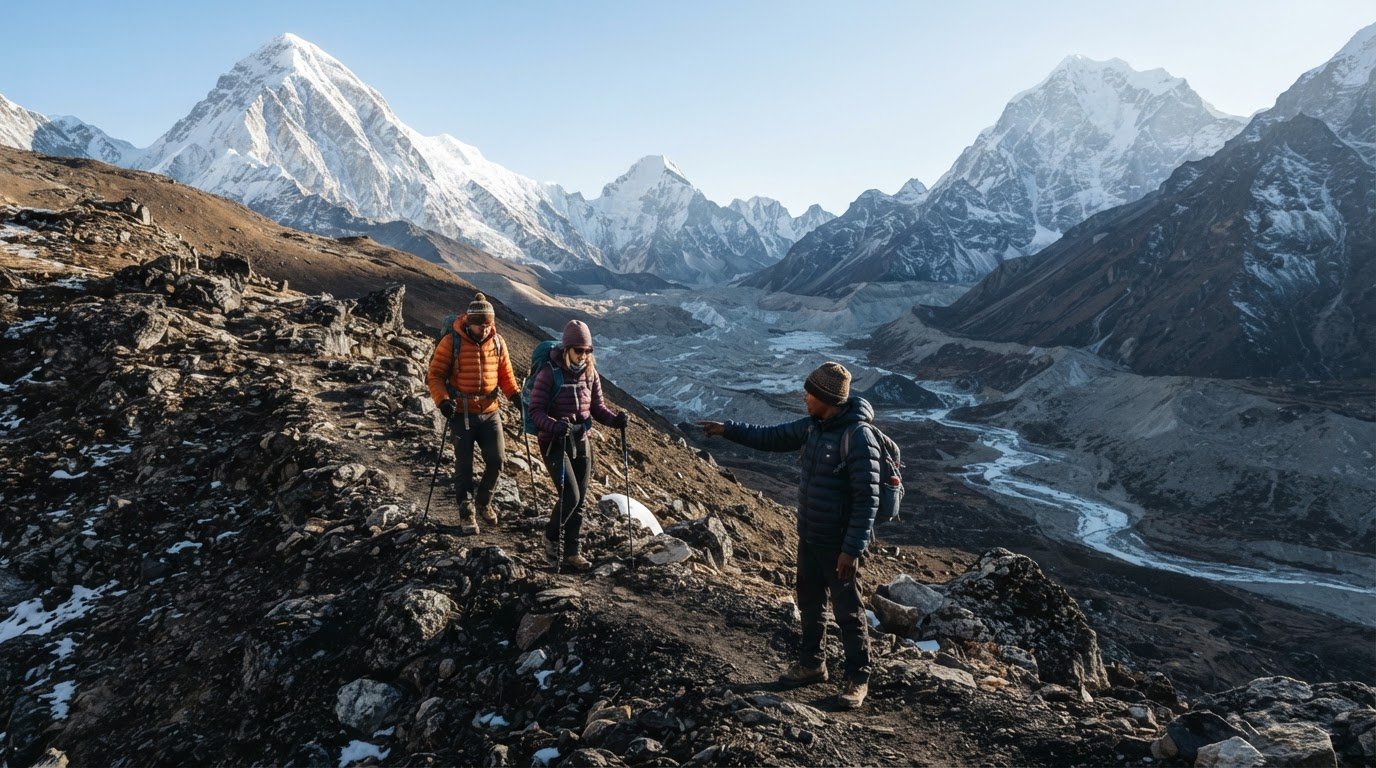
Nepal Trekking Expedition Packages by Price and Elevation
Choosing Nepal trekking expedition packages starts with matching the journey to your time, altitude goals and appetite for support. An Everest Base Camp Trek is listed as a 15-day trip reaching 5,550 metres, while summit expeditions involve a different level of planning and mountain support.
It’s natural to weigh cost alongside adventure, but the itinerary shapes the whole experience: duration, elevation, guiding and travel arrangements all matter. A well-matched package should make these details clear before you set off.
This guide explains what affects package prices, how trekking and expedition options differ, and what to consider when choosing a guided journey. It also covers Nepal’s high-altitude options, from classic treks to summit-focused climbs, to help you plan with a clearer sense of the route ahead.
Key Takeaways
- Compare itineraries by duration, elevation and included support, not by headline price alone.
- Understand how route difficulty, guide services and departure arrangements shape the planning and cost of a trek.
- Distinguish trekking journeys from peak-climbing expeditions, including the different levels of preparation and support they call for.
- Use your experience, available time and altitude goals to narrow down routes before choosing a Nepal adventure.
Package prices, durations and elevations
Compare Nepal trekking expedition packages by itinerary, time commitment and highest altitude, not price alone. Everest routes show how those choices shape the journey.
Trekking Package Prices
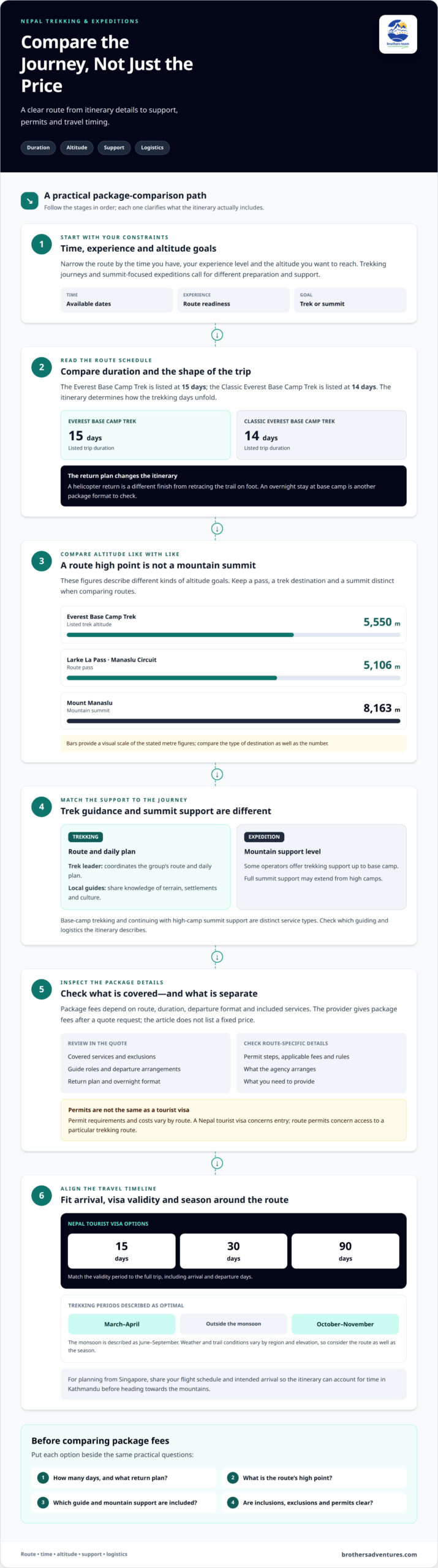
Package prices depend on the route, duration, departure format and services included. Brothers International Tours & Trading Pte Ltd provides package fees after a quote request. A helicopter return changes the itinerary from a walk-back route, while an overnight stay at base camp creates a different package format. Compare each option’s inclusions before weighing the cost.
Trek Durations and Itineraries
Duration changes the pace and structure of a trek. The Everest Base Camp Trek is listed as a 15-day trip, while the Classic Everest Base Camp Trek is listed at 14 days. Those itineraries differ in length, so consider how the schedule fits your available time. Kathmandu may feature in trip planning, but the route itinerary determines how the trekking days unfold. A helicopter return also creates a different finish from retracing the trail on foot.
Route Elevations
Altitude is a central comparison point: the Everest Base Camp Trek is listed at 5,550 metres. On the Manaslu Circuit, Larke La Pass reaches 5,106 metres, while the mountain itself stands at 8,163 metres. These figures describe different points, a route high point and a summit, so compare like with like. A view across a valley and a high pass are not equivalent altitude goals.
Use these details to narrow the route before comparing departures. A 14-day Everest itinerary, a 15-day version and a helicopter-return option each represent a different time commitment. Match the highest point to your altitude aims, then assess how the route’s duration and return plan fit your schedule.
Trekking agency and local guide services
From Singapore, an agency can plan a Nepal itinerary around your travel dates, route choice and intended arrival. Share your flight schedule so the trekking plan can account for time in Kathmandu before heading towards the mountains.
Visa planning belongs in that timeline. Nepal tourist visas are available for 15, 30 or 90 days, so match the validity period to the full trip, including arrival and departure days. For payment, review the package quote and its stated terms; the price depends on the itinerary and is provided after a quote request.
Guided planning starts with the route. A base camp trek and a high-altitude expedition require different support. Expedition operators may offer trekking support up to base camp or full summit support from high camps. Understanding the distinction helps you assess the guiding and logistics your journey requires.
A trek leader coordinates the group’s route and daily plan, while local guides share knowledge of the terrain, settlements and culture. On the Manaslu Circuit, for example, the itinerary crosses Larke La Pass. An Annapurna route passes through different landscapes and communities, where local context can enrich the experience beyond reaching the highest point.
Ask the agency to make the schedule, route and guide role clear in the itinerary. This lets you see how each day connects, where the trek transitions from approach to mountain travel, and how the support matches your goals. The Annapurna Base Camp Trek via Poon Hill is one route option, while Nepal Expeditions & Peak Climbing suits readers considering summit-focused support.
Good planning accounts for culture and pace, not just distance. Share your available dates, preferred route and experience level, then review the itinerary to understand the journey before committing.
Contact an agency with your travel dates, preferred route and arrival plans, and share your flight schedule so it can build the itinerary around your flights. Choose a 15-, 30- or 90-day visa period that covers the whole trip, then request a package quote and review its payment terms before committing.
Trekking and expedition packages in Nepal
Nepal’s packages span trekking routes and summit climbs, including peaks above and below 8,000 metres. The key distinction is the level of mountain support the itinerary is designed to provide.
Compare written inclusions and exclusions, guide roles, departure arrangements and permit handling. A headline price alone cannot show whether two Himalayan journeys offer equivalent support.
Package Inclusions and Exclusions
The itinerary and quote should define the package’s scope, including covered services and anything handled separately. Compare these details alongside the route, guide support and departure plan. Trekking to base camp and continuing with high-camp summit support are distinct service types, not interchangeable options. Ask how each service fits your planned journey.
When comparing agencies, use the same route and support needs as your reference point. Check that exclusions are clearly stated, then compare the practical services described in each package.
Trekking Permits, Fees, and Rules
A trekking agency can map route-specific permit requirements into the itinerary and explain applicable fees and rules before booking. Requirements and costs vary by route, so compare how clearly the arrangements are explained. Permit handling is separate from a Nepal tourist visa, which concerns entry rather than access to a particular trekking route.
Ask for permit steps and relevant charges to be clearly described in the package information. This helps you understand what the agency arranges and what you need to provide.
March to April and October to November are described as optimal trekking periods, outside the June to September monsoon. Weather and trail conditions vary by region and elevation, so the season alone cannot define every route. When considering a Himalayan circuit, compare its location and altitude with the planned departure period.
High altitude brings health risks. According to Singapore’s National Library Board, Everest climbers are susceptible to altitude sickness, pulmonary edema, cerebral edema, blood embolisms and frostbite. Weather and trail hazards also affect route planning. The itinerary and guide support should reflect the demands of the mountain journey.
Use the written itinerary to compare support, permits and seasonal suitability before choosing your Nepal adventure.
How can a trekking agency match Nepal trekking routes to beginners, experienced trekkers, and expedition climbers?
A trekking agency should match the route to your experience, available time and altitude goals. Everest Base Camp, the Annapurna region and summit expeditions each call for different itineraries and support.
For a first Himalayan trek, an agency can discuss a route’s daily demands, highest point and overall schedule before recommending a plan. The Everest Base Camp Trek reaches 5,550 metres, so that altitude is an important part of deciding whether its demands fit your experience. A shorter, lower-altitude itinerary may suit someone prioritising scenery and a gentler introduction.
Experienced trekkers may want a longer route or a demanding pass. The Manaslu Circuit crosses Larke La Pass at 5,106 metres, offering a clear example of how a route’s high point shapes the challenge. In the Annapurna region, route choice can also reflect whether you want a base camp destination, mountain views or varied landscapes.
Expedition climbers need a different conversation from trekkers. Nepal packages cover peaks above and below 8,000 metres, and operators distinguish trekking support up to base camp from full summit support through high camps. Mount Everest, at 8,848 metres, represents a summit objective, not simply a trek to a viewpoint. The agency should align the support plan with the chosen mountain and the climber’s experience.
To find a suitable match, share your previous trekking experience, preferred pace, available dates and altitude ambitions. The agency can use these details to shape an itinerary and explain how its routes and guide services fit your goals. A first high-altitude trek and a summit climb call for different plans.
Ready to shape a route around your experience and goals? Plan your Nepal trekking journey with guidance tailored to the kind of adventure you want.
Brothers International Tours & Trading Pte Ltd: Nepal Expeditions & Peak Climbing
Brothers International Tours & Trading Pte Ltd can help match your Nepal plans to a trek, tour or peak-climbing goal. Turn to its Nepal Expeditions & Peak Climbing offering when your ambitions extend beyond a trekking route and towards a summit-focused journey.
For a shorter introduction to Nepal, the 8Days Nepal Adventure Tour and 8Days Scenic Nepal Mini Trek offer distinct ways to plan your time. The 5Day Nepal Luxury Tour provides another itinerary option. Consider the experience you want, the time you have and whether your priority is trekking, broader discovery or climbing. Those choices help frame a useful planning conversation.
Share your preferred route, travel dates and experience level to start shaping a Nepal journey around your goals. Contact Brothers International Tours & Trading Pte Ltd to discuss your plans.
Take the Next Step Towards Nepal
Turn your mountain dream into a clear travel brief. Note the experience you want, the time you can set aside, your previous trekking experience and whether you’re drawn to cultural discovery, a trail or a summit. These priorities give your planning conversation a useful starting point.
Use these priorities to choose Nepal trekking expedition packages that suit you, rather than choosing by a dramatic name alone. A well-matched itinerary should reflect what you hope to experience and the support your journey requires. Keep your preferred travel window flexible enough to discuss route options, then decide which direction feels right.
Brothers International Tours & Trading Pte Ltd can help you explore the next step, whether you’re considering a Nepal tour, a mini trek or peak climbing. Bring your ideas and start shaping an adventure that feels like yours. Contact Brothers International Tours & Trading Pte Ltd to discuss your plans, and look forward to the mountains ahead.
Frequently Asked Questions
What Nepal trekking expedition packages are available for 2026?
Options include treks, Nepal tours and peak-climbing expeditions. Brothers International Tours & Trading Pte Ltd (Company Registration No. 200800228H; TA NO 02211) offers the Everest Base Camp Trek, Annapurna Base Camp Trek via Poon Hill, and Nepal Expeditions & Peak Climbing. Its Nepal itineraries also include the 8Days Nepal Adventure Tour and 8Days Scenic Nepal Mini Trek. Ask about dates that fit your travel plans.
How much do Nepal trekking packages cost, including permits, guides, accommodation, and flights?
Package fees are provided after a quote request, and the itinerary determines the cost. Package services include professional guides, local transportation, accommodation and permit processing. Ask for a written quote that clarifies inclusions and exclusions, including how international flights are handled. Nepal visa fees are separate and are not included in the quoted price. Visa, vaccination, passport-validity and travel-insurance requirements are your responsibility and are handled separately from the tour price.
How long do popular Nepal treks take, and what itineraries are available?
Popular itinerary examples include a 10-day Annapurna Base Camp Trek and an 8-day Ghorepani Poon Hill Trek. These give you different trip lengths to consider, while the chosen route determines the sequence of stops and trekking days. Ask for the day-by-day itinerary, including arrival and departure arrangements, so you can compare the full schedule with your available travel time.
Is a licensed guide mandatory for trekking in Nepal, and what should clients check when choosing a trekking agency?
Guide requirements depend on the route and applicable rules, so ask the agency to identify what applies to your itinerary. Also review the guide’s role, permit arrangements, day-by-day route plan and written package inclusions and exclusions. A clear explanation should distinguish trekking support from summit-climbing support, helping you choose services that fit your intended journey.




Comments are closed