


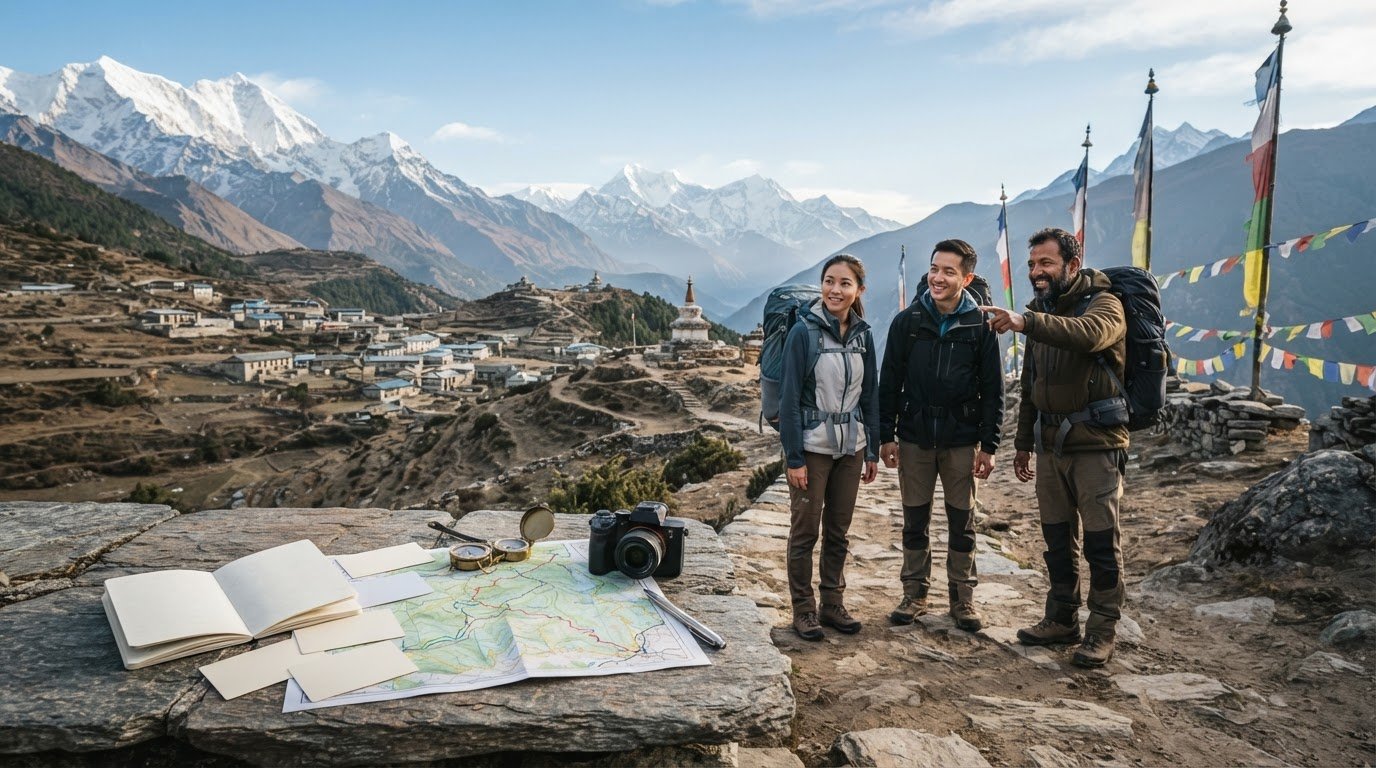
Nepal Trekking Permits Guide: 2026 Trek Requirements
What if the permit you need depends not on how far you trek, but on the exact route you choose? That’s the key to this Nepal trekking permits guide: requirements can vary by region, and a permit arrangement for one trek may not cover another.
It’s understandable if the names and rules feel confusing, especially when older online advice conflicts with current requirements. Foreign trekkers must be accompanied by a licensed guide affiliated with a registered trekking agency in Nepal’s national parks, conservation areas and restricted regions. Rules and fees can change, so check the latest official guidance before you travel.
This guide explains which permits may apply to routes such as Everest, Annapurna and restricted-area treks, which documents to prepare, and how applications are arranged. It also outlines what to confirm when joining a guided package, including which permit processing is included and what information you need to provide. Start with your route, then make sure your arrangements are clear before setting off.
Key Takeaways
- Use this Nepal trekking permits guide to narrow down which permit categories may apply to your chosen route.
- Compare permit types by what they cover, then verify requirements against your exact itinerary.
- Prepare your route, travel dates and required documents before arranging permits.
- Check current official guidance rather than relying on older blogs or forum posts.
- If you choose a multi-day package, confirm which permit processing is included and what information you need to provide.
Nepal trekking permits: what they are and why your route matters
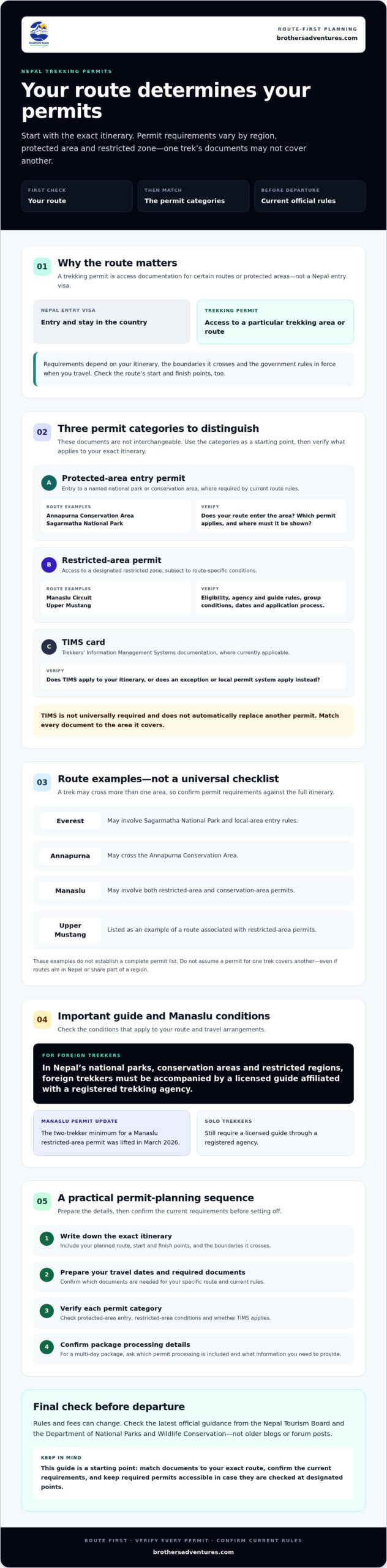
A trekking permit is official permission or entry documentation required for access to certain routes or protected areas in Nepal. It is separate from a Nepal entry visa: your visa relates to entering and staying in the country, while a trekking permit relates to access to a particular trekking area or route. The documents you need depend on your itinerary, the boundaries it crosses and the government rules in force when you travel.
Start with your route, not a generic checklist. A useful Nepal trekking permits guide helps you match documents to your planned trek, then prompts you to confirm current requirements before departure. Permit names and rules can change, so treat older travel articles and forum posts as background rather than final confirmation.
Why one Nepal trekking permit list cannot cover every route
Routes can pass through different protected areas or restricted zones, each with its own requirements. For example, an Everest itinerary may involve Sagarmatha National Park and local-area entry rules; an Annapurna trek may cross the Annapurna Conservation Area; and a Manaslu itinerary may involve both restricted-area and conservation-area permits. These are examples, not a universal checklist. Confirm requirements for your exact itinerary, including its start and finish points.
Don’t assume that a permit for one trek covers another, even if both routes are in Nepal or share part of a region. Check the latest information with the Nepal Tourism Board and the Department of National Parks and Wildlife Conservation. The Trekking in Nepal guide also offers an overview of permit categories to explore before checking official requirements.
Permit terminology travellers may encounter
TIMS refers to the Trekkers’ Information Management Systems card. Its applicability depends on the route and current rules, so don’t assume it is required everywhere or that it replaces another permit. A protected-area entry permit applies where the relevant park or conservation-area rules require one. A restricted-area permit is a separate category for designated restricted zones, with requirements that may differ from those for protected areas.
These terms aren’t interchangeable. Before setting off, match each document to the area it covers and verify whether your route requires additional permissions. A route-first check can help prevent a paperwork surprise once you’re on the trail.
Nepal trekking permit types: understand what each one covers
Permit names refer to different kinds of access, so the documents aren’t interchangeable. Use this comparison as a starting point, then match each category against your exact itinerary and current rules. This Nepal trekking permits guide focuses on what to check, rather than treating any example as a checklist for every trek.
| Permit category | Typical scope | Route examples | What to verify |
|---|---|---|---|
| Protected-area entry permit | Entry to a named national park or conservation area, where required by current route rules. | Annapurna Conservation Area, Sagarmatha National Park | Whether your route enters the area, which permit applies, and where it must be shown. |
| Restricted-area permit | Access to a designated restricted zone, subject to route-specific conditions. | Manaslu Circuit, Upper Mustang | Eligibility, agency and guide rules, group conditions, dates, and application process. |
| TIMS card | Trekker information documentation, where currently applicable. | Requirements may differ between trekking areas. | Whether TIMS applies to your exact itinerary or an exception or local permit system applies instead. |
Protected-area entry permits for trekking routes
An Annapurna Conservation Area Permit (ACAP) and a Sagarmatha National Park entry permit are examples of protected-area documentation. They apply only where current route rules require them, not simply because a trek is popular or located in Nepal. Permits may be checked at designated points along a route, so confirm which documents you need and keep them accessible. Check official permit information for current requirements and schedules. This section doesn’t list fees.
Restricted-area permits and TIMS requirements
Restricted-area permits are tied to particular routes and can come with agency, guide, group or timing conditions. Manaslu and Upper Mustang are examples, but check their rules against your planned dates and itinerary. The two-trekker minimum for a Manaslu restricted-area permit was lifted in March 2026; solo trekkers still require a licensed guide through a registered agency. Treat TIMS separately: it isn’t universally required, and its applicability or exceptions can change.
Before confirming arrangements, ask which permits your route needs, who will process them and what documents you must provide. Brothers International Tours & Trading Pte Ltd includes permit processing in its multi-day packages, alongside trek logistics. Confirm the exact inclusions for your chosen itinerary. Explore the Nepal trekking packages if you’d like to consider a guided option.
Which permits apply to Everest, Annapurna, Manaslu, and other treks?
Your itinerary, not the trek name alone, determines which permits you need. The route’s start and finish points, side trips and protected-area boundaries can all affect the paperwork. Use these examples to identify what to check, not as a final permit list. Confirm current rules for your exact dates and route before departure.
| Example trek or route | Possible permit categories | What to verify |
|---|---|---|
| Everest region | Sagarmatha National Park entry permit; Khumbu Pasang Lhamu Rural Municipality entry permit | Whether your route enters the park or local area, where permits are issued, and whether a TIMS card applies. A Jiri or Salleri approach may involve Gaurishankar Conservation Area requirements. |
| Annapurna region | Annapurna Conservation Area Permit (ACAP) | Whether your itinerary enters the conservation area and whether TIMS is currently required or enforced for that route. |
| Manaslu Circuit | Manaslu Restricted Area Permit, Manaslu Conservation Area Permit, and potentially ACAP | Current permit conditions, guide and agency requirements, and coverage for the route’s exit section. |
| Upper Mustang | Upper Mustang Restricted Area Permit and ACAP | Current eligibility, application channel, permitted dates and route coverage. |
Everest and Annapurna trekking permit checks
In the Everest region, the current permit combination may include both Sagarmatha National Park and Khumbu Pasang Lhamu Rural Municipality documentation. In Annapurna, ACAP may apply when the route enters the conservation area. TIMS requirements differ, and the research available for 2026 indicates it’s no longer enforced on standard Annapurna routes. Don’t assume every route in either region follows the same rules. For itinerary context, see the Everest Base Camp planning guide.
Manaslu, Upper Mustang, and other restricted-area checks
Manaslu and Upper Mustang show why route-by-route checks matter: a restricted-area permit may be needed alongside conservation-area permissions. Manaslu’s previous minimum of two trekkers for a restricted-area permit was lifted in March 2026, but a solo trekker still needs a licensed guide through a registered agency. For any restricted route, verify current eligibility, group conditions, guide requirements and application arrangements. These examples aren’t exhaustive, and route names alone can’t confirm which permits you need.
Use this Nepal trekking permits guide as a starting point, then check each document against your final itinerary. If you’re joining a multi-day package, ask which permit processing is included and what information you must provide.
How to arrange Nepal trekking permits before departure
Preparing before you leave can make permit arrangements much smoother. Start with your final route and dates, then check the current official rules for every area it crosses. This sequence helps you clarify who arranges each document, what you need to supply and what to keep accessible on the trail.
A practical permit preparation sequence
- 1. Confirm your itinerary. Check the route’s start and finish points, any side trips, travel dates, and whether it crosses protected or restricted areas. Even a change to the approach or exit route can affect which permissions apply.
- 2. Verify current requirements. Check official guidance for permit types, eligibility, application channels and supporting documents. Rules can change, so don’t rely on an older blog or forum post as your final source.
- 3. Agree who handles each task. Ask whether you, your trekking agency or another party submits applications, collects permits and keeps records. Confirm who is responsible for presenting them at route checkpoints.
- 4. Confirm the package details. For a multi-day package, ask which permit processing is included, which permits are covered for your specific itinerary, and what information you must provide. Don’t assume every document is included just because processing is part of the package.
Documents, timing, and on-route checks
Document requirements vary, so confirm the current checklist before sending anything. Depending on the route and application process, officials or an operator may request passport details, a copy of your Nepal visa, passport-sized photos or your trekking itinerary. Ask about the required format and validity of each item, and use a secure channel when sharing personal documents.
If you’re arranging permits through offices in Kathmandu, current guidance recommends allowing at least one full working day; government offices are closed on Saturdays and public holidays. Check whether your particular permits can be processed elsewhere or online, and don’t treat this planning allowance as a guaranteed processing time.
Before setting off, keep permit records accessible and follow your guide’s instructions at checkpoints. If an operator coordinates permit processing alongside accommodation, transport and guide logistics, confirm your own responsibilities in writing. The specialist tour operator guide offers context on assessing that coordination. For a guided Nepal trek with permit processing included in a multi-day package, explore Nepal trekking packages and confirm the inclusions for your route.
Make permit planning easier with a guided Nepal trek
A guided itinerary can bring permit processing into the wider trek plan, alongside accommodation, local transport and guide services. Brothers International Tours & Trading Pte Ltd includes permit processing within its multi-day packages. The exact permits and traveller responsibilities can still vary with the route, so clarify the details before booking rather than assuming every document is covered.
Instead of asking only, “Are permits included?” ask which permissions match your planned route, who handles each application and what you need to provide. This Nepal trekking permits guide approach keeps paperwork connected to the real itinerary, from dates and route choices to on-the-ground logistics.
Questions to ask before choosing a trekking package
- Which permits fit the exact itinerary? Ask the operator to identify the relevant permit categories for the route and confirm whether permit processing is included in the package.
- What documents must I provide? Check whether you need to submit passport or Nepal visa details, photographs, itinerary information or other documents, and ask about the required format and timing.
- Who is responsible for each step? Clarify who submits applications, keeps permit records and carries or presents them along the route. Confirm your own tasks as well.
- What happens if dates or routes change? A revised itinerary may affect permit requirements or arrangements. Ask how the operator will review changes and whether you’ll need to provide updated information.
Turn permit checks into a confident trek plan
Before setting off, make sure your route and travel dates are final, check current official requirements, prepare the requested documents and agree who handles every permit-related task. Keep your records accessible during the trek and follow your guide’s instructions at checkpoints. For more context on how a guided itinerary fits together with trek logistics, read the guided trek in Nepal overview.
With those details confirmed, permit planning becomes one clear part of the adventure rather than a last-minute scramble. Explore guided Nepal trekking journeys and ask which permits and document responsibilities apply to the itinerary you have in mind.
Set Out with Your Trek Plans in Place
The clearest lesson from this Nepal trekking permits guide is simple: start with your exact itinerary, then confirm which permits apply under current rules. Permit categories differ, and TIMS requirements may depend on the route. Check official guidance, prepare the requested documents and make sure you know who submits, carries and presents each permit.
A guided package can coordinate permit processing with other trek arrangements. Brothers International Tours & Trading Pte Ltd is a family-owned travel agency operating since 1992. Its multi-day packages include permit processing and can include professional guides, local transport and accommodation. Before booking, confirm which permits are covered for your itinerary, what documents you must provide and how changes to your route or dates could affect arrangements.
Ready to plan your mountain journey? Explore guided Nepal trekking journeys and find an option that fits your plans. With the route and permit responsibilities clear, you can focus on the trail ahead and the landscapes along the way.
Frequently Asked Questions
Which permits do I need for trekking in Nepal?
The permits you need depend on your exact route and the rules in force when you travel. Your trek may require protected-area entry documentation, a restricted-area permit or other applicable records. Requirements can differ between routes, even within the same region. Use this Nepal trekking permits guide as a starting point, then confirm your itinerary with an official source or qualified operator. Don’t assume a permit for one area covers another trek.
Is TIMS required for every trek in Nepal?
No. Don’t assume TIMS applies to every trek or that its requirements have stayed the same. Applicability can depend on your route, and exceptions or local permit arrangements may apply. Check the latest guidance from the Nepal Tourism Board or ask a qualified operator to confirm what applies to your exact itinerary. If an operator is arranging your permits, ask them to explain whether TIMS is needed and why.
Can I get Nepal trekking permits on my own?
It depends on the permit and its current application process. Some permit categories may have different application channels, while restricted-area permits must be processed through a registered trekking agency. Foreign trekkers in Nepal’s national parks, conservation areas and restricted regions must be accompanied by a licensed guide affiliated with a registered agency. Confirm the rules for your route before planning an independent application, and ask an operator which documents you’ll need to provide.
How much do Nepal trekking permits cost?
Permit fees vary by category and may depend on your route or travel dates. Check the latest official fee schedule for every permit that applies to your itinerary, since policies and charges can change. Avoid relying on an old blog post or another trek’s fee list. If you’re booking a multi-day package, ask which permit processing is included and whether any permit charges are handled separately.
What happens if I trek in Nepal without the required permit?
Travelling without a required permit can lead to problems at checkpoints and may disrupt or prevent your planned trek. The consequences depend on current rules and circumstances, so don’t rely on informal advice or assume you can sort it out on the trail. Confirm requirements before departure, keep relevant permit records accessible, and follow your guide’s instructions at checkpoints along the route.
Do I need a guide to obtain a restricted-area permit in Nepal?
Restricted-area permits can have specific conditions involving guides, agencies, group composition or travel dates. Foreign trekkers must have a licensed guide affiliated with a registered trekking agency in Nepal’s restricted regions. Requirements can vary by route and change over time, so confirm current rules for the area and dates you plan to visit. Before committing, clarify who submits the application and who accompanies you on the trek.
Can a trekking agency arrange Nepal permits for me?
Yes, a trekking agency may coordinate permit processing as part of a multi-day travel package, depending on the itinerary and package terms. Brothers International Tours & Trading Pte Ltd includes permit processing within its multi-day packages. Before booking, confirm which permits match your route, what documents you must supply and how changes to dates or itinerary affect arrangements. Ask the operator to make each person’s responsibilities clear.


Comments are closed