


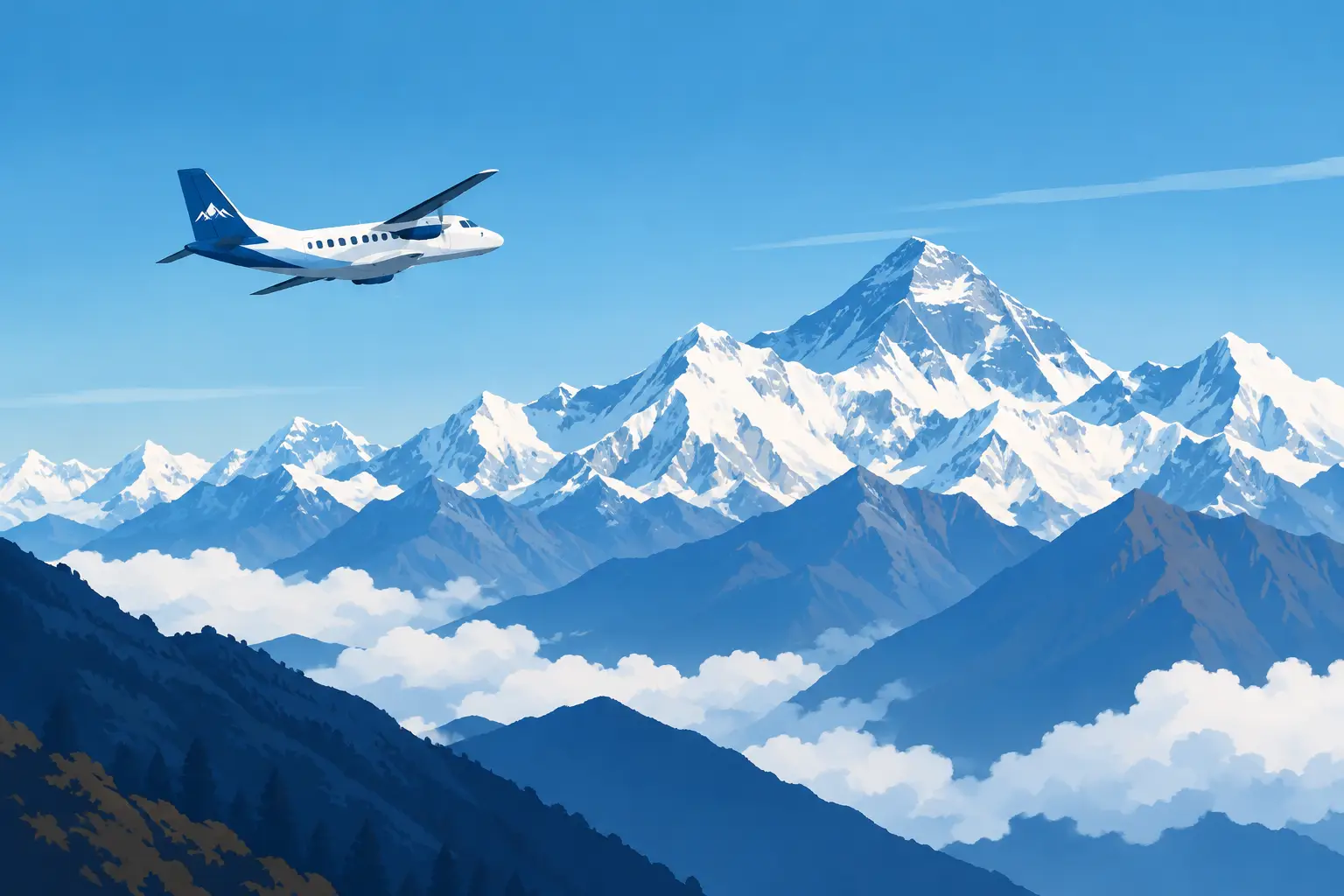
Best Nepal Mountain Flight Options for Everest
The Himalaya does not always require a long trek to leave a lasting impression. For travellers short on time, travelling with family, or saving their energy for a later adventure, the best Nepal mountain flight options bring Everest, Lhotse, Makalu and the Kathmandu Valley’s northern skyline remarkably close. The right choice depends less on finding the biggest view and more on matching the aircraft, route, weather flexibility and budget to the experience you want.
A mountain flight is not a substitute for standing on a trail in the Khumbu or Annapurna regions. It is something different: an accessible, carefully timed encounter with the high Himalaya, often completed before breakfast in Kathmandu. When conditions are clear, it can become one of the defining moments of a Nepal holiday.
Best Nepal Mountain Flight Options Compared
For most visitors, there are two main ways to see the eastern Himalaya from the air: a fixed-wing scenic flight from Kathmandu or a private helicopter charter. Both can reveal extraordinary mountain scenery, but they suit different travellers.
Fixed-wing Everest scenic flights
The classic Everest mountain flight operates from Kathmandu on a small fixed-wing aircraft. It usually lasts around one hour and follows an eastbound route towards the Himalayan range, returning to Kathmandu after passengers have viewed the major peaks.
This is generally the most practical option for solo travellers, couples and small groups who want a clear, memorable mountain experience without the cost of a charter. Every passenger is normally given access to a window view during the flight, and crew members often indicate the peaks as they come into sight. On a good morning, the sequence of snow-covered summits feels almost unreal: Langtang and the central ranges give way to the giants of eastern Nepal, with Everest appearing among the peaks close to the Tibetan border.
The trade-off is that you remain at cruising altitude and follow a scheduled route. You will not land in the mountains, and the experience depends heavily on visibility. If your goal is the classic aerial view of Everest at sensible cost, however, this remains the leading choice.
Private helicopter charters
A helicopter charter offers greater flexibility and a more personal pace. It can be arranged for couples, families, photographers, corporate groups or travellers with specific interests, and it may include a landing where conditions and permissions allow. Popular concepts include an Everest-region flight with a high-altitude viewpoint or breakfast stop, a Langtang Valley flight, or an aerial journey towards Annapurna.
Helicopters are particularly attractive when the journey itself matters as much as the view. Their lower operating altitude and ability to alter the pace can make valleys, villages, ridgelines and glaciers feel more immediate. They are also useful for travellers who cannot commit to a multi-day trek but still wish to experience the scale of the mountains beyond Kathmandu.
The key consideration is cost. A charter is priced for the aircraft rather than an individual seat, so it makes better value when shared by a group. Weather, passenger weight, landing rules and high-altitude operating limits also shape the final plan. A responsible operator will explain these details clearly rather than promising a landing that conditions may not permit.
Helicopter seat-sharing trips
For travellers who prefer the helicopter experience without booking a full aircraft, seat-sharing departures can offer a middle ground. These departures usually depend on enough confirmed passengers and are more common on popular Everest sightseeing routes.
Seat-sharing can be excellent value, but it requires flexibility. Departure times may change, fellow passengers may join from different hotels, and the itinerary is less private than a charter. It is a good fit for independent travellers who can keep a spare morning available and do not mind sharing the journey.
Regional mountain flights beyond Everest
Everest deserves its reputation, but it is not Nepal’s only aerial spectacle. A helicopter journey towards Annapurna can showcase the dramatic contrast between green foothills, deep river valleys and high glaciated terrain. Langtang offers another compelling option, particularly for those interested in a closer view of Himalayan valleys and Tamang mountain settlements.
These routes can be ideal for return visitors or groups whose wider Nepal itinerary already focuses on Pokhara, Chitwan or cultural sightseeing. The most suitable flight is often the one that complements your route instead of adding unnecessary backtracking to Kathmandu.
Choosing the Right Mountain Flight for Your Holiday
Start with the question of what you want to remember. If your priority is seeing Everest from the air with minimum time and a manageable budget, choose a scheduled fixed-wing scenic flight. If you want a private occasion, greater route flexibility or the possibility of a mountain landing, consider a helicopter charter.
Your group size matters. A scheduled flight is straightforward for one or two people. For a family or a group of friends, sharing a helicopter can change the value calculation, especially if privacy and a tailored departure time are important. School and educational groups may find a fixed-wing flight easier to organise, subject to group size and airline availability, while a carefully managed helicopter experience can be a powerful addition for a small specialist group.
Fitness is less of a concern than many first-time visitors expect. You do not need trekking experience for a standard mountain flight. Yet high altitude still deserves respect. If a helicopter itinerary includes a high-altitude stop, time on the ground is usually kept short and your guide should monitor the group carefully. Anyone with a relevant medical condition should seek medical advice before travelling and share concerns during trip planning.
Photography is another useful deciding factor. Fixed-wing flights give broad views through aircraft windows, but reflections and the aircraft wing can affect photographs. A helicopter may offer more varied angles, though camera handling remains subject to safety instructions and seating arrangements. For the best results, focus first on enjoying the moment, then take a few deliberate images once the view opens up.
When to Book for Clear Himalayan Views
Mountain flights are usually scheduled early in the morning because visibility is often best before cloud develops later in the day. No responsible operator can guarantee a clear Everest view. Himalayan weather changes quickly, and flights may be delayed, rerouted or cancelled for safety.
The clearest periods are often during the main spring and autumn travel seasons, broadly from March to May and from late September to November. Winter mornings can also bring excellent visibility, although Kathmandu can be colder and occasional fog may affect departures. During the monsoon months, cloud and rain make a successful mountain flight less dependable.
Build flexibility into your itinerary. The best approach is to reserve the flight for one of your first suitable mornings in Kathmandu, ideally with another morning available afterwards. This gives you a realistic chance to rebook if weather intervenes. Do not schedule an international departure, a long overland transfer or a non-refundable activity immediately after your flight.
What Happens on the Morning of the Flight
Most mountain flights begin with an early hotel collection and transfer to Kathmandu airport. Bring your passport, dress in layers and keep your camera or mobile phone easy to reach. The airport process can take longer than the actual flight, particularly during busy seasons, so patience is part of the experience.
Once airborne, the city soon fades beneath the hills. The first part of the journey may feel calm and ordinary, then the horizon begins to change. What looks like a distant line of cloud resolves into snow, rock and sharp ridges rising far beyond the foothills. Everest is only one part of a vast mountain system, and many travellers are surprised by how strongly the surrounding peaks shape the experience.
If weather prevents departure, your operator should explain the available options, which may include rebooking, a refund under the relevant airline conditions, or an alternative activity. Read the cancellation terms before confirming, particularly for private charters, where aircraft positioning and operational commitments can affect the policy.
Planning With the Right Support
A mountain flight may last only an hour, but smooth planning begins earlier. Airport transfers, realistic timing, weather contingency and clear communication all matter. This is especially true if the flight is part of a wider itinerary involving trekking, cultural touring or onward travel.
At Brothers Team, our Kathmandu-based experience helps travellers place mountain flights where they make practical sense: before a trek, after a cultural tour, or as a rewarding highlight for those who cannot head into the high valleys on foot. We can also advise when a helicopter option genuinely adds value and when a classic scheduled flight is the wiser choice.
Give the mountains a spare morning, keep expectations flexible, and let the weather set the pace. When the sky clears and the Himalaya fills the window, the early alarm will feel like a very small price to pay.

Comments are closed