


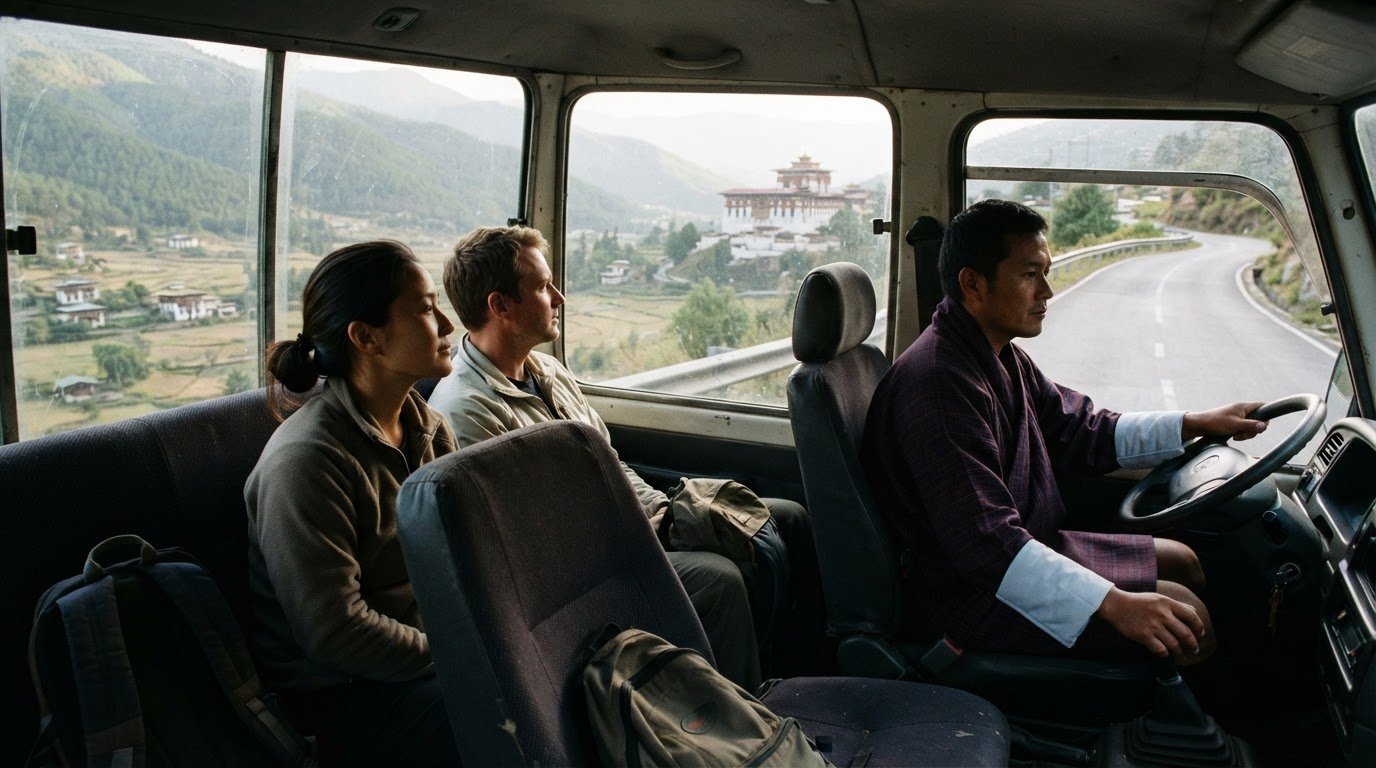
Himalayan Multi Destination Tour Package Prices and Routes
The longest Himalayan itinerary isn’t automatically the best fit. A Himalayan multi destination tour package can combine Nepal’s Kathmandu landmarks and mountain scenery with Bhutan’s monasteries and dzongs. The route and trip length determine how much you can experience along the way. Add trekking for a more active journey, or focus on cultural visits and dramatic views.
Choosing between Nepal and Bhutan means considering more than the destinations on a map. Look for a pace that suits your available time, scenery that interests you and trekking that matches the adventure you want. This guide compares route ideas, trip-length and package-price considerations, and Himalayan landscapes to help you decide which journey suits your plans.
Key Takeaways
- Match Nepal and Bhutan stops to your preferred pace, and consider how transport links shape time on the ground.
- Compare itineraries by trip length and what each route includes, not by headline starting price alone.
- Choose between sweeping mountain views and trekking-focused days by weighing the scenery and activity level you want.
- Use the Kathmandu, Nagarkot, Paro and Thimphu route comparison to narrow down a journey that fits your travel plans.
Nepal–Bhutan tour highlights and transport
Nepal and Bhutan itineraries can pair Kathmandu’s heritage with Bhutanese monasteries and dzongs. Add India for destinations such as Darjeeling, or extend the journey to Tibet for Lhasa’s monasteries and palace squares. Choose the combination according to your priorities: cultural sightseeing, mountain scenery or a broader regional journey.
Nepal–Bhutan itineraries can begin in Kathmandu, with city landmarks before the journey continues into Bhutan. Along the way, the focus shifts from Nepal’s temples and historic streets to Bhutan’s mountain valleys and religious architecture. This route suits travellers looking for contrasting cultural settings rather than repeated city stops.
Bhutan’s Taktsang Monastery, also known as the Tiger’s Nest, clings to a cliff about 800 metres above the valley floor. It offers a striking example of the country’s spiritual heritage and dramatic landscape. On routes involving India, the drive from Darjeeling to Phuentsholing takes seven hours, so the land crossing can shape the day’s pace.
A Nepal–Bhutan–Tibet itinerary brings together Nepal’s cultural landmarks, Bhutanese monasteries and dzongs, and Tibetan Buddhist culture. Kathmandu’s pagoda-style architecture contrasts with Lhasa’s monastic sites and palace squares. This broader route suits travellers keen to explore distinct traditions, but it takes careful planning to sequence destinations and transport connections.
For a family tour, match daily travel with everyone’s comfort and interests. A day of sightseeing in Kathmandu, a monastery visit in Bhutan and a longer drive between destinations have different rhythms. Prioritise fewer transfers, allow time for cultural stops and choose a route where mountain views complement the itinerary rather than crowd it. Compare a Nepal–Bhutan journey with one that adds India, and consider how much time you want to spend in transit.
Tour durations and per-person starting prices
Trip length and inclusions shape both the itinerary and its per-person cost. Compare the number of nights, accommodation category, transport, meals and guiding together rather than judging a tour by duration alone.
Tour Duration Options
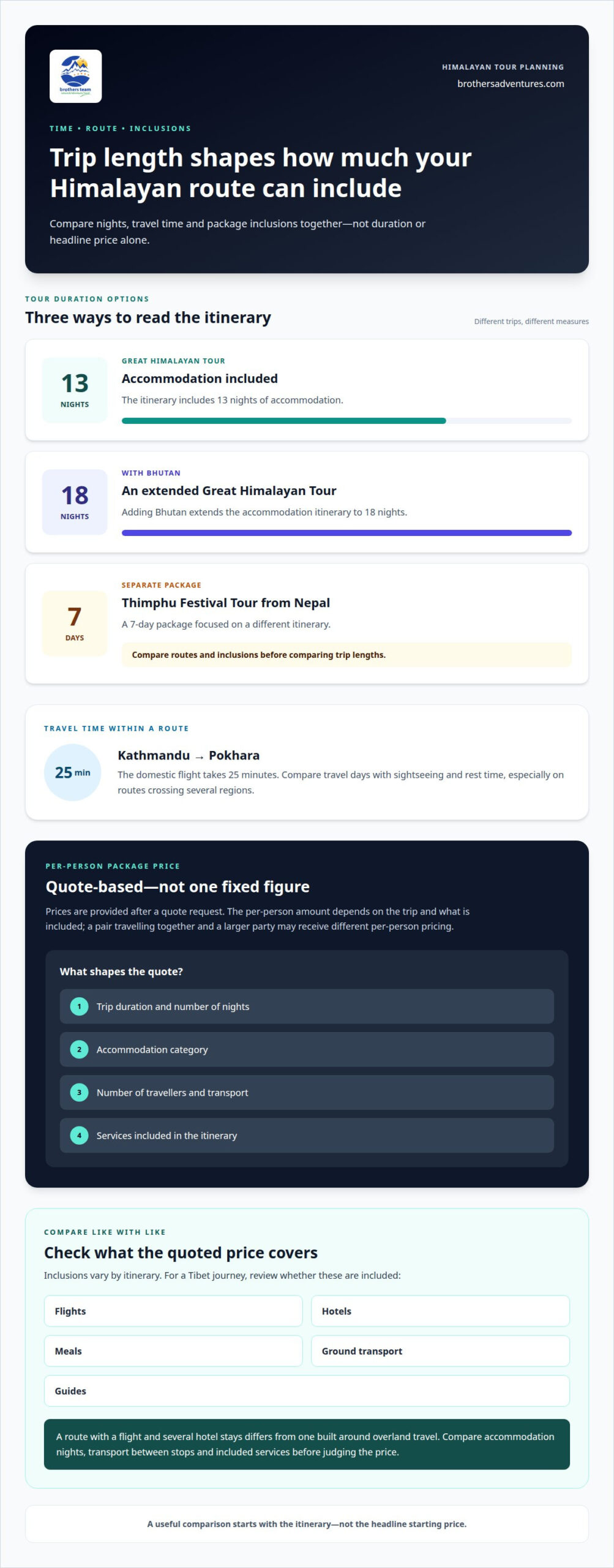
Shorter trips focus on fewer destinations, while longer routes leave more room for cultural visits and mountain scenery. A Great Himalayan Tour itinerary includes 13 nights of accommodation, extending to 18 nights with Bhutan. A separate Thimphu Festival Tour from Nepal is a 7-day package.
For an adventure centred on Nepal, the route may also include a domestic flight: Kathmandu to Pokhara takes 25 minutes. Compare how travel days fit alongside sightseeing and rest, especially when an itinerary crosses several regions. More nights can allow a broader route, but the destination sequence matters just as much.
Per-Person Package Prices
Per-person prices depend on the itinerary and are provided after a quote request. Factors include trip duration, accommodation category, traveller numbers, transport and included services. The per-person price may differ between a pair travelling together and a larger party.
For a Tibet journey, compare the route and accommodation with the per-person rate. Check whether the itinerary includes flights, hotels, meals, ground transport and guides. Inclusions vary, so review them to understand what the quoted price covers. This also helps you distinguish a cultural visit to an ancient temple from a longer journey through several destinations.
Use the itinerary to compare like with like: nights of accommodation, transport between stops and included services. For example, a route with a flight and several hotel stays differs from one built around overland travel. To explore a Nepal-focused route, see the Nepal adventure tour options.
Himalayan scenery and trekking options
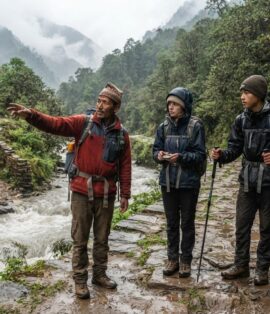
A multi-country journey can shift from Nepal’s mountain trails to Tibet’s monastery landscapes and Bhutan’s distinctive architecture. Trekking adds sustained walking and changing terrain, while sightseeing routes focus more on cultural stops. Stok Kangri reaches 6,153 metres, illustrating the high-altitude environments found across the region. Match the itinerary to the experience you want, whether that means active days or a gentler look at several countries.
Tibet tours can focus on cultural landmarks, mountain scenery or a mix of both. In a small-group tour, the route and daily pace shape the shared experience. Compare monastery visits, time in cities and overland travel before choosing. Lhasa’s monasteries and palace squares, for example, offer a different focus from an itinerary built around trekking landscapes.
For Singapore citizens, visa and permit requirements depend on the destinations and route, including any transit. Brothers International Tours & Trading Pte Ltd can help map document requirements for each country and permit-related stop. Travellers are responsible for obtaining the documents required for their journey.
The best travel period depends on the scenery you want. The itinerary describes late October to December as a time for clear weather and views of Mt. Kanchandzonga. It recommends January to mid-April for snow at Tsomgo Lake and Baba Mandir, while March and April bring rhododendrons and orchids.
Fitness demands depend on the itinerary: cultural sightseeing generally involves less walking than a trekking route. Allow for acclimatisation when planning high-altitude destinations such as Stok Kangri. Share your walking experience and preferred activity level so Brothers International Tours & Trading Pte Ltd can match the route to your plans.
Mountain travel can involve altitude, changing weather and remote terrain. Plan for safety according to your route and activities, and choose travel insurance that covers your destinations and trekking plans. Insurance terms and tour requirements depend on the policy and itinerary. Travel insurance is handled separately from the tour price.
Brothers International Tours & Trading Pte Ltd structures bookings around your chosen countries, route and travel dates, and explains the applicable reservation and cancellation terms. Review those terms alongside the itinerary before booking, especially when the journey combines several destinations or transport arrangements.
Kathmandu, Nagarkot, Paro and Thimphu routes
A Nepal–Bhutan itinerary can combine Kathmandu and Nagarkot with stops in Paro and Thimphu. Use this sequence as a starting framework, then set the pace around sightseeing, transfers and time at each destination. Nepal–Bhutan tours can begin with Kathmandu’s city landmarks before continuing into Bhutan. The order of later stops also affects how smoothly the journey flows.
In Kathmandu, give cultural landmarks time of their own rather than treating the capital only as an arrival point. Its pagoda-style architecture and religious sites offer a distinct introduction to Nepal’s heritage. Then decide whether Nagarkot suits your priorities. Including both places requires time for transfers as well as sightseeing, so avoid filling every day with another move.
Paro and Thimphu bring the Bhutan portion of the route into focus. Plan these stops around the cultural visits that matter most to you, including Bhutanese monasteries and dzongs. Check how much travel time falls between visits. This makes it easier to compare a route with several cultural stops against one that gives fewer destinations more breathing room.
Airport arrangements also affect how comfortable the route feels. Consider your arrival point, onward travel between Kathmandu and the Bhutan stops, and how much sightseeing time remains after each transfer. The itinerary should distinguish travel days from visit days, so a famous site does not become a hurried stop. For families, a clear daily rhythm helps balance city visits, transfers and rest.
Before settling on Kathmandu, Nagarkot, Paro and Thimphu, decide which destination deserves the most time. A provider can then arrange the route around that priority and the transport links. Explore Nepal and Bhutan route options to start shaping your journey.
Brothers International Tours & Trading Pte
Brothers International Tours & Trading Pte helps travellers choose a journey that fits their preferred pace, scenery and activity level. If Nepal is your priority, compare the 8Days Nepal Adventure Tour, 8Days Scenic Nepal Mini Trek and 5Day Nepal Luxury Tour by the kind of experience each offers. These options give you starting points for considering cultural visits, trekking or a more comfortable travel style.
To plan a multi-destination journey, share the countries you want to visit, your travel dates and how you would like to balance sightseeing with trekking. This gives the itinerary a clear direction and keeps the focus on the route details that matter to you. Contact Brothers International Tours & Trading Pte Ltd, also known as Brothers Adventures, for a personalised quote.
Choose the Journey That Feels Right
Start by deciding how you want the journey to feel: active and outdoors-focused, rich in scenery or set at a more comfortable pace. A Himalayan multi destination tour package is easier to plan when you begin with that preference, then build the route around the places and experiences that matter most to you.
For a Nepal-focused starting point, Brothers International Tours & Trading Pte Ltd offers the 8Days Nepal Adventure Tour, 8Days Scenic Nepal Mini Trek and 5Day Nepal Luxury Tour. Each gives you a different style of travel to consider as you refine your plans.
Bring your preferred destinations, travel dates and activity level into the conversation. Those choices help turn inspiration into a practical itinerary. Contact Brothers International Tours & Trading Pte Ltd to discuss your Himalayan travel plans, and take the next step toward a journey that feels distinctly yours.
Frequently Asked Questions
What destinations are included in popular Himalayan multi-destination tour packages?
Popular routes can include Nepal, Bhutan, Tibet and India, with combinations shaped around cultural visits, mountain scenery or trekking. A broader eastern Himalayan itinerary can also include Sikkim and Darjeeling. Consider the experience you want: adding countries brings variety, while focusing on fewer places leaves more time for local visits and reduces time spent transferring between destinations.
What are the best Himalayan multi-destination itineraries for 7, 10, or 14 days?
The best duration depends on how many borders and travel connections you want to include. For 7 days, focus on one country or a compact route. With 10 days, consider pairing Nepal and Bhutan, while 14 days can allow a wider multi-country plan. These are planning approaches, not fixed itineraries; route order and travel time determine how much sightseeing fits.
How much do Himalayan multi-destination tour packages cost in Singapore dollars?
Package prices vary according to the route, trip duration, accommodation category, traveller numbers, transport and included services. Brothers International Tours & Trading Pte Ltd provides a price after you request a quote. Compare inclusions before weighing the total. Visa fees are separate and are not included in the quoted tour price. Visa, vaccination, passport-validity and travel-insurance requirements are handled separately and remain the traveller’s responsibility.
What transport options connect Himalayan destinations, and how long are transfers?
Routes use a mix of flights and road transfers, depending on the destinations. A flight from Kathmandu to Pokhara takes 25 minutes, while the drive from Darjeeling to Phuentsholing takes seven hours. These examples show why transfer time matters when planning sightseeing days. Look at each connection in sequence, since a long road leg can affect the pace of the surrounding itinerary.
Which Himalayan destinations are suitable for families or first-time visitors?
Families and first-time visitors may prefer itineraries centred on cultural sightseeing, adding trekking only if its walking demands suit the group. A plan built around city visits, for example, offers a different pace from one focused on mountain trails. Consider everyone’s walking comfort, interest in cultural stops and tolerance for transfers, then balance travel days with time to explore.
How do I book a Himalayan multi-destination tour, and what cancellation rules apply?
Choose your countries, route and travel dates, then have the provider structure the booking and explain its reservation and cancellation terms. Review those terms alongside the itinerary before committing.


Comments are closed