


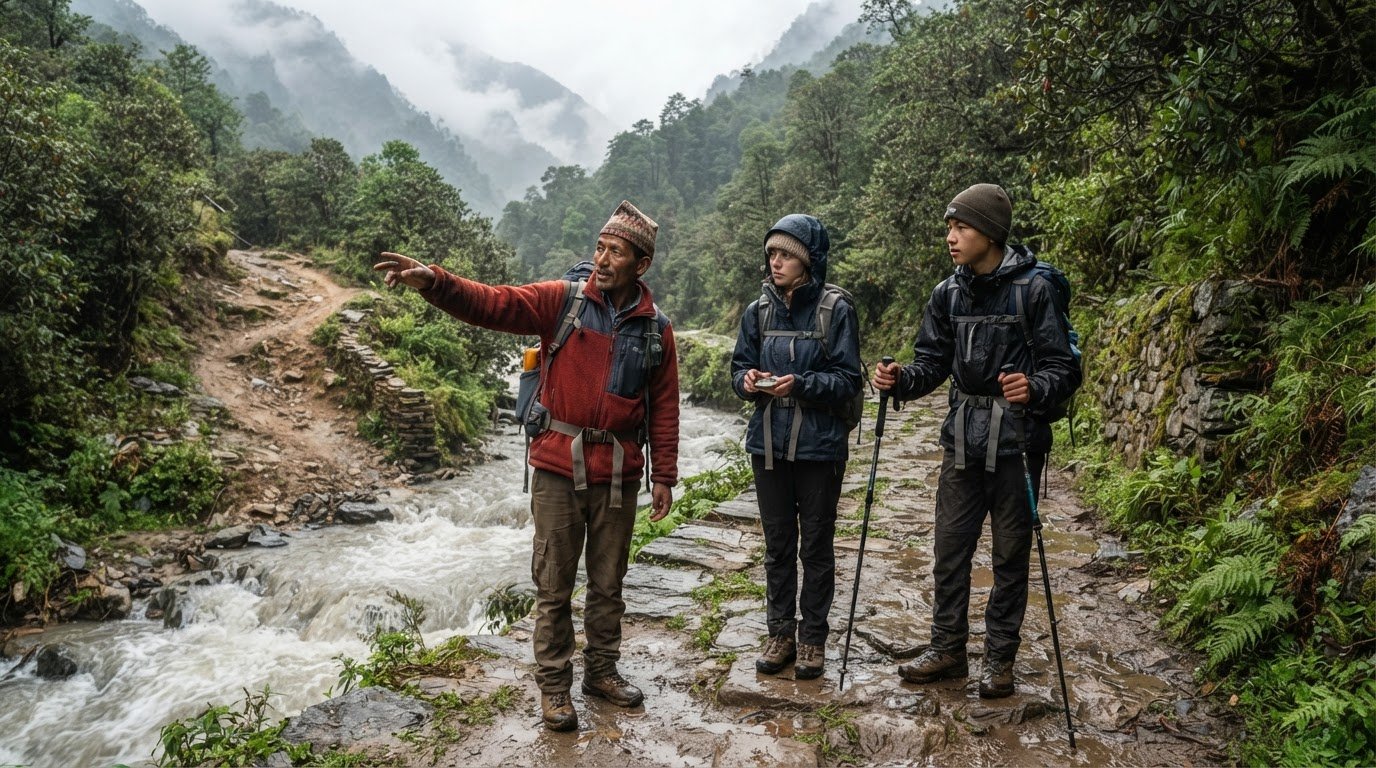
Youth Outdoor Leadership Expeditions in Nepal
The hardest lesson on a Nepal trek may be knowing when not to move. A youth outdoor leadership expedition in Nepal should build more than trekking skills: it should help young people assess risk, make thoughtful backcountry decisions and travel with care for the environment. School expedition examples range from 14 to 19 days, so trip length depends on the route and the experience being planned.
For students, parents and educators, safety and sustainability matter as much as mountain views. This guide explains how expedition planning can balance those priorities, what young people can learn outdoors, and how to choose a suitable trip length.
Explore the key considerations before choosing an expedition, from practical risk assessment to responsible travel habits. You’ll learn what makes a Nepal journey a meaningful outdoor leadership experience, rather than simply a trek.
Key Takeaways
- Build safety into every day by pairing route planning with map-and-compass practice and decisions that reflect changing conditions.
- Help teens take an active role in backcountry choices, learning to balance ambition with the wellbeing of the group.
- Make sustainability practical through thoughtful travel habits and respect for the places and communities along the route.
- Choose a trip length around its route and goals; Nepal school expedition examples range from 14 to 19 days.
Outdoor safety and sustainability
Good expedition planning brings safety, environmental care and practical learning together. For young people, each day in the mountains can build sound habits alongside a sense of adventure.
Provider Accreditation and Safeguarding
When comparing providers, look for clearly described accreditation, relevant reviews and written safeguarding procedures. Reviews can show how families and schools describe communication, preparation and support. Safeguarding information should explain supervision, conduct expectations and how concerns are handled. Consider how the expedition balances challenge with young people’s wellbeing. These details help schools and families assess a program without mistaking an impressive itinerary for proof of quality.
Departure dates, group sizes and booking deadlines depend on the itinerary, school calendar and route arrangements. Confirm these details in the expedition plan, including how the schedule supports supervision and preparation. Do not assume that dates or group capacity are the same for every program.
Permit, visa and travel-document requirements depend on each participant’s nationality, travel arrangements and trekking route. Organisers should outline the document steps for the group and specify what information families need to provide. Start early enough to resolve individual paperwork before departure.
Fitness and Trekking Preparation
Prepare for trekking with regular walks, hill or stair practice, and sessions carrying the day pack planned for the journey. Increase effort gradually and practise walking at a steady pace with short breaks. A vaccination plan should reflect each young traveller’s health and itinerary. Arrange personalised guidance through a travel-health consultation rather than applying the same list to every participant.
Use the route plan to build a gear list, including suitable footwear, layered clothing and personal essentials. Test footwear and packs before travelling, and practise packing so students can carry what they need comfortably. Preparation also means discussing how the group will respond to fatigue, changing conditions and a slower pace.
Leadership programs can teach map and compass skills, from reading terrain to choosing routes and bearings. Students can practise in small teams, explain their decisions and consider how a route choice affects the whole group. Service activities should reflect the expedition’s purpose, with environmental care part of everyday choices, such as respecting trails and local places.
Teen backcountry expeditions
A youth outdoor leadership expedition in Nepal can turn a trek into an opportunity to practise teamwork, responsibility and cultural awareness. The route, daily demands and learning goals shape the experience, so plan for the group rather than focusing on a landmark alone.
Age Groups and Experience Levels
Age suitability depends on the expedition’s goals, supervision plan and physical demands. First-time trekkers can build skills through clear daily roles, guided practice and manageable team tasks. Participants with outdoor experience may take on route-planning or leadership responsibilities while respecting the group’s shared decisions.
Growth comes from meaningful responsibility, not simply covering more ground. Before departure, explain the walking routine, packing approach and group roles. Students can practise carrying their essentials, organising equipment and speaking up when they need support. These habits help young people contribute confidently in remote settings.
Destinations and Trekking Routes
The Everest Base Camp route is one option for a school backcountry journey. One school group’s Nepal trip lasted 17 days and included a 13-day trek to Everest Base Camp. This example shows how an itinerary can include both trail time and travel beyond the trek.
Match the route to the group’s experience, available time and cultural learning goals. A shorter trek may leave more room for activities off the trail, while a longer journey gives students more time to settle into trekking routines. For a youth outdoor leadership expedition in Nepal, packing plans and daily roles should reflect the actual itinerary.
Prepare students for the opportunities ahead by rotating team roles and setting a simple daily reflection. Invite them to notice local culture respectfully. The Scenic Nepal Mini Trek is one option to consider when exploring a scenic trekking experience.
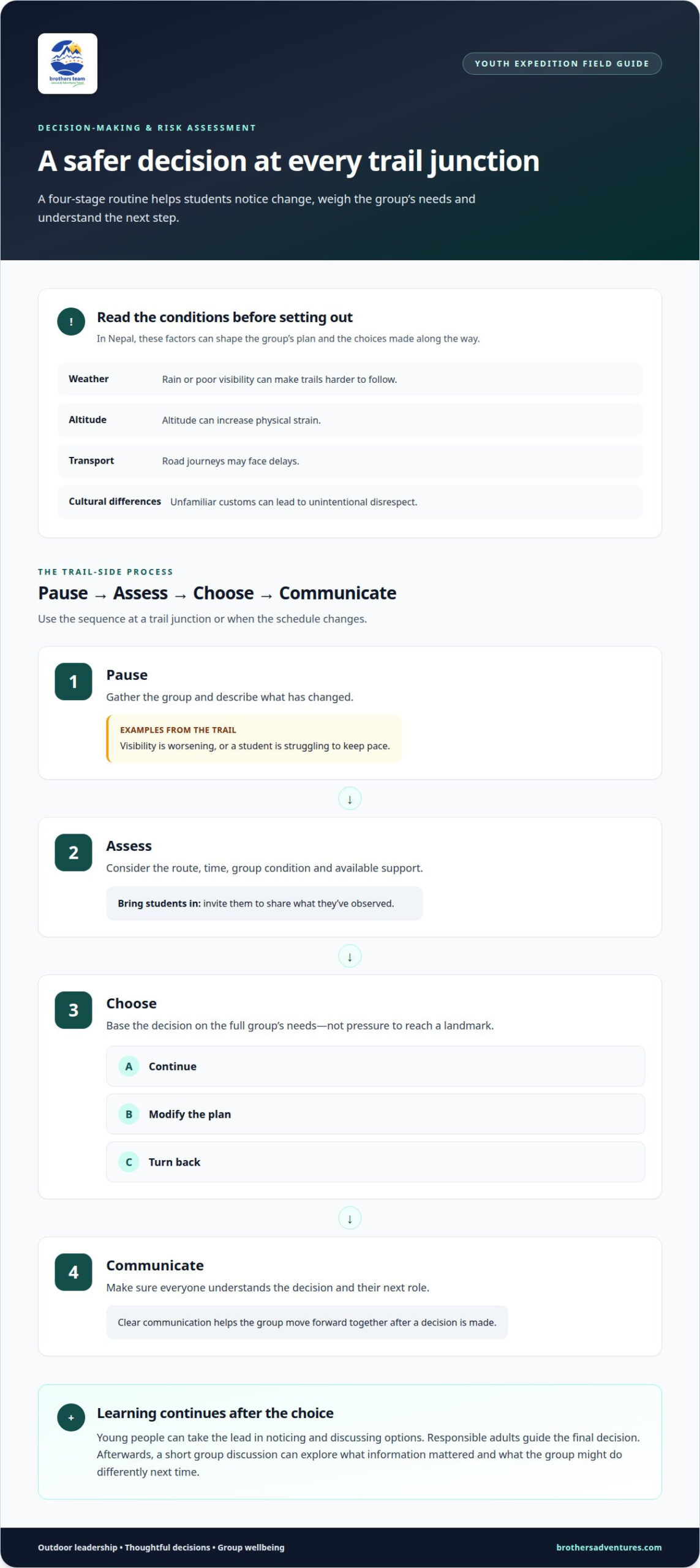
Decision-making and risk assessment
For a school expedition, risk assessment turns a mountain challenge into a practical learning experience. Students can learn to notice changing conditions, discuss options and understand when the group should adjust its plan.
Weather, altitude, transport and cultural differences all shape risk in Nepal. Rain or poor visibility can make trails harder to follow, altitude can increase physical strain, and road journeys may face delays. Unfamiliar customs can also lead to unintentional disrespect. Account for each factor in the group’s plan before setting out.
Use a simple decision sequence at each trail junction or schedule change:
- Pause: Gather the group and describe the change, such as worsening visibility or a student struggling to keep pace.
- Assess: Consider the route, time, group condition and available support. Invite students to share what they’ve observed.
- Choose: Continue, modify the plan or turn back based on the full group’s needs, not pressure to reach a landmark.
- Communicate: Make sure everyone understands the decision and their next role.
This process lets young people take the lead without placing responsibility beyond their experience. A student might notice that a teammate needs a break, while responsible adults guide the final decision. Afterwards, a short group discussion can explore what information mattered and what the group might do differently next time.
Preparation also means learning local etiquette before meeting communities along the route. Discuss respectful greetings, asking permission before taking photographs, and showing care around homes or religious places. These examples help students see cultural awareness as part of good judgement, not an extra activity.
Deeper learning comes from reviewing decisions, including everyday choices such as changing pace or taking a rest. When young people explain their reasoning, listen to other perspectives and adapt together, they practise skills that serve them beyond the expedition. The aim is thoughtful participation, not risk-taking for its own sake.
Expedition lengths
Nepal school expeditions can span different lengths, depending on trekking goals and the time set aside for learning. Examples include a 14-day Everest Trek and Sherpa Culture school trip and a 19-day Everest Base Camp Trek and Community Service school trip. These itineraries show how the Himalayas can frame journeys with distinct cultural and community themes.
A separate school group described its Nepal expedition as a 15-day trip. Together, these examples offer useful reference points, not a fixed template for every student group. The right length depends on the chosen route, travel arrangements and the balance between trekking, cultural discovery and leadership skills.
Consider what students need time to do. A route-focused journey may centre on trekking, while a community-service theme needs time to engage with its purpose. Cultural learning can also shape the schedule, giving students time to discover local traditions and reflect on what they encounter. Extra days are not automatically better; every part of the itinerary should support the trip’s educational aims.
For a school planning discussion, map the itinerary against its priorities:
- Route: Identify the trek and the time needed for its planned stages.
- Learning: Set aside time for group reflection and leadership practice.
- Community: Make sure service or cultural activities have room in the schedule.
- Logistics: Account for travel days as well as time on the trail.
These steps help schools compare a 14-day example with a 19-day program by purpose, not duration alone. They also help students understand how trekking connects with education, teamwork and the wider cultures they encounter. For a tailored conversation about a Nepal expedition’s length and focus, explore Nepal expedition planning.
Brothers International Tours & Trading Pte Ltd: Nepal Expeditions & Peak Climbing
Brothers International Tours & Trading Pte Ltd offers Nepal Expeditions & Peak Climbing for travellers planning an adventure in Nepal. For youth groups considering trekking routes, trip length and learning goals, this is a natural next step once the group’s priorities are clear.
The 8Days Nepal Adventure Tour and 8Days Scenic Nepal Mini Trek offer distinct ways to explore Nepal within an eight-day itinerary. The 5Day Nepal Luxury Tour provides another option for groups considering a shorter journey. Review each itinerary against the students’ experience, schedule and expedition aims before choosing.
Share your group’s goals and preferred travel period to discuss a suitable Nepal journey. Contact Brothers International Tours & Trading Pte Ltd to explore the options.
Turn Your Nepal Expedition Plan Into a Journey
A youth outdoor leadership expedition in Nepal can give students a fresh setting to practise responsibility and curiosity. Shape the journey around what matters most to your group: trekking, cultural discovery or a broader Nepal experience. Start with the school calendar, students’ interests and the kind of challenge they are ready to take on.
Brothers International Tours & Trading Pte Ltd offers the 8Days Nepal Adventure Tour, 8Days Scenic Nepal Mini Trek and 5Day Nepal Luxury Tour. These options give you different starting points for considering the itinerary and experience that best fit your plans.
Bring your priorities together, then discuss a suitable next step with the team. A thoughtful plan can help students arrive ready to learn, contribute and discover Nepal at their own pace.
Contact Brothers International Tours & Trading Pte Ltd to discuss your Nepal travel plans. A memorable journey begins with a clear purpose and an open mind.
Frequently Asked Questions
What youth outdoor leadership expeditions in Nepal are available?
Nepal options include Nepal Expeditions & Peak Climbing, School & College Trip, 8Days Nepal Adventure Tour, 8Days Scenic Nepal Mini Trek and 5Day Nepal Luxury Tour. For a youth group, the best fit depends on whether its priority is trekking, a broader Nepal journey or a school-focused trip. Compare each itinerary’s stated activities and schedule with the group’s learning aims.
How long do Nepal youth expeditions last, and what are the typical itineraries?
Available trip lengths vary: the listed Nepal tours include five- and eight-day options, while school expedition examples span 14, 15 and 19 days. A 14-day example combines an Everest trek with Sherpa culture, and a 19-day example pairs Everest Base Camp trekking with community service. The itinerary’s route, travel days and planned activities determine how the time is organised.
What safety, supervision, medical, and altitude-acclimatization measures do providers offer?
Safety measures depend on the itinerary, so the trip plan should explain how adults supervise students, communicate decisions and respond if someone feels unwell. It should also describe how the schedule accounts for altitude, including the pace of ascent and opportunities to rest. Medical arrangements should clarify who leads the response, how concerns are escalated and what support is available during remote sections.

Comments are closed