


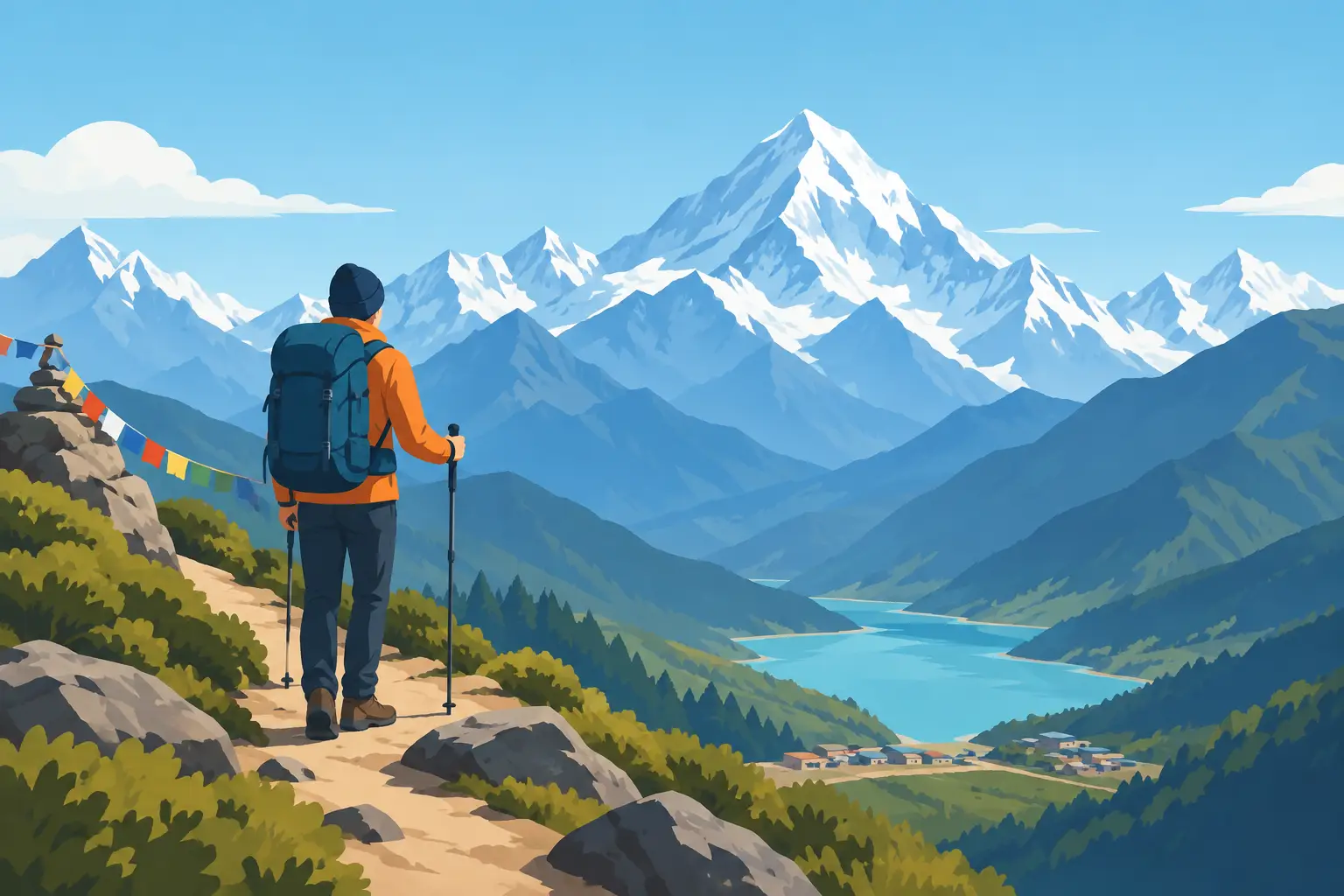
7 Everest Base Camp Alternatives Worth Trekking
The walk into Everest Base Camp is rightly famous, but the Khumbu is not the only place in Nepal where a trail can change the scale of your day – and perhaps your outlook. The best Everest Base Camp alternatives offer the same ingredients many trekkers come for: high mountain scenery, welcoming villages, a genuine physical challenge and the satisfaction of reaching somewhere earned on foot. They simply deliver them in different proportions.
For some travellers, the deciding factor is avoiding the Lukla flight. For others, it is a shorter holiday, a lower sleeping altitude, quieter paths or a stronger focus on Gurung, Tamang or Tibetan-influenced culture. There is no single substitute for Everest Base Camp. The right trek depends on what drew you to the Himalayas in the first place.
How to choose an alternative to Everest Base Camp
Start with the practical realities, not just the photographs. Everest Base Camp commonly takes around 12 to 14 days from Kathmandu, including essential acclimatisation days, and reaches a high point above 5,000 metres at Kala Patthar. If your concern is altitude, select a route with lower overnight stops rather than merely a shorter itinerary. Going up too quickly is not made safer by determination or fitness.
Then consider how remote you would like to feel. Some routes have comfortable tea houses, regular villages and straightforward road access. Others require a more self-contained approach, longer transfers and greater flexibility when weather or trail conditions change. The season matters too. Spring and autumn generally offer the clearest mountain views and busiest trails, while winter can be wonderfully quiet but cold, and summer brings rain to many lower valleys.
Below are five rewarding choices, plus two variations for travellers who still want an Everest-region experience without following the standard Base Camp route.
Everest Base Camp alternatives for every kind of trekker
Annapurna Base Camp: a close encounter with the peaks
Annapurna Base Camp is the natural choice for travellers who want a dramatic Himalayan destination with a more compact timeframe. Usually completed in seven to 11 days depending on the approach, the trek rises through terraced farmland, rhododendron forest and stone villages before reaching the Annapurna Sanctuary. The final amphitheatre is surrounded by enormous peaks, including Annapurna I, Machhapuchhre and Hiunchuli.
This is not an easy walk. There are many stone steps, especially around Chhomrong, and the climb can feel demanding in wet conditions. Yet the highest overnight point is lower than Everest Base Camp, at about 4,130 metres, making it an appealing option for first-time Himalayan trekkers who still want serious mountain atmosphere. It also combines particularly well with a few nights in Pokhara, where the journey begins and ends at a gentler pace.
Langtang Valley: mountains and Tamang heritage
Langtang Valley is one of Nepal’s most rewarding treks for travellers with around a week to spare. The road journey from Kathmandu leads to Syabrubesi, then the trail follows the Langtang Khola through forest and villages into a broad alpine valley beneath Langtang Lirung. Kyanjin Gompa, with its mountain-ringed setting, is an excellent place for a rest day and a viewpoint walk.
The trek has a more intimate character than the Everest trails. You may pass yak pastures, prayer wheels and homes shaped by Tamang and Tibetan cultural traditions, while still gaining wide Himalayan views. A high viewpoint such as Kyanjin Ri can exceed 4,700 metres, so acclimatisation remains relevant, but the itinerary is generally easier to fit into a nine- or 10-day Nepal holiday. It is a strong choice for those who value culture as much as a summit-style photograph.
Mardi Himal: short, scenic and beautifully varied
Mardi Himal has become popular for good reason. From the Pokhara area, the route climbs through forest to a ridgeline where the views suddenly open towards Machhapuchhre, Annapurna South and Hiunchuli. It can often be completed in five to seven days, making it one of the most accessible high-mountain experiences for travellers with limited leave.
Its shorter duration should not be mistaken for a casual ramble. The upper trail can be steep, narrow and exposed in places, and accommodation is simpler than on the main Annapurna Base Camp route. Weather can also obscure the very views people come to see. For energetic walkers who are happy with basic lodges and want maximum scenery in a short window, however, Mardi Himal is difficult to beat.
Poon Hill and Ghorepani: the right first Himalayan trek
Not every memorable Himalayan holiday needs to reach 4,000 metres. The Ghorepani Poon Hill trek is ideal for families, school groups, first-time trekkers and anyone who wants a manageable introduction to Nepal’s mountain trails. The sunrise walk to Poon Hill is early and uphill, but the reward is a sweeping panorama across Dhaulagiri, Annapurna and Machhapuchhre.
Most itineraries take four to six days, with comfortable village stops and time to enjoy the region’s Gurung and Magar communities. The main trade-off is that the route is popular and its lower elevation does not provide the same high-altitude drama as Everest or Annapurna Base Camp. What it does offer is a well-paced, culturally rich trek that leaves room for Pokhara, Kathmandu or a longer Nepal itinerary.
Manaslu Circuit: for a wilder, longer journey
Travellers who find Everest Base Camp too busy may prefer the Manaslu Circuit. This is a longer and more remote trek around the world’s eighth-highest mountain, usually taking 14 to 18 days. The route follows deep river valleys, passes villages with strong Tibetan Buddhist heritage and climbs to Larke Pass at approximately 5,106 metres.
Manaslu is a genuine undertaking. It requires a restricted-area permit, an organised trekking arrangement with a licensed guide, careful acclimatisation and a willingness to accept basic facilities in the upper valley. Road conditions at either end can affect timings. In return, it delivers a powerful sense of progression, diverse landscapes and a quieter trail than the main Everest corridor. It suits experienced walkers, or fit first-timers prepared to train properly and allow enough days.
Two ways to stay in the Everest region
Gokyo Lakes: Everest views without Base Camp
If it is the Khumbu landscape you want rather than the Base Camp landmark itself, Gokyo Lakes is one of the finest alternatives. The turquoise lakes, glacial terrain and climb of Gokyo Ri create a different kind of Everest journey. From the summit, the panorama includes Everest, Lhotse, Makalu and Cho Oyu – a view many trekkers consider wider and more rewarding than Kala Patthar.
The route still depends on the Lukla flight and reaches serious altitude, so it needs the same thoughtful pacing as an Everest Base Camp trek. It is best for travellers who are comfortable with high elevations but would prefer a less congested valley and more time beside extraordinary alpine lakes.
Everest via Gokyo and Cho La Pass: the demanding variation
For seasoned trekkers, the Gokyo and Cho La Pass route can be combined with Everest Base Camp. Strictly speaking, it is not an alternative destination, but it is a more adventurous alternative to the usual out-and-back itinerary. It crosses Cho La Pass at about 5,420 metres before joining the Base Camp trail.
This variation adds days, distance and a technical element when snow or ice is present. It should never be chosen simply to make an itinerary sound more impressive. With sound acclimatisation, capable guides and suitable conditions, it is a remarkable circuit for people who want the fullest possible Khumbu experience.
Match the route to your real priorities
A trek becomes more enjoyable when its pace matches your holiday rather than fighting against it. If you have one week, Langtang, Mardi Himal or Poon Hill may give you a far better experience than trying to compress a high-altitude itinerary. If you have two weeks and seek a major personal challenge, Annapurna Base Camp, Gokyo or Manaslu deserve closer consideration.
Training still matters on every route. Build steady walking fitness before departure, practise climbing hills with a daypack and choose boots you have already worn in. Once in Nepal, drink regularly, walk at the planned pace and tell your guide promptly about persistent headache, nausea, dizziness or unusual fatigue. A good itinerary gives the body time to adapt; it is not an obstacle to overcome as quickly as possible.
At Brothers Team, we plan treks around the people walking them, with realistic acclimatisation, experienced local guidance and the practical arrangements that let you focus on the trail. Whether your goal is a first sunrise over Annapurna or a high pass in a remote valley, choose the route that leaves you excited to start walking – and sufficiently prepared to enjoy every step.

Comments are closed