


Custom Group Tours Nepal That Fit Your Group
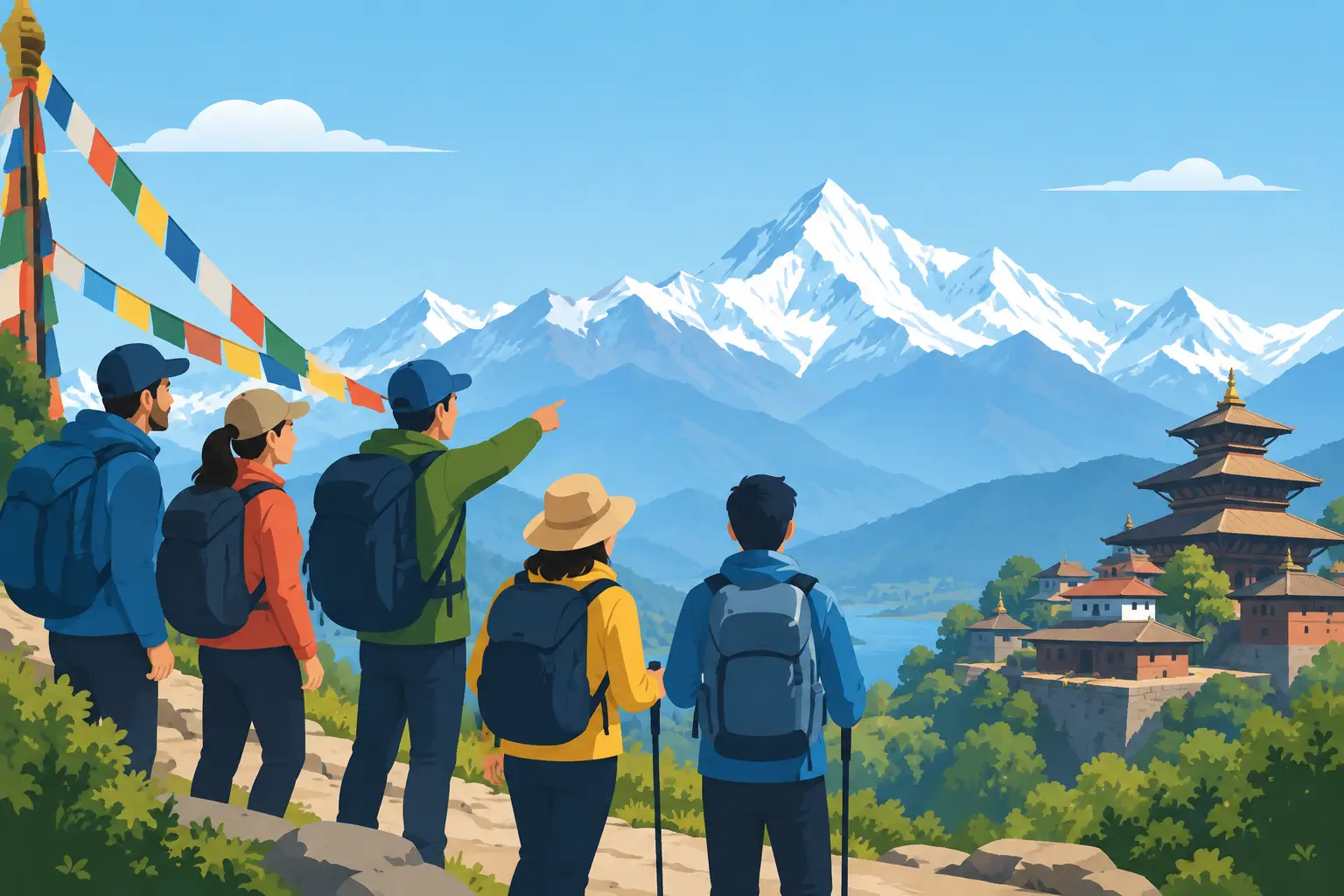
A group of friends may want sunrise over Poon Hill and relaxed evenings in mountain lodges. A school group may need clear supervision, learning outcomes and manageable walking days. A team marking a milestone may prefer Kathmandu’s heritage, a short Himalayan trek and time together away from routine. Custom group tours Nepal work best when the itinerary starts with the people travelling, rather than a fixed route that asks everyone to adapt.
Nepal rewards thoughtful planning. Its extraordinary variety sits within a relatively compact country, from the historic lanes and temples of the Kathmandu Valley to rhododendron forests, high passes, riverside villages and the great Himalayan skyline. Yet road conditions, domestic flight schedules, altitude and differing fitness levels all shape what is realistic. A well-designed group journey brings these elements together with care, so the adventure feels exciting without becoming unnecessarily complicated.
What makes a custom group tour in Nepal worthwhile?
A private itinerary gives your group control over the pace, focus and level of challenge. That does not simply mean choosing hotels or changing a departure date. It means building a journey around the purpose of the trip: cultural discovery, personal challenge, education, celebration or a mix of all four.
For an active group with limited time, a four- to six-day trek in the Annapurna region can offer big mountain views without committing to a long expedition. Poon Hill, for example, is often a strong choice for first-time Himalayan walkers who are willing to climb steadily but want comfortable lodge stays and a defined finish. Groups with more trekking experience may look towards Everest Base Camp, the Gokyo Lakes route or Cho-La Pass, where acclimatisation days and contingency time are essential parts of the plan, not optional extras.
A custom itinerary is equally valuable for travellers who do not want trekking to dominate every day. Combine Kathmandu’s Durbar Squares and sacred sites with Bhaktapur, Patan, Chitwan’s wildlife or Pokhara’s lakeside setting. The contrast between living heritage and mountain landscapes is often what makes Nepal so memorable for mixed-interest groups.
Start with the group, not the destination checklist
The most useful planning conversation is an honest one. How many people are travelling? What is the age range? Has anyone walked at altitude before? Is the group happy with simple tea-house accommodation, or would a hotel-based cultural programme suit better? Are there dietary, medical, mobility or religious considerations that deserve attention from the outset?
Fitness deserves particular care. A group can include keen hikers and people who are new to mountain walking, but the route must be chosen for the least experienced member if everyone is expected to travel together. Pushing the pace to satisfy the strongest walkers can leave others exhausted, anxious or more vulnerable to altitude illness. Sometimes the better answer is a moderate trek with exceptional scenery, supported by a guide who can offer encouragement and set a sustainable rhythm.
The season also affects the experience. Spring brings warmer conditions, clear periods and flowering hillsides, while autumn is popular for stable weather and wide mountain views. Winter can suit lower-altitude trekking and cultural travel, although cold mornings and snow may limit higher routes. Monsoon journeys require a different approach: greener landscapes and fewer crowds, balanced against rain, leeches on some trails and possible transport disruption.
Custom group tours Nepal for schools and colleges
For educators, Nepal offers more than a dramatic backdrop. It can turn subjects into direct experience. Students may examine Himalayan geography from a viewpoint above the cloud line, learn about living religious traditions in Kathmandu, meet local communities or take part in age-appropriate outdoor activities that develop resilience and teamwork.
The strongest educational programmes are structured without feeling overly formal. A day of heritage sightseeing can be followed by a guided village walk. A short trek can include conversations about trail etiquette, waste reduction, water use and how tourism supports mountain livelihoods. Reflection time is valuable too, particularly for young travellers encountering a culture and landscape very different from home.
Duty of care must shape every decision. This includes sensible activity choices, realistic journey times, reliable transport, properly briefed leaders and clear procedures for illness or changing weather. Younger groups often benefit from hotel-based stays or lower-altitude walking programmes rather than ambitious high passes. Adventure should build confidence, not place students under pressure to prove themselves.
The details that protect the experience
A memorable Nepal trip often depends on arrangements travellers barely notice when they are working well. Airport collection, domestic connections, trekking permits, lodge reservations, meals on remote routes, baggage handling and dependable ground transport all need to align. In the Himalayas, flexibility is just as important as planning. Weather can delay a flight, a road can take longer than expected, or a member of the group may need an extra rest day.
This is where local operational knowledge matters. A Kathmandu-based team can respond quickly, communicate with lodges and transport providers, and adjust arrangements on the ground when circumstances change. Brothers Team combines this destination presence with long experience supporting groups from Singapore and further afield, including travellers taking their first steps in the Himalayas.
Altitude deserves a separate conversation. Acute mountain sickness is not determined by age, fitness or enthusiasm. The safest strategy is gradual ascent, rest or acclimatisation days where required, enough fluids, careful observation and a willingness to change the plan if symptoms develop. For high-altitude routes, experienced guides, clear briefing and access to appropriate support give the group confidence without creating false reassurance. No summit, pass or viewpoint is worth compromising someone’s wellbeing.
Build in room for real travel
A tightly packed itinerary may look impressive on paper, but Nepal rarely rewards rushing. Long drives can be scenic and slow. A heritage visit becomes richer when there is time to speak with a local guide rather than hurry through photographs. On trek, an unplanned tea stop, a change in cloud cover or a conversation in a lodge can become one of the days people remember most.
This does not mean leaving the programme vague. It means allowing sensible margins. A group flying to Lukla for an Everest region trek should keep contingency days at the end of the holiday. A road-based itinerary should avoid stacking major activities immediately after a long transfer. If a group has a special celebration, schedule it where the setting and energy levels will allow everyone to enjoy it.
Accommodation choices should follow the route and the group’s expectations. In Kathmandu and Pokhara, there is a broad range of comfortable hotels. On established trekking trails, tea houses are part of the experience: welcoming, practical and often more basic at higher elevations. Private rooms may be limited in peak season, and hot showers or charging can carry an additional cost. Being open about these realities before departure prevents disappointment and helps travellers appreciate the setting for what it is.
A clear brief leads to a better itinerary
Before asking for a proposal, it helps to share a few essentials: your preferred travel window, number of travellers, available days, budget range, previous hiking experience and the one or two moments the group most hopes to have. Perhaps it is reaching Everest Base Camp, watching dawn from a ridge, seeing wildlife in Chitwan, or giving students their first experience of travelling with purpose.
Also be clear about what you do not want. Some groups want to avoid internal flights. Others prefer not to move accommodation every night, or need an itinerary with vegetarian meals and private transport throughout. These are not minor preferences. They are the building blocks of a trip that feels comfortable, achievable and genuinely personal.
Nepal has a way of making groups feel both small beside the mountains and closer to one another. Give the planning the attention it deserves, choose a route that respects every traveller, and leave enough space for the country to surprise you.

Comments are closed