


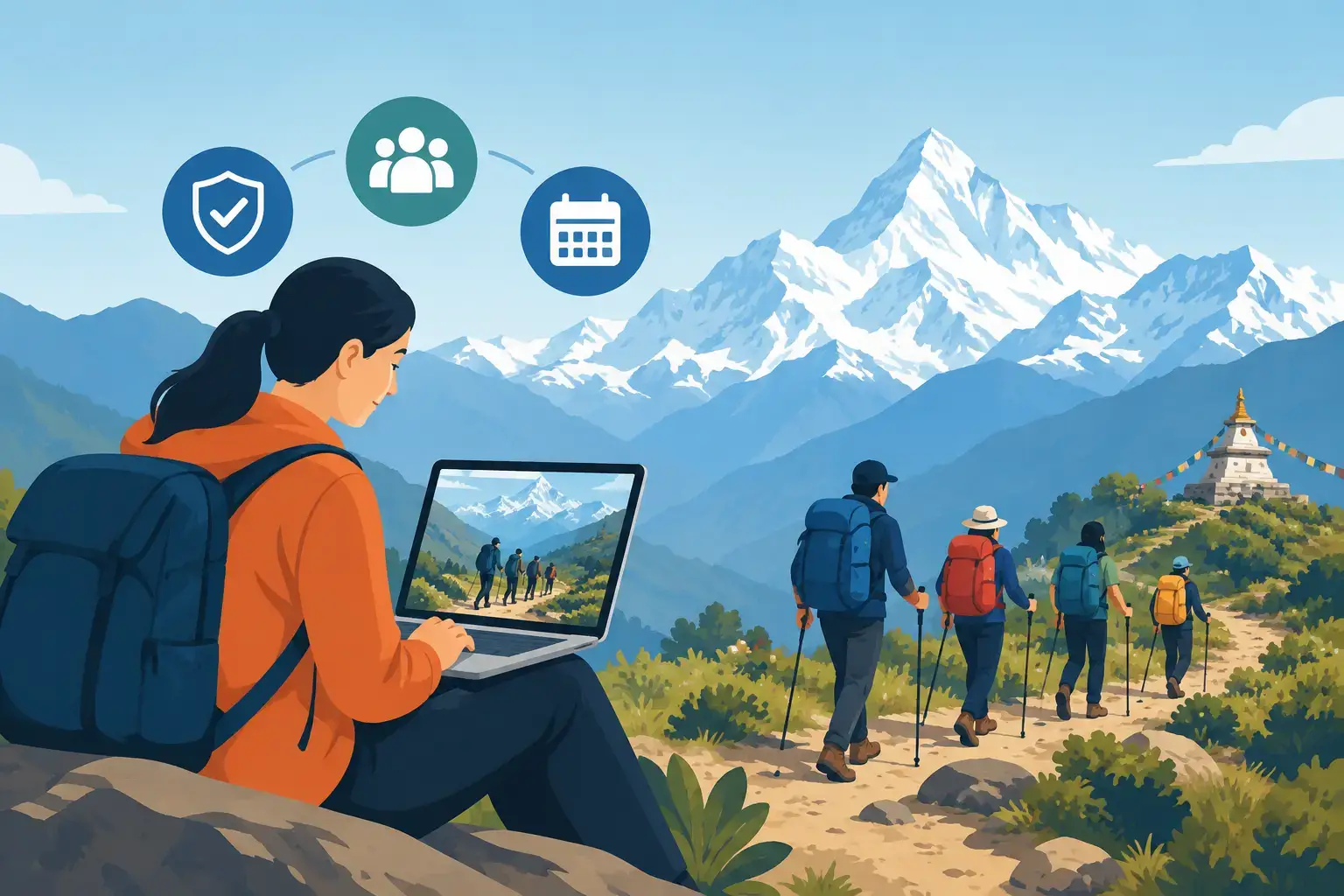
How to Book Nepal Group Treks with Confidence
The first view of snow peaks from a mountain trail can feel like a personal milestone, but getting there asks for more than enthusiasm. When you book Nepal group treks, the route, pace, guide team and acclimatisation plan all shape whether the experience feels rewarding or unnecessarily difficult. A well-managed group gives you companionship on the trail, local insight in the villages and reliable support when the weather or altitude changes the day’s plan.
Nepal is not a one-size-fits-all trekking destination. An Everest Base Camp journey and an Annapurna Poon Hill trek may both feature remarkable Himalayan scenery, yet they demand different preparation, time commitments and comfort expectations. The right booking starts by matching the trek to your group, rather than choosing only the most recognisable name.
Book Nepal Group Treks by Matching the Route to Your Group
Start with the question that matters most: what does your group want to remember? For some, it is the sense of achievement that comes with reaching Everest Base Camp. For others, it is a gentler walk through rhododendron forests, terraced fields and Gurung villages, with sunrise views from Poon Hill. Both are genuine Himalayan experiences, but the physical demands are very different.
Everest region: high altitude and big ambition
Everest Base Camp is a classic choice for fit first-time trekkers who can allow enough time for a gradual itinerary. Most routes begin with a flight to Lukla and climb through Sherpa settlements, monasteries and dramatic valleys before reaching the Khumbu’s high glacial landscape. The scenery is exceptional, but altitude is the central consideration, not fitness alone.
For experienced trekkers seeking a more demanding journey, the Gokyo Lakes and Cho-La Pass route brings quieter valleys, turquoise lakes and a challenging high pass into the itinerary. It needs a stronger appetite for long days, cold conditions and flexibility around weather. It is an outstanding option, but not one to choose simply because it sounds more adventurous.
Annapurna: varied landscapes and flexible trek lengths
The Annapurna region suits groups looking for a broad mix of mountain views, village life and accessible trail options. Poon Hill is often a good introduction to Himalayan trekking, particularly for travellers with limited time or mixed experience levels. The Annapurna Base Camp trek takes you deeper into a natural amphitheatre of peaks and calls for greater stamina, while still remaining a different altitude proposition from the Everest region.
A good operator will discuss daily walking hours, trail gradients, sleeping elevations and rest days before suggesting a route. A group of colleagues in their forties, a family with active teenagers and a university outdoor club may all be capable of trekking in Nepal, but they are unlikely to benefit from exactly the same itinerary.
Pace Is the Most Valuable Part of the Itinerary
A rushed trekking programme can turn a dream holiday into a test of endurance. The best group itineraries build in sensible walking stages and allow time to adjust, particularly on high-altitude routes. This is not wasted time. It gives your body the chance to acclimatise, gives your guide room to respond to changing conditions and gives you the chance to enjoy the place you came to see.
On Everest routes, acclimatisation days are planned around sleeping altitude rather than simply taking a day off. You may walk higher during the day and return to a lower lodge to sleep. Guides also monitor how each trekker is feeling, paying attention to headaches, loss of appetite, unusual fatigue or disturbed sleep. No itinerary can remove all altitude risk, so the group must be willing to listen to professional advice, even when that means slowing down or changing the plan.
This is where a smaller, carefully managed group has a real advantage. The guide can get to know individual walking speeds and confidence levels instead of treating the party as a single unit. For school, college and organised groups, clear supervision, sensible group ratios and daily briefings are especially valuable.
What a Properly Organised Trek Should Cover
The advertised price should not be the only factor when comparing Nepal group treks. A low headline figure can leave key arrangements unclear, while a more complete programme protects your time and makes costs easier to understand. Before confirming, ask exactly what is included from arrival through to departure.
A professionally arranged trek should clearly account for:
- airport transfers, internal transport and domestic flight arrangements where required;
- trekking permits, national park fees and local documentation;
- experienced trekking guides, porters and appropriate staff support;
- accommodation in Kathmandu and mountain lodges during the trek;
- meals specified in the itinerary, plus practical advice on personal spending;
- an altitude-safety approach, emergency procedures and communication arrangements.
The details matter. Mountain lodge standards vary by location and season, and rooms are usually simple at higher elevations. Wi-Fi, hot showers and charging facilities may be available for an extra fee, but should not be assumed. In the Everest region, domestic flights can be delayed by mountain weather. A sensible booking includes contingency time rather than tightly connecting your international departure to the planned return from the trail.
Choose the Season for Your Priorities
Spring and autumn are popular trekking seasons because they generally offer stable conditions and clear mountain views. Spring brings warmer lower trails and flowering forests, while autumn often offers crisp skies after the monsoon. These months also bring busier lodges and trails, especially around Everest Base Camp and Poon Hill.
Winter can suit travellers who prefer quieter routes and do not mind colder mornings, though high passes may be less practical. Monsoon trekking brings rain, leeches on lower trails and less reliable visibility, but some rain-shadow areas can still work well for the right group. There is no universally perfect month. The better question is whether your group values clear views, quieter trails, warmer temperatures or a particular school-holiday window.
Prepare Together Before You Travel
The most successful groups begin preparing several weeks or months before departure. Regular walking, hill training and stair climbing will help more than a last-minute gym session. Trekking is usually a sustained effort over consecutive days, so build endurance gradually and train in the boots you intend to wear.
Your equipment does not need to be complicated, but it must be dependable. Well-fitted boots, a waterproof outer layer, warm insulating clothing and a comfortable daypack are more useful than fashionable expedition gear. Your main duffel is normally carried by porter support, while you carry water, valuables, extra layers and personal essentials during the day.
It is also wise to set group expectations early. Some members may want to photograph every village and prayer flag, while others prefer a steady rhythm to the next lodge. Agreeing that the trek is not a race creates a more generous atmosphere. Strong groups encourage one another, but never pressure someone to ignore symptoms or push beyond safe limits.
Ask the Questions That Reveal Real Support
Before you book, ask who will be with your group on the ground, how the itinerary handles acclimatisation, and what happens if a trekker cannot continue. Ask whether the operator runs its own arrangements locally or simply passes the booking to an unknown supplier. You should also understand the expected lodge standard, porter arrangements, single-room availability and any likely additional costs.
Brothers Team combines Singapore-based travel support with Kathmandu destination operations, making it easier to plan the journey before departure and to receive practical local care once the trek begins. For a private group, a customised programme can also make sense: add cultural sightseeing in Kathmandu, allow extra acclimatisation days, or select a route that fits the group’s available dates and experience.
A Himalayan trek is demanding enough to be memorable and carefully supported enough to be enjoyable. Choose a route that respects your group’s ability, leave room for the mountains to set their own pace, and you will return with more than photographs – you will carry the quiet confidence of having travelled well.


Comments are closed