


Upper Mustang Trek Package: A 2026 Guide to Choosing Your Journey
The longest itinerary isn’t automatically the best journey. A well-chosen Upper Mustang trek package is about more than the number of days: clear logistics, thoughtful pacing and the right support can make this remote Himalayan adventure more rewarding.
It’s natural to focus first on the dramatic landscapes and ancient culture, then find package descriptions tricky to compare. What’s covered? How are restricted-area permits arranged? And how demanding will the route feel? These practical details matter when you’re planning a guided trek far from familiar comforts.
This 2026 guide explains what an Upper Mustang journey involves, how to compare itineraries and inclusions, and what to consider as you prepare. You’ll also learn what to look for in guiding, accommodation and transport arrangements. Brothers International Tours & Trading Pte Ltd is a family-owned travel agency with experience in guided adventures since 1992, bringing key travel arrangements together as you plan.
Key Takeaways
- See why a guided Upper Mustang trek package depends on coordinated planning, not simply the longest itinerary.
- Use a practical checklist to compare guiding, local transport, accommodation and permit processing with package exclusions.
- Compare journey pace and travel arrangements alongside duration to find an itinerary that suits your readiness.
- Prepare by assessing your fitness, considering timing and checking current permit requirements through official sources.
- Learn how Brothers International Tours & Trading’s family-owned experience, established in 1992, supports guided adventure planning.
Why an Upper Mustang Trek Package Offers More Than a Scenic Route
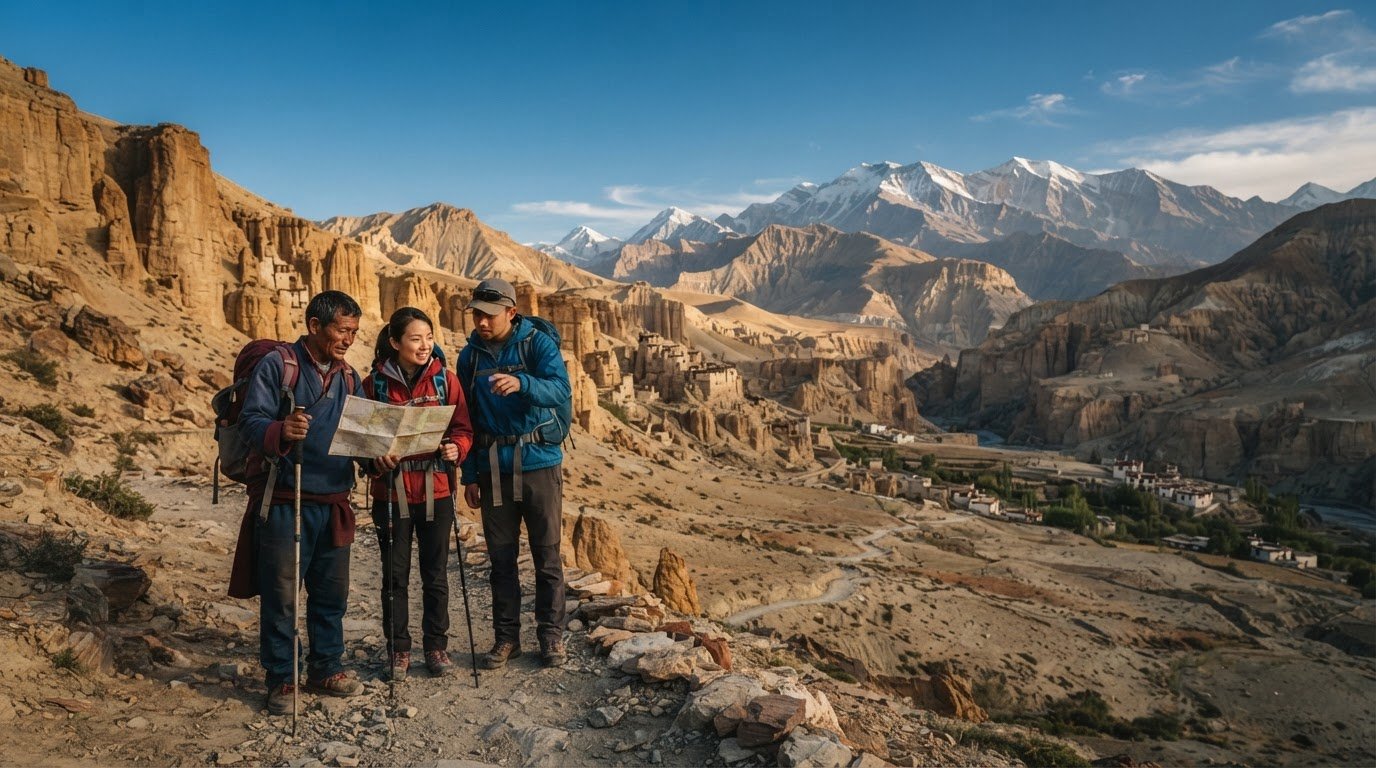
The appeal of Upper Mustang is easy to picture: immense, dry mountain terrain, weather-shaped ridges and traces of a rich cultural past. But the experience is more than a series of beautiful views. An Upper Mustang trek package brings guided exploration together with coordinated travel arrangements, helping you focus on the journey while practical details are organised around it.
“An Upper Mustang trek package is a guided journey that coordinates the travel arrangements needed to explore the region, with the route and schedule shaped to the trip.” Its value lies in how the moving parts work together, not in a promised route or fixed number of days. Professional guiding, local transport, accommodation and permit processing can all form part of coordinated package planning.
Upper Mustang’s high-altitude desert scenery feels strikingly different from the lush landscapes many people associate with Nepal. Its heritage is just as compelling: monasteries, historic architecture and Tibetan Buddhist influences are part of a living cultural setting. For an overview of Upper Mustang’s rich history and culture, explore how geography and local traditions have shaped the region. Arrive with curiosity, and remember that these are lived traditions, not a backdrop staged for visitors.
What makes Upper Mustang a distinctive trekking destination?
Expect open, arid landscapes, dramatic contrasts of light and shadow, and cultural landmarks that give the journey depth beyond the trail. The region’s history and Tibetan Buddhist traditions influence its architecture, spiritual sites and everyday customs. Take time to observe, listen and follow local guidance, particularly around places of worship. Treat each encounter with respect rather than assuming every custom is for display.
Who is likely to enjoy a guided Upper Mustang trek?
This journey may suit travellers drawn to mountain scenery and cultural discovery who appreciate having a guide accompany their exploration. It also calls for realistic expectations: remote travel and multi-day trekking involve sustained effort and less convenience than a conventional holiday. If your ideal break centres on resort comforts, frequent downtime and minimal walking, this style of adventure may not be the right fit—travellers seeking curated leisure itineraries or urban exploration might look instead to destination specialists like City Rise Tourism.
Guidance and coordination are useful when travel arrangements need to connect across a remote itinerary. Instead of piecing together each element alone, travellers can benefit from a joined-up plan for transport, places to stay and permit processing. That support doesn’t remove the physical demands or make the landscape predictable. It brings structure to the journey, leaving more attention for the trail, scenery and cultural context.
Before choosing, consider what you want from the experience: long days outdoors, meaningful cultural encounters, or a balance of both. A well-matched guided journey makes room for discovery while respecting the realities of remote trekking. Start with an honest assessment of your travel style and readiness for the terrain, rather than the headline itinerary length.
What an Upper Mustang Trek Package Should Cover
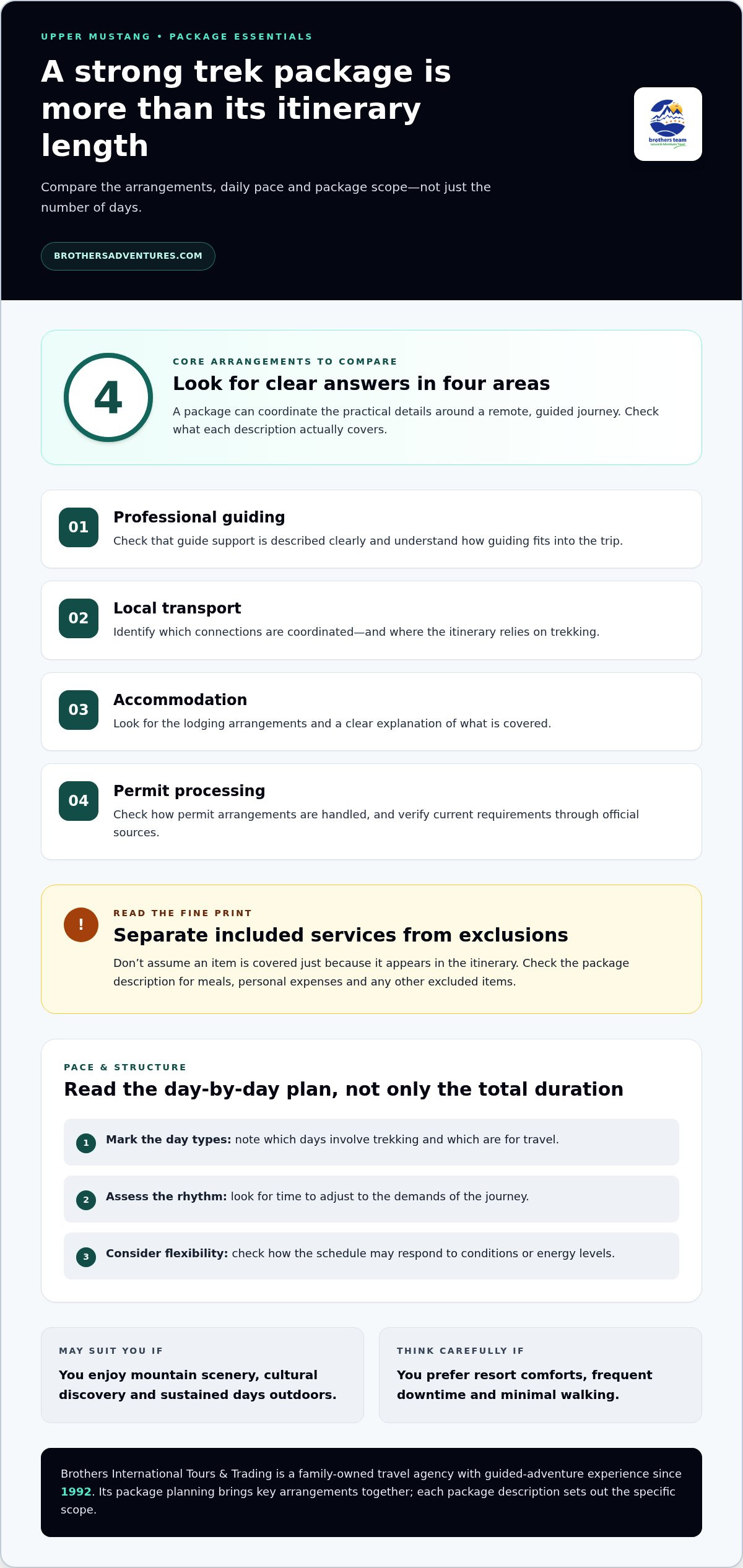
Package descriptions can use similar language while covering different arrangements. Compare the practical details, not just the headline itinerary. A clear Upper Mustang trek package should explain how guiding, transport, accommodation and permit processing fit into the journey, then distinguish those services from anything travellers arrange or pay for separately.
Use this checklist to assess each package description:
- Guiding: Look for professional guide support and a clear explanation of how guiding fits into the trip.
- Local transport: Identify which transport arrangements are coordinated and where the itinerary relies on trekking.
- Accommodation: Check what lodging arrangements are described and whether the package explains what is covered.
- Permit processing: Look for a clear account of how permit arrangements are handled. For current travel guidance, refer to the official Nepal tourism guidelines.
- Inclusions and exclusions: Separate services covered by the package from meals, personal expenses or other excluded items. Don’t assume something is included just because it appears in an itinerary.
Brothers International Tours & Trading’s guided adventure packages bring professional guides, local transport, accommodation and permit processing together within the package price. This coordinated approach covers key arrangements; the individual package description explains its specific scope.
If you’re exploring different styles of supported travel, explore guided adventure journeys to see how coordinated package planning can support an adventure.
How to compare itinerary structure and daily pace
Read the day-by-day plan rather than judging by total length alone. Note which days involve trekking and which are for travel, and look for time to adjust to the demands of the journey. Consider whether the schedule allows flexibility if conditions or energy levels affect the day. Itineraries vary, so focus on whether the pace and structure suit your needs rather than treating one schedule as a universal standard.
Which services make remote trekking easier to manage?
Professional guides support guided exploration, while coordinated local transport connects the different parts of a remote itinerary. Accommodation planning structures overnight stays, and permit processing brings an important administrative task into the package arrangements. Brothers International Tours & Trading has operated as a family-owned travel agency since 1992, bringing these services together in its guided adventure packages. Compare how each element is described to understand the practical support behind the scenery.
How to Compare Upper Mustang Trek Packages Without Fixating on Duration
A trip’s total number of days tells you how much time it takes, but not how that time is used. One itinerary may devote more days to trekking, while another includes more travel time or a different daily rhythm. Compare the structure and support behind each option before deciding whether its length suits your available leave and travel style.
Use this table to assess package descriptions side by side. If a detail isn’t explained, mark it as a comparison gap rather than assuming it’s included.
| Factor | What to compare | Why it matters |
|---|---|---|
| Duration | Total trip days, and how trekking and travel days are counted | Two packages with similar lengths can allocate time very differently. |
| Daily pace | How each day is structured, including walking and rest opportunities | A manageable rhythm can matter more than fitting in the most stops. |
| Guiding | How guide support is described throughout the journey | Clear details help you understand the support you can expect. |
| Transport | Which local transport arrangements are coordinated | Transport can shape how travel days connect with trekking days. |
| Accommodation | What overnight arrangements are covered in the description | This helps you compare the package’s practical comfort and scope. |
| Permit handling | Whether permit processing is described as part of the arrangements | It clarifies who is handling this important planning element. |
Longer doesn’t automatically mean safer, more comfortable or better value. Extra days may allow a different pace, but only if the itinerary uses them in a way that matches your needs. A shorter schedule isn’t necessarily more efficient if it leaves little room for rest or flexibility. Compare services and the daily plan, then weigh them against your available time.
Which package details deserve the closest comparison?
Start with service scope and pace, then examine the headline duration. Look at how travel days, overnight arrangements and guide support are described across the itinerary. For example, two plans might list the same number of days but differ in how much time is spent walking versus travelling. Note vague or missing details as gaps, not proof that a service is included. A related Everest Base Camp trek cost planning guide offers another way to think through package planning, with attention to the elements behind the headline figure.
How should travellers balance comfort, time, and experience?
Match the schedule to your fitness, available leave and preferred travel rhythm. If you enjoy unhurried days, a plan with more breathing room may suit you better than a tightly packed itinerary. Flexibility can change the feel of a multi-day trek by giving the schedule more room to adapt, though the package description should explain what flexibility means in practice. There’s no single best format for everyone. Choose a balance that lets you engage with the journey without treating every day as a race.
How to Prepare for an Upper Mustang Trek Package
Good preparation turns a big Himalayan ambition into a series of manageable decisions. Start early, work through the practical steps in order, and leave room to verify details that can change. A package may coordinate key travel arrangements, but your readiness, health considerations and understanding of the itinerary still deserve careful attention.
- Assess your readiness. Consider your experience with sustained walking, how you respond to long active days and whether the planned pace feels realistic. Build fitness gradually with regular walks and varied terrain, then review the itinerary’s walking and travel days.
- Review current permit information. Restricted-area arrangements can change. Verify the latest permit requirements through official sources during your planning, rather than relying on old package descriptions or informal summaries. Permit processing can be part of coordinated package planning, but it isn’t a promise of approval.
- Plan timing with the route in mind. Compare proposed dates with current route and seasonal information, and allow enough time for the full itinerary, including travel days. Don’t choose dates based only on a convenient calendar window if the route details don’t suit your plans.
- Organise your essentials. Review the package description for what is covered, then prepare for remaining needs. Think through clothing layers, footwear, personal medication and documents relevant to your travel arrangements. Keep important information accessible and plan for the possibility of limited conveniences in remote areas.
“Verify permit and route details against current official guidance, because outdated information can leave even a carefully planned trek out of step with conditions.”
What should travellers understand about permits?
Permit rules and processing arrangements may change, so check current requirements with official sources rather than treating a past itinerary as definitive. Revisit the guidance as your plans take shape, and note where the information came from and when you reviewed it. In a package, permit processing is a logistical consideration that can be coordinated alongside other arrangements; it shouldn’t be presented as guaranteed approval.
How can trekkers prepare for altitude and remote conditions?
Build stamina progressively with regular walks that increase in duration, and include varied terrain where practical. This can help you prepare for sustained activity, but no training plan can guarantee protection from altitude-related illness. If you have health concerns or questions about trekking at altitude, discuss your personal circumstances with a qualified clinician before travelling.
Set expectations for remote conditions, too. Convenience, services and connectivity may differ from what you’re used to at home, so think ahead about communication, daily essentials and managing without constant access to familiar amenities. Read the itinerary carefully and use its route details to guide your preparation rather than assuming every day will feel alike. Brothers International Tours & Trading brings professional guides, local transport, accommodation and permit processing together within its guided adventure packages. Explore guided adventure planning as you shape a journey that fits your readiness and travel goals.
Plan Your Upper Mustang Trek with Brothers’ Guided-Package Experience
Planning a remote Himalayan trek means bringing several moving parts into a coherent journey. Brothers International Tours & Trading is a family-owned travel agency established in 1992, with guided adventure packages across Nepal and other Asian destinations. Its experience coordinating package arrangements gives travellers a practical foundation as they plan an ambitious trek.
A guided package can bring professional guides, local transport, accommodation and permit processing together within the package price. For a journey with multiple travel elements, that coordination reduces the work of organising each piece separately and gives you a clearer framework for assessing whether the itinerary’s pace and arrangements suit your plans.
What does a guided package bring together?
Each service has a distinct role. Professional guides support guided exploration, local transport connects travel arrangements, accommodation provides for overnight stays, and permit processing helps manage an important planning task. Bringing these elements into one coordinated itinerary can make the logistics easier to follow, particularly for travellers planning a multi-day Himalayan trek. The specific route and duration depend on the journey being planned.
Coordination matters because these arrangements affect one another. The sequence of travel and trekking days shapes where overnight stays fit, while permit processing is part of the broader preparation. Seeing the elements together helps you understand the overall plan instead of piecing together disconnected details. It doesn’t remove the demands of remote travel, but it can make the planning picture easier to navigate.
How to take the next step with confidence
Before choosing an itinerary, jot down your preferred pace, the cultural or landscape experiences that interest you, and how much time you can set aside. Then compare those priorities with the itinerary structure and package services. Look for a clear picture of what arrangements are covered and how the days fit together. A slower rhythm may appeal to one traveller, while another may prioritise making the most of limited leave.
Use those preferences to shape a journey that feels considered rather than rushed. Brothers’ family-owned approach pairs long-standing travel experience with coordinated guided-package services, helping turn a complex set of arrangements into a clearer plan. Start with what matters most to you, then explore the possibilities at a comfortable pace.
Explore guided journeys with Brothers and begin shaping a trekking plan around your interests, preferred pace and available travel time.
Take the Next Step Towards Upper Mustang
Let your first planning decision be about the kind of experience you want. Do you picture measured days with time to take in the landscape, or a brisker rhythm that makes the most of your available leave? What cultural encounters matter to you? Clear answers will help you assess whether an Upper Mustang trek package fits your interests and shape a journey around more than a checklist of stops.
Keep your plans flexible as you refine them. Route details and permit requirements deserve current attention, while your preferred pace and readiness should guide itinerary planning. With the right questions in hand, planning becomes less about chasing a supposedly perfect schedule and more about finding a thoughtful way into a remarkable region.
Brothers brings a personal approach to guided adventure planning, helping travellers consider how the moving parts of a Himalayan journey fit together. Take the next step at your own pace and start exploring what could suit you.
Explore guided journeys with Brothers, and begin shaping an adventure that feels right for you.
Frequently Asked Questions
Is an Upper Mustang trek package suitable for first-time Himalayan trekkers?
It can be, depending on your fitness, health, response to altitude, itinerary pace and prior walking experience. A first-time trekker who already enjoys long walks may feel differently from someone new to sustained activity. Assess your readiness honestly, and discuss personal health concerns with a qualified clinician before deciding. A guided package can organise logistics, but it can’t remove the physical demands of trekking or guarantee how you’ll respond to altitude.
Can you trek in Upper Mustang without a guide?
Don’t assume independent trekking is permitted. Upper Mustang access rules for restricted areas can change, so verify current requirements with official Nepal authorities before making plans or relying on older travel information. A guided package can coordinate trip planning and permit processing as part of its arrangements, but that doesn’t promise permit approval. Check that the rules you’re using apply to your travel dates and intended way of exploring the area.
How much does an Upper Mustang trek package cost?
There isn’t one price that applies to every Upper Mustang trek package. The total depends on factors such as itinerary length, travel logistics, accommodation, guiding and the services included. Compare written inclusions and exclusions before weighing headline figures: two packages may cover different arrangements, even if their itineraries appear similar. Consider what you would need to organise separately, too, so you can judge the full scope of each option without relying on assumptions.
What is the best time of year for an Upper Mustang trek?
There isn’t a universally ideal season for every traveller, and seasonal conditions can affect weather, trail experience and travel arrangements. Before selecting dates, check authoritative, up-to-date guidance on conditions along your intended route. Then weigh that information against your preferred pace, available travel time and itinerary. A season that suits one traveller’s priorities may not suit another’s, so use current guidance to make a considered choice rather than relying on a blanket recommendation.
Can I visit Upper Mustang without completing a multi-day trek?
Possibly, but don’t assume a particular alternative route or access arrangement without checking current details. The way you visit still affects transport planning, permits and how much of the area you can experience. Start by deciding whether you want sustained walking or a different style of exploration, then verify route and access information against reliable, current sources. This helps you shape realistic expectations without treating a trekking itinerary as the only possible format.
What should I pack for an Upper Mustang trek?
As a starting point, consider layered clothing, broken-in walking footwear, sun protection, personal medication and a daypack. These are general trekking essentials, not a complete destination-specific packing list. Your final choices depend on the season, itinerary and current conditions, so avoid packing solely from a generic checklist. Review the final itinerary’s practical advice before departure, and make sure footwear has been worn on walks beforehand rather than saved for the trail.
Are accommodation and meals always included in an Upper Mustang trek package?
No, inclusions can vary, so read the package’s included and excluded sections carefully. Brothers’ general package services include accommodation, but that alone doesn’t establish specific lodging arrangements or meal coverage for an Upper Mustang itinerary. Look for written details about what the package covers and what you’ll need to arrange separately. This gives you a clearer basis for comparing the full scope of different journeys without assuming meals or accommodation are automatically included.

Comments are closed