


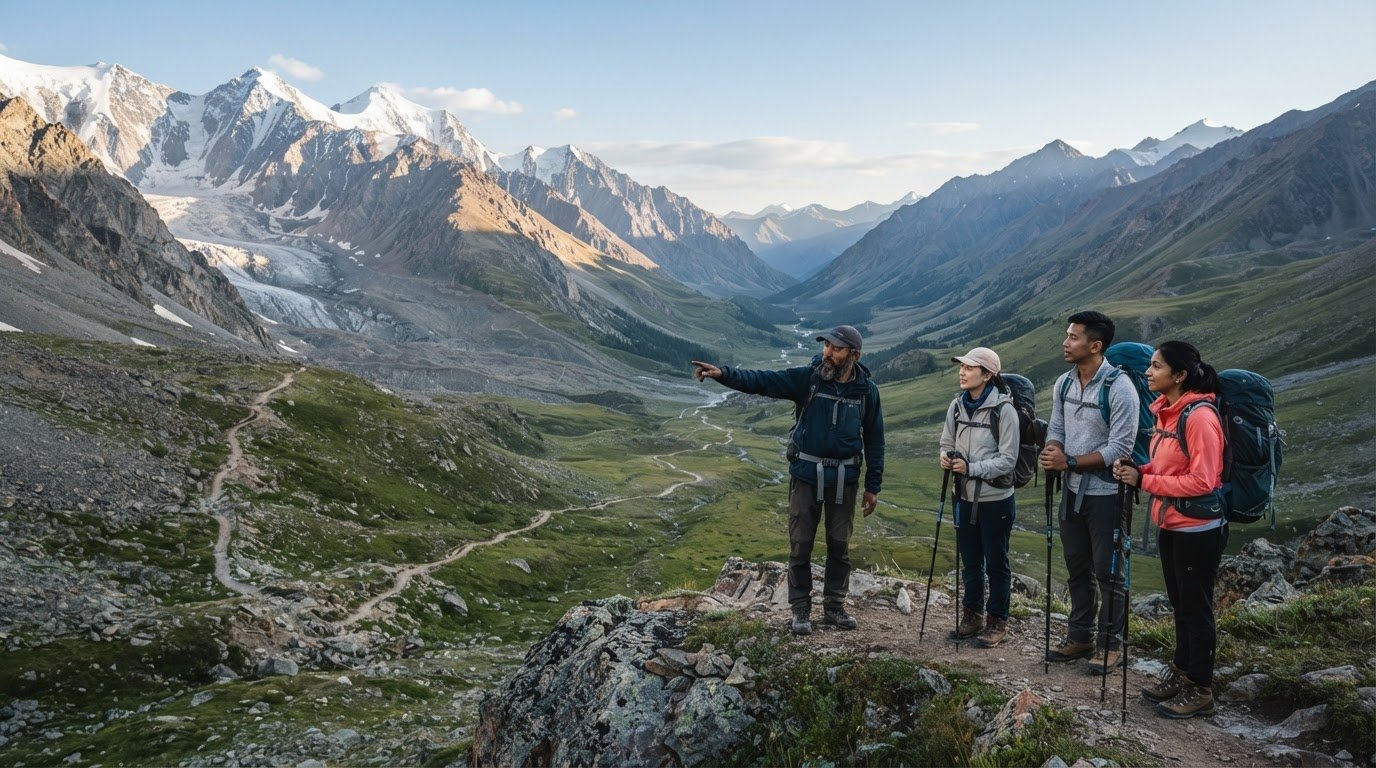
Tian Shan Trekking Expedition: How to Choose Your 2026 Adventure
The most dramatic Tian Shan trekking expedition isn’t automatically the best fit. A route with high passes and remote camps can be thrilling, but a gentler trek may suit you better if you’re building confidence at altitude or want more time to enjoy the scenery. Compare daily walking demands, remoteness, accommodation and the support included, not just the route on a map.
Comparing routes across Kazakhstan and Kyrgyzstan can feel daunting, especially when trekking and technical climbing are sometimes discussed together. Start with your walking experience, comfort with altitude and preferred pace. This guide explains how to compare expedition styles, assess terrain and prepare for a guided journey. It also clarifies how a regional itinerary, such as the 10Days Beauty of Kazakhstan & Kyrgyzstan tour, differs from a dedicated trekking route, and how custom planning can help focus a trip around your travel priorities.
Key Takeaways
- Match route scenery, remoteness and daily walking demands to the kind of mountain journey you want.
- A Tian Shan trekking expedition can involve multi-day hiking without the technical skills required for a summit climb.
- Compare trip duration, group format, guiding, transport, accommodation and permit arrangements before choosing a package.
- Use your walking experience, fitness, altitude readiness and comfort with remote settings to assess which trek suits you.
- Guides and coordinated logistics can simplify planning for a remote journey, while a tailored itinerary can reflect your travel priorities.
What makes a Tian Shan trekking expedition different from a standard trek?
The Tian Shan is a major Central Asian mountain system that crosses several countries and includes a wide range of elevations and landscapes. Its scale matters when you plan a trek: one route may follow an accessible valley, while another ventures into remote high country. Those choices affect daily walking demands and the support you may need. The Tian Shan mountain range overview provides a broader picture of the range’s geography and peaks.
Compared with a familiar, well-serviced trail, an expedition-style journey may involve several days on foot, changing terrain and fewer facilities along the way. A trekking expedition is a multi-day journey through mountain terrain; a technical climbing trip adds a summit objective that may require mountaineering skills and equipment. The distinction is useful, but the word expedition alone doesn’t tell you how strenuous a trip will be.
Where the Tian Shan trekking experience unfolds
Kyrgyzstan and Kazakhstan are useful starting points for comparing routes, but neither offers just one kind of Tian Shan experience. Around Kyrgyzstan’s Issyk-Kul, the lake and surrounding mountains provide geographic context, not a standard trekking itinerary. Elevation, access, scenery and facilities vary by route. Compare the actual journey rather than relying on a country name or a familiar landmark.
The Western Tian-Shan UNESCO area is another point of reference. This protected landscape extends across Kazakhstan, Kyrgyzstan and Uzbekistan, while the mountain system itself reaches farther. The range includes broad valleys, alpine scenery and more isolated terrain. Access and conditions depend on the route and current circumstances.
Trekking expedition or technical climbing trip?
A walking-focused itinerary is built around covering ground on foot. Its challenge depends on altitude, duration, terrain and conditions. A technical summit objective is different: it may involve climbing rather than hiking alone, and can call for specialist equipment and mountaineering experience. Read the itinerary’s activities and objectives carefully instead of assuming every high-mountain trip is a climb.
Use these distinctions when comparing descriptions:
- Trekking: The main activity is walking along a route, though steep, uneven or high-altitude sections can still be demanding.
- Technical climbing: The itinerary includes a climbing objective beyond ordinary trail walking.
- Mixed adventure: The programme may combine trekking with other activities, so assess each part separately.
There’s no universal experience threshold that suits every route. Match your walking background and comfort with altitude to the trip’s daily demands, remoteness and support arrangements. A shorter walk from a base and a long journey over high passes are not interchangeable, even if both are described as treks. Choose based on the actual terrain and objectives, then prepare for that journey.
Compare Tian Shan routes by scenery, remoteness, and trekking style
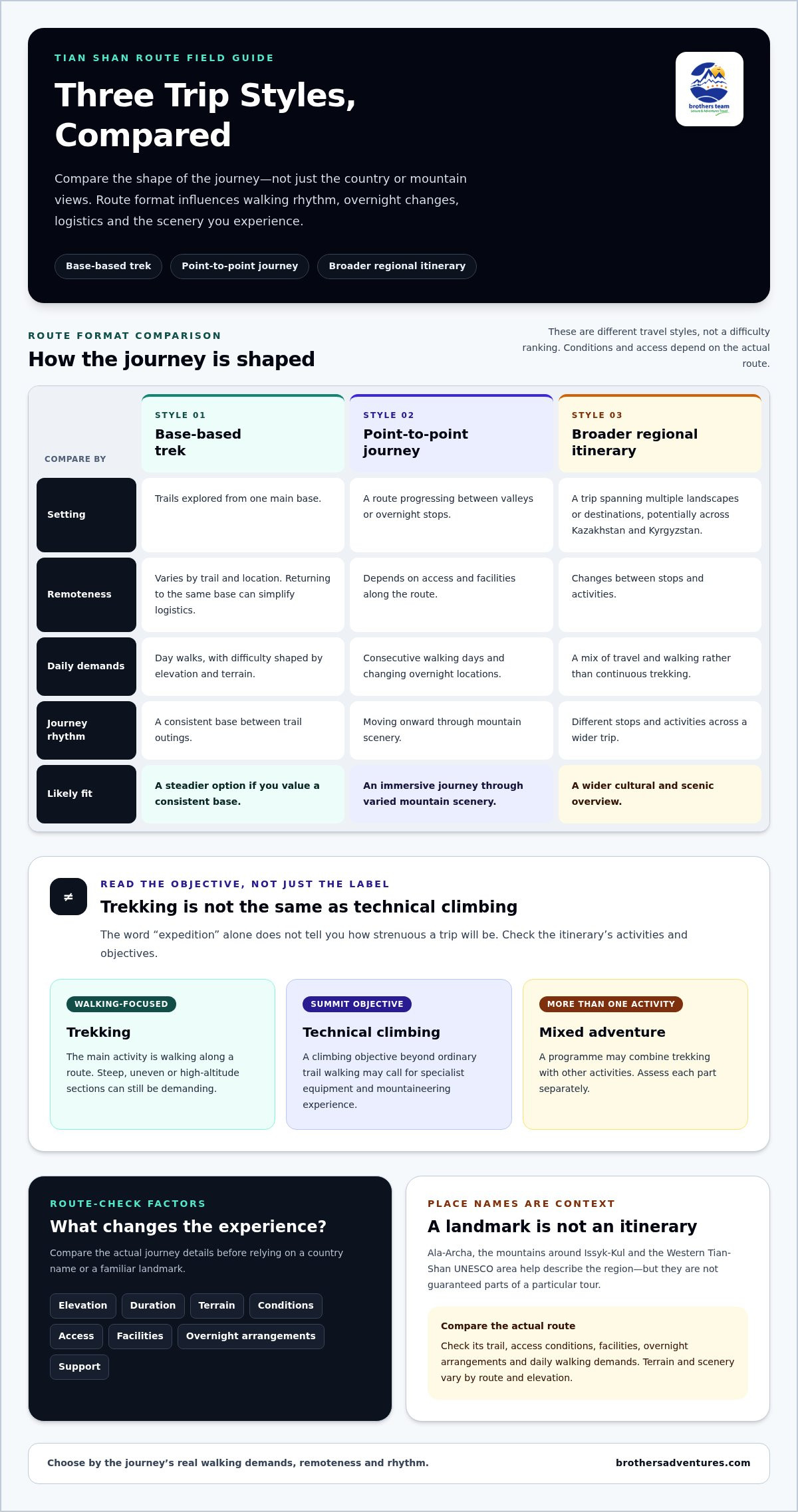
Compare the shape of the journey, not just the country or mountain views. Some trips use one base for day hikes; others move between valleys or combine destinations. The format affects how much time you spend walking, how often you change accommodation and how much ground you can explore. Access and conditions also vary, so treat place names as starting points for comparison, not promises about a particular itinerary.
Route choice shapes your pace, logistics and scenery. Use this comparison to identify the style that best suits your priorities:
Base-based trek
Setting: Trails explored from one main base.
Remoteness: Varies by trail and location; returning to the same base can simplify logistics.
Daily demands: Day walks, with difficulty shaped by elevation and terrain.
Likely style: A steadier option if you value a consistent base.
Point-to-point journey
Setting: A route progressing between valleys or overnight stops.
Remoteness: Depends on access and facilities along the route.
Daily demands: Consecutive walking days and changing overnight locations.
Likely style: An immersive journey through varied mountain scenery.
Broader regional itinerary
Setting: A trip spanning multiple landscapes or destinations, potentially across Kazakhstan and Kyrgyzstan.
Remoteness: Changes between stops and activities.
Daily demands: A mix of travel and walking rather than continuous trekking.
Likely style: A wider cultural and scenic overview.
Kyrgyzstan routes: alpine scenery and remote valleys
Ala-Archa and the mountains around Issyk-Kul are geographic reference points, not guaranteed parts of a particular tour. Trail areas near established access points can differ from longer journeys into remote valleys, where transport, facilities and daily planning become more important. Scenery also changes with elevation and route. Before choosing a trek, compare its actual trail, overnight arrangements and access conditions rather than assuming all routes in Kyrgyzstan share the same character.
Kazakhstan routes: choose by access and landscape
Kazakhstan’s Tian Shan areas also vary in terrain and trail access, so a focused trek and a wider cross-border itinerary serve different goals. A dedicated walking route prioritises time on the trail; a regional journey can offer broader scenery and cultural variety, with less of the trip necessarily spent trekking. The Western Tian Shan UNESCO World Heritage Site highlights the region’s ecological richness, while the 10Days Beauty of Kazakhstan & Kyrgyzstan is a regional travel option, not a named trekking route.
For a wider planning perspective, explore this Central Asia travel and tour operator guide. Then weigh trail time against the appeal of visiting more than one destination. Travellers planning around particular landscapes and walking preferences can also explore a custom Central Asia itinerary.
How to compare Tian Shan expedition packages before you choose
A headline or trip duration won’t tell you whether a journey suits your walking experience. Compare the route, daily rhythm and practical support together. A few extra days might mean more walking, or they might allow time to travel between trail areas. Review the day-by-day plan before deciding that one package is easier or better value.
Use this checklist to compare the essentials:
- Route: Identify the start and end points, terrain, altitude changes and whether the journey returns to a base or moves between overnight stops.
- Duration and pacing: Count the walking days, rest periods and travel days. Consider whether the schedule offers the rhythm you want, not just the total number of days.
- Group format: Check whether the trip is private or shared, and how the group arrangement may affect flexibility and pace.
- Guiding: Understand what professional guide services cover and how they support the planned route.
- Logistics: Review the package description for local transport, accommodation and permit processing, and note how each fits into the journey.
Inclusion details show how a trip is organised from one stage to the next. A package may include professional guides, local transportation, accommodation and permit processing, but inclusions vary. Read the specific itinerary rather than assuming every listed element applies. The Tian Shan geology and climate offers useful context for the differences in landscapes and conditions across the range.
What the itinerary and group format tell you
Look for walking days, rest periods, elevation changes and overnight arrangements. Together, these details show whether the schedule is steady or concentrated, and how much time is spent travelling between places. A private format may allow more flexibility in how a group travels, while a shared group follows a common plan. Choose the rhythm that suits your experience and preferences.
How to assess guiding and trip logistics
Professional guiding provides route-focused support, while local transportation connects the journey’s different stages. Accommodation arrangements and permit processing are also important planning details, particularly for travel in remote areas. Clear descriptions help you understand how these elements fit together. If an itinerary includes a summit objective and technical climbing, treat it as a different kind of adventure; this Island Peak climbing package guide explores that distinction.
Brothers International Tours & Trading Pte Ltd has designed guided adventure and leisure trips across South and Central Asia since 1992. Its Kazakhstan and Kyrgyzstan tour offers a regional travel option, while custom itineraries can be shaped around travel preferences and experience. Explore custom Central Asia travel planning as you narrow down your plans.
Is a Tian Shan trekking expedition too remote or demanding for you?
It depends on the itinerary, your preparation and the support arranged for the journey. One trek may involve day walks from an established base; another may mean consecutive days on uneven ground, higher elevations and limited access to facilities. A single difficulty label can’t capture those differences. Assess readiness against the actual walking days, altitude and remoteness, rather than relying on a general trek rating.
Use this four-step check to identify what you’re ready for and where you may need more preparation:
- Walking experience: Have you completed multi-day walks, or mostly shorter outings? Consider how you handle consecutive days on your feet and varied terrain.
- Fitness: Think about the route’s daily distances, elevation changes and any carrying requirements. Gradual training and longer practice walks can help you understand your comfort and pace.
- Altitude: Find out how high the itinerary goes and how it allows time to adjust. People respond differently to altitude, so don’t assume a previous experience predicts your response on another trip.
- Remoteness: Consider your comfort with fewer facilities, patchy phone signal and changes to plans if conditions shift. Review the itinerary’s support and communication arrangements.
Assess your trekking experience and physical readiness
Look beyond whether you can manage one long walk. Consecutive days, steep or uneven sections and carrying personal items can feel different from a day hike. Build familiarity gradually with longer practice walks and the kind of terrain you expect. If you have health concerns or questions about strenuous activity, discuss them with a qualified medical professional before travelling.
Plan for altitude, weather, and changing conditions
Altitude and weather vary with route, elevation and season, so readiness for one itinerary doesn’t automatically transfer to another. Review the planned acclimatisation approach and how guides respond if conditions change or someone feels unwell. No acclimatisation schedule can guarantee how you’ll feel. Seek current safety guidance and official travel advisories during planning, and use qualified medical advice for personal altitude concerns.
For a remote journey, practical support can make planning clearer. Guided trips may coordinate professional guides, local transport, accommodation and permit processing. Brothers International Tours & Trading Pte Ltd designs guided trips across South and Central Asia, and custom itinerary planning can align a journey with your experience and preferred pace. Explore a tailored Central Asia itinerary as you consider which adventure suits you.
Plan your Tian Shan trekking journey with experienced trip support
A memorable mountain journey starts with a clear brief. Decide what matters most: sweeping alpine views, time in remote valleys, a gentler walking rhythm or a wider look at Central Asia. Then describe your trekking experience, preferred pace and support needs. These details help turn a broad idea into a considered itinerary, while keeping the route’s actual conditions in view.
Match your priorities to a guided Central Asia itinerary
Brothers International Tours & Trading Pte Ltd is a family-owned travel company that has designed guided adventure and leisure trips across South and Central Asia since 1992. Its custom itineraries can be shaped around traveller priorities. A package can include professional guide services, local transportation, accommodation and permit processing, coordinating important parts of a multi-day journey.
Make your preferences practical. A useful itinerary brief might cover:
- Scenery: The mountain landscapes and cultural experiences you hope to prioritise.
- Pace: How much walking you want, your preferred rhythm and whether you want time between demanding days.
- Experience: Your previous walking background and comfort with altitude or remote settings.
- Support: The guiding and logistical arrangements that would help you travel with confidence.
The 10Days Beauty of Kazakhstan & Kyrgyzstan is a regional travel option, not a named trekking route. It offers a starting point for considering a broader journey across the two countries, while custom planning can reflect your travel priorities without assuming a specific route.
Take the next step toward your expedition
Bring together three decisions: the route style and scenery you prefer, the daily demands that fit your experience, and the practical support you want. Then review how the itinerary handles guiding, local transportation, accommodation and permit processing. A clear view of these elements makes it easier to judge whether a proposed journey fits your goals.
A Tian Shan trekking expedition can be an immersive walking journey or part of a broader Central Asian adventure. Find the right fit by aligning route and pace with your readiness, then shaping the trip around the places and experiences you value most.
Ready to turn your ideas into a considered Central Asia journey? Explore Central Asia journeys with Brothers Adventures.
Turn your mountain ambitions into a journey
Your ideal Tian Shan trekking expedition doesn’t need to be the most demanding route on the map. It should offer the experience you’re excited to prepare for, whether that means quiet valley walks, big alpine views or a broader journey through Central Asia. Let that vision guide your planning.
Write down what you most want to see and experience on the trail, then use it to shape your travel plans. A thoughtful itinerary can balance your ambitions with your comfort level, leaving room for the changing light, wide horizons and sense of distance that make a mountain journey memorable.
Ready to explore what your journey could look like? Explore Central Asia journeys with Brothers Adventures and take the first step towards an adventure that feels like yours.
Frequently Asked Questions
Is the Tian Shan part of the Himalayas?
No. The Tian Shan is a separate mountain system in Central Asia, while the Himalayas lie farther south. The ranges belong to Asia’s wider mountain geography, but they’re distinct destinations with different landscapes and trekking areas. For trip planning, focus on the specific country and route rather than treating “high mountains” as one interchangeable region. Kazakhstan and Kyrgyzstan both provide access to parts of the Tian Shan.
Can you trek in the Tian Shan without technical climbing experience?
Yes, many walking-focused routes don’t have a technical summit-climbing objective, so mountaineering experience may not be needed. That doesn’t mean every trek is easy: elevation, uneven trails, consecutive walking days and isolation can make a route demanding. Check whether the itinerary is built around hiking or includes a climb, and consider the route’s actual conditions. A climbing objective may require specialist skills and equipment beyond ordinary trekking.
How many days should I allow for a Tian Shan trekking expedition?
There’s no single ideal duration; it depends on the route, walking days and travel between trail areas. A short trek from one base needs a different schedule from a point-to-point journey with overnight stops. Allow time for getting to and from the mountains as well as the walk itself. Use the day-by-day plan to judge whether the pace of a Tian Shan trekking expedition leaves enough room for your priorities.
Do I need a visa to trek in Kazakhstan or Kyrgyzstan?
Visa requirements depend on your passport and planned stay, so check official government guidance before booking. From January 1, 2026, citizens of 55 countries can enter Kyrgyzstan visa-free for up to 30 days within any 60-day period; don’t assume this applies to every nationality. Kazakhstan’s entry rules also vary by passport, and its QazETA requirement for previously visa-exempt nationalities is scheduled to start November 1, 2026. Verify current rules before departure.
What happens if weather changes during a Tian Shan trek?
Plans may need to change if conditions make a trail or pass unsuitable on the day. The itinerary and guide’s judgement should take priority over sticking rigidly to a schedule. Before setting out, understand how route decisions are made and what alternatives may be possible, such as adjusting the day’s walking plan. Mountain weather can differ by elevation and location, so bring suitable clothing and follow current local guidance.
How much does a guided Tian Shan trekking expedition cost?
There isn’t one standard price for a guided trek, and a cost range from other operators shouldn’t be treated as a quote for a particular package. The route, trip length, group arrangement and included services all affect what you’re comparing. Review the itinerary’s stated inclusions, such as guiding, local transport, accommodation and permit processing, then compare the full package scope rather than headline price alone. Custom itineraries are shaped around traveller priorities.
What is the highest point on a Tian Shan trekking route?
There isn’t one highest point shared by all Tian Shan trekking routes; the elevation depends on the itinerary and the passes or viewpoints it reaches. Don’t confuse a trek’s high point with the range’s highest summits. Pobeda Peak, also known as Jengish Chokusu, rises to 7,439 metres, but that figure describes a mountain summit, not a typical trekking waypoint. Use the route’s own elevation profile to understand its demands.



Comments are closed