


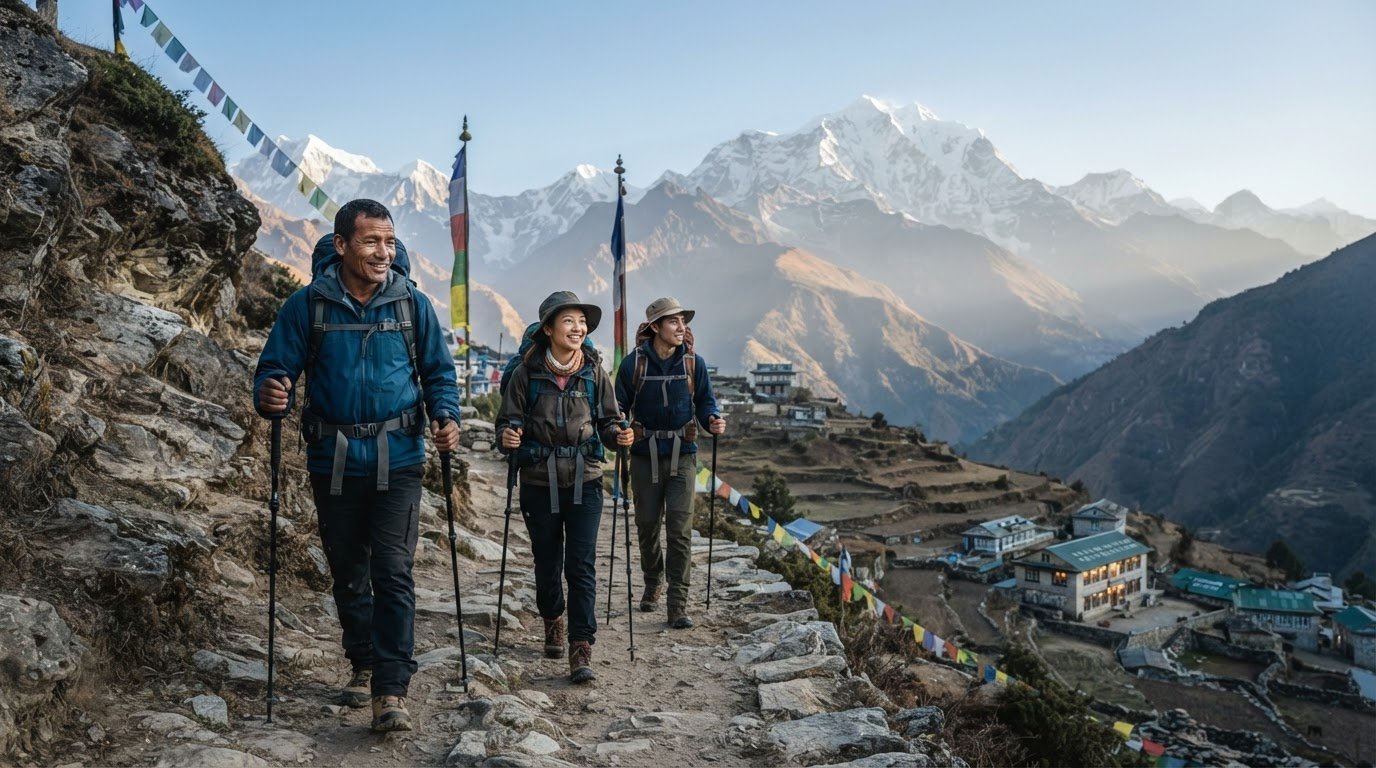
What to Expect on a Guided Trek in Nepal: The Complete 2026 Traveler’s Guide
What if the best part of a Himalayan trek isn’t simply reaching the viewpoint, but knowing someone experienced is helping you get there safely? A guided trek Nepal journey brings practical questions about altitude, permits, meals, and mountain lodges into one organized plan, leaving you more time to take in the snow-bright peaks and village life along the way.
If you’re wondering what a guide actually does, or whether guided trekking is worth choosing over going solo, look beyond the trail map. For foreign trekkers, a licensed guide is mandatory on national park and conservation area treks in 2026. Local support can also help make each day more manageable, especially when plans, altitude, or remote conditions call for careful decisions.
This guide covers what to expect from arrival in Nepal to the final steps of your trek, including permits and logistics, altitude safety, food and accommodation, and respectful ways to connect with local communities. Brothers International Tours & Trading Pte Ltd is a family-owned travel agency that designs and operates guided trekking packages, helping you approach iconic routes with local knowledge and a well-planned itinerary.
Key Takeaways
- See how guides coordinate navigation, safety, and day-to-day logistics, and how teahouse treks differ from camping expeditions.
- Learn why permit requirements vary by route and what to expect from basic mountain lodge stays.
- Compare guided and solo trekking to weigh the practical value of local support, especially when plans or conditions change.
- Match your fitness, hiking experience, and available time to a route, from a shorter mini trek to Everest Base Camp.
- Discover how a guided trek Nepal experience can bring you closer to mountain communities while helping your journey run more smoothly.
What to Expect on a Guided Trek in Nepal: A 2026 Overview
A guided trek Nepal experience brings the moving parts of a Himalayan journey together: route planning, local knowledge, safety awareness, and practical coordination from one day to the next. Your guide can help you focus on the changing mountain scenery and the people who call these valleys home, rather than managing every trail decision alone. A guide provides support, but the route, altitude, and weather still call for preparation and sound judgment.
Your trek leader is more than a pathfinder. They help set a sensible pace, explain local customs, coordinate daily arrangements, and respond thoughtfully when weather, trail conditions, or how someone is feeling calls for a change of plan. In 2026, foreign trekkers on national park and conservation area routes are required to trek with a licensed guide affiliated with a government-registered agency.
Most visitors choose between two styles. On a teahouse trek, you walk between villages and stay in local mountain lodges. This makes it easier to experience settled valleys and everyday village life. A camping expedition arranges tents and camp operations, which can support routes with fewer lodges or more remote overnight stops. Routes vary widely: the Great Himalaya Trail, for example, crosses diverse landscapes and communities, so its challenges and support needs differ from those of a shorter, established trek.
The Core Components of a Guided Package
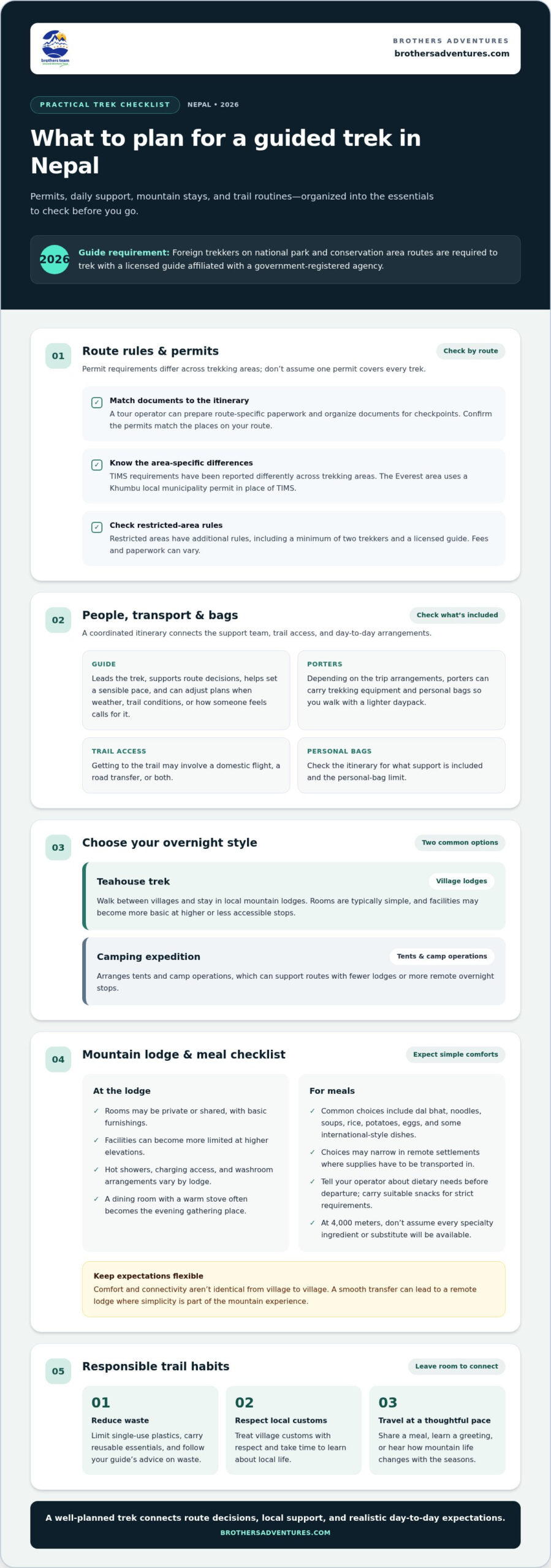
A well-coordinated itinerary connects people, transport, and overnight arrangements. A professional guide leads the trek and supports route decisions. Depending on the trip arrangements, porters can carry trekking equipment and personal bags, leaving you to walk with a lighter daypack. Check the itinerary for the support included and the personal-bag limit.
Getting to the trail may involve a domestic flight, a road transfer, or both. At the end of each walking day, there are practical details to consider: where you’ll sleep, what meals are available, and how supplies are managed. Teahouse rooms are typically simple, and facilities can become more basic at higher or less accessible stops. Meal choices vary too, so expect local staples rather than the range of a city restaurant. Your package itinerary sets out the arrangements included for the trek.
Why 2026 Is the Year for Himalayan Exploration
Established trekking areas continue to develop their visitor infrastructure, but comfort and connectivity aren’t identical from village to village. Set realistic expectations: a smooth transfer can lead to a remote lodge where simplicity is part of the mountain experience.
Responsible trekking includes reducing waste, limiting single-use plastics, and supporting local communities. Carry reusable essentials, follow your guide’s advice on waste, and treat village customs with respect. Slow travel fits naturally here. Take time to share a meal, learn a greeting, or hear how mountain life changes with the seasons. A shorter itinerary such as the 8Days Scenic Nepal Mini Trek can offer a taste of trekking without rushing every moment. The best journey leaves room to notice the Himalayas, not just pass through them.
Behind the Scenes: The Logistics of a Professional Himalayan Expedition
A Himalayan trek involves more than booking a room and following a trail. Permits, transport, bags, meals, and changing conditions all need to line up, often in remote areas with limited services. On a guided trek Nepal itinerary, good logistical planning helps you spend less time solving problems on the move and more time enjoying the journey.
Navigating Permits and Paperwork
Permit requirements depend on the route, and Nepal’s systems can be confusing to research from abroad. TIMS requirements have been reported differently across trekking areas, while the Everest area uses a Khumbu local municipality permit in place of TIMS. Restricted areas have additional rules, including a minimum of two trekkers and a licensed guide. Fees and paperwork can vary, so don’t assume one permit covers every trek.
A knowledgeable tour operator matches paperwork to your itinerary, prepares the relevant documents, and organizes what you need at checkpoints. Requirements differ by route and may change, so confirm that the permits in your itinerary match the places you plan to visit. For route updates and official travel information, consult the Nepal Tourism Board official website. Remote valleys call for especially careful preparation: permit planning depends on knowing where each requirement applies, not just which forms to prepare.
Mountain Life: Food and Accommodation
Teahouses are working village lodges, not uniform hotels. Expect a simple private or shared room, basic furnishings, and facilities that can become more limited at higher elevations. A dining room with a warm stove often becomes the social heart of the evening. Hot showers, charging access, and washroom arrangements vary by lodge, so pack essentials and be ready for simpler comforts as the trail climbs.
Menus commonly include dal bhat, noodles, soups, rice, potatoes, eggs, and some international-style dishes. Choices may narrow in remote settlements, where supplies have to be transported in. Tell your operator about dietary needs before departure, and carry suitable snacks if you have strict requirements. At 4,000 meters, don’t assume a lodge can provide every specialty ingredient or substitute.
Porters, Bags, and the Trail Routine
Porters can make multi-day trekking more manageable by carrying assigned luggage, but ethical porterage means respecting safe loads and allowing for local conditions. Check the itinerary for a clear personal-bag limit rather than treating a porter’s capacity as unlimited. Keep your valuables, medication, documents, water, and warm layers in your own daypack.
Before the trek, the team identifies and labels the bag that will travel separately from your daypack, then arranges its transfer toward the trailhead. This may involve road transport or a domestic flight. At the trekking start, porter-carried bags are organized for the walking route, while you keep your daypack with you. Keep a small set of essentials accessible in case the main luggage is delayed. Brothers International Tours & Trading Pte Ltd coordinates guiding, local transportation, accommodation, and permit processing within its trekking packages, helping connect the travel arrangements with each day on the trail.
Guided vs. Solo Trekking: Comparing Safety, Support, and Success Rates
On a Himalayan trail, reaching a destination isn’t simply a test of determination. Weather, trail conditions, acclimatization, and how your body responds to altitude all shape the outcome. There’s no reliable success rate that applies to every trekker or operator, and a guide can’t promise a particular result. But a guided trek Nepal itinerary gives you local support for decisions that can affect both safety and progress. For example, the Everest Base Camp trek involves planning across travel days, trail stages, and altitude, not just following a route on a map.
Solo travel may seem to offer more freedom, but the practical work still includes arranging transport, finding accommodation, handling permits, and responding when plans change. An emergency can add complexity: you may need to explain your location, communicate symptoms, and coordinate help in a remote area. On national park and conservation area routes, foreign trekkers are required to hire a licensed guide affiliated with a government-registered agency in 2026, so solo trekking isn’t an option on those routes.
The Critical Importance of AMS Management
Altitude sickness can affect trekkers regardless of fitness. A guide can watch for changes such as headache, nausea, unusual tiredness, dizziness, or poor coordination, and ask how symptoms are developing. Some teams use pulse oximeters to track oxygen saturation alongside a symptom checklist, but a device reading alone can’t diagnose altitude sickness or show that it’s safe to continue.
Good pacing matters. Your guide can encourage a steady walking speed, planned rest, hydration, and a gradual itinerary rather than pushing to keep up with the fastest person. If symptoms worsen, the priority is to stop gaining altitude and seek appropriate medical advice. If evacuation is needed, the trekking team can share the trekker’s location and condition with the relevant contacts and help coordinate a helicopter response, subject to weather, access, and operational conditions. A guide supports decision-making; they don’t replace medical care or make a rescue instantaneous.
Cultural Immersion and Local Access
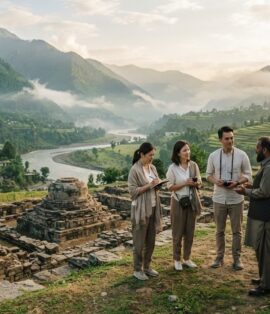
Safety is only part of the difference. A local guide can help bridge language gaps in Sherpa and Gurung villages, explain local customs, and add context to the landscapes and settlements you pass. That turns a quick stop into a chance to understand the living heritage behind the trail.
Relationships matter, but they aren’t a pass into private spaces. A thoughtful guide can help you approach a monastery or local home respectfully, explain when photography or a visit is appropriate, and make introductions where welcome. Follow their lead, ask before taking photos, and accept a polite no. These small gestures create better exchanges than treating a village as a backdrop. Brothers Adventures’ professional guiding and local knowledge help you engage with the mountains and the people who call them home.
Selecting the Right Path: From Beginner Mini Treks to Everest Base Camp
The right route isn’t simply the most famous one. It’s the trek that fits your fitness, available time, comfort with altitude, and idea of a rewarding adventure. For a guided trek Nepal journey, start with an honest picture of your experience, then choose a trail that gives you room to enjoy the landscape rather than race through it.
- Assess your fitness and hiking experience. Think about how you handle several hours of walking, uneven ground, and consecutive active days. If you’re new to hiking, build stamina with regular walks and choose an itinerary suited to your current ability. Fitness helps, but it doesn’t remove the need to acclimatize at altitude.
- Set your timeframe. An eight-day window can point you toward a shorter itinerary such as the 8Days Scenic Nepal Mini Trek. Include travel time and breathing room in your plans, not just the days on the trail.
- Choose your kind of scenery. Decide whether you’re drawn to iconic landmarks and well-known routes or prefer quieter trails and a slower pace. Each option brings a different balance of mountain views, village visits, and remoteness.
- Shape the itinerary with a specialist. Share your experience, schedule, interests, and any concerns. A specialist can help match the route and daily pace to your needs, making the trip feel personal rather than one-size-fits-all.
Ideal Entry-Level Routes
A shorter trek can deliver remarkable Himalayan views without committing to a high-pass crossing or an extended expedition. The 8Days Scenic Nepal Mini Trek offers a defined option for travelers working with limited time. For families and newer hikers, the Poon Hill sunrise trek is a scenic introduction to walking in the mountains. Sunrise brings the surrounding peaks into view, while the route avoids the extreme altitude associated with higher Himalayan passes. “Entry-level” still means walking on mountain trails, so prepare for varied terrain and discuss the daily demands when planning.
The Ultimate Challenge: High-Altitude Classics
The Everest Base Camp Trek is famous for its approach to the foot of the world’s highest mountain, with dramatic high-altitude scenery and stops in Sherpa communities along the way. Its appeal is clear, but the altitude and duration call for careful preparation and a realistic schedule. Review the practical budget considerations in this guide to Everest Base Camp trek costs, without assuming every itinerary has the same inclusions.
The Annapurna Base Camp Trek via Poon Hill pairs a famous sunrise viewpoint with a trek through mountain scenery. It offers a different experience from the Everest route, so choose based on the scenery and pace you want, not on the idea that one classic is automatically better.
Ready to match your time and trekking experience to a route? Explore guided Nepal trekking options and start shaping an itinerary that fits your Himalayan ambitions.
Why Brothers Adventures is Your Trusted Bridge to the Himalayas
A trek to Nepal’s high trails can feel like several journeys stitched together: choosing a route, organizing travel, preparing for altitude, then settling into a different rhythm among mountain communities. Brothers International Tours & Trading Pte Ltd connects those steps through a family-owned travel agency that has designed and operated leisure and adventure trips since 1992.
The agency’s offices in Singapore and Kathmandu connect trip planning with arrangements on the ground. You can discuss your goals before departure, while local coordination helps bring the itinerary to life once you reach Nepal. The result is a more personal approach than treating a trek as a transaction. Your guide and planning team can help you understand the arrangements and prepare for the trail.
Guided trekking also relies on local expertise. Professional guides and porters connect expedition logistics with livelihoods in mountain communities. Responsible trekking means respecting the work involved: agree on clear luggage arrangements, follow guidance on safe loads, and treat every member of the trekking team with consideration. These choices help make the journey a partnership, not simply a route through someone else’s home.
A Personalized Planning Experience
Start with the details that shape your trip: available dates, walking experience, interests, and who’s coming along. Brothers International Tours & Trading Pte Ltd can tailor an itinerary around those priorities, coordinating the journey from planning through in-country trekking arrangements. Families and schools can also explore educational tours in Nepal for students, where time outdoors can sit alongside opportunities to learn about local life and culture.
Good support doesn’t mean every day must go exactly to plan. It means having experienced people who can help you understand the arrangements and respond thoughtfully when conditions call for flexibility. For travelers setting out on a guided trek Nepal adventure, that steady human connection can make a complex journey feel more approachable.
Start Your Adventure Today
Want a balanced introduction to Nepal? The 8Days Nepal Adventure Tour brings together an accessible timeframe and a taste of the country’s landscapes and culture. If you’re drawn to mountain panoramas but would rather take in Everest from the air, the Mt Everest View Flights Experience offers a different perspective without following a multi-day trail. Choose the kind of adventure that fits your time, interests, and comfort with walking.
Share what you hope to see and how you want the journey to feel. Plan a custom Nepal itinerary with Brothers International Tours & Trading Pte Ltd, with guiding, local transportation, accommodation, and permit processing coordinated as part of your trekking package.
Make Space for Your Himalayan Adventure
The best journeys begin with a clear intention. Perhaps you want to watch first light spill across a mountain ridge, share stories over tea, or discover how far your own footsteps can take you. Hold on to that picture as you plan. It can help you choose a journey that feels meaningful, not simply impressive on a map.
A guided trek Nepal adventure is an invitation to be present: notice the changing trail, meet each day at its own pace, and let the mountains surprise you. You don’t need to have every moment figured out before you begin. Start with the experience you’re hoping for, then choose an itinerary that supports it.
Plan your Himalayan trekking journey with Brothers Adventures and turn that first spark of inspiration into a trip to look forward to. The Himalayas are calling. Go meet them with curiosity, confidence, and an open heart.
Frequently Asked Questions
Is a guided trek in Nepal suitable for beginners?
Yes, beginners can enjoy a guided trek in Nepal by choosing a route and walking schedule that suit their experience. Start with shorter daily distances and build stamina through regular walks before departure. Practice on uneven ground and try walking with the daypack you plan to carry. Tell your guide how you’re feeling during the trek, and don’t treat reaching a particular landmark as more important than your wellbeing.
How do I prevent altitude sickness (AMS) during the trek?
You can lower your risk by following a gradual itinerary, walking at a steady pace, and being open about symptoms from the start. Headache, nausea, dizziness, and unusual tiredness deserve attention, especially if they worsen. Don’t try to hide how you feel to keep up with the group. Follow your guide’s advice, and seek medical assessment if symptoms develop. No level of fitness or preparation can guarantee that you’ll avoid AMS.
What is included in a typical Nepal trekking package?
A trekking package generally brings key arrangements together, such as guiding, local transport, accommodation, and permit processing. The precise inclusions depend on the itinerary, so read its written breakdown before setting your travel budget. Pay attention to which meals, airport or trailhead transfers, and luggage arrangements are specified, as these can affect your out-of-pocket spending. Keep a copy of the itinerary handy so you can refer to the agreed plan during your trip.
Do I need travel insurance for a guided trek in Nepal?
Arrange travel insurance that explicitly covers high-altitude trekking and helicopter evacuation. Coverage can depend on your policy’s altitude limit, activities, and medical conditions, so review the wording rather than relying on a general travel policy label. Some trekking permits require insurance evidence, including permits for restricted areas and TIMS processing. Keep digital and paper copies of your policy details and emergency contact information accessible during the trek.
How much should I tip my guide and porters in 2026?
There isn’t a single verified 2026 tip amount that suits every trek, since trip length, team roles, and group size differ. Treat a tip as a personal thank-you, not a substitute for agreed wages or a condition of good service. Before departure, include gratuities in your trip budget and ask your tour operator for current guidance for your itinerary. If giving a group tip, make sure it’s shared transparently among the team.
What kind of food will I eat while trekking in the Himalayas?
Food choices depend on the lodge and how remote your stop is, so expect variation rather than a fixed menu throughout the trek. If you have allergies, religious restrictions, or a strict diet, write them down and share them before departure; carry a translated note if useful. Ask about ingredients before ordering, and pack familiar snacks for long walking days. A few compact options can help if your preferred food isn’t available.
Can I customize a private guided trek for my group?
Yes, Brothers Adventures can tailor trekking itineraries to a group’s interests, schedule, and experience. Share who’s travelling, the dates you have in mind, your preferred pace, and any priorities such as village visits or mountain viewpoints. Families, friends, and school groups may have different needs, so clear planning helps shape a suitable route. Customization can adjust the itinerary, but it can’t remove the physical demands or altitude risks of trekking.
How far in advance should I book my Nepal trekking tour?
Book as early as practical, especially if you’re travelling during a popular trekking period or have fixed leave dates. Planning ahead gives you more time to prepare fitness, documents, insurance, and any route-specific permits. It also helps coordinate the various parts of a multi-day trip before you arrive. If your dates are flexible, share that during planning; flexibility can make it easier to shape an itinerary around your priorities.

Comments are closed