


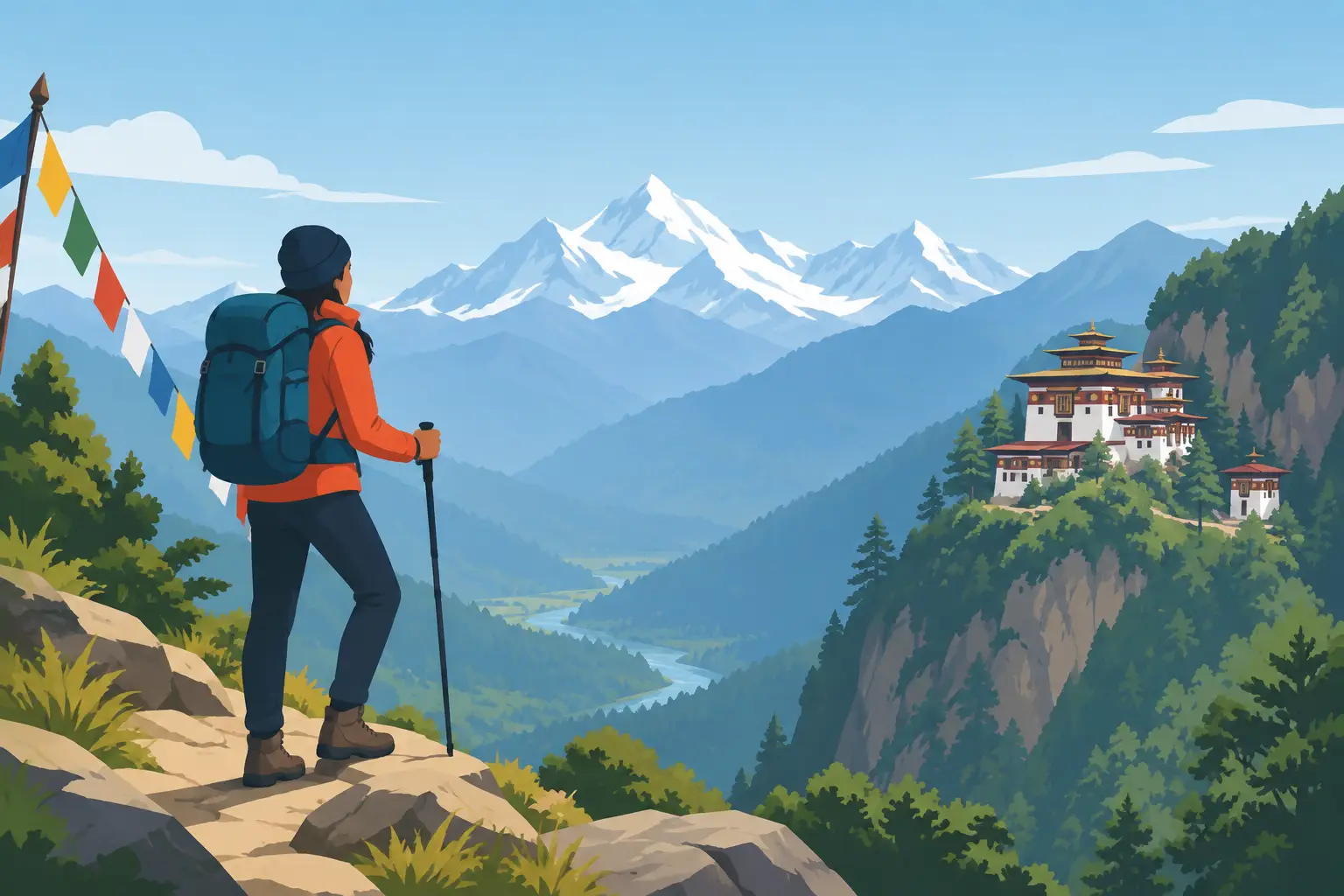
How to Plan Bhutan Trekking with Confidence
Bhutan is not a destination where you simply arrive, hire a taxi and set off into the hills the next morning. Its protected valleys, high passes and living Buddhist culture reward travellers who plan with care. Knowing how to plan Bhutan trekking means balancing the mountain challenge you want with the time needed for permits, acclimatisation, travel connections and genuine cultural discovery.
For many travellers, that careful rhythm is the appeal. A trek can take you from pine forests and remote yak-herding camps to prayer-flagged passes with views towards sacred Himalayan peaks, then back to a warm Bhutanese welcome in Paro or Thimphu. The right plan leaves room to enjoy all of it rather than rushing from one overnight stop to the next.
Start with the Bhutan trek that suits you
Bhutan has routes for active first-time Himalayan walkers as well as serious high-altitude trekkers. The key is not choosing the longest or highest route on paper. Choose the itinerary that matches your walking experience, fitness, available holiday time and comfort with basic camping.
The Druk Path Trek is often the most approachable introduction. Usually completed in four to six days, it travels between the Paro and Thimphu areas through blue pine forest, high ridges and lakeside camps. Altitude is still significant, but daily distances are manageable for prepared walkers. It works especially well when combined with Bhutan’s major cultural sights.
For a more remote experience, the Dagala Thousand Lakes Trek offers alpine lakes, broad mountain scenery and a quieter feel. The Jomolhari Trek is a stronger choice for trekkers who want dramatic views, high passes and an extended time in the country’s north-west. It commonly takes seven to ten days and reaches elevations where acclimatisation and steady pacing become central to the experience.
At the far end of the scale sits the Snowman Trek. This is one of the Himalaya’s great long journeys, often taking three weeks or more through isolated high country. It demands proven multi-day trekking ability, excellent fitness, flexibility for weather delays and a real willingness to camp in demanding conditions. It is not simply a longer Jomolhari trek.
A good first question is: do you want a cultural holiday with a trek at its heart, or a trekking expedition with a few cultural days around it? Both are worthwhile, but they need different timing and expectations.
How to plan Bhutan trekking around permits and travel rules
Bhutan tourism is regulated, and most international visitors arrange their holiday through a licensed Bhutanese operator or an overseas travel specialist working with one. Your operator normally coordinates the visa process, trek permits, guide, transport, accommodation, meals and camping crew. Requirements, fees and the Sustainable Development Fee can change, so confirm the current position before committing to flights.
This structure is reassuring when heading into remote terrain. Trek logistics may include pack animals, camp staff, food supplies, safety equipment and transport to trailheads that are not served by public transport. A knowledgeable local team also understands seasonal trail conditions and can adjust an itinerary if a pass is affected by snow or weather.
Build in at least two or three nights in Paro or Thimphu before starting a higher trek, particularly if you arrive from sea level. This is not wasted time. It allows for gentler acclimatisation, a visit to Taktsang Monastery, local sightseeing and a buffer in case flight schedules change. Paro’s mountain airport is memorable to fly into, but weather can occasionally affect operations.
When planning international connections, avoid making a non-refundable onward booking for the same day as your return from Bhutan. A little flexibility is one of the most useful forms of travel insurance in the Himalaya.
Choose the season for your priorities
Spring, generally March to May, brings clear mornings, rhododendron blooms and excellent trekking conditions, although afternoon cloud can build. Autumn, from late September through November, is prized for stable weather and wide mountain views. These are the busiest trekking windows, so early planning gives you the best choice of flights and experienced guides.
Winter can suit travellers who prefer quieter cultural touring and lower-altitude walks. Days can be bright and crisp, but high routes may be snowy or inaccessible. During the summer monsoon, trails are greener and visitor numbers are lower, yet rain, leeches in forested areas, cloud and slippery ground make it less suitable for many classic treks.
There is no universally perfect month. A photographer may accept colder autumn mornings for clearer views; a traveller interested in wildflowers may prefer spring; a school or group itinerary may need to align with term dates. Let the route and your priorities decide, rather than choosing solely by a weather chart.
Prepare for altitude before you prepare for distance
On Bhutan treks, altitude can be the deciding factor even for people who are very fit. Several popular routes cross passes above 4,000 metres, where the air is thinner and recovery takes longer. Fitness helps, but it does not prevent altitude illness.
A sensible itinerary gains height gradually and includes rest or easier days where needed. Walk at a pace that lets you speak in short sentences, drink regularly, eat well and tell your guide early if you develop a persistent headache, nausea, unusual fatigue, dizziness or poor sleep. Never treat symptoms as something to push through to keep the group moving.
Begin training eight to twelve weeks before departure where possible. Aim for regular brisk walking, longer weekend hikes, stair climbing and strength work for your legs and core. Train in the boots you will wear, and gradually carry a daypack with water, waterproof layers and personal items. If your trek involves consecutive long days, back-to-back walks are more useful than one very hard session followed by a week of rest.
Speak to your GP or a travel-health professional before travelling if you have a medical condition or take regular medication. Comprehensive insurance that covers trekking at your route’s maximum altitude, medical treatment and evacuation is essential.
Pack for changing mountain weather
Bhutan’s trekking weather can shift quickly. A warm morning climb may turn into a cold, wet afternoon at camp, while clear nights can fall below freezing at higher elevations. Layers are more practical than one heavy garment: a moisture-wicking base layer, insulating mid-layer and waterproof outer shell allow you to adjust through the day.
Bring well-worn-in waterproof boots with dependable grip, several pairs of trekking socks, gloves, a warm hat, sunglasses and high-factor sun protection. A reusable water bottle or hydration system, personal first-aid items, head torch, dry bags and a power bank are also worthwhile. Your operator will advise what camping equipment is included, but a warm sleeping bag suitable for sub-zero nights is often important on higher routes.
Do not overpack simply because a camp team carries the main load. Soft bags have capacity limits, and a lighter personal kit makes every transfer easier. Keep essential medication, documents, a warm layer and valuables with you rather than in the main trek baggage.
Make space for Bhutan beyond the trail
The best Bhutan trekking holidays do not treat villages, dzongs and monasteries as a quick add-on. A visit to a farmhouse, an evening in Thimphu, a local meal or time spent at a hillside monastery gives context to the landscapes you walk through. These are living religious and community spaces, so dress modestly, ask before photographing people or ceremonies, and follow your guide’s advice on local etiquette.
Travelling with a small group can make the experience more personal, while a private departure offers more control over pace, dates and cultural interests. Larger school and college groups benefit from additional planning around supervision, suitable trek stages and clear safety procedures. In every case, the strongest itinerary has contingency time and does not try to fit every landmark into a few days.
An experienced specialist can coordinate these moving parts from the first route discussion to the final airport transfer. Brothers Team plans Bhutan journeys with the same careful approach it brings to Himalayan trekking: realistic pacing, knowledgeable local support and attention to the details that allow travellers to focus on the experience.
Leave Bhutan with a plan that is ambitious enough to challenge you, but generous enough to let you pause at a mountain pass, hear the prayer flags in the wind and appreciate how rare it is to walk through a landscape that still feels wonderfully unhurried.

Comments are closed