


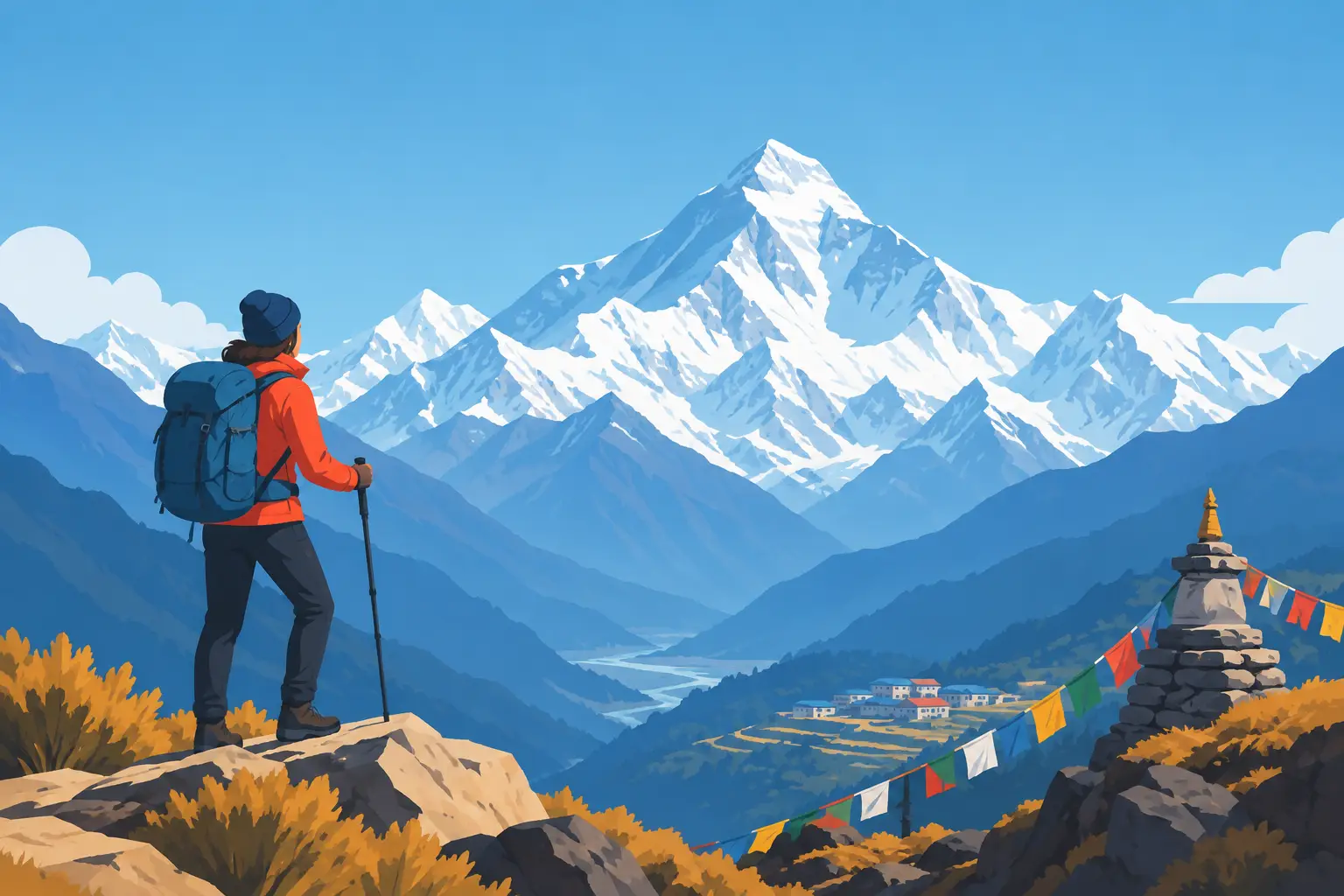
When Is Everest Trekking Season? Plan Wisely
The answer to when is Everest trekking season is not simply ‘spring or autumn’. Those are the two principal windows, certainly, but the best time for your trek depends on what you value most: clear mountain views, quieter trails, warmer daytime walking, lower costs, or the chance to experience the Khumbu in a less conventional season. Everest is never a casual destination. Choosing the right month gives you a stronger start before your boots reach the trail.
For most travellers, October and November offer the clearest balance of stable weather and superb visibility. April and May bring warmer conditions and colourful rhododendron forests, along with the energy of climbing season. Winter and monsoon can also work for the right person, provided the itinerary, expectations and support are adjusted carefully.
When is Everest trekking season at its best?
The main Everest trekking seasons are spring, from March to May, and autumn, from late September to November. These periods sit either side of Nepal’s summer monsoon and generally provide the most favourable combination of trail conditions, lodge availability and mountain visibility.
Autumn is often regarded as the first choice for an Everest Base Camp trek. The monsoon has cleared dust from the atmosphere, leaving dramatic views of Everest, Lhotse, Ama Dablam and the surrounding peaks. Days are commonly dry and pleasantly cool at lower elevations, although mornings and nights become sharply colder as you climb towards Dingboche, Lobuche and Gorakshep.
Spring is equally rewarding, especially for travellers who enjoy a livelier mountain environment. Temperatures rise gradually, snow begins to recede on higher trails, and the hills below Namche Bazaar can be bright with flowering rhododendrons. This is also the season when Everest expeditions prepare for summit attempts, so Base Camp can feel particularly active.
Neither season is guaranteed to deliver flawless weather every day. Himalayan conditions can change rapidly, and flights to or from Lukla may be delayed by cloud, wind or poor visibility in any month. A well-planned trip should always include contingency time rather than relying on a tightly fixed international departure.
Autumn trekking: October and November
For first-time Himalayan trekkers, autumn is often the most straightforward time to travel. October typically brings crisp skies, comfortable daytime walking temperatures and green valleys after the rain. By November, the air can be even clearer, though the cold becomes more pronounced at altitude.
The trade-off is popularity. The Everest Base Camp route, teahouses and flights can be busy, particularly in mid-October. This does not mean the experience feels crowded throughout the day – the trail remains a remarkable journey through Sherpa villages, forests, suspension bridges and wide glacial valleys – but early booking gives you better choices for flights and accommodation.
Autumn also suits more challenging routes such as Gokyo Lakes and Cho-La Pass. The pass can still be cold and occasionally snowy, but stable weather improves the likelihood of a safe crossing. For travellers wanting quieter trails, an itinerary via Gokyo can offer a more spacious feel than the direct Base Camp route while adding the unforgettable viewpoint of Gokyo Ri.
Spring trekking: March to May
Spring begins cool, with March sometimes carrying winter-like conditions at higher elevations. By April, the trails are warming, daylight is longer, and the landscape feels increasingly alive. May is usually the warmest trekking month before the monsoon arrives, though afternoon cloud can build more regularly.
This season is an excellent fit for people who prefer less severe daytime cold, especially on acclimatisation walks around Namche Bazaar and Dingboche. It can also be a good choice for those combining Everest trekking with a cultural stay in Kathmandu or other parts of Nepal before or after the trail.
The main consideration is visibility. Early mornings can be beautifully clear, while clouds may gather later in the day. Guides often plan walking hours accordingly, setting off early so guests enjoy the best conditions and arrive at the lodge with time to rest, hydrate and acclimatise.
Spring is also busy. Trekkers share the trail with expedition teams, porters and mountaineering staff carrying supplies towards Everest Base Camp. For many, this adds atmosphere and a sense of occasion. For others seeking a quieter experience, a carefully paced Gokyo Lakes itinerary or an early-season departure may be preferable.
Winter: clear skies, serious cold
December to February is outside the classic Everest trekking season, but it should not be dismissed. Winter can bring exceptionally clear skies, peaceful trails and a more intimate lodge experience. If solitude and sharp mountain views matter more than mild temperatures, it can be a memorable time to walk in the Khumbu.
The challenge is the cold. At higher stops, temperatures can fall well below freezing overnight, and water bottles, taps and bathrooms may freeze. Snow or ice can affect higher sections of the route, while passes such as Cho-La may be unsuitable depending on conditions. Days are shorter too, so the pace and daily distances need sensible planning.
A winter Everest Base Camp trek is best suited to travellers who are comfortable with cold-weather clothing, flexible around weather disruption and willing to follow guidance closely. It is not necessarily harder because of technical terrain, but small comforts become more significant when temperatures drop.
Monsoon: possible, but not the usual choice
June to August brings the summer monsoon. Rain is common in the lower valleys, trails can be muddy, leeches may appear in forested sections, and cloud often blocks the big mountain views that draw people to Everest. Lukla flight disruptions are more likely, making extra contingency days essential.
Yet monsoon trekking has a particular appeal for travellers with flexible schedules. The landscapes are intensely green, the valleys are quieter and rain often falls in bursts rather than without pause. Higher areas beyond the main rain belt may occasionally offer better conditions, although this should never be assumed.
For a first Everest trek, monsoon is usually not our first recommendation. For experienced walkers who value solitude and can absorb changes to flights and daily plans, it may be worth considering with a conservative itinerary and realistic expectations.
Choose your month around the trek you want
Everest Base Camp is possible in both main seasons, but route choice changes the decision. The standard route through Namche Bazaar, Tengboche, Dingboche and Lobuche is well supported by teahouses and is suitable for a broad range of fit, prepared trekkers. Spring and autumn are both strong choices.
Gokyo Lakes and Cho-La Pass demand more from the weather. The high pass is sensitive to snow, ice and wind, so autumn and the middle of spring are generally more reliable. A crossing should never be treated as a box to tick. If conditions are poor, a responsible guide may recommend an alternative route, even when it changes the original plan.
If your priority is photography, autumn often has the edge for long-distance clarity. If you prefer warmer walking days and spring flowers, choose April or May. If you want fewer people and can handle deep cold, consider late November, December or early March. The best month is the one that matches your tolerance for uncertainty as well as your holiday dates.
Weather is only one part of a safe Everest plan
A good season cannot replace acclimatisation. Everest Base Camp sits at 5,364 metres, and even fit hikers can develop altitude-related symptoms if they ascend too quickly. A sensible itinerary includes gradual height gain, rest days in places such as Namche Bazaar and Dingboche, and guides who monitor how each guest is feeling.
Allowing extra days also matters. Weather can affect Lukla flights, while an unexpected need for another acclimatisation night should not turn into a crisis because of a rigid schedule. The strongest itineraries build flexibility into the journey from the start, including reliable local logistics, appropriate accommodation and clear contingency arrangements.
Packing should follow the season, but every trekker needs a layered system: moisture-wicking base layers, warm insulating pieces, a waterproof outer shell, gloves, hat, sun protection and proper trekking boots. In the Himalayas, a sunny afternoon can become a cold evening quickly, particularly once you are above the tree line.
Brothers Team plans Everest journeys with the understanding that a successful trek is not measured only by reaching a viewpoint. It is also about having the time, guidance and confidence to appreciate the Sherpa culture, prayer flags, mountain monasteries and extraordinary landscapes along the way.
When you choose your Everest trekking season, leave room for the mountains to set their own pace. A few contingency days and a thoughtful acclimatisation plan may be the most valuable items you bring.

Comments are closed