


Mardi Himal Trek Package: The Complete 2026 Himalayan Buying Guide
What if the most rewarding ridge walk in the Himalayas is also the easiest to underestimate? You want sweeping views of Machhapuchhre without fighting massive trail crowds, but choosing the ideal Mardi Himal trek package often feels daunting. Between navigating mandatory licensed guide regulations, worrying about rapid elevation gains up to 4,500 metres, and questioning tea house standards along a newly popular trail, planning can easily trigger second thoughts.
You deserve complete clarity before you lace up your boots, free from surprise logistics costs or rushed itineraries that compromise your safety. Discover how to evaluate, compare, and choose the right Mardi Himal trek package for an unforgettable Himalayan adventure. Here’s everything you need to know about transparent inclusions, essential permit protocols, and smart acclimatization pacing so you can step onto the ridge with total confidence.
Key Takeaways
- Discover why Mardi Himal’s narrow ridgeline delivers some of the most dramatic, up-close views of Mount Machapuchare without the heavy foot traffic of classic trails.
- Learn how to evaluate a comprehensive Mardi Himal trek package so essential items like mandatory ACAP permits, TIMS registration, and licensed local guides are fully covered without hidden surprises.
- Understand the vital differences between risky express itineraries and safety-focused schedules that give your body ample time to acclimatize up to 4,500 metres.
- Identify the ideal spring and autumn trekking windows, alongside practical physical conditioning tips to conquer steep stone staircases with confidence.
- Find out how partnering with an established operator featuring dual-office ground support ensures complete logistical care and seasoned mountain safety from start to finish.
Understanding the Mardi Himal Trek: Route Charm, Sacred Vistas, and Ridge Terrain
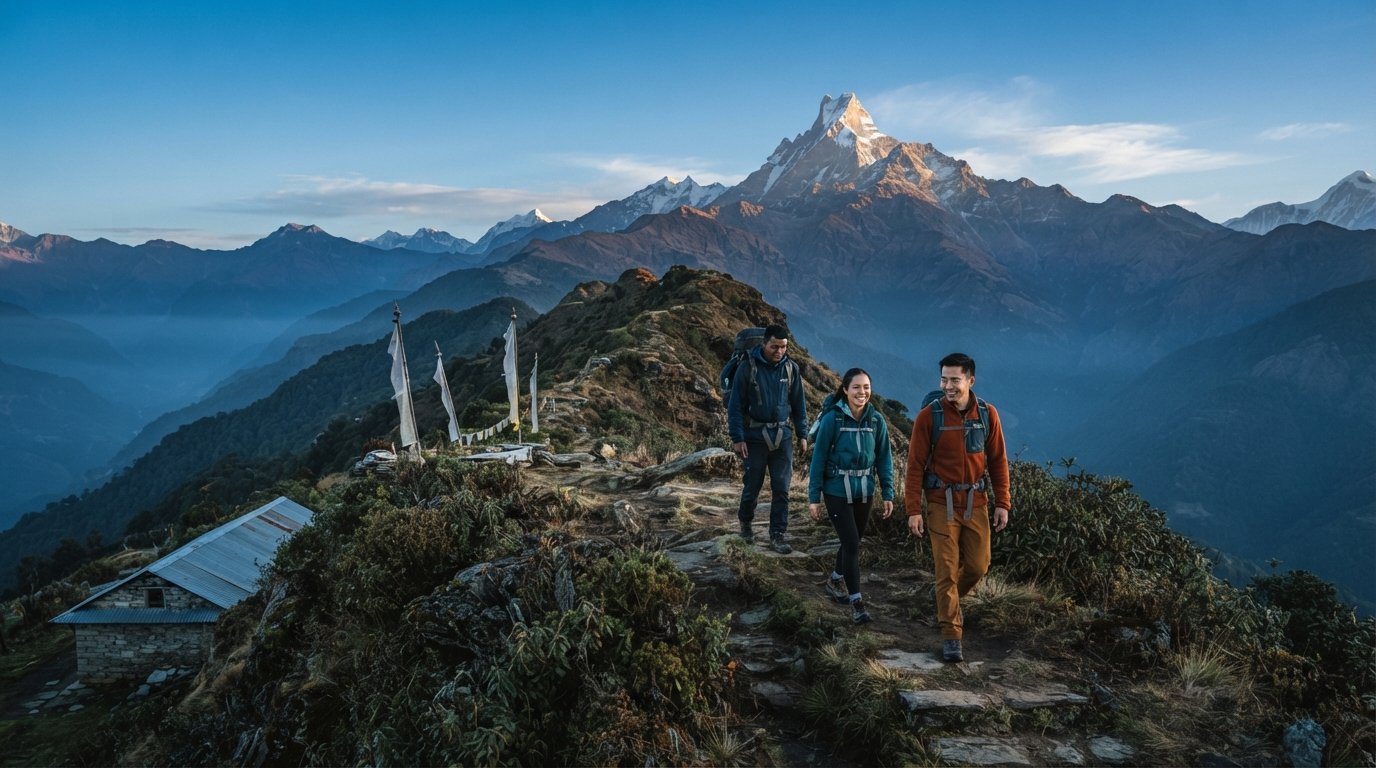
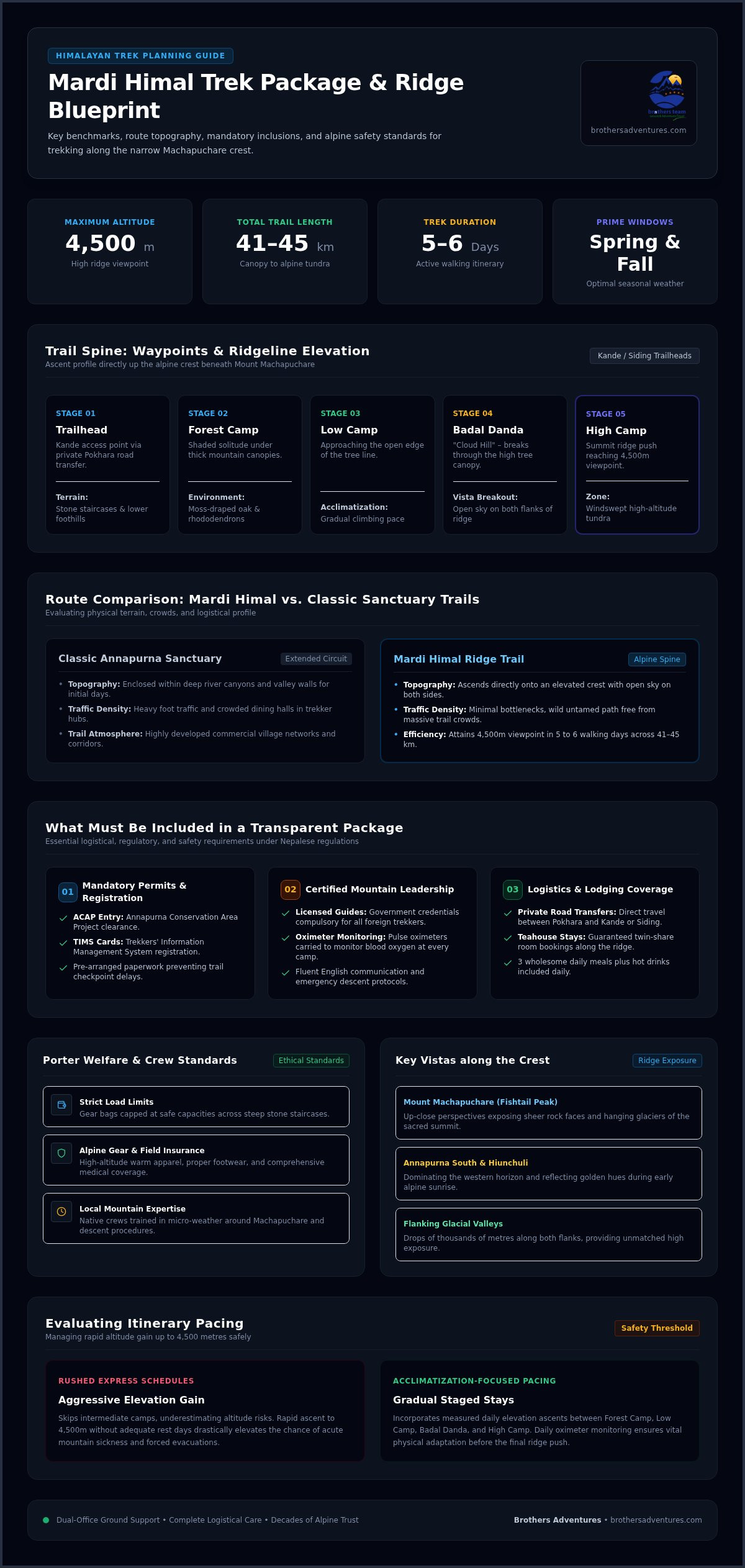
Tucked beneath the dramatic shadow of Fishtail Peak, the ridgeline beneath Mardi Himal offers an intimate vantage point that few other Annapurna routes can match. While traditional sanctuary circuits guide you along deep river valleys, this trail ascends straight up an alpine crest. Booking a dedicated Mardi Himal trek package lets you trade heavily trodden stone corridors for a quiet mountain path that feels wild and untamed. Over roughly 41 to 45 kilometres, the landscape transforms with startling speed, guiding you from moss-draped oak and rhododendron canopies into sharp, windswept high-altitude tundra.
The Geography of the Narrow Ridge
Standard regional itineraries often keep you enclosed within canyon walls for the first several days. In contrast, the Mardi trail mounts an elevated spine where open sky surrounds you on both sides. Leaving the shaded solitude of Forest Camp, you climb toward Low Camp before breaking clear of the tree line at Badal Danda, aptly named Cloud Hill. Here, the ridgeline reveals breathtaking, unobstructed perspectives:
- Mount Machapuchare: Towering so close that you can observe every sheer rock face and hanging glacier of this sacred summit.
- Annapurna South and Hiunchuli: Guarding the western horizon, casting golden reflections across the valley during early sunrise.
- Glacial Valleys: Plummeting thousands of metres down either flank, providing a thrilling sense of exposure as you walk the crest toward High Camp.
Mardi Himal vs Classic Annapurna Sanctuary Routes
Classic journeys to Annapurna Base Camp wind through extensive village networks and lively trekker hubs. While culturally rich, they bring steady foot traffic and crowded dining halls. Mardi Himal preserves a rugged backcountry atmosphere. Lodging options are simpler, trail bottlenecks are rare, and the wilderness remains front and centre. Because the route reaches high alpine viewpoints up to 4,500 metres in just 5 to 6 days of walking, selecting a well-paced Mardi Himal trek package gives you the majesty of an extended expedition within a remarkably efficient mountain itinerary.
What to Look for in a Comprehensive Mardi Himal Trek Package
Low-budget listings often look enticing until hidden expenses pile up on the trail. A truly all-inclusive Mardi Himal trek package should remove operational guesswork so you can focus entirely on the climb. Under current Nepalese regulations, all foreign visitors must trek with a licensed guide, making agency verification essential rather than optional. Aligning with an established tour operator ensures your paperwork, safety gear, and mountain transfers are organized methodically before you even arrive in Nepal.
Essential Inclusions: Logistics, Permits, and Accommodations
Permit clearance forms the legal foundation of your trek. Reputable operators manage your entry registration with the Annapurna Conservation Area Project alongside your Trekkers’ Information Management System (TIMS) cards. Beyond paperwork, quality packages guarantee reliable private transfers between Pokhara and rugged trailheads like Kande or Siding, skipping unreliable public buses. Teahouse accommodation along the ridge remains basic, but full-service bookings secure twin-share rooms and three wholesome daily meals with hot drinks, protecting you from inflated high-altitude lodge menus.
Guide Standards, Safety Briefings, and Porter Welfare
Mountain safety hinges on the competence of your team. Certified trekking guides hold recognized government credentials, speak fluent English, and carry pulse oximeters to track blood oxygen levels at every camp. Ethical treatment of support staff matters just as much. Premier packages strictly uphold fair porter welfare standards:
- Load Limits: Limiting gear bags to reasonable capacities so porters never carry unsafe weights over steep ridge steps.
- Alpine Gear and Insurance: Equipping support teams with warm high-altitude clothing, footwear, and comprehensive field medical insurance.
- Local Expertise: Hiring native mountain crews who know micro-weather shifts around Machapuchare and understand immediate descent protocols.
If you prefer seasoned hands handling your logistics, exploring specialized trekking departures through Brothers Adventures gives you three decades of direct ground-handling reliability across the Himalayas.
Comparing Itinerary Pacing: Express Treks vs Acclimatization-Focused Packages
Ascending from valley trailheads below 2,000 metres up to the 4,500-metre Upper Viewpoint puts serious physical pressure on your lungs. Choosing the right Mardi Himal trek package comes down to pacing. While shorter routes promise fast turnarounds, pushing elevation too aggressively ruins the experience. Taking a structured, gradual approach keeps altitude sickness at bay while giving you time to absorb the silent spectacle of early mountain mornings.
The 4-Day Express Route: High Speed and Steeper Risks
Four-day express itineraries force daily vertical gains exceeding 1,000 metres on steep forest stairs. That kind of relentless upward push leaves practically zero margin for biological adaptation. If cloud banks roll in on summit morning, an express timeline gives you no secondary window to wait for clear skies. Unless you’re an endurance athlete who has already acclimatized on neighboring trails, rushing this ridge often leads to pounding headaches and premature descents.
The Curated 6-to-8 Day Itinerary: The Gold Standard for Safety
A safety-first schedule transforms the climb into an invigorating journey rather than an exhausting race. It systematically protects your health through deliberate stages:
- Gentle Initial Ascent: Starting at Australian Camp or Pothana allows your circulatory system to settle into alpine walking.
- Staged Elevation Gains: Resting at Forest Camp and High Camp gives your body vital downtime before tackling thin ridge air.
- Dawn Ridge Push: Leaving High Camp before first light ensures you reach the Upper Viewpoint for sunrise, with enough buffer time to savour the vistas.
- Knee-Friendly Descent: Dropping down via the forested slopes of Siding Village softens impact on joints while providing a peaceful loop finish.
Combining Ridge Trekking with Heritage Explorations
Pacing is just as crucial after you step off the trail. You can blend an alpine ridge walk into a comprehensive Nepal adventure tour 8 days program or complement high-altitude exertion with a historic Nepal cultural tour package. Taking quiet recovery days around tranquil lakeside Pokhara supports sustainable tourism in the Annapurna region by extending economic benefits to local homestays. For travellers organizing an active family trek Nepal departure, adaptable multi-day scheduling makes the Himalayas accessible and enjoyable for every generation.
Trek Preparation for 2026: Physical Conditioning, High Ridge Packing, and Seasons
Preparing thoroughly turns an intimidating alpine ridge into an empowering personal milestone. While selecting a reliable Mardi Himal trek package secures your logistics, arriving physically prepared and properly geared ensures you enjoy every hour above the clouds. The narrow spine leading toward base camp exposes you to shifting mountain elements, demanding smart seasonal timing, disciplined cardiovascular fitness, and dependable cold-weather protection.
Seasonal Guide: Spring Blooms vs Autumn Clarity
Prime conditions arrive during two distinct annual windows:
- Spring (March to May): Lower elevations burst into deep red and pink rhododendron blossoms. Days offer moderate temperatures and gentle breezes, though afternoon clouds occasionally roll across high ridges.
- Autumn (September to November): The post-monsoon atmosphere delivers crystalline skies, crisp mornings, and the sharpest panoramic clarity of Annapurna’s glaciers.
Winter brings heavy summit snow and freezing winds, while summer monsoon rains attract forest leeches and obscure trails. Planning around spring or autumn guarantees optimal visibility and dry footing.
Physical Training and Ridge Trail Demands
Expect to walk 5 to 7 hours daily over continuous, uneven stone staircases. Building eccentric quadricep strength and solid calf resilience prevents knee fatigue during the steep descent toward Siding. Four to six weeks before flying, train on local stairs or stair-climbing machines while wearing a weighted daypack. Above 3,500 metres, oxygen levels drop substantially; adopt a measured, rhythmic walking pace and alert your guide immediately if early signs of Acute Mountain Sickness appear.
Essential Ridge Packing List and Teahouse Realities
High Camp sits in thin, sub-zero air where overnight temperatures plummet well below freezing. A technical three-tier clothing system is non-negotiable:
- Layering Essentials: Moisture-wicking merino base layers, an insulating fleece mid-layer, and a heavy-fill down jacket paired with a windproof outer shell.
- Footwear: Sturdy, well-broken-in trekking boots, merino wool socks, and compact microspikes for pre-dawn ice along narrow summit traverses.
- Teahouse Gear: A high-capacity power bank to offset scarce solar charging, personal water purification tablets, and a thermal sleeping bag liner for added warmth.
Get ready for your Himalayan journey with expert advice and seamless departure planning by contacting the team at Brothers Adventures today.
Booking Your Mardi Himal Trek with Brothers Adventures: Decades of Alpine Trust
Venturing onto steep Himalayan ridges demands absolute trust in the team walking beside you. Founded in 1992, Brothers International Tours & Trading Pte Ltd, operating as Brothers Adventures, brings more than three decades of alpine heritage and deep local connections to every expedition. Rather than outsourcing your safety to unvetted third-party contractors, our family-operated model bridges thorough pre-trip consultation with direct ground management across Nepal. Selecting a dedicated Mardi Himal trek package with our team means every vehicle transfer, high-ridge permit, and teahouse booking is coordinated under our personal supervision from the moment you touch down in Kathmandu.
The Brothers Adventures Difference: Heritage, Care, and Safety
Our dual-office presence provides a smooth, reliable planning experience before you fly, combined with seasoned mountain leadership once your boots hit the trail. We treat every trekker as an invited personal guest. That commitment reflects across our operational standards:
- Direct Accountability: We handle ground logistics with our own veteran crew, removing the risks and miscommunications common to third-party agency aggregators.
- Certified High-Altitude Leaders: Our licensed guides carry complete medical kits, monitor your vital signs daily, and implement prompt, practiced safety protocols whenever mountain weather shifts.
- Absolute Financial Clarity: Your fixed-price arrangements cover your TIMS registration, ACAP entry clearance, mountain lodging, and private ground transfers without unexpected fees on the trail.
Tailoring Your Himalayan Adventure Package
Every adventurer arrives with unique fitness goals and timeline constraints. Our mountain specialists consult with you directly, offering practical advice on gear choices, pack weights, and cardiovascular prep before your departure. We customize private departures to add acclimatization pauses, scenic rest days in Pokhara, or wider cultural touring across the valley floor. Whether you are stepping onto high trails for the first time or seeking pristine views away from congested routes, our personalized planning keeps your safety and enjoyment centered at all times.
Begin mapping your 2026 ridge ascent with a trusted specialist. Reserve your Himalayan journey today with Brothers Adventures, operating under Brothers International Tours & Trading Pte Ltd, and experience the majestic heights of Annapurna with complete peace of mind.
Step Onto the Ridge with Complete Himalayan Confidence
Standing eye-to-eye with Mount Machapuchare at 4,500 metres is an unforgettable experience, but reaching that high viewpoint safely starts long before your flight departs. Choosing a comprehensive Mardi Himal trek package means respecting the mountain’s steep elevation profile, securing certified guiding leadership, and protecting your peace of mind with transparent logistics from the valley floor to high camp.
Since 1992, Brothers Adventures has guided trekkers across Nepal with personal care and proven high-altitude safety management. We manage every detail, from your required permits and private ground transfers to dedicated porters and continuous health monitoring on the trail. That means you don’t have to worry about logistics and can focus entirely on the crisp alpine air and soaring Himalayan panoramas.
Your next great adventure is waiting above the clouds. Connect with our specialist team today to Plan Your Mardi Himal Adventure with Brothers Adventures and take your first step toward an extraordinary journey.
Frequently Asked Questions
What is typically included in a guided Mardi Himal trek package?
A full-service Mardi Himal trek package includes all mandatory paperwork, such as Annapurna Conservation Area Project permits and TIMS cards, alongside licensed English-speaking mountain guides and dedicated porters. It also covers twin-share teahouse lodging along the ridge, three freshly prepared daily meals with hot beverages, and private vehicle transfers between Pokhara and your trailhead.
How difficult is the Mardi Himal trek compared to Annapurna Base Camp?
Mardi Himal is shorter in total distance at roughly 41 to 45 kilometres, but it features significantly steeper terrain than the valley walk to Annapurna Base Camp. Trekkers tackle long sequences of uneven stone stairs and exposed crest trails. The daily walking duration averages 5 to 7 hours, requiring good lower-body strength and cardiovascular endurance.
Can beginners complete the Mardi Himal trek package safely?
Yes, beginners with a solid baseline fitness level can safely complete a Mardi Himal trek package provided they choose a sensible 6-to-8 day itinerary. Rushing the route in under five days creates unnecessary strain and increases altitude hazards. Training on stairs and following a measured walking pace ensures novice hikers reach the high viewpoints comfortably.
What is the highest point reached on the Mardi Himal trail?
The highest accessible elevation on the route is the Mardi Himal Base Camp at approximately 4,500 metres. Most itineraries make a pre-dawn push to the Upper Viewpoint at around 4,200 metres to catch sunrise over Fishtail Peak, with strong hikers having the option to continue along the ridge to base camp before descending.
What are the teahouse accommodations and bathroom facilities like?
Lodges along the Mardi ridgeline offer basic, unheated twin-share bedrooms with foam mattresses, pillows, and heavy blankets. Lower camps sometimes feature attached bathrooms with solar hot water, but higher stops like Badal Danda and High Camp rely on shared squat or western toilets. Running water is freezing cold, so baby wipes and personal sleeping bag liners are essential.
What happens if a trekker experiences altitude sickness along the ridge?
Licensed guides monitor daily oxygen saturation levels and symptom progression using portable oximeters. If a trekker displays symptoms of Acute Mountain Sickness that don’t subside with rest and hydration, the primary protocol is an immediate, assisted descent to lower elevation camps. In severe medical emergencies, experienced operators initiate rapid helicopter evacuation procedures directly from designated clearing zones along the ridge.
When is the best time of year to book a Mardi Himal package?
The prime windows run through spring from March to May and autumn from September to November. Spring blankets the lower forests in vibrant rhododendron blossoms while offering mild daytime hiking weather. Autumn provides the crispest atmospheric clarity, dry trail conditions, and unobstructed mountain panoramas following the monsoon rains.





Comments are closed