


Nepal Educational Travel Programmes That Matter
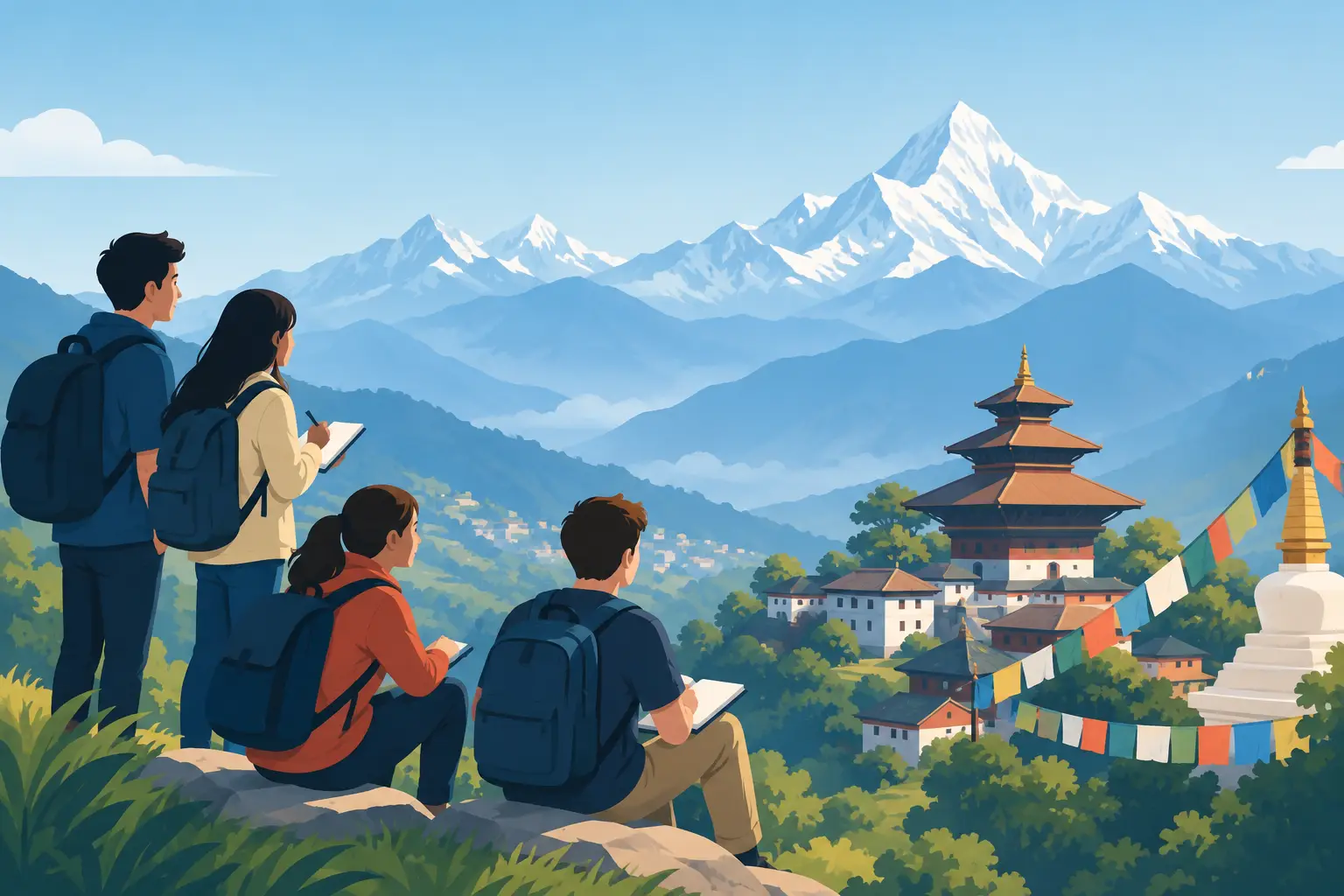
A geography lesson feels different when students are standing beneath snow-covered Himalayan ridges, watching prayer flags move in the wind, or speaking with a community whose daily life is shaped by the mountains. The best Nepal educational travel programmes turn these moments into structured learning – with enough challenge to build confidence, and enough support for every participant to feel safe, included and engaged.
For schools, colleges and youth groups, Nepal is not simply a dramatic backdrop for a trip abroad. It is a living classroom where environmental science, geography, history, religion, development studies and personal leadership meet. A well-designed programme gives students time to observe, ask questions, reflect and contribute, rather than rushing them from one landmark to the next.
Why Nepal is a powerful place to learn
Nepal brings major global themes close to home. Its landscape rises from subtropical lowlands to the world’s highest peaks, making it an exceptional setting for understanding altitude, climate, watersheds, conservation and the pressures facing mountain communities. Students can see how rivers support villages and cities, how farming adapts to steep terrain, and why changing weather patterns matter so deeply in the Himalaya.
Culture is equally central to the experience. Kathmandu Valley’s temples, stupas and historic squares offer a valuable introduction to Hindu and Buddhist traditions, art, architecture and heritage conservation. In rural areas, students encounter a pace of life often very different from Singapore or the UK, while learning that communities are never defined by a single story. Respectful conversations with local hosts, guides and educators can challenge assumptions far more effectively than a classroom worksheet.
There is also the personal learning that happens outdoors. A day walk on stone paths, an early start for a sunrise viewpoint, or a group task during a village stay requires resilience, cooperation and self-management. These are meaningful outcomes, but they should not be confused with hardship for its own sake. Educational travel works best when the challenge is appropriate to the age, fitness and experience of the group.
What strong Nepal educational travel programmes include
A successful itinerary starts with learning objectives, not a list of famous places. A group studying environmental change may spend more time in a Himalayan foothill community, discussing forests, agriculture and water use. A history or religious studies group may benefit from deeper interpretation in Kathmandu, Patan and Bhaktapur. For students focused on leadership, a carefully paced trek can create natural opportunities for shared responsibility and reflection.
The strongest programmes combine several settings. Kathmandu provides heritage, urban life and a useful introduction to Nepal’s cultural diversity. A lower-altitude trekking area such as the Annapurna foothills can offer mountain learning without placing a first-time student group into an overly demanding high-altitude itinerary. Chitwan or another lowland area can add biodiversity, conservation and a different geographical perspective.
Local interaction should be planned with care. A school visit, community-led activity, cultural workshop or conversation with a conservation practitioner can be highly valuable when it is mutually respectful and properly arranged. Groups should avoid treating communities as attractions or arriving with assumptions about what people need. The aim is exchange, listening and learning.
Reflection is another essential part of the design. Short guided discussions at the end of the day, individual journals, photo assignments or small group presentations help students connect what they have seen with their course themes. Without this space, even an outstanding experience can become a collection of memories rather than lasting learning.
A balanced itinerary is better than an ambitious one
It is tempting to pack a Nepal programme with every possible highlight: Kathmandu heritage sites, rafting, wildlife, a high mountain trek, volunteering and a long road journey. In practice, this can leave students tired and teachers managing logistics instead of learning.
A better plan allows time to settle in, adjust to the environment and absorb each place. A 7 to 10-day programme might pair Kathmandu Valley cultural learning with several days of guided trekking in the foothills. Longer groups can add conservation or community-based learning, but should still protect time for rest, travel delays and reflection.
Road conditions, domestic flight schedules and weather can affect plans in Nepal. A capable operator builds sensible flexibility into the route rather than presenting every transfer as guaranteed. This is especially important for school groups, where clear communication and calm contingency planning make a substantial difference.
Choosing the right level of outdoor challenge
Not every educational group needs a high-altitude trek. Nepal has rewarding walks and village routes at lower elevations, where students can experience mountain culture and panoramic views without the demands of sleeping at significant altitude. This may be the right choice for younger travellers, mixed-ability groups or programmes with broader cultural aims.
For older students and experienced outdoor groups, a longer trek can be a genuine milestone. However, routes in higher Himalayan regions require thoughtful acclimatisation, realistic walking days and close attention to individual wellbeing. Altitude illness is not a test of fitness or determination. It can affect anyone, and the correct response is always to stop, assess and descend where necessary.
Programme leaders should ask direct questions before selecting a route: What is the group’s previous walking experience? How many days are available? Will students carry their own packs? What medical and pastoral support is required? Is the purpose physical challenge, environmental study, cultural immersion, or a combination of these? Honest answers lead to a better trip.
Safety and safeguarding need to be visible in the plan
Educational travel has a duty of care that goes beyond booking hotels and transport. Before departure, participants and parents need clear information about fitness expectations, kit, food, accommodation, cultural etiquette, insurance and health requirements. Leaders should also understand how communication, rooming arrangements, emergency procedures and supervision will work on the ground.
In mountain areas, safety depends on good judgement rather than dramatic promises. This means experienced local guides, manageable group sizes, sensible route pacing, first-aid capability and a plan for changing conditions. It also means selecting lodges and transport providers carefully, and ensuring that dietary requirements are discussed early.
The human side matters too. Travelling as a group can bring homesickness, anxiety, fatigue or conflict to the surface. A programme with realistic daily timings and supportive leaders gives students room to manage these feelings. Small acts of care – checking in after a long walk, making time for a quiet break, or explaining an unexpected delay – help young travellers feel secure.
Responsible learning leaves room for local benefit
Educational groups often want to make a positive contribution, and that intention is welcome. The most useful approach is usually to support local businesses and community-led experiences through the itinerary itself: staying in locally run lodges, employing local guides, eating at local establishments and paying fairly for workshops or visits.
Short-term volunteering needs particular caution. A project should never be included merely to create an emotional moment or a photograph. If a group participates in service activity, it should be requested locally, suitable for the time available, properly supervised and connected to a genuine need. In many cases, learning about a community’s work and supporting it respectfully is more appropriate than trying to complete a project in a few hours.
Environmental responsibility is equally practical. Refillable water systems, reduced single-use plastic, proper waste management and respect for trails all matter. Students should understand that mountain landscapes are not untouched playgrounds. They are homes, working environments and fragile ecosystems.
Planning with a specialist operator
A school or college group needs more than an attractive itinerary. It needs reliable coordination from first enquiry through to the return flight: permits where required, suitable accommodation, transport, meals, trained guides, risk-aware route planning and a responsive point of contact.
Brothers Team combines Singapore-based service with Kathmandu destination support, helping group leaders shape programmes around learning aims as well as practical realities. This local knowledge is particularly valuable when planning mountain travel, where weather, road conditions and altitude considerations need experienced handling.
The best time to start planning is well before students begin fundraising or families make commitments. Early discussion makes it easier to match the route to the academic calendar, group profile and budget, while allowing enough time for medical preparation, briefing sessions and thoughtful pre-departure learning.
A Nepal educational journey should leave students with more than photographs of the Himalaya. Give them the time, context and support to notice what the mountains, communities and shared challenges are teaching them – and those lessons can travel home with them.

Comments are closed