


Can Novices Climb Island Peak in Nepal Safely?
Island Peak looks close enough to Everest to feel like a dream borrowed from the world’s highest mountains. Its summit stands at 6,189 metres, above the Imja Valley, with a final ridge that delivers extraordinary views towards Lhotse, Ama Dablam and the surrounding Khumbu peaks. But can novices climb Island Peak? Yes, some can – provided they understand what “novice” means, train seriously, and join an itinerary that gives their body time to adapt.
Island Peak is often described as an introductory Himalayan climbing peak. That description is useful, but it should not be mistaken for easy. It is an achievable first mountaineering objective for a fit trekker with the right guidance, rather than a first outdoor challenge for somebody hoping enthusiasm alone will carry them to the top.
What makes Island Peak different from a trek?
The approach to Island Peak follows the classic Everest region trail through Sherpa villages, forests and high mountain valleys. Many climbers incorporate Everest Base Camp or the Gokyo Lakes into their journey, giving themselves useful acclimatisation days and making the trip feel richer than a summit attempt alone.
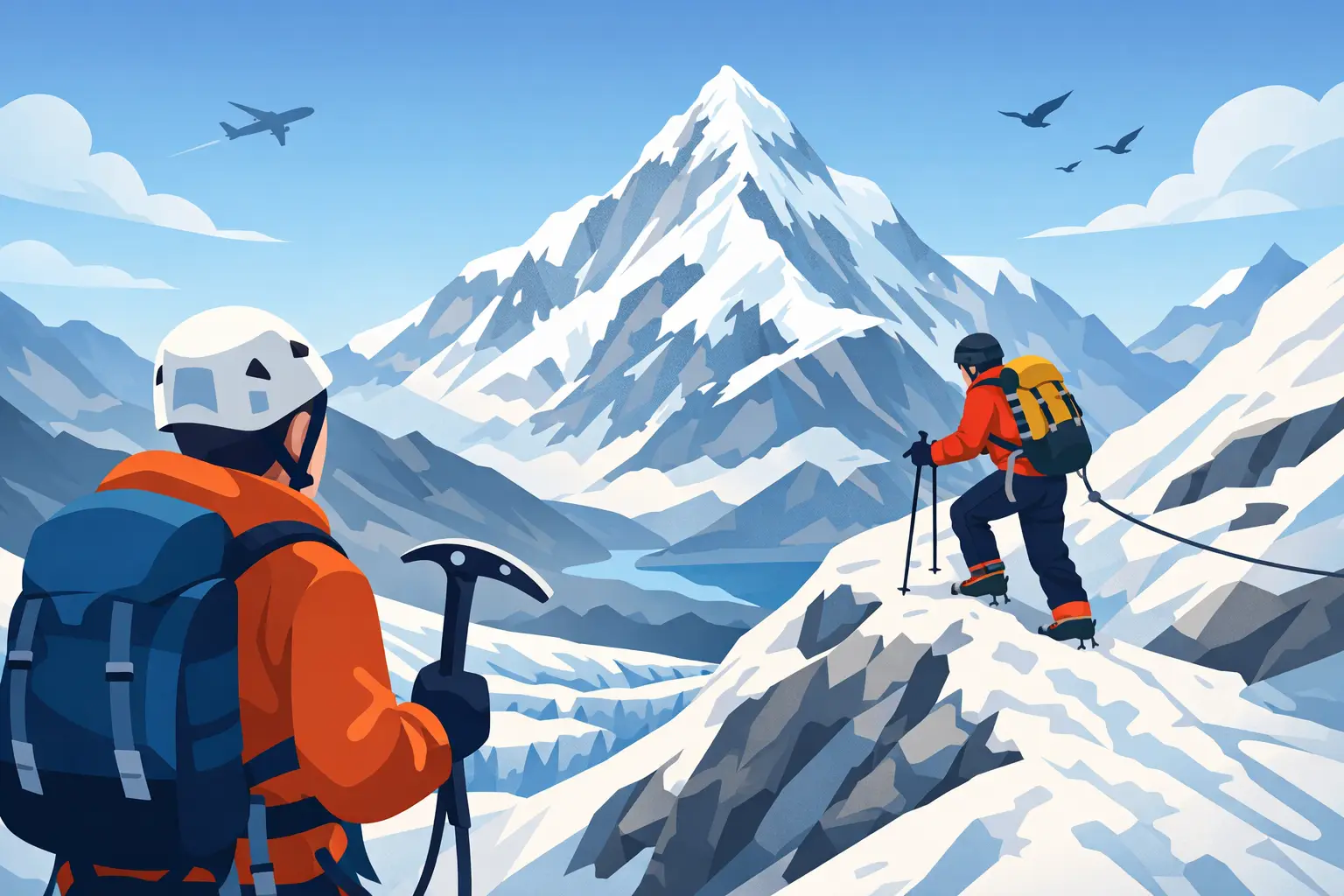
Until Island Peak Base Camp, the route is primarily demanding high-altitude trekking. Summit day is different. Climbers usually leave camp well before dawn, cross rocky ground and glacier terrain, put on crampons, and ascend a fixed rope section towards the summit ridge. Depending on conditions, this can involve a steep snow slope, ladders over crevasses, and a narrow exposed ridge.
You do not need to be an expert alpinist, but you do need to be comfortable learning and using basic equipment. A professional climbing guide will teach you how to wear crampons, attach to a fixed line with a safety device, use a harness and move as part of a rope team. The technical skills are manageable for beginners. The harder question is whether you can carry them out calmly after several hours of climbing in freezing temperatures and thin air.
Can novices climb Island Peak with no climbing experience?
A novice with no previous mountaineering experience can climb Island Peak, but previous high-altitude trekking experience is strongly recommended. Someone who has completed a demanding multi-day trek, such as Everest Base Camp, Annapurna Circuit or Kilimanjaro, will arrive with a clearer sense of how their body and mind respond to long days, basic lodges, cold mornings and altitude.
There is a meaningful difference between being new to climbing and being new to the mountains. A first-time climber who has hiked regularly, completed challenging treks and is prepared to train has a realistic route towards Island Peak. A person with little walking fitness, no experience of sustained uphill days and no tolerance for discomfort should begin with a trekking holiday instead.
The summit success rate also depends on conditions. Fresh snow, wind, glacier changes and the physical effects of altitude can make the final ascent more demanding from one season to the next. A responsible guide may turn a climber around even when the summit is close. This is good judgement, not a failed service.
The fitness benchmark that matters
Island Peak does not demand elite speed, but it does reward durable fitness. Expect consecutive days of walking, often for five to seven hours, on uneven ground at altitude. Summit day can be 10 to 14 hours from camp to camp, depending on the group, weather and route conditions.
Before travelling, aim to become comfortable with long hill walks while carrying a daypack. Stair climbing, uphill treadmill sessions, cycling and steady running can build the aerobic base needed for long trekking days. Add strength work for the legs, core and upper body, particularly squats, lunges, step-ups and loaded carries.
Training should also include time on your feet. A gym session is helpful, but it does not fully prepare ankles, knees and shoulders for rocky trails. If you live in Singapore or another flat location, use stairwells, stadium steps or an inclined treadmill, and schedule weekend walks with a progressively heavier pack. Start several months before departure rather than trying to make up fitness in the final few weeks.
Acclimatisation is your most important safety system
At 6,189 metres, Island Peak is high enough for altitude illness to affect even very fit people. Fitness cannot prevent it. Good acclimatisation, sensible pacing, hydration, nutrition and honest communication with guides are what reduce the risk.
A well-planned itinerary gradually increases sleeping altitude and includes rest or acclimatisation days. These are not wasted days. They allow the body to adjust, give guides an opportunity to monitor the group, and offer time to enjoy places such as Namche Bazaar, Dingboche and the Imja Valley rather than rushing through them.
Listen carefully to symptoms. Headache, loss of appetite, nausea, dizziness and unusual fatigue should be reported early. Your guide may recommend rest, medication or descent according to the situation. There is no prize for hiding a headache in the hope that it disappears. In the Himalayas, early decisions protect the whole group.
For this reason, choosing the shortest itinerary is rarely the best value. A few extra days can improve comfort, strengthen summit chances and make the overall experience far more enjoyable.
What first-time climbers need to learn
Most Island Peak expeditions include a practical training session at Base Camp. Treat it as essential, even if you have used similar equipment before. You should understand how your boots and crampons fit, how to walk efficiently on snow, how to use your safety attachment on a fixed rope, and how to respond when the guide gives an instruction.
Gear matters because small problems become large ones in the cold. Boots must be compatible with crampons and warm enough for a pre-dawn glacier ascent. Gloves need to keep your hands warm while still allowing you to operate clips and carabiners. Goggles or sunglasses, a reliable head torch, insulated clothing and a properly fitted harness all deserve attention.
A reputable operator will advise on a detailed kit list and arrange specialist climbing equipment where appropriate. Do not assume ordinary trekking boots will be suitable, and do not save weight by leaving behind essential warm layers. Summit mornings are often much colder than trekkers expect.
The value of an experienced guide and well-paced group
Island Peak is not a mountain to approach as an independent novice. Local climbing guides understand the current glacier conditions, weather patterns, safe turnaround times and practical realities of moving a group at altitude. They also bring the quiet confidence that helps first-time climbers focus on one step at a time.
Brothers Team plans Himalayan journeys with acclimatisation, permits, domestic flights, lodge arrangements, meals and experienced on-trip support considered from the outset. That co-ordination matters on a peak climb, where uncertainty around logistics can drain energy before the mountain section has even begun.
Ask any operator practical questions before booking. Find out the guide-to-climber ratio for summit day, whether a climbing skills session is included, how many acclimatisation days are built in, and what happens if weather delays the ascent. You should also ask about emergency procedures, oxygen availability where relevant, communications and insurance requirements.
When Island Peak may not be the right first objective
There is no shame in deciding that a major trek is the better next step. If you are uneasy with heights, unable to train consistently, recovering from an injury, or unsure how you cope above 4,000 metres, consider Everest Base Camp, Gokyo Lakes or an Annapurna route first. These journeys still offer profound Himalayan scenery and personal achievement, with fewer technical demands.
Likewise, a novice travelling with an ambitious friend should not feel pressured to continue beyond their limits. On a well-run trip, the decision to stop is respected. The mountain will remain, and experience gained on a trek can make a future Island Peak attempt safer and more rewarding.
A realistic path to the summit
The best Island Peak novices tend to share a few qualities: they prepare steadily, accept instruction, manage their pace and keep expectations flexible. They are not necessarily the strongest people in the group. Often, they are the travellers who conserve energy, eat and drink consistently, layer clothing early and speak up when something feels wrong.
Set your goal around the full journey, not only the summit photograph. Walking through the Khumbu, learning from Sherpa communities, watching the light change across Ama Dablam and testing your resilience at altitude are experiences that hold their value whatever the final summit decision. Train well, choose patient professional support, and Island Peak can become a remarkable first step into Himalayan climbing.



Comments are closed