


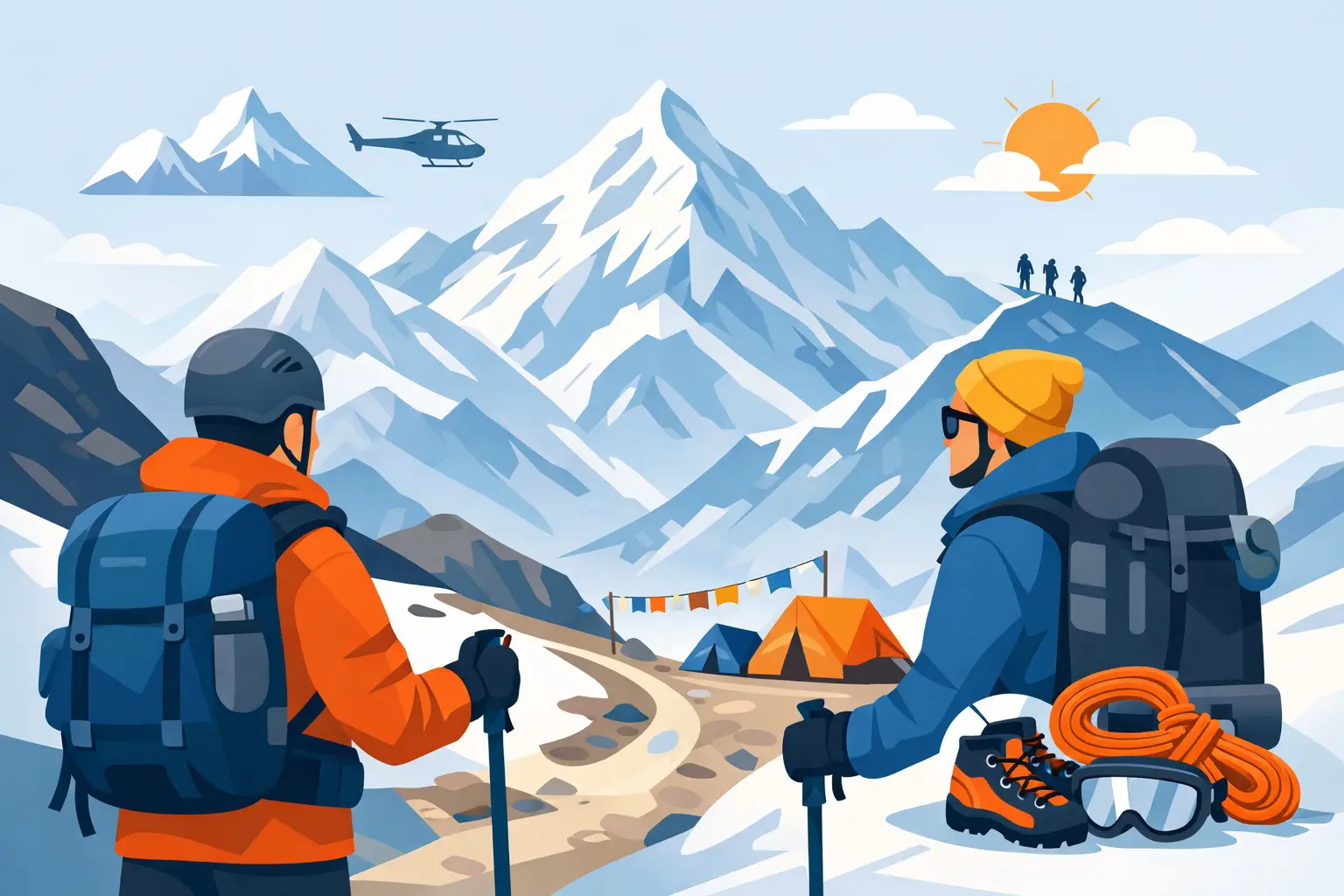
Himalayan Safety Guide for High-Altitude Treks
A clear blue morning in the Himalayas can turn cold, windy and cloudy before lunch. On a trek to Everest Base Camp, Gokyo Lakes or Annapurna, the views may be unforgettable, but the environment asks for sound judgement every day. This Himalayan safety guide is designed to help you prepare for the realities of high-altitude travel without taking away the joy of the journey.
The safest trek is rarely the fastest one. It is the one with a sensible itinerary, good communication, enough flexibility and a team that is willing to change plans when conditions demand it. Mountains reward patience.
Start with the right itinerary
Altitude affects everyone differently. Fitness is valuable, particularly on long ascents and uneven trails, but it does not make anyone immune to altitude illness. A first-time trekker can acclimatise well, while an experienced runner can feel unwell if they climb too quickly.
For this reason, build rest and acclimatisation days into the route rather than treating them as optional spare time. On popular Nepal treks, these days are often spent taking a short hike to a higher point before returning to sleep lower. This approach helps the body adjust while also offering time to enjoy villages, monasteries and mountain scenery.
A well-paced Everest Base Camp itinerary normally allows several days for gradual ascent, especially around Namche Bazaar and Dingboche. More challenging combinations, such as Gokyo Lakes and Cho-La Pass, need extra care because the days are longer, the terrain can be icy and the pass sits at a serious altitude. If you have limited holiday time, choose a shorter route or add days rather than compressing the schedule.
Recognise altitude illness early
At higher elevations, the air contains less oxygen. Your body needs time to adapt, and no amount of determination should override warning signs. Mild altitude sickness can begin with a headache, poor sleep, unusual tiredness, nausea or loss of appetite. These symptoms should be reported to your guide early, even if they seem manageable.
The practical response may be a slower day, a rest day, increased fluids and close monitoring. However, worsening symptoms require a more cautious decision. Severe headache, confusion, difficulty walking in a straight line, breathlessness at rest, a persistent cough or chest tightness are urgent signs. Descent is the key treatment for serious altitude illness, not simply taking painkillers and continuing upwards.
Do not feel embarrassed about speaking up. Trekking groups work best when everyone is honest about how they feel. A responsible guide will assess the situation, discuss the options and put health ahead of reaching a viewpoint or finishing a planned route.
Acclimatisation is more than a rest day
Good acclimatisation begins before symptoms appear. Walk at a pace where you can still speak in short sentences, avoid racing other trekkers and take regular breaks without allowing yourself to become chilled. Drink consistently throughout the day, eat what you can and limit alcohol, particularly once you are at higher lodges.
Medication may be appropriate for some travellers, but it should be discussed with a qualified medical professional before departure. Tell your trek operator about relevant medical conditions, prescription medicines, previous altitude issues and allergies. Accurate information allows the team to plan responsibly and support you properly on the trail.
Prepare for changing mountain weather
The Himalayas are not unsafe because they are remote. They become risky when weather, terrain and human decisions do not match. A steep path that is straightforward in dry conditions can become slippery after rain, while a high pass can be closed or unsafe after fresh snow or strong winds.
Spring and autumn generally offer the most reliable trekking conditions in Nepal, yet neither season guarantees clear skies every day. Flights to mountain airstrips can be delayed by cloud, and road journeys may take longer than expected. Keep some contingency time at the end of your trip, particularly if you have an international flight to catch from Kathmandu.
Listen when guides recommend an early start, a revised route or an extra night in a village. Such changes can feel disappointing in the moment, but they are often what allow a trek to remain enjoyable and safe. The mountain will still be there tomorrow.
Pack for safety, not just photographs
Your kit should protect you from sun, cold, rain and the repeated strain of walking. Layers are more useful than one heavy item because temperatures can vary widely between a sunny ascent and an evening in a lodge. A warm insulated jacket, waterproof outer layer, hat, gloves and good-quality trekking socks matter even on routes that seem mild at lower elevations.
Footwear deserves particular attention. Wear well-fitted, broken-in trekking boots with reliable grip. New boots can cause blisters within the first few days, turning every descent into a painful task. Bring blister plasters and treat hot spots early. Trekking poles are also useful for many travellers, easing pressure on knees during long descents and adding stability on loose ground.
Your daypack should carry water, snacks, sunscreen, sunglasses, waterproofs, a warm layer and personal medication. Himalayan sunshine is strong, and snow or pale rock can intensify glare. A refillable bottle or hydration system is practical, but make sure you have a dependable method for treating drinking water when required.
Before leaving home, check that you have:
- Travel insurance that specifically covers trekking altitude, medical treatment and emergency evacuation.
- A medical check if you have heart, lung or other conditions that could affect high-altitude travel.
- Copies of passport details, insurance information and essential prescriptions kept separately from the originals.
- A realistic understanding of the route, including daily walking hours, sleeping altitudes and the possibility of delayed flights.
Choose local support you can trust
Independent trekking can suit highly experienced travellers on straightforward routes, but it places more responsibility on you to manage permits, navigation, changing conditions and decisions around illness. For first-time Himalayan trekkers, families, schools and groups, knowledgeable local support brings reassurance that is difficult to replace.
An experienced guide does more than lead the way. They monitor pace, recognise when someone is struggling, communicate with lodge owners, adapt logistics and make judgement calls when weather shifts. Porters also play an essential role in a fair and well-managed trekking team. Pack thoughtfully, respect weight limits and remember that every bag is carried by a person over the same steep terrain.
Brothers Team plans Himalayan journeys with acclimatisation, trusted ground arrangements and practical support at the centre, from permits and lodge bookings to on-trail guidance. That preparation gives travellers more room to enjoy the landscapes and cultures around them.
Trek as a considerate guest
Safety also has a community dimension. Respect local customs, dress appropriately in villages and ask before photographing people or religious sites. Stay on established trails where possible, carry rubbish out when facilities are limited and use water responsibly in high mountain settlements.
In lodges, keep expectations realistic. Hot showers, charging points and internet access can be limited or unavailable, especially when weather interrupts supply lines. A flexible attitude makes these moments easier, and it helps the whole group maintain good spirits when a change of plan is needed.
Know when turning back is the right achievement
The summit, pass or base camp is never more valuable than your wellbeing. There are occasions when a guide recommends stopping, descending or taking a different route. This is not failure. It is sound mountain judgement and often the reason travellers return home with positive memories rather than a preventable emergency.
Prepare carefully, walk steadily and give the Himalayas the time they deserve. When you do, each prayer flag, high valley and shared cup of tea in a mountain lodge becomes part of an adventure that feels challenging for all the right reasons.



Comments are closed