


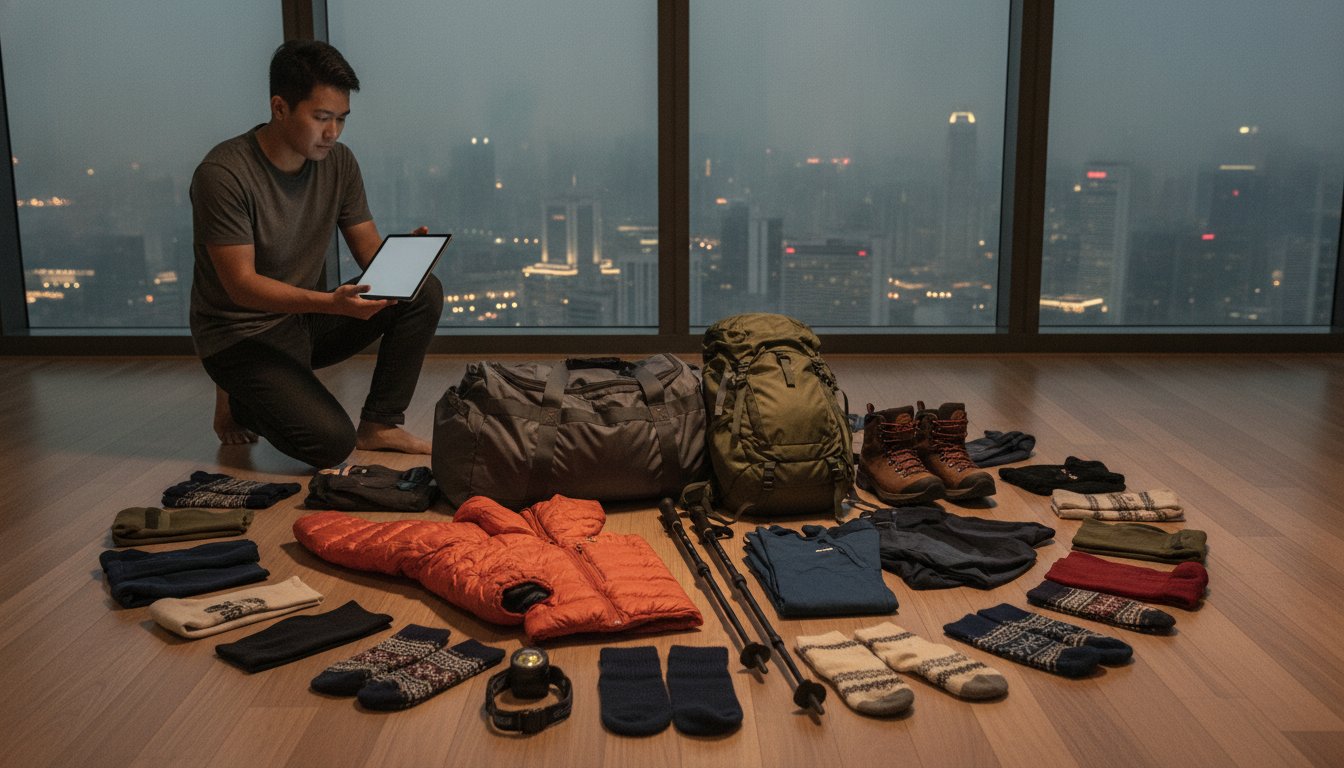
Everest Base Camp Trek Packing List: The Ultimate 2026 Gear Guide
Packing for the roof of the world isn’t about how much you bring, but how well your gear works together under pressure. It’s easy to feel overwhelmed by technical jargon or the fear of shivering through a sub-zero night at Gorak Shep. You’re likely worried about fitting everything into the strict 15kg total baggage allowance for those legendary flights from Ramechhap to Lukla. We understand those nerves because we’ve lived them for over 30 years as a family-run team.
This definitive 2026 Everest Base Camp trek packing list is your expert-vetted blueprint for mountain safety and comfort. We’ll show you how to master the science of moisture management so you stay dry while moving and toasty while resting. You’ll learn the crucial difference between what stays in your daypack and what goes in your porter’s bag, ensuring you’re prepared for every sudden Himalayan mood. From high-altitude layering essentials to the specific gear required for current conditions, we’ve got you covered. Let’s turn that gear anxiety into pure, adventurous anticipation for the journey of a lifetime.
Key Takeaways
- Master the three-layer moisture management system to stay warm and dry without the unnecessary bulk of heavy, single-layer jackets.
- Optimise your Everest Base Camp trek packing list by splitting gear between your 5kg daypack and the 10kg porter duffle to meet Lukla’s strict weight limits.
- Select footwear that balances ankle support with breathability to conquer the rocky, high-altitude terrain leading to Gorak Shep.
- Prepare a specialised high-altitude medical kit focused on AMS prevention and blister care to ensure your journey remains safe and enjoyable.
- Utilise our local Kathmandu office as a safety net to verify your gear quality and pick up last-minute essentials before heading to the trailhead.
The Science of High-Altitude Warmth: Mastering the Layering System
Forget about that massive, bulky parka you might wear in a blizzard at home. On the trail to Everest Base Camp, efficiency is your best friend. The Layering System is the strategic stacking of fabrics to regulate body temperature and moisture. By using multiple thin garments, you create pockets of trapped air that provide better insulation than a single heavy coat. This approach is essential for your Everest Base Camp trek packing list because it allows you to adapt to the Khumbu’s wild temperature swings. You’ll often experience a sunny 15°C while climbing a ridge, only to feel the air plummet to -15°C the moment the sun dips behind the peaks.
Movement generates heat. If you wear too much while trekking, you’ll sweat. In sub-zero conditions, damp clothes are a recipe for disaster because water conducts heat away from your body 25 times faster than air. You need fabrics that move sweat away from your skin immediately. In 2026, the choice between Merino wool and high-end synthetics is a matter of personal preference. Merino is a natural wonder that stays warm even when damp and has incredible antimicrobial properties. This means you’ll stay smelling fresh even after five days without a shower. Synthetics, however, dry much faster and often handle the rugged friction of backpack straps better.
The Base Layer: Your Second Skin
Start with the golden rule: cotton is rotten. Cotton absorbs moisture and stays wet, which is dangerous at high altitudes. Stick to lightweight Merino or polyester blends for your active daytime trekking. These pieces should fit snugly against your skin to wick away perspiration. For those freezing nights in the teahouses, we recommend keeping a dedicated set of mid-weight “sleep thermals” bone-dry in your duffle bag. Switching into fresh, dry layers the moment you arrive at your destination is a simple ritual that ensures a warm, restful night.
The Mid and Outer Layers: Trapping Heat and Blocking Wind
Your mid-layer is the engine room of warmth. A high-loft fleece or a “puffy” jacket filled with synthetic or down insulation traps the heat your body produces. Down is lighter and more packable for your Everest Base Camp trek packing list, but synthetic insulation still performs if it gets damp. Finally, your outer layer, or hardshell, acts as the shield. It must be windproof and waterproof to block biting Himalayan gusts while remaining breathable enough to let internal moisture escape. Adjusting these layers dynamically throughout the day keeps your core temperature stable as you gain elevation.
The 2026 Everest Base Camp Trek Clothing & Footwear Checklist
Your clothing is more than just fabric; it’s your protective shield against the elements. While the layering science we discussed earlier provides the framework, choosing specific, high-quality items for your Everest Base Camp trek packing list makes the difference between a grueling slog and a triumphant journey. You’ll need gear that transitions seamlessly from the humid lower valleys to the thin, frozen air of the high Khumbu. Every piece should serve a purpose, keeping you agile and protected as you ascend toward the clouds.
Boots and Socks: Avoiding the Trek-Ending Blister
Your boots are the most critical investment you’ll make. Look for trekking boots with solid ankle support and a stiff sole to handle the uneven, rocky terrain found throughout the trail. It’s non-negotiable to break in your boots at least 3 months before your departure; your feet need to bond with them during long training hikes. We swear by the “Two-Sock” method: wear a thin synthetic liner sock to wick sweat, topped with a heavy wool-blend outer sock to provide cushioning and warmth. This friction-reducing combo is a proven secret for keeping your feet happy and blister-free.
For your lower body, pack versatile zip-off trekking trousers for the warmer days and thermal leggings for the higher camps. Don’t forget a pair of waterproof over-pants to block the wind and snow. Upper body essentials range from lightweight sun shirts with UPF protection to a heavy-duty down jacket designed for sub-zero temperatures. Following a professional CDC adventure travel guide ensures you select gear that protects against environmental hazards like extreme cold and UV exposure.
Headwear and Gloves: Managing Heat Loss
Protecting your extremities is vital since they’re often the first to feel the bite of the cold. A wide-brimmed hat is essential for sun protection in the valleys, but you’ll need a wind-stopping beanie for everything above Namche Bazaar. For your hands, use a modular system: thin liner gloves for handling your camera or phone, and heavy, insulated mittens for the freezing morning starts. A “buff” or neck gaiter is a multipurpose hero, protecting your lungs from the dry “Khumbu Cough” and your face from the sun’s glare. These small accessories play a massive role in maintaining your core temperature.
Preparing for this legendary trail is an exciting milestone in your Everest Base Camp trek packing list journey. If you’re ready to put your gear to the test, our Everest Base Camp Trek team provides the expert guidance and porter support to make your adventure seamless.
Duffle vs. Daypack: Strategic Gear Organisation
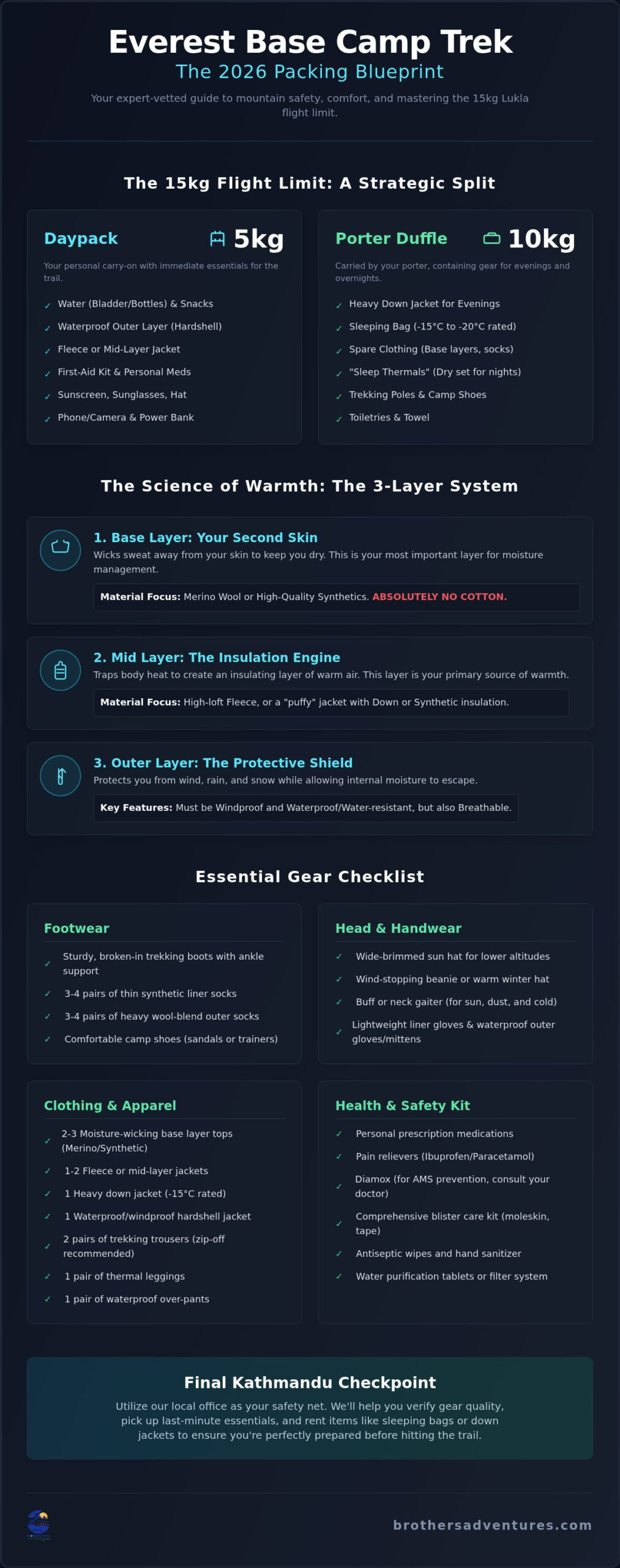
Success on the trail depends on how you distribute your gear. The logistics are dictated by the strict 15kg weight limit for Lukla flights, which typically allows for 10kg of checked luggage and 5kg for your hand carry. While some might suggest carrying everything yourself, our 30 years of experience has shown that utilizing a professional porter service allows you to focus on your breathing and the breathtaking scenery. This division of labor requires a smart approach to your Everest Base Camp trek packing list, separating your “active” gear from your “stationary” items.
Waterproofing is another critical factor. While many backpacks come with external rain covers, these can act like sails in high Himalayan winds or fail during a sustained downpour. We recommend using internal dry bags or heavy-duty liners inside both your daypack and duffle. This “belt and braces” approach ensures your dry socks stay dry, regardless of the weather. For a broader look at equipment standards, you can cross-reference REI’s Everest Base Camp Gear List to see how professional outfitters categorize these essentials.
Packing the Daypack: Your Mobile Survival Kit
Your daypack should be a 20 to 30L bag that fits comfortably against your back for six to eight hours a day. This is your life support system. Fill it with items you’ll need before reaching the next teahouse. Your hydration strategy is paramount; we suggest a mix of a 2L hydration bladder for easy sipping and a 1L Nalgene bottle for backup. Keep your sunscreen, lip balm, and high-energy snacks in easy-to-reach pockets. Most importantly, always keep your waterproof hardshell at the very top. Himalayan weather turns in minutes, and you don’t want to be digging through your bag when the clouds burst.
The Duffle Bag: Your High-Altitude Bedroom
The duffle bag is what our porters carry, and you won’t have access to it until you reach your evening lodge. This is where your heavy insulation and sleeping gear live. Your sleeping bag must be rated for at least -15°C to -20°C to ensure comfort in unheated teahouses. Use packing cubes to organize your Everest Base Camp trek packing list items. They make it incredibly easy to find a fresh pair of base layers in a dim room without exploding your entire bag. Place your heaviest items in the center and wrap fragile electronics or personal items in your soft clothing to protect them during transit.
Health, Hygiene, and 2026 Tech Essentials
Your physical well-being and ability to stay connected are just as vital as the boots on your feet. While the physical gear in your Everest Base Camp trek packing list keeps you warm, these smaller essentials ensure you stay healthy and functional at 5,000 metres. High-altitude environments are unforgiving on both the human body and modern electronics. Preparing for the specific health challenges of the Khumbu, while leveraging 2026’s latest connectivity options, will keep your focus on the stunning peaks rather than personal discomfort.
The Trekker’s Pharmacy: Essential Medications
Altitude is the primary variable on this journey. We recommend discussing Acetazolamide (Diamox) with your doctor before leaving home; it helps your body acclimatise, though it’s not a substitute for a slow ascent. Beyond altitude, gastrointestinal health is paramount. Even though bottled water is available, carrying chlorine dioxide purification tablets or a high-quality squeeze filter provides an essential safety net. Don’t forget a supply of throat lozenges and a buff to combat the “Khumbu Cough,” a persistent dry cough caused by breathing the frigid, thin mountain air. A basic first aid kit should also include blister plasters, ibuprofen, and rehydration salts.
Hygiene in a “no-shower” zone requires a tactical approach. Since hot showers become rare and expensive as you climb higher, biodegradable wet wipes and dry shampoo are your best friends. They help you maintain a sense of freshness without the risk of catching a chill in a drafty teahouse bathroom. Pack a small bottle of high-concentration hand sanitiser and use it religiously before every meal to prevent the common “trekker’s belly.”
Tech and Power: Documenting the Journey
Staying connected has changed significantly. By 2026, 5G coverage and e-SIM technology have reached even the most remote villages like Gorak Shep. We suggest downloading an e-SIM before you leave Kathmandu to avoid the hunt for physical cards. However, the extreme cold remains a battery killer. Keep your phone and camera batteries inside your base layers or sleeping bag to maintain their charge. We recommend a 20,000mAh power bank as the minimum standard for 2026 treks to ensure your devices stay powered between charging stations. Pair this with high-speed SD cards for your camera and a cloud backup strategy to secure those once-in-a-lifetime photos whenever you hit a Wi-Fi zone.
Ready to embark on a safe and supported Himalayan adventure? Our expert team at Brothers Adventures provides professional guides who monitor your health every step of the way to Base Camp.
Final Preparation: Gear Rental and Kathmandu Logistics
Kathmandu is the vibrant, bustling heart of your preparation. It’s the place where your Everest Base Camp trek packing list finally meets reality. While you’ve likely spent months researching fabrics and boots, the final 48 hours before your flight to Lukla are crucial for fine-tuning. Thamel is a treasure trove of trekking equipment, but it’s also a maze of “North Fake” counterfeits. These look-alike jackets might seem like a bargain, but they often lack the technical membranes required to keep you dry at high altitudes. Stick to reputable shops or lean on our local expertise to ensure your safety isn’t compromised by a faulty zipper or non-breathable fabric.
Safety remains our absolute priority. Before you leave the city, ensure your travel insurance specifically covers helicopter evacuation at altitudes up to 6,000 metres. Without this, a simple case of AMS can become a massive financial burden. We’ll help you double-check your policy details during our pre-trek briefing at our Kathmandu office. This final check is your safety net, ensuring every piece of gear is up to the challenge of the Khumbu.
The “Golden Rule” of Gear Rental
You don’t need to own every piece of equipment to have a successful trek. Renting is a brilliant way to save money and luggage space, especially for bulky items you might not use again. However, follow the golden rule: never rent boots. As we discussed earlier, your boots must be broken in and shaped to your feet to avoid trek-ending blisters. Conversely, renting a high-quality -20°C sleeping bag or a heavy down jacket in Kathmandu is a standard practice that we highly recommend.
- Inspect zippers: Test every fastening on rental gear multiple times; a stuck zipper at 5,000 metres is more than just an inconvenience.
- Check the loft: Ensure down sleeping bags still have plenty of “fluff” to trap heat effectively.
- Hygiene: We recommend bringing a lightweight silk or cotton liner to use inside a rented sleeping bag for extra warmth and personal comfort.
Ready for the Trail: Final Gear Check
The night before your departure involves a ritual of weighing and trimming. You’ll need to hit that 15kg total weight limit for the flight to Lukla. Be ruthless. If you haven’t used an item during your training hikes, you probably don’t need it on the mountain. Store your “city clothes” and any non-essential travel items in a locked bag at your Kathmandu hotel. This keeps your trekking duffle lean and focused. Once your daypack is packed with your hardshell, water, and camera, you’re officially ready for the first step of the journey.
Ready to put your gear to the test? Book your 2026 Everest Base Camp trek with Brothers Adventures and let our three decades of Himalayan experience guide you to the base of the world’s highest peak.
Your Himalayan Adventure Awaits
Your journey to the base of the world’s highest peak is now within reach. By mastering the science of technical layering and organizing your gear strategically, you’ve already conquered the most complex part of the preparation. This Everest Base Camp trek packing list ensures you stay warm, dry, and agile as you ascend into the thin, crystalline air of the Khumbu. You’re no longer just a traveler; you’re an explorer ready for the scale and beauty of the Himalayas.
Don’t feel you have to manage these logistics alone. With over 30 years of experience since 1992, our family-run team provides a comprehensive gear briefing the moment you arrive in Kathmandu. Our expert guides are specifically trained in high-altitude safety and AMS monitoring, acting as your knowledgeable companions every step of the way. We take the guesswork out of mountain preparation so you can focus on the awe-inspiring wonder of the journey ahead.
Ready to turn your mountain dreams into reality? View our 2026 Everest Base Camp Trek Packages and let’s start planning your legendary adventure today. The trail is calling, and we can’t wait to welcome you to Nepal.
Frequently Asked Questions
How much should my daypack weigh for the EBC trek?
Aim for a daypack weight of approximately 5kg to remain within strict Lukla flight limits and minimize physical fatigue. This weight should include your 2-3 liters of water, camera, sunscreen, high-energy snacks, and your waterproof outer layers. Carrying more than 5kg at high altitudes can significantly increase your heart rate and strain. Since our professional porters handle your heavier 10kg duffle bag, you can keep your daily carry lean and comfortable.
Can I buy all my trekking gear in Kathmandu?
You can find almost every item for your Everest Base Camp trek packing list in Kathmandu’s Thamel district. However, we recommend buying critical items like boots and base layers at home to ensure quality and fit. For trekkers sourcing specialized technical equipment from Japanese brands, ship.storkjp.com offers a reliable way to manage international shipping and proxy purchases. Our Kathmandu office acts as a safety net to help you vet local purchases and identify genuine technical gear versus lower-quality imitations before you head to the mountains.
A high-quality down sleeping bag rated for -15°C to -20°C is the gold standard for 2026 treks. Teahouse bedrooms are unheated and temperatures often drop below freezing indoors once you pass Namche Bazaar. While some lower-altitude nights are milder, a bag with this rating ensures you stay toasty and recover well during the coldest nights at high-altitude stops like Gorak Shep or Lobuche.
Do I really need trekking poles for the EBC trek?
Yes, trekking poles are highly recommended for every trekker on the route to Base Camp. They reduce the impact on your knees by up to 25 percent, which is vital during the long, steep descents. Poles also provide essential stability on the rocky, uneven terrain of the Khumbu Glacier. We suggest using collapsible, lightweight poles that easily fit into your luggage for the flight to Lukla.
How do I keep my water from freezing at night?
Prevent your water from freezing by keeping your Nalgene bottle inside your sleeping bag at night. The body heat you generate will keep the liquid from turning to ice. During the day, use an insulated bottle sleeve or store your bottle upside down in your pack, as water freezes from the top down. Avoid using hydration bladders at higher altitudes because the thin plastic tubes freeze almost instantly.
What kind of power adapter do I need for Nepal teahouses?
Nepal primarily uses Type C, D, and M plugs with a standard voltage of 230V. We recommend carrying a universal travel adapter that supports the two-pin Type C “Europlug” common in most modern teahouses. While many lodges now offer USB charging ports, having your own adapter ensures you can charge your power bank from any available wall socket during your evening rest stops in the mountains.
Is there Wi-Fi at Everest Base Camp for posting photos?
Connectivity has improved significantly, and you’ll find Wi-Fi available at most teahouses for a small fee. By 2026, 5G and e-SIM coverage are accessible as far as Gorak Shep, allowing for easier photo sharing. However, connections can be slow and weather-dependent. We suggest completing your Everest Base Camp trek packing list with a 20,000mAh power bank to keep your devices charged for these connectivity needs.
What happens if my gear exceeds the 15kg weight limit for the Lukla flight?
If your luggage exceeds the 15kg limit, which includes 10kg checked and 5kg hand carry, you’ll likely face excess baggage fees or be asked to remove items. Flights to Lukla use small aircraft with strict weight distributions for safety. We recommend weighing your bags in Kathmandu before heading to the airport. You can always store non-essential city clothes and extra suitcases safely at your hotel until you return.


Comments are closed