



Educational Travel That Stays With Students
A student who has watched the sun rise over the Annapurna range, spoken with a local host in a Himalayan village, or traced the stories held in an ancient temple rarely remembers that day as a lesson. Yet the learning is real, immediate and often far more lasting than anything confined to a classroom. Educational travel gives young people a chance to test what they know against the world as it is lived.
For schools, colleges and group leaders, that opportunity comes with responsibility. A meaningful journey needs more than a list of famous sights. It needs clear learning aims, sensible pacing, trusted local support and enough space for students to observe, ask questions and reflect. When those elements come together, travel becomes part of a young person’s education rather than a break from it.
What Makes Educational Travel Meaningful?
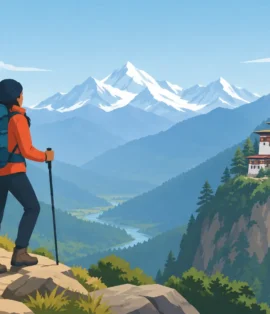
The strongest programmes connect place with purpose. A geography class studying rivers and mountain environments can see how Himalayan communities depend on glacial water, terraced farming and changing weather patterns. Students of history and religion can better understand Buddhist and Hindu traditions by respectfully visiting monasteries, temples and living heritage sites. A trek can introduce resilience, teamwork and responsible decision-making in ways that are difficult to reproduce at school.
This does not mean every hour needs a worksheet or a lecture. Too much structure can turn an exciting journey into school relocated overseas. The value often lies in a balance: a knowledgeable guide provides context, a planned activity gives students a focus, and unhurried time lets them notice the details themselves.
Real learning also includes the small moments. Ordering food with patience, adapting to a different daily routine, sharing a room, coping when rain changes a plan, and recognising that another community may see the world differently all build maturity. These are not extras around the itinerary. They are part of the experience.
Why Asia Works So Well for Student Groups
Asia offers a remarkable range of learning environments within journeys that can be tailored to different ages, abilities and subjects. Nepal combines dramatic landscapes with living culture, making it particularly suitable for outdoor education, geography, sustainability and personal development. A carefully paced trek around the Annapurna region or a shorter Poon Hill route can be achievable for active student groups without requiring technical climbing experience.
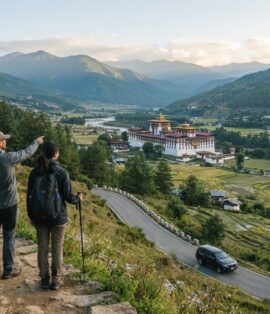
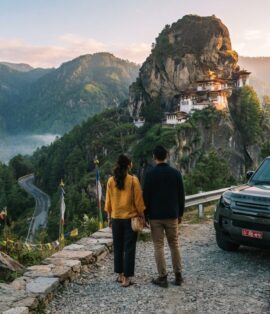
Bhutan offers a thoughtful setting for discussions around culture, conservation and national identity. India can bring together architecture, faith, food, history and contemporary social change. In Cambodia and Vietnam, students can explore powerful heritage, community life and the lasting effects of conflict and renewal. Sri Lanka, Malaysia and Indonesia offer equally valuable opportunities through biodiversity, coastal environments, cultural traditions and conservation projects.
The best destination depends on the group. Younger pupils may benefit from a programme based around cultural activities, accessible walks and supervised community encounters. Older students may be ready for multi-day trekking, field-based environmental study or a more demanding expedition element. A good itinerary should stretch a group without making hardship the main event.
Educational Travel Needs Careful Pacing
For a school or college group, the route on paper is only the beginning. Flight timings, road journeys, meal arrangements, accommodation standards, staff-to-student ratios and access to medical support all shape whether the programme feels inspiring or exhausting. In mountain destinations, acclimatisation is especially important.
Students travelling to higher altitudes need time for their bodies to adjust. A responsible Himalayan itinerary builds in gradual ascent, rest or acclimatisation days, realistic walking times and experienced guide support. Rushing to reach a high viewpoint may look efficient, but it can compromise wellbeing and reduce what students are able to take from the journey. Altitude plans should always put health ahead of a fixed schedule.
Pacing matters culturally too. Visiting several cities in rapid succession may sound ambitious, but it can leave little time for genuine understanding. One well-guided morning at a monastery, village, museum or conservation site can be more valuable than a hurried day of check-box sightseeing. Students need time to ask thoughtful questions, record observations and talk through what they have seen.
Build Learning Before Departure
The journey should begin well before the airport. A pre-departure session can introduce the destination’s history, customs, climate and practical expectations. It is also the right time to discuss respectful photography, appropriate dress at religious sites, waste reduction and the importance of listening to local voices rather than treating communities as attractions.
Giving students a simple enquiry question helps them travel with curiosity. They might consider how mountain tourism affects local livelihoods, how a community protects a forest, or how faith shapes daily life in a particular place. The question should be open enough to encourage observation, not so narrow that students overlook everything else.
Teachers can also prepare students for the fact that travel sometimes changes plans. A delayed domestic flight, rain on a trail or a road closure is not ideal, but it can become a useful lesson in flexibility and group cooperation when handled calmly. Clear expectations before departure make these moments easier to manage.
Make Reflection Part of the Itinerary
Reflection is where experience begins to settle into understanding. This need not be formal or time-consuming. Ten minutes at the end of the day for a journal entry, a small group discussion or a shared observation can help students connect events to the themes they are studying.
Prompts work best when they invite honesty. Ask what surprised them, what felt unfamiliar, whose perspective they may have missed, or what responsibility visitors have in the place they have entered. Students may return with more questions than answers. That is often a sign that a programme has made them think seriously.
After the trip, presentations, photo essays, field reports or a school assembly can extend the value of the experience. They also help students share the journey with classmates and families without reducing it to a gallery of scenic images.
Safety Is What Gives Adventure Its Confidence
Adventure and careful planning belong together. Parents and educators need to know who is meeting the group on arrival, how transport is checked, where students will stay, what happens if someone becomes unwell and who can make decisions if conditions change. These details should be clear before anyone travels.
In remote and high-altitude areas, local knowledge is invaluable. Guides who understand the trail, weather patterns, lodge networks and local health facilities can make practical decisions early, rather than reacting after a problem develops. They also bring a depth of cultural insight that no standard guidebook can offer.
Brothers Team plans educational and active group journeys with this balance in mind, drawing on Kathmandu-based operations, experienced local teams and careful coordination of transport, permits, accommodation, meals and on-trip support. For group leaders, this means more time can be spent with students and less time spent trying to solve logistics from a distance.
Risk management should not remove every challenge. A challenging walk, an early start for a mountain view or a new cultural setting can be precisely what makes the experience memorable. The aim is managed challenge: enough support for students to feel safe, and enough responsibility for them to grow.
Choosing the Right Programme for Your Group
Start with the learning outcomes, then choose the destination and activity level to match. A programme built around a trendy location rather than a clear educational purpose can be difficult to justify and harder to deliver well. Consider the group’s age, previous travel experience, fitness, medical needs, budget and the amount of time available.
Be realistic about journey times. Mountain roads can be slower than expected, and travel between regions may take a full day. A less crowded itinerary with meaningful activities, comfortable rest and contingency time is usually more successful than an overfilled schedule. It also gives local guides room to adapt when weather or group energy requires it.
Ask practical questions of any operator: who leads the group on the ground, how is altitude managed, what emergency procedures are in place, how are dietary needs handled, and what experience do they have with young travellers? The answers reveal whether a programme has been designed for real group travel or simply adapted from a general holiday itinerary.
A well-planned educational journey does not promise that every student will return transformed in the same way. Some may discover a love of mountains; others may become more interested in history, conservation or another culture. What matters is that they return with wider horizons, stronger confidence and a more thoughtful way of seeing the places and people beyond their own familiar routines.


Comments are closed