


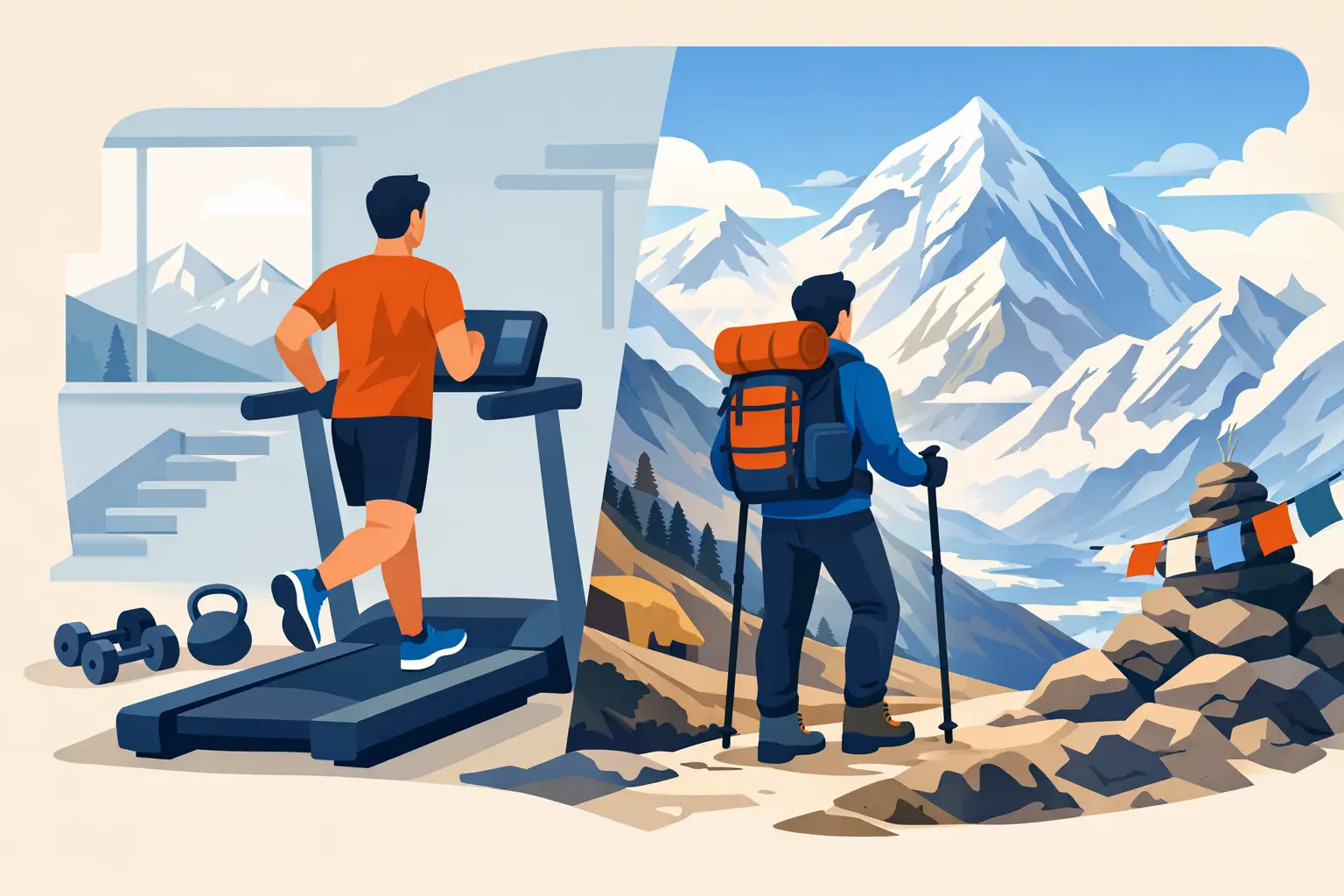
How to Train for Trekking in the Himalayas
A long uphill morning feels very different when you are carrying a daypack, climbing stone steps and breathing thin Himalayan air. Knowing how to train for trekking means preparing for that real combination – not simply trying to run faster or lift heavier weights. Whether you are planning Poon Hill, Annapurna, Everest Base Camp or a route involving Gokyo Lakes and Cho-La Pass, the aim is to arrive with enough fitness to enjoy the mountains, the villages and the journey between them.
How to train for trekking: start with the route
Your training should reflect the trek you have booked. A lower-altitude trail with moderate daily distances calls for a different approach from a high Himalayan itinerary with several consecutive days of climbing, uneven ground and early starts. Look at the likely walking hours, total ascent, trail conditions, maximum altitude and whether you will carry a full pack or only a daypack.
For many first-time trekkers, the biggest surprise is not one steep climb. It is waking up and doing it again the next day. Build training around consistency and time on your feet, rather than chasing a single hard gym session each week.
Give yourself eight to twelve weeks where possible. If you already walk regularly and have a good fitness base, six weeks may be enough for a moderate trek. For Everest Base Camp, high passes or peak-climbing preparation, allow longer and progress more gradually. A rushed programme is more likely to leave you tired or injured before your holiday begins.
Build the engine for long mountain days
Trekking is primarily an endurance activity. You need a comfortable aerobic base that lets you keep moving for hours, recover overnight and still have energy for the next day’s trail. Brisk walking is the most specific starting point, but cycling, swimming, jogging, rowing and cross-training can all support your fitness.
Aim for three cardiovascular sessions each week. Most should feel steady rather than exhausting: you can speak in short sentences, but would not want to hold a long conversation. Start with 30 to 45 minutes and gradually extend one session into a longer walk, ideally outdoors.
Your weekly long walk is particularly valuable. Begin at a distance that feels manageable, then add time or ascent in small increments. Work towards four to six hours on your feet for a moderate Himalayan trek. More demanding routes may require longer outings, but there is no prize for overdoing it. Finishing a training walk able to train again later in the week is better than being sore for several days.
If you live in Singapore or another flat city, use what is available. Stairwells, stadium steps, a treadmill set to an incline, hilly park routes and a step machine can all develop climbing endurance. Alternate sustained uphill efforts with an easy recovery period, then build the duration gradually. Downhill fitness matters too: descend steps under control, as this prepares your thighs and knees for long mountain descents.
Add strength where trekkers need it most
Strong legs make ascents more efficient, while a stable core and upper body help you move confidently with a pack. You do not need an athlete’s physique, but two focused strength sessions each week can make a noticeable difference on the trail.
Prioritise movements that work several joints at once: squats or sit-to-stands, lunges, step-ups, deadlifts with a manageable weight and calf raises. Step-ups are especially useful because they resemble the repeated climbing motion of a trek. Start with a low box or step and good form, then add height, repetitions or a light pack over time.
Include simple core work such as planks, side planks and controlled carries. These support posture when you are walking for hours with a daypack. Upper-body exercises, including rows and press-ups, are helpful for using trekking poles and carrying your belongings, but legs, balance and endurance should receive most of your attention.
Quality matters more than load. If a knee caves in during a lunge or your back rounds during a lift, reduce the weight and ask a qualified trainer for guidance. Anyone returning from injury, managing joint pain or living with a medical condition should seek individual advice before beginning a new programme.
Train with the footwear and pack you will use
A trek is not the place to discover that your boots rub your heel or your pack pulls on your shoulders. Wear your intended trekking footwear on progressively longer walks, using the same socks you plan to take. Boots should be properly broken in, but not worn out. If your route has well-maintained trails and you prefer lightweight walking shoes, train in those instead.
Once your walking base is established, add a pack to one or two sessions each week. Begin with a light load and increase it slowly towards the weight you expect to carry. On many supported Himalayan treks, a porter carries the main duffel while you carry water, layers, sunscreen, snacks and personal essentials. That is still enough weight to affect your shoulders, hips and balance on rough terrain.
Practise using trekking poles if you intend to bring them. They can reduce strain on descents and provide rhythm on climbs, but only if adjusted to the right height and used naturally. A few local hill walks are far better than trying them for the first time on a rocky path above Namche Bazaar.
Prepare for altitude, but do not confuse it with fitness
Excellent fitness does not guarantee an easy experience at altitude. Acute mountain sickness can affect fit, experienced travellers as well as slower walkers. Training improves your ability to cope with the physical work of trekking, but acclimatisation depends on gaining height at a sensible pace, allowing rest days and responding early to symptoms.
You cannot fully replicate high altitude at sea level. Altitude masks and breath-holding exercises are not a substitute for a well-planned itinerary. The most useful preparation is to arrive healthy, avoid an exhausting final week of training, stay hydrated and follow your guide’s advice once on the trail.
Headache, poor sleep or reduced appetite can occur while acclimatising. However, severe or worsening symptoms must never be ignored. A responsible trekking plan includes flexible pacing and the willingness to descend if needed. At Brothers Team, altitude planning and local guide support are treated as part of the journey, not an afterthought.
A practical training week for trekking
As your fitness develops, a balanced week could include the following:
- One longer outdoor walk, gradually building duration and elevation.
- One hill, stairs or treadmill-incline session with controlled uphill intervals.
- One steady aerobic session, such as a brisk walk, cycle, swim or easy jog.
- Two full-body strength sessions, with a rest day between them if possible.
- One or two lighter days for mobility, stretching or an easy walk.
This is a framework, not a rulebook. If you are new to exercise, start with fewer sessions and build from there. If you are already active, replace some general cardio with more hill walking and pack practice. The closer your training resembles the rhythm of your planned trek, the more useful it becomes.
Do not neglect recovery, mobility and trail skills
Training gains happen during recovery. Sleep well, eat enough protein and carbohydrates to support your activity, and keep easy days genuinely easy. Sudden increases in distance, steep descents or pack weight are common causes of avoidable aches. A little stiffness is normal; sharp pain, swelling or pain that changes your gait is a signal to stop and get advice.
Spend a few minutes after training on ankle, hip and calf mobility, particularly if you sit for long periods at work. Single-leg balance work is also worthwhile. Stand on one leg while brushing your teeth, progress to gentle reaches, or practise on varied ground during walks. Mountain trails are rarely flat, and confidence on uneven surfaces saves energy.
Finally, practise the small habits that make a long trekking day smoother: drinking regularly, adjusting layers before you overheat, eating snacks before you feel drained and keeping a steady pace. The strongest walker is not always the one who charges ahead. It is often the person who moves patiently, listens to their body and arrives at the lodge with enough energy to enjoy the evening.
Train with purpose, then let the mountains set their own pace. A well-prepared body gives you more room to notice prayer flags in the wind, share a cup of tea with fellow trekkers and savour every hard-earned view.


Comments are closed