


Nepal Peak Climbing Permits: What to Know
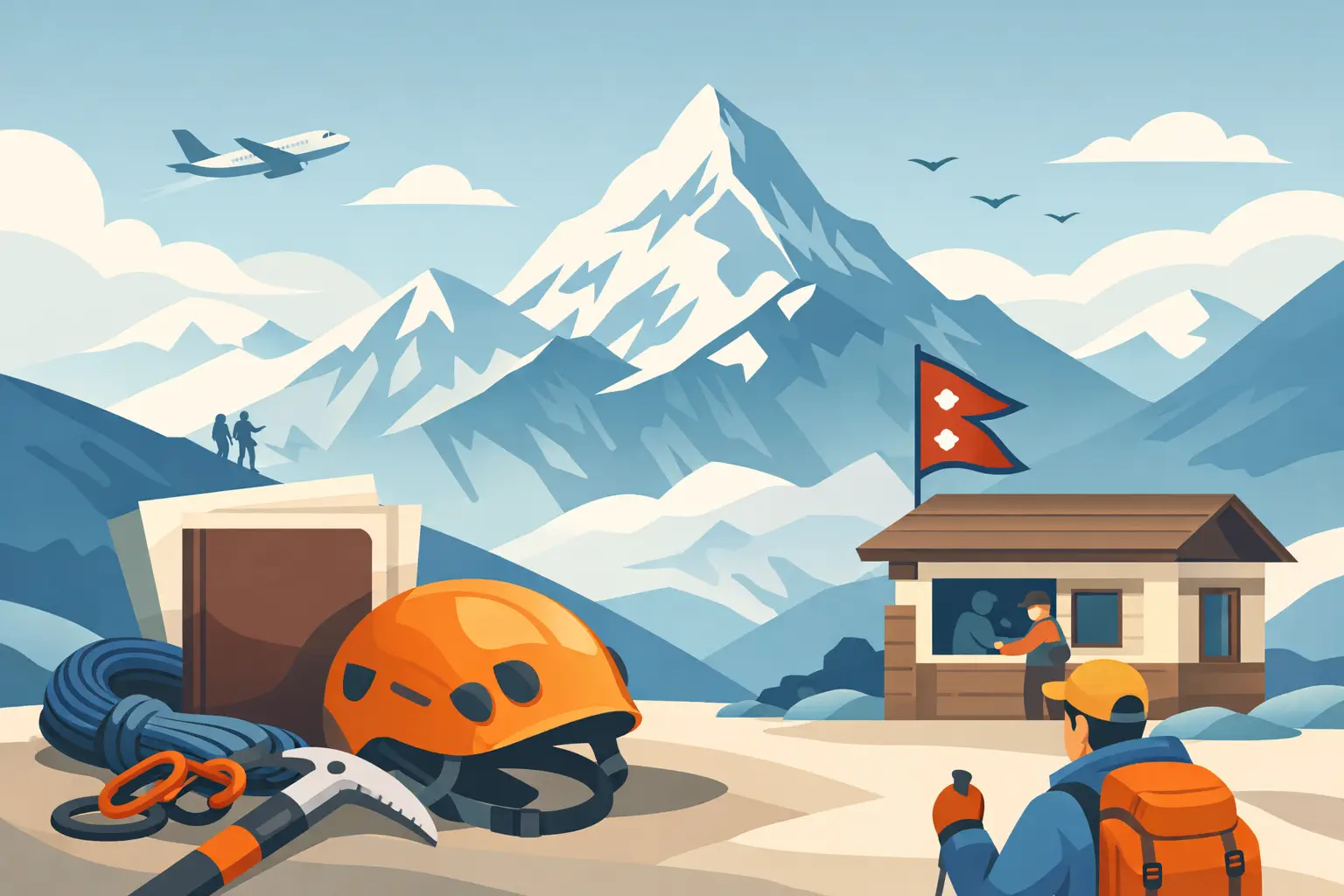
A summit day in Nepal may begin before midnight, with crampons biting into frozen ground and a headtorch tracing the line towards a high col. Long before that moment, however, the climb begins with Nepal peak climbing permits. The right permit is not merely paperwork. It confirms that your chosen mountain, route, season, guide team and supporting logistics have been properly considered.
For travellers coming from Singapore or further afield, Nepal’s permit system can look confusing at first. There are different authorities, changing fee schedules and separate access requirements for the valleys leading to a peak. With a capable local operator, the process is manageable. The important part is understanding what is being arranged, why it matters and where a climbing plan needs more than a trekking itinerary.
Nepal Peak Climbing Permits: Which Authority Applies?
Nepal broadly distinguishes between trekking peaks and expedition peaks. Trekking peaks are still serious high-altitude objectives, often requiring ropes, ice axe and crampons, but are generally managed under a different system from Nepal’s major expedition mountains.
Many popular objectives, including Island Peak, Mera Peak, Lobuche East and Pisang Peak, fall within the trekking-peak framework administered by the Nepal Mountaineering Association. Your climbing agency applies for the climbing permit on behalf of the group. The permit is issued for a named peak, a defined climbing period and a list of climbers.
Higher expedition mountains, including peaks governed by the Department of Tourism, follow a more formal expedition process. These climbs can involve additional documentation, stricter operational conditions, environmental obligations and, depending on the mountain and current regulations, liaison arrangements. A peak’s height alone does not tell you which system applies. Its official classification does.
This distinction matters because a trek to Everest Base Camp is not the same as an Island Peak climb added to that trek. The approach route may be familiar, but climbing above base camp requires a separate permit, qualified climbing support and technical preparation.
More Than One Permit May Be Needed
A peak-climbing permit covers the summit objective. It does not automatically cover every place you pass through to reach it. Depending on your itinerary, your trip may also require entry permits for national parks, conservation areas or restricted regions.
For example, a climbing journey in the Everest region generally includes Sagarmatha National Park entry, while a peak in the Annapurna region may involve Annapurna Conservation Area access. Restricted-area routes have their own conditions, often including minimum group sizes and a licensed Nepali agency. These requirements can change, so the final documentation should always be checked against the current rules before travel.
There may also be local municipality charges, route-specific registrations or trekking documentation requested in particular regions. These are usually straightforward when handled in Kathmandu before departure, but they should be included in your trip costing rather than treated as a surprise on the trail.
What Your Climbing Agency Needs From You
Permit applications are normally submitted through a registered Nepalese agency. You will be asked for passport details, passport-sized photographs, your intended dates and personal information that must match your travel documents exactly. A spelling difference between a passport and an application can create unnecessary delays.
Your operator will also need to know the full climbing party, the peak, the planned route and the Nepal dates surrounding the climb. Do not assume you can swap a climber at the last minute or extend the climb indefinitely once a permit is issued. Amendments may be possible, but they take time and can involve additional charges.
Good planning begins well before your flight. Share your passport copy early, make sure it has sufficient validity, and confirm whether your itinerary has contingency days. Himalayan weather, domestic flight delays and acclimatisation needs are real factors. A permit date should support a sensible mountain schedule, not force a hurried summit attempt.
Permit Fees Depend on Peak and Season
There is no single price for a Nepal climbing permit. Fees vary by the peak, the season and the governing authority. For trekking peaks, seasons are commonly divided into spring, autumn/winter and monsoon/summer periods, with the busiest climbing windows often carrying higher charges.
Spring, usually March to May, is popular for stable climbing conditions and expedition activity. Autumn, generally September to November, offers clear post-monsoon skies and is another excellent period for many peaks. Winter can be quieter and beautiful, but colder temperatures and heavier snow may make a technical summit more demanding. Monsoon climbs can work in selected rain-shadow areas, yet flight disruption, wet trails and cloud cover require flexibility.
When comparing quotations, ask what is included. A low headline price may exclude climbing permit fees, national park entry, staff insurance, waste-related deposits, equipment, summit bonuses, domestic flights or emergency costs. The clearest quote separates the permit and government charges from guiding, accommodation, food and transport.
Fees are revised from time to time. Rather than relying on an old blog post or a friend’s past receipt, request a current, itemised costing for your exact peak and travel dates.
The Permit Is Only One Part of a Safe Climb
A permit allows a legal attempt. It does not make the mountain suitable for every traveller. Mera Peak is often chosen by strong trekkers seeking a first Himalayan summit, but its altitude is considerable. Island Peak and Lobuche East add technical demands that can become much harder when tired, cold and short of breath.
The best itinerary builds acclimatisation into the approach rather than treating it as spare time. This means gradual ascent, planned rest or acclimatisation days, and the freedom to adjust if someone develops symptoms of altitude illness. A summit is always optional. Returning safely with the group is the measure of a well-managed journey.
For many trekking peaks, a qualified climbing guide will provide a pre-climb skills session covering harness use, fixed ropes, crampons, ice axe handling and ascender technique. That session is valuable, but it is not a substitute for fitness. Train for sustained uphill days with a loaded pack, uneven terrain and several consecutive days of effort. If you have limited experience with snow or rope systems, choose a peak and itinerary that allow time to learn without pressure.
Travel and rescue insurance also deserve careful attention. Standard holiday insurance may exclude climbing above a certain altitude, use of technical equipment or helicopter evacuation. Read the policy wording, declare the activity accurately and carry the emergency contact details with you. Your agency should arrange appropriate insurance for its Nepal-based climbing staff as well.
Choosing the Right Peak for Your Experience
The most memorable first climb is rarely the highest or most fashionable option. It is the one that matches your fitness, technical experience, available time and appetite for uncertainty.
Mera Peak suits trekkers who can manage long high-altitude days and want an accessible introduction to glacier travel. Island Peak offers a more technical finish, with fixed ropes and a steeper summit section. Lobuche East is often chosen by climbers looking for a demanding progression after previous Himalayan trekking. Peaks such as Yala or Pisang can be attractive alternatives, but conditions, approach logistics and official rules differ from season to season.
A reliable operator will ask about your previous altitude, winter walking, rope experience and training rather than simply selling the most ambitious summit. At Brothers Team, this conversation is part of building a route that gives you a genuine chance to enjoy the climb, not just endure it.
Questions Worth Asking Before You Book
Is the climbing permit included in the quoted price?
Ask for confirmation in writing, along with the national park or conservation fees and any deposits or local charges. You should know exactly what is paid before leaving Kathmandu.
Who will lead the technical climbing section?
Clarify whether you will have a qualified climbing guide, how many climbers are assigned to each guide and what equipment is provided. The guide-to-climber ratio matters most on summit day, when the team may be moving on snow, ice or fixed lines.
What happens if weather or altitude changes the plan?
A responsible itinerary includes contingency time and a clear decision-making process. No operator can guarantee a summit, but they can provide careful pacing, honest advice and practical alternatives if conditions are poor.
Do I need my own technical equipment?
This depends on the peak and operator. Crampons, boots, harnesses, helmets, ice axes and down clothing may be supplied, hired in Kathmandu or brought from home. Check fit, quality and compatibility in advance, especially for boots and crampons.
A Nepal peak climb is a powerful personal goal, but the best journeys leave room for the mountain to set the pace. Choose your peak with care, allow time to acclimatise, and let experienced local support handle the permits while you focus on arriving prepared, curious and ready for the next step upwards.



Comments are closed