


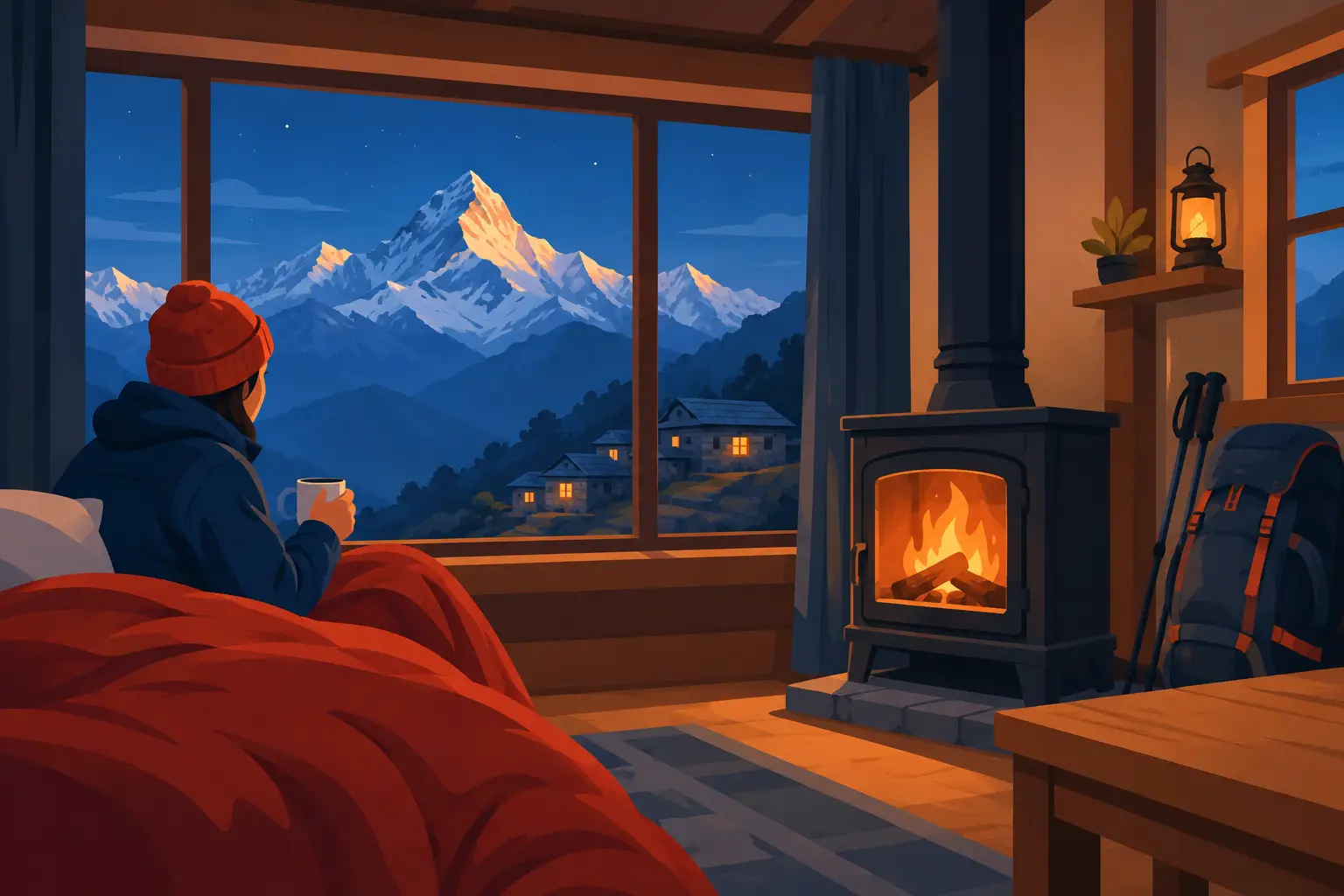
Are Nepal Lodges Heated? A Trekker’s Night Guide
The question “are Nepal lodges heated?” matters far more when you are packing for Everest Base Camp or Annapurna than when you are looking at route maps. After a full day of walking, temperatures can fall sharply once the sun leaves the valley. A warm meal, a proper sleeping bag and realistic expectations about your room can make the difference between a memorable mountain night and a long, chilly one.
The short answer is that most Nepal trekking lodges have heating in their communal dining room, but not in the bedrooms. This is particularly true on higher Himalayan routes, where fuel is expensive, electricity can be limited and temperatures can drop below freezing overnight. Tea houses remain welcoming, sociable places to rest, eat and share stories, but they are not centrally heated hotels.
Are Nepal lodges heated on Everest and Annapurna treks?
On popular trekking routes such as Everest Base Camp, Gokyo Lakes, the Annapurna Circuit and Poon Hill, lodges generally provide a heated dining area in the evening. Depending on the location, this may be warmed by a stove fuelled with wood, dried yak dung or another local fuel source. The stove is usually lit from late afternoon, when trekkers return from the trail, until after dinner.
This dining room becomes the heart of the lodge. You will often find trekkers gathered around the warmth with a cup of ginger tea, hot lemon or soup, drying damp gloves at a sensible distance and discussing the next day’s ascent. It is one of the small pleasures of lodge trekking in Nepal.
Bedrooms are different. Most have simple twin beds, mattresses, pillows and blankets, though the quality and thickness of bedding varies considerably. Rooms are rarely heated. At lower elevations, particularly on gentler Annapurna routes, the temperature may feel perfectly manageable with a good sleeping bag. Above roughly 3,500 metres, and especially in the Everest region, a cold bedroom should be expected during the main trekking seasons.
At high points such as Dingboche, Lobuche, Gorak Shep, Dzongla or Gokyo, water bottles may freeze overnight in the coldest periods. The lodge itself can still feel comfortable and well run, but warmth comes from what you wear and bring rather than from a radiator in the room.
Why bedroom heating is uncommon
It is tempting to judge a lodge by city-hotel standards, but Himalayan tea houses operate in challenging conditions. Fuel has to be brought in by porter, pack animal or, in remote areas, helicopter. Using it to heat every room would be costly and environmentally demanding.
Many lodges also have timber walls, basic insulation and shared washing facilities. A stove in every bedroom would create practical fire and ventilation concerns. Concentrating heat in one communal area is safer, more efficient and keeps the lodge’s operating costs more reasonable for trekkers.
This does not mean every lodge is basic or uncomfortable. On established trails, tea houses have improved greatly over the years. You may find electric blankets, attached bathrooms, charging points, Wi-Fi and heated dining rooms at selected lodges. However, these services are not guaranteed, and their availability depends on altitude, season, weather and the lodge’s power supply.
Everest region lodges
Everest trails are often colder than first-time trekkers anticipate, especially from Namche Bazaar upwards. Many lodges offer an excellent dining-room atmosphere, but bedrooms at altitude can be very cold from November to March. During spring and autumn, nights remain cold even when daytime walking conditions are pleasant and sunny.
Some premium lodges at lower elevations offer more comfort, including heating options in rooms. Once you move into the higher Khumbu, choices narrow and a practical approach becomes essential. A warm sleeping bag is not an optional extra for Everest Base Camp, Gokyo or Cho-La Pass itineraries.
Annapurna region lodges
The Annapurna region covers a broad range of climates. Poon Hill and lower Annapurna trails are usually milder than the Everest Base Camp route, particularly in villages below 3,000 metres. Still, mornings can be crisp and unheated rooms can feel cold at night during autumn, winter and early spring.
On the Annapurna Circuit, temperatures become much more serious as you approach Manang, Thorong Phedi and Thorong La. Here, the lodge dining room may be heated in the evening, while bedrooms remain unheated. If you are crossing the pass, conserving warmth and getting a good night’s rest before an early start are important parts of your preparation.
How to stay warm in a Nepal tea house
The right kit is more reliable than hoping for a heater. For high-altitude trekking, choose a sleeping bag rated for conditions below freezing. A comfort rating around -10°C is a sensible benchmark for many Everest Base Camp and high Annapurna itineraries, although the ideal rating depends on your season, how cold you sleep and whether your operator provides additional blankets.
Sleeping bag liners can add a little warmth and keep your bag clean, but they are not a substitute for an appropriately rated sleeping bag. If you tend to feel cold, ask for an extra lodge blanket early, before the busiest part of the evening. Availability is usually good on established routes, but it is never wise to rely on one.
Wear dry layers in bed. A clean thermal base layer, warm socks and a beanie can be remarkably effective. Keep the clothing you will need at dawn inside your sleeping bag or close beside it, rather than leaving it on a cold floor. A down jacket can also serve as an extra layer over your sleeping bag if needed.
A filled hot-water bottle is one of the most useful comforts on the trail. Many lodges can provide hot water for a charge. Place the bottle near your feet, ensure the cap is tightly sealed, and wrap it in a spare sock or fleece to avoid direct contact with your skin. Never use a damaged bottle.
Avoid going to bed dehydrated simply because you do not want to leave your warm sleeping bag for the toilet. Good hydration supports acclimatisation and recovery. Instead, keep a head torch, warm layer and footwear arranged where you can reach them easily. A small insulated flask of warm water can be welcome overnight and useful for the following morning.
What to expect by season
October and November bring clear skies and busy lodges, but the evenings become colder as autumn progresses. March to May offers longer daylight and warming daytime temperatures, although high-altitude nights remain cold. In December, January and February, rooms can be extremely cold and some lodges or facilities may operate on reduced schedules.
During the monsoon months, temperatures at lower altitude are warmer, but damp clothing creates a different challenge. Rooms are still generally unheated, so it is vital to protect spare layers and your sleeping bag from moisture. A dry bag or waterproof liner inside your trekking duffel is a simple safeguard.
Weather can change quickly in the Himalaya. Even in peak trekking season, a cold spell, snow or strong wind can make an ordinary lodge night feel much colder than anticipated. That is why a carefully paced itinerary, experienced guide support and sensible packing matter as much as fitness.
Should you pay for extra room heating?
At some lower-altitude or more developed lodges, you may be offered an electric blanket, a heater or a room with better insulation. These can be worthwhile comforts, particularly for travellers who sleep cold, but do not build your entire plan around them. Power may be limited, the cost can be higher at altitude and equipment may not operate during an outage.
A personal heater is generally not practical to carry and should not be used in a room without the lodge’s approval. Fire safety, overloaded sockets and poor ventilation are real concerns. Your guide can advise on what is available at each stop and help you make sensible choices without wasting energy or money.
For most trekkers, the best approach is straightforward: enjoy the warmth and company of the dining room, have dinner and hot drinks, then retreat to bed with dry layers, a proper sleeping bag and a hot-water bottle. Brothers Team plans lodge-based Himalayan journeys with these real trail conditions in mind, so you know what level of comfort to expect before setting out.
A cold room does not have to spoil the experience. With the right preparation, those quiet nights beneath the mountains become part of the story: a head torch glowing softly, frost on the window, and the anticipation of another remarkable day on the trail.


Comments are closed