


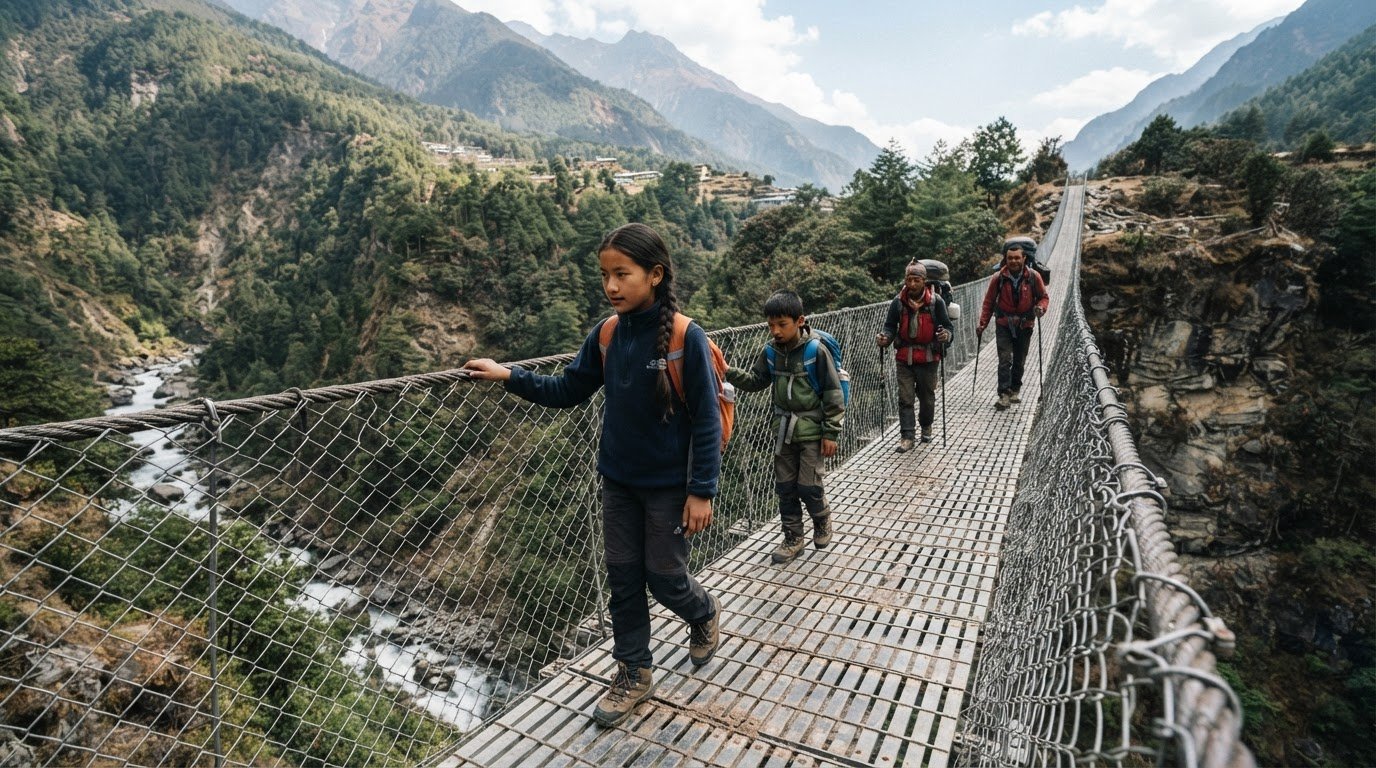
International School Trekking Expeditions for Students
A well-planned international school trekking expedition helps students build resilience, independence and teamwork through shared outdoor challenges. The route, pace and support should suit students’ ages, abilities and experience. Practical risk planning and appropriate camp facilities help the group feel prepared.
It’s natural to want an adventure that feels exciting without asking students to take on more than they’re ready for. A rewarding trek gives them room to grow, work together and discover what they can do, with thoughtful planning shaped around the group.
Learn how trekking can support student development, suit different age groups and address practical considerations such as risk management and camp accommodation. You’ll also find out how to shape a school trip around students’ needs and the experience you want them to bring home.
Key Takeaways
- Use trekking challenges to help students practise resilience, independence and collaboration in a real-world setting.
- Build risk planning around the route, group needs, supervision and student wellbeing, not just the itinerary.
- Match the expedition’s pace and level of challenge to students’ age, experience and outdoor skills.
- Consider camp accommodation and facilities as part of the overall experience, and explore a School & College Trip for a professionally planned journey.
Resilience, independence and collaboration
A Borneo trek calls for good fitness and mental resilience, making it a powerful setting for learning. Students encounter changing terrain, tired legs and shared decisions, rather than a classroom exercise. A carefully paced programme gives them opportunities to try, adjust and keep contributing. The aim isn’t for every student to perform alike, but for each person to take part meaningfully.
Build experiential learning into the route through practical responsibilities. For example, small groups can take turns checking that everyone is ready before the next walking stage. Students practise noticing what the team needs, communicating clearly and following through on a shared task. Adults remain responsible for supervision and decisions. Students gain independence within clear boundaries, rather than being left to manage difficult situations alone.
- Practise persistence: Set a group goal, such as reaching the next planned rest point together.
- Share responsibility: Rotate simple roles, such as encouraging a teammate or keeping the group organised.
- Reflect as a team: After a challenging section, invite students to name what helped them continue.
These experiences make a walk more than a physical challenge. A student who struggles with a steep section might accept encouragement, then offer it to someone else later. That exchange makes collaboration visible and gives educators a concrete way to discuss resilience: what felt difficult, what support helped, and what the student might try next time.
Make reflection part of the expedition, not an afterthought. At camp, a short group discussion can help students connect decisions on the trail with learning back at school. They might identify a moment when they listened well or a team habit they want to improve. These observations can also inform later projects, such as a group account of how the team handled a shared challenge.
Give students space to discover strengths they may not show in familiar settings. One might be a calm communicator; another may notice when a teammate needs support. With achievable responsibilities and thoughtful reflection, an international school trekking expedition can build confidence and consideration without turning the journey into a test of who is toughest.
Risk management and student wellbeing
A sound plan connects the route, supervision, health needs and emergency response. For students, that preparation also preserves space for learning and enjoyment outdoors.
Managing Expedition Risks
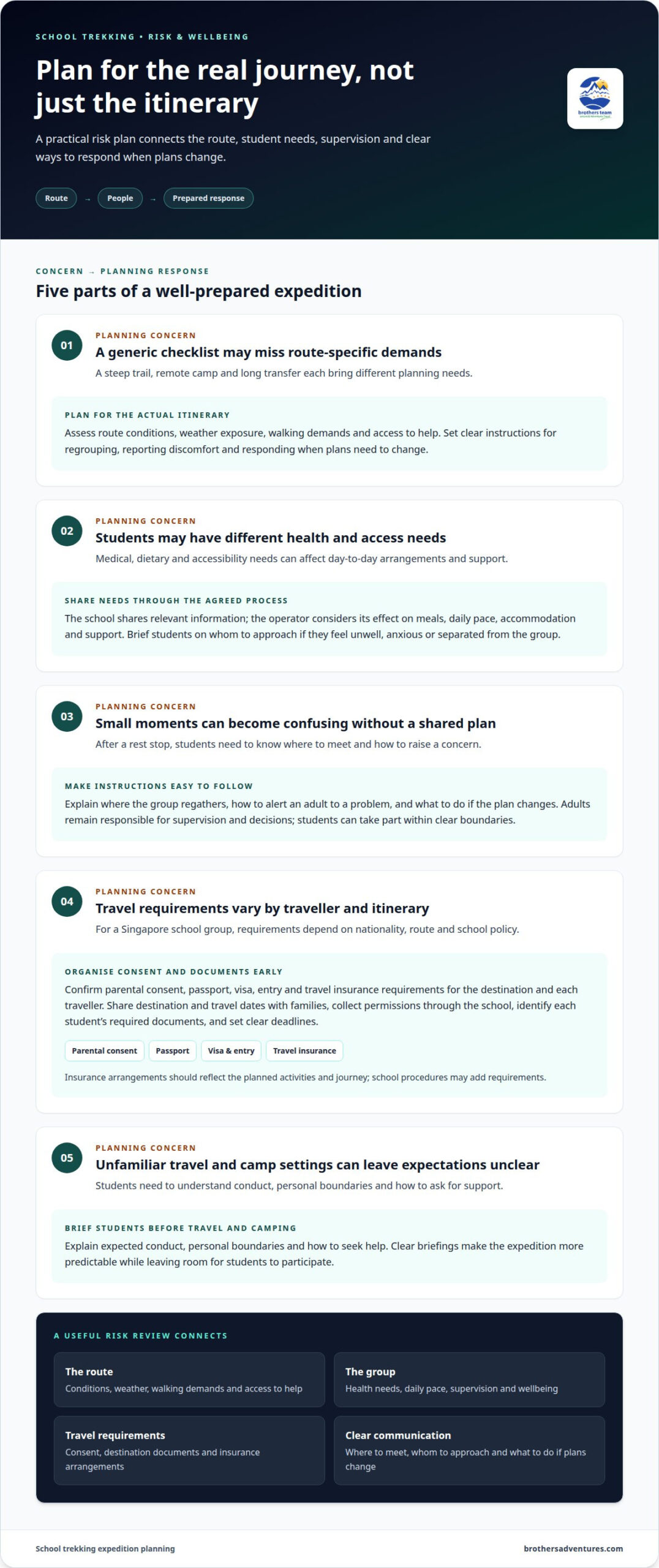
Start with the actual itinerary, not a generic checklist. A steep trail, a remote camp and a long transfer each bring different planning needs. The expedition team should assess route conditions, weather exposure, walking demands and access to help. Set clear instructions for regrouping, reporting discomfort and responding when plans need to change.
Include student wellbeing in planning from the start. The school should share relevant medical, dietary and accessibility needs through its agreed process. The operator can then consider how those needs affect meals, daily pace, accommodation and support. Clear briefings during the journey should tell students whom to approach if they feel unwell, anxious or separated from the group.
Consent and Travel Requirements
For a Singapore school group, plan for parental consent and confirm passport, visa, entry and travel insurance requirements for the destination and each traveller. Requirements depend on nationality, route and school policy, so build the document plan around the actual itinerary.
Keep the process organised: share the destination and travel dates with families, collect required permissions through the school, and identify the documents each student needs. Travel insurance arrangements should reflect the planned activities and journey, while school procedures may add requirements. Clear deadlines help families understand what to submit and when, without leaving document checks until departure.
A useful risk review covers small, practical moments too. The group should know where to meet after a rest stop and how students can alert an adult to a problem. Briefings before travel and camping can explain expected conduct, personal boundaries and how to ask for support. These steps make the expedition more predictable while leaving room for students to participate.
For schools considering a Nepal route, Nepal Expeditions & Peak Climbing offers a relevant starting point for discussing the journey’s terrain, itinerary and planning needs.
Age-appropriate wilderness expeditions
Choose a destination and route that suit students’ experience, fitness and learning goals. A suitable journey builds outdoor skills progressively, rather than treating every age group alike.
Choosing Suitable Destinations
Schools can consider overseas wilderness settings such as Borneo or Nepal, matching the destination to students’ readiness and learning aims. For groups seeking experiential learning and rugged cultural travel across the wider region, bestofpng.com provides examples of curated adventure journeys and community-centred itineraries. Borneo trekking calls for good fitness and mental resilience, so preparation is an important part of deciding whether it suits the group. Brothers International Tours & Trading Pte Ltd organises School & College Trips, with trip planning shaped around the school calendar, route and information supplied about the group.
Selecting Trekking Routes
For students travelling from Singapore, a suitable route depends on walking demands, terrain, available support and the group’s previous outdoor experience. A Borneo trek may suit students prepared for a physically and mentally demanding journey; less experienced groups need a route that allows skills to develop gradually. Providers should explain how each route’s challenge, daily plan and learning opportunities fit the intended group.
Preparing Fitness and Equipment
Assess students’ fitness against the planned route and their experience, then shape preparation advice around those demands. For a Borneo trek, good fitness and mental resilience are important considerations. Equipment guidance should reflect the route and conditions, covering suitable clothing, footwear and personal essentials rather than giving every group the same packing list. This gives students a clear, relevant preparation plan.
Matching Expeditions to Age
Progression can move from exploratory day trips to overnight camps for elementary students, then more demanding outdoor activities for secondary students. Australian International School students take a week-long overseas expedition in Year 5; Year 10 students travel overseas to refine outdoor skills. Students in Years 9 and 10 also participate in Duke of Edinburgh’s Award expeditions. These examples show how journey length, independence and leadership can grow with experience, rather than being set by age alone.
Camp accommodation and facilities
Camp arrangements shape how students rest, regroup and prepare for each day outdoors. For a school journey, assess accommodation and facilities alongside the hiking or climbing plan.
Camp Accommodation
In Sabah, traditional longhouses at Camp Tinangol may be up to 100 ft long. That gives schools a concrete example of communal-style accommodation to discuss when shaping an expedition. The provider should explain the sleeping arrangements, shared spaces and practical routines, then consider how they suit students’ ages, group needs and education goals.
Accommodation also affects the rhythm of an adventure. A camp that brings students together can support group reflection after a day outdoors, while clear expectations help everyone settle in. Plan for how the group arrives, stores personal belongings and gets ready for the next day’s activities. For mountain-based journeys and wilderness bases, options like Nordseter Fjellpark demonstrate how communal cabins and group lodges can support outdoor teams between active days.
Camp Facilities
Facilities influence daily routines as much as the route does. Camp Bongkud’s mains electricity is backed up by a generator available between 18:00 and 22:00. This schedule is a useful planning detail for evening activities, charging needs and preparation for the following day. The provider should build camp routines around the facilities available.
Consider how meals, washing arrangements and common areas fit the itinerary and students’ needs. These details affect comfort after hiking and help the group prepare for activities such as climbing. Review each camp’s facilities against the actual schedule, rather than assuming every site supports the same routine.
For a Nepal-focused school adventure, explore an itinerary with camp arrangements in mind. Discussing the route and overnight setting together helps align the experience with students’ learning aims and the school’s preferred style of travel.
Brothers International Tours & Trading Pte: School & College Trip
Brothers International Tours & Trading Pte offers a School & College Trip for schools planning a student journey. Turn to this option when you want professional support shaping an expedition around your group, educational aims and preferred destination. For a Nepal-focused adventure, the 8Days Scenic Nepal Mini Trek and 8Days Nepal Adventure Tour provide examples of trips to consider. Nepal Expeditions & Peak Climbing is another relevant offering for schools exploring a more challenging mountain experience.
Share your students’ age range, experience, learning goals and preferred travel period when discussing a trip. These details help shape the conversation about the route and itinerary. Contact Brothers International Tours & Trading Pte to discuss a School & College Trip for your students.
Start shaping the journey
Turn your school’s learning priorities into a clear trip brief. Consider what students should take away, which destination fits their experience, and what practical needs will shape the journey. With those choices in view, an international school trekking expedition can become a purposeful part of the school year, not simply a change of scenery.
For Nepal planning, Brothers International Tours & Trading Pte Ltd offers the 8Days Nepal Adventure Tour, 8Days Scenic Nepal Mini Trek and 5Day Nepal Luxury Tour. These give you starting points for discussing destination and trip style, while the school’s goals guide the conversation about the right fit.
Contact Brothers International Tours & Trading Pte Ltd to discuss your school’s expedition plans. Take the first step toward a journey your students can learn from and remember.
Frequently Asked Questions
What age groups and year levels can join school trekking expeditions?
Students from elementary through secondary years can take part when the challenge matches their readiness. Year level alone doesn’t determine suitability: consider previous outdoor experience, comfort with overnight stays, walking ability and capacity to follow group instructions. A student’s first wilderness experience may call for a shorter, more supported format, while experienced students may be ready for a greater leadership role.
How long are international school trekking expeditions, and what are typical itineraries?
Duration depends on the destination, route and school’s learning priorities. An itinerary may combine travel, guided walks, camp stays and time for cultural learning, with the balance shaped by the group’s needs. Brothers International Tours & Trading Pte lists Nepal trips with durations in their names, including the 8Days Nepal Adventure Tour and 8Days Scenic Nepal Mini Trek. These are trip examples, not a single standard school itinerary.
What safety measures, medical support, and emergency plans do school expeditions provide?
A well-planned expedition sets out supervision arrangements, communication procedures and steps for responding to illness, injury or changing conditions. Medical needs should inform decisions about the route, daily pace, meals and support. Before departure, the school and expedition team should agree how concerns are reported, who leads the response, and how families are contacted if plans change.
What are the risks of student trekking expeditions, including altitude sickness, weather, and injury?
Risks can include altitude-related illness, changing weather, slips, falls and fatigue. Their likelihood and seriousness depend on factors such as route, elevation, terrain and conditions during the journey. A practical plan considers how the group will respond if a student feels unwell or an outdoor section becomes unsuitable. Students should know to report discomfort promptly to supervising adults.


Comments are closed