


Bhutan Festival Travel Guide for Tshechu Trips
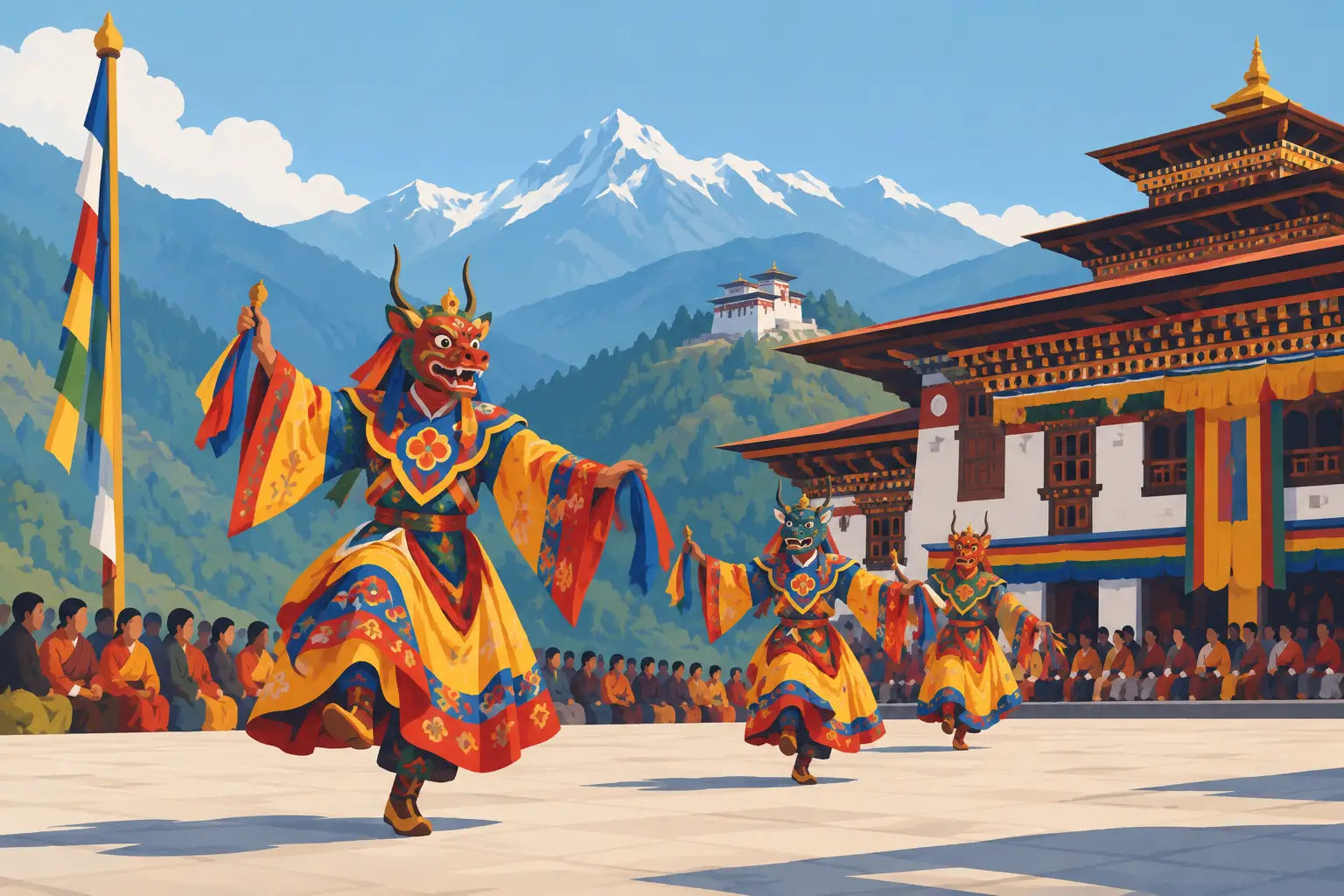
A Bhutanese tshechu does not feel like a performance arranged for visitors. Before sunrise, families in their finest gho and kira walk towards a dzong or monastery courtyard, carrying packed lunches and greeting neighbours. Monks prepare behind painted doors; horns, drums and chanting carry across the valley. By the time the masked dances begin, you are witnessing a living religious gathering with deep meaning for the people around you.
This Bhutan festival travel guide is for travellers who want to experience that atmosphere respectfully while building a comfortable, well-paced Himalayan holiday around it. Festivals can be one of the most memorable reasons to visit Bhutan, but they also make planning less flexible. Dates follow the lunar calendar, accommodation fills early, and the most celebrated events draw large local crowds. With the right expectations and careful arrangements, the rewards are considerable.
What makes a Bhutanese tshechu special?
Tshechus are annual Buddhist festivals, commonly held at dzongs and monasteries across Bhutan. The best-known celebrations take place in places such as Paro, Thimphu, Punakha, Gangtey and Bumthang, although smaller district festivals can offer a quieter and more intimate experience.
The programme centres on cham, or masked sacred dances. Dancers portray protective deities, animals and figures from Buddhist teachings, accompanied by traditional instruments and ritual music. These are not simply colourful displays. Many Bhutanese attend to receive blessings, honour religious traditions and gather with family. Watching with patience, rather than trying to photograph every moment, changes the experience entirely.
The scale varies greatly. A major Paro or Thimphu tshechu offers energy, colour and a broad cross-section of Bhutanese life, but it can also mean busier roads and limited hotel choice. A regional festival may be easier to absorb at a relaxed pace, particularly for travellers who value village walks, local encounters and time in the mountains. Neither is automatically better. The right choice depends on whether you prefer a landmark occasion or a more secluded cultural journey.
Choosing the best time for festival travel in Bhutan
Festival timing should come first, then the rest of your route can take shape around it. Dates move each year, so confirm the current calendar before committing to flights or leave. The spring and autumn festival periods are especially popular because they often coincide with clear mountain weather and pleasant daytime temperatures.
Spring brings rhododendrons at higher elevations, fresh green valleys and warmer days. It can be a good fit for travellers combining a tshechu with gentle walking in Paro, Punakha or the Phobjikha Valley. Autumn is usually drier, with crisp views of Himalayan peaks and excellent conditions for trekking. It is also a particularly busy period, so early planning matters.
Winter festivals have a different appeal. Days can be bright and quiet, particularly in western Bhutan, while mornings and evenings are cold. Fewer visitors can make the journey feel more personal, but high passes and higher-altitude areas may be affected by snow. Summer brings lush landscapes and fewer crowds, balanced against rain, cloud cover and possible travel disruption. For a festival-focused itinerary, local knowledge is useful in weighing the weather, road conditions and your preferred pace.
Allow time beyond the festival day
Do not plan to arrive on the morning of a major tshechu and leave immediately afterwards. A minimum of two or three nights in the festival area gives room for flight changes, road transfers and an unhurried visit. It also lets you see the destination beyond the courtyard: Paro’s farmhouses and hillside temples, Punakha’s rivers and rice fields, or Bumthang’s forested valleys and monasteries.
Bhutan’s roads are scenic but can be slow and winding. A journey that looks short on a map may take several hours. Building in sensible travel days is not lost time. It is what allows the festival to remain a highlight rather than a tightly scheduled obligation.
Booking permits, flights and accommodation
International visitors generally need their Bhutan visa and travel arrangements organised in advance through an approved Bhutanese operator or an overseas travel specialist working with one. Entry requirements, daily charges and permit arrangements can change, so rely on current official guidance and confirm the details before booking. Indian visitors have different entry procedures, though advance planning remains essential.
Paro is Bhutan’s main international airport and flights are weather dependent, especially in mountain conditions. Booking an itinerary with a little flexibility at the beginning or end is wise. Travellers coming from Singapore often connect through regional hubs, and flight schedules may influence which festival and route make the most sense.
Festival weeks place pressure on accommodation, guides and vehicles. This is most noticeable in Paro and Thimphu, where well-located hotels can be reserved many months ahead. Book early if you have a specific tshechu in mind, especially for a group, school trip or family holiday. A good ground team can coordinate permits, transport, hotel standards and guide availability as one journey rather than leaving you to solve each piece separately.
Festival etiquette: how to be a welcome guest
The simplest rule is to follow the behaviour of local attendees and the guidance of your guide. Dress modestly, covering shoulders and knees. Layers are practical because courtyards can be cold at the start of the day and warm in the afternoon. Remove hats where appropriate, keep your voice low during prayers and avoid stepping over religious objects.
Photography rules differ by venue and by ceremony. In some areas, photographs may be permitted from a designated space; inside temples, they are commonly prohibited. Never use flash around dancers or worshippers, and do not push forward for a close image. If in doubt, ask first. A respectful photograph is a bonus, not the purpose of the day.
Seating can be informal, and the best view is not always at the front. Find a place where you are not obstructing families, elderly attendees or monks moving through the courtyard. You may be offered butter tea, snacks or conversation. Accepting with warmth, even if you only take a small amount, is a gracious way to share the occasion.
What to pack for a Bhutan festival holiday
Pack for changing temperatures rather than for a formal event. Comfortable walking shoes are useful around dzongs, town streets and uneven courtyard edges, while a warm fleece or insulated jacket makes early starts far more pleasant. A lightweight waterproof layer is valuable in any season.
Bring modest clothing, sun protection, a reusable water bottle and a small day bag. A scarf can provide warmth and a little extra coverage when entering religious spaces. Keep valuables discreet and carry a power bank if you plan to use your mobile phone throughout a long festival day. If you are extending your trip with a trek, pack separately for the trail and let your itinerary include a chance to repack before heading into the mountains.
Altitude is another consideration. Paro and Thimphu sit high enough for some travellers to notice mild breathlessness or fatigue, while routes towards Dochula Pass, Phobjikha or Bumthang climb higher. Drink water, take the first days steadily and avoid cramming long drives, hikes and late nights into your arrival schedule. Bhutan is best experienced at a measured pace.
Building a journey around the celebration
A well-designed Bhutan festival holiday pairs the cultural intensity of a tshechu with quieter days. For a first visit, Paro, Thimphu and Punakha offer a balanced route of monasteries, valley scenery and manageable drives. Add Gangtey for wide open landscapes and black-necked crane habitat in season, or Bumthang for a deeper look at rural Bhutanese culture.
Active travellers can include the hike to Tiger’s Nest, a lower-altitude valley walk or a multi-day trek where timing allows. Be realistic about energy levels. A long festival day in a crowded courtyard can be tiring, and Tiger’s Nest deserves a fresh morning rather than being squeezed between road journeys. For school and organised groups, pacing, clear meeting points and an experienced guide are especially valuable during busy celebrations.
Brothers Team can help shape a festival departure around the places you most want to see, while arranging the practical details that make remote Himalayan travel feel well supported. The goal is not to rush from one photograph to the next, but to arrive prepared, comfortable and present.
Leave a little space in your plan for the unexpected: an invitation to share tea, a valley walk after the crowds have gone, or the sound of monastery horns carrying through the morning mist. Those unscheduled moments often become the part of Bhutan you remember longest.



Comments are closed