


Sikkim Himalayan trekking tour: seasons, Dzongri and local stays
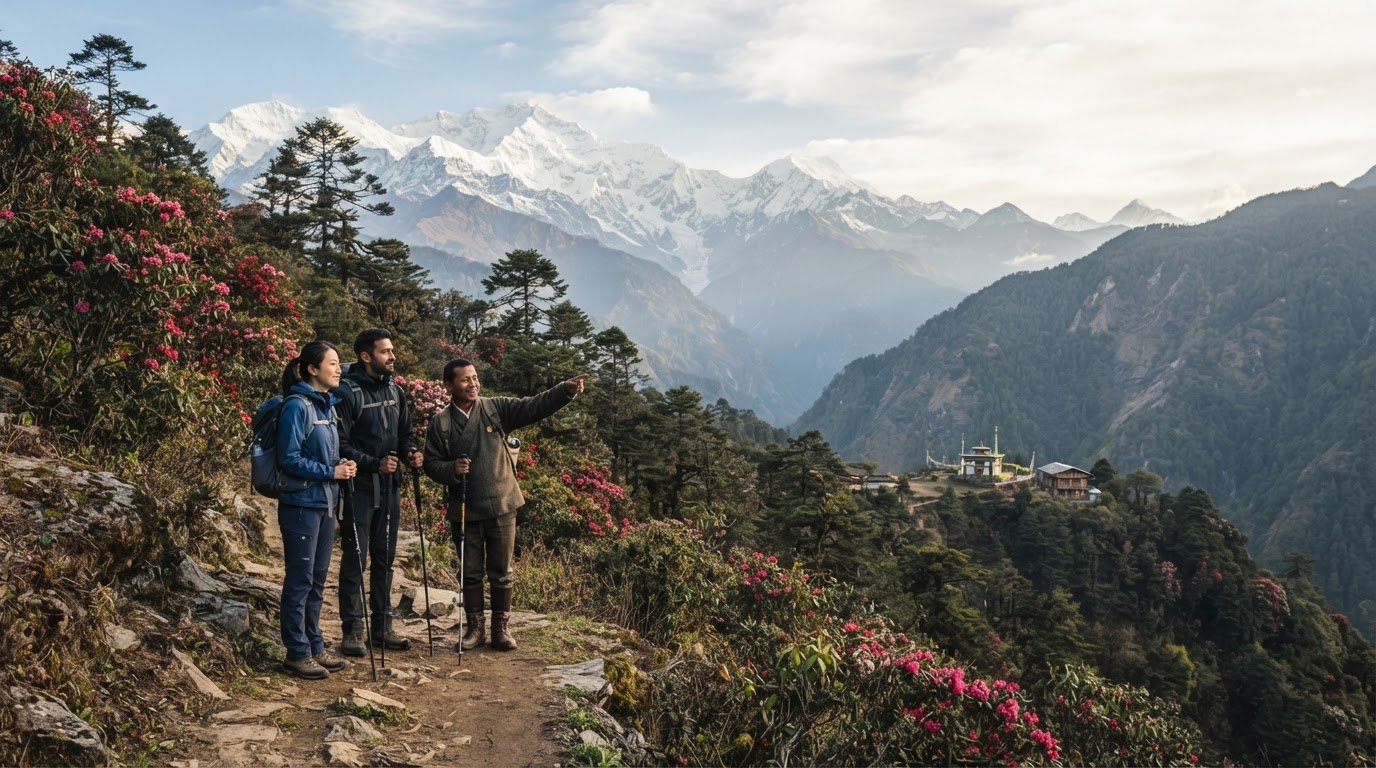
Plan a Sikkim Himalayan trekking tour for March to June or September to December, the recommended trekking windows. Through our expert planning at Brothers International Tours & Trading Pte Ltd, the Dzongri route from Yuksom to Dzongri Top and back takes 4 to 5 days, giving you a focused trek into Sikkim’s dramatic Himalayan landscape.
The draw is bigger than a trail or a summit viewpoint. Sikkim’s Himalayan landscape brings together mountain scenery, monasteries and local stays, offering a blend of nature and culture. You may already be picturing vast mountain views; choosing the right season and understanding the trek’s pace help turn that picture into a practical plan. Read on to compare the trekking seasons, see what to expect from Dzongri, and explore how homestays and monasteries can add a more rooted feel to the journey. The goal is simple: help you shape a trek that fits the experience you want, from crisp mountain days to meaningful encounters along the way.
Key Takeaways
- Choose between spring and autumn trekking windows by weighing the weather and the kind of mountain experience you want.
- Allow 4 to 5 days for the Dzongri route from Yuksom to Dzongri Top and back, and plan for changing Himalayan views along the way.
- Make room for local stays and monasteries to experience how Sikkim’s culture is woven into the journey.
- Explore how Sikkim’s dramatic range of elevations shapes its trekking landscape, from lower valleys to high mountain terrain.
1. Best seasons and weather
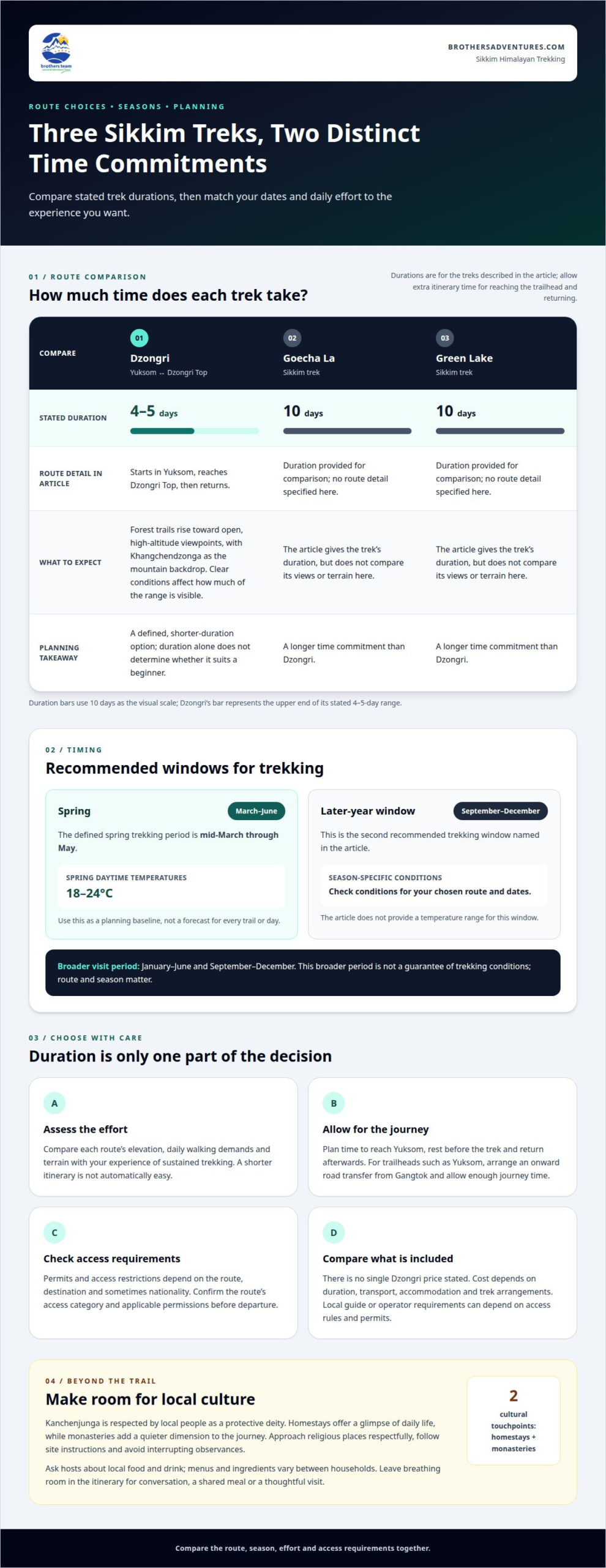
For trekking in Sikkim, the recommended windows are March to June and September to December. A broader visit period is January to June and September to December, but trekking conditions depend on the route and season. Spring trekking is described as mid-March through May, with daytime temperatures of 18 to 24 degrees Celsius. For a Sikkim Himalayan trekking tour, treat these figures as a planning baseline, not a forecast for every trail or day.
Match your dates to the experience you want. Spring offers a defined trekking window, while the broader recommended periods give you more flexibility. Before choosing an itinerary, compare the route, elevation profile, daily walking demands and seasonal conditions. Allow time to travel to the trailhead, too, rather than treating the trek as a stand-alone activity. Planning your route and dates together makes a Sikkim Himalayan trekking tour easier to organise.
Beginners should look for a shorter itinerary with manageable daily walking and a gradual increase in effort. The 4-to-5-day Dzongri route is a defined option, but duration alone doesn’t determine whether it suits a first trek. Consider your fitness, comfort with sustained walking and the route’s elevation before choosing.
Permit requirements depend on the route and the areas it enters. Identify your trail and prepare your travel identification details, then arrange the applicable permissions through the relevant Sikkim authorities or a registered local operator before departure.
Foreign visitors should plan around route-specific access restrictions, particularly for treks into protected or restricted areas. Confirm the route’s access category and arrange the required permissions before setting out. Requirements can vary by nationality and destination.
For trailheads such as Yuksom, plan an onward road transfer from Gangtok and allow enough time for the journey in your itinerary. Choose the transfer based on your trailhead and current route conditions. This helps keep your first trekking day focused on the trail, rather than a rushed arrival.
2. Dzongri Trek duration and views
The Dzongri Trek from Yuksom to Dzongri Top and back takes 4 to 5 days. That gives you time to move from forested trails towards open, high-altitude viewpoints, with Khangchendzonga as the defining mountain backdrop. Clear conditions can shape how much of the range you see, so the experience is as much about the journey as reaching Dzongri Top.
Use the route’s duration to plan your wider itinerary, not just your walking days. Add time for reaching Yuksom, resting before the trek and returning afterwards. For comparison, both the Goecha La Trek and the Green Lake Trek take 10 days. These durations show how route choice affects the commitment, but they don’t establish a difficulty rating.
Popular Sikkim treks vary in length: Dzongri takes 4 to 5 days, while Goecha La and Green Lake each take 10 days. Compare difficulty through the route’s elevation, daily walking demands, terrain and your experience with sustained trekking. A shorter itinerary isn’t automatically easy; assess the effort involved across each day before deciding.
Local guide or operator requirements can depend on the route’s access rules and permit arrangements. For Dzongri, plan the trek around those requirements, including the support needed for navigation and trail logistics.
There’s no single price for a Dzongri itinerary. The cost depends on factors such as duration, transport, accommodation and trek arrangements, and is provided after a quote request. Compare what each itinerary covers, along with its walking days, rather than judging by headline duration alone.
If you’re also weighing trekking options beyond Sikkim, explore broader adventure travel ideas as you shape your plans.
The Dzongri Trek takes 4 to 5 days, while the Goecha La and Green Lake treks each take 10 days. Difficulty depends on elevation, daily walking demands, terrain, and your experience with sustained trekking.
3. Local culture, homestays and monasteries
Kanchenjunga is more than a mountain in Sikkim: local people respect it as a protective deity. Keep that spiritual connection in mind when discussing the peak or visiting religious places. A homestay offers a personal glimpse of daily life, especially when you take time to speak with your hosts rather than treating it simply as a place to sleep. Listen, ask politely and let local customs guide your visit.
Monasteries bring a quieter dimension to a trekking itinerary. Enter respectfully, follow any instructions displayed at the site, and avoid interrupting prayer or other observances. If you’re unsure about a custom, ask a local host before your visit. This helps you approach a monastery with care and appreciate its atmosphere without treating a sacred place as just a photo stop.
Make meals part of the cultural experience, too. At a homestay, ask what local food and drink are being served, how they’re prepared and whether a dish has a particular occasion or meaning. Menus and ingredients vary between households, so listen to your host rather than assuming every meal represents all of Sikkim. Mention dietary needs clearly before mealtime, and show appreciation for the effort behind a home-cooked meal.
Leave some breathing room around monastery visits and local stays. A schedule built entirely around trail mileage can leave little time for conversation, a shared meal or a thoughtful visit. Choose a homestay for the chance to connect with hosts, and approach each monastery first as a place of worship. Together, these choices bring the human landscape into focus alongside the mountains, with Kanchenjunga’s cultural significance adding a meaningful thread to the journey.
4. Sikkim’s Himalayan trekking landscape
Sikkim’s trekking landscape spans elevations from 300 to 8,540 metres above sea level. That enormous vertical range makes route choice central to the experience: lower valleys, forested slopes and high mountain terrain each bring different demands and scenery. For a Sikkim Himalayan trekking tour, compare the route’s altitude, length and terrain with the kind of trek you want. A high-altitude destination calls for a different plan than a journey through lower landscapes.
Khangchendzonga stands at 8,586 metres and is the world’s third-highest peak. It is a massif of five peaks, giving the mountain range a scale that shapes Sikkim’s horizon. The Green Lake route reaches 5,050 metres, placing it among the high-altitude options. These figures help distinguish a trek’s setting, but altitude alone doesn’t describe every day’s effort or the views along the trail.
For a shorter mountain-focused outing, consider the Dzongri route from Yuksom. Goecha La offers a longer approach into the Khangchendzonga region, while Green Lake reaches a high alpine destination. Both Goecha La and Green Lake take 10 days. The best route for your Sikkim Himalayan trekking tour depends on your available time, trekking experience and interest in high-altitude landscapes.
Here’s the useful takeaway: Sikkim isn’t one uniform mountain trail. Its broad elevation range means the route determines the terrain, altitude and overall character of your trek. Start by deciding whether you want a focused viewpoint trek or a longer journey towards a remote high-altitude destination. Then match that aim to your schedule and experience. For broader mountain-adventure ideas as you plan, explore trekking and adventure travel options.
Brothers International Tours & Trading Pte Ltd: 8Days Nepal Adventure Tour
Brothers International Tours & Trading Pte Ltd offers the 8Days Nepal Adventure Tour for travellers considering a Himalayan journey beyond Sikkim. If you’re drawn to mountain scenery but want to compare a Nepal itinerary, this provides a different way to experience the region. For a trekking-focused option, the 8Days Scenic Nepal Mini Trek offers another route to explore.
Use these Nepal tours as alternatives when you’re shaping your next adventure, not as substitutes for Sikkim’s trails. Your choice depends on whether you want a broader Nepal trip or a mini trek. To explore these options, visit brothersadventures.com or contact Brothers International Tours & Trading Pte Ltd.
Choose the journey that calls you next
Let your Sikkim Himalayan trekking tour begin a wider mountain-travel story. Once you’ve chosen the landscape and cultural experience that matter most, consider where your curiosity might lead next. Nepal offers a different setting for adventure, whether you’re looking for a broader journey, a focused trek or a more comfortable travel style.
Brothers International Tours & Trading Pte Ltd offers the 8Days Nepal Adventure Tour, the 8Days Scenic Nepal Mini Trek and the 5Day Nepal Luxury Tour. Each gives you a different way to explore Nepal, so you can shape your next trip around the experience you’re seeking. Take the next step at your own pace, and explore the options with the team.
Contact Brothers International Tours & Trading Pte Ltd to discuss your next adventure. Keep your sense of wonder close, and let the next trail begin.
Frequently Asked Questions
When is the best season for trekking in Sikkim?
The main trekking windows are March to June and September to December. For spring, mid-March through May is a more specific period to consider. Plan your route and travel days around the season, and leave room for changing conditions. A useful next step is to choose your preferred month, then match the trail and daily walking demands to your experience.
How much do Sikkim trekking tours cost, including permits and guide fees?
There isn’t one fixed total for Sikkim trekking tours. Cost depends on the route, trip duration, transport, accommodation, permit arrangements and guiding. A trip-specific figure is provided after a quote request. Compare the full itinerary breakdown, including the logistics and services covered, rather than looking only at a headline tour price. This helps you understand what contributes to the total.
What should trekkers pack for a Sikkim Himalayan trek?
Pack sturdy, broken-in walking footwear, layered clothing, a waterproof outer layer and spare socks. Add a headlamp, sun protection, personal medication and a reusable water bottle. Protect documents and essential items from rain, and pack clothing you can adjust as conditions change during the day. Before leaving, check your gear against the route’s terrain and accommodation arrangements.
What are the altitude sickness risks and safety precautions on Sikkim treks?
High-altitude routes can bring altitude-related health concerns, so build acclimatisation into your itinerary rather than rushing uphill. Follow your guide’s pace and instructions, and promptly report unusual symptoms or difficulty to your trekking team. Discuss your route and health needs with a medical professional before departure, and carry personal medication as advised. Don’t treat fitness alone as proof of readiness for altitude.
What are the accommodation, food, and camping options on Sikkim treks?
Homestays can bring you closer to local hospitality and home-cooked meals, while overnight arrangements on the trail depend on the route and itinerary. When comparing plans, ask which stays and meals are included, and share dietary needs ahead of mealtimes. Camping options also depend on the trek’s arrangements, so make sure your chosen itinerary clearly explains where you’ll sleep each night and how meals are organised.
What restrictions apply to foreign tourists trekking in Sikkim?
Foreign visitors should check route-specific access restrictions, especially for treks into protected or restricted areas. Confirm the route’s access category and arrange the required permissions before setting out. Requirements can vary by nationality and destination.



Comments are closed