


Western Tibet overland expedition from Lhasa to Kathmandu
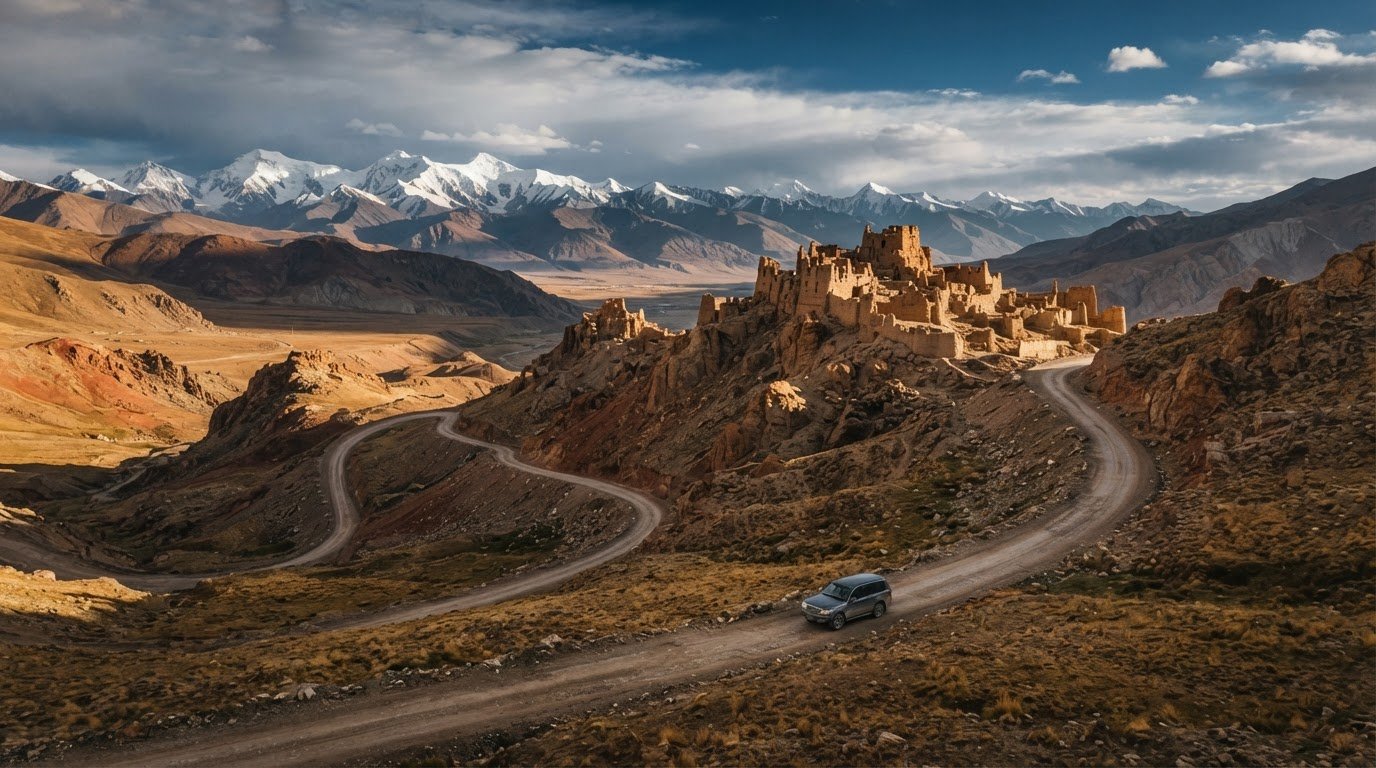
Yes, foreigners can travel overland from Lhasa to Kathmandu on an organised route, with the Friendship Highway journey covering about 1,000 km. A Western Tibet overland expedition takes you into a wilder landscape, where high passes rise above 5,000 metres and the ancient Guge Kingdom adds a remarkable glimpse of Tibet’s past. The route is possible, but its altitude and long road days call for thoughtful planning.
If you’re drawn to a Western Tibet overland expedition but unsure what the journey involves, that’s understandable. This is no ordinary transfer between cities: changing terrain, thin air and remote stretches shape the experience as much as the destinations do. Knowing what lies ahead helps you decide whether this adventure suits your pace and travel plans.
Discover how the route works, what to expect at high altitude and why Guge’s historic ruins make Western Tibet so compelling. We’ll also look at the seasons suited to overland travel, so you can picture the journey before setting out.
Key Takeaways
- Foreigners can travel overland from Lhasa to Kathmandu on an organised route; understand how the journey’s route and border crossing shape your plans.
- Build in time to adjust to altitude: Lhasa sits at 3,650 metres, and the itinerary includes high passes and a stay at Darchen, 4,574 metres above sea level.
- Discover how Guge became a religious and cultural centre in the 11th century, and what its remote western setting adds to the journey.
- Compare the recommended travel seasons with monsoon-related road risks to choose a more suitable time for your expedition.
High-altitude passes and acclimatisation
Road travel through Tibet brings gradual climbs followed by exposed high passes. Plan around the route’s elevations, not just the distance between stops.
Gradual Altitude Gain by Road
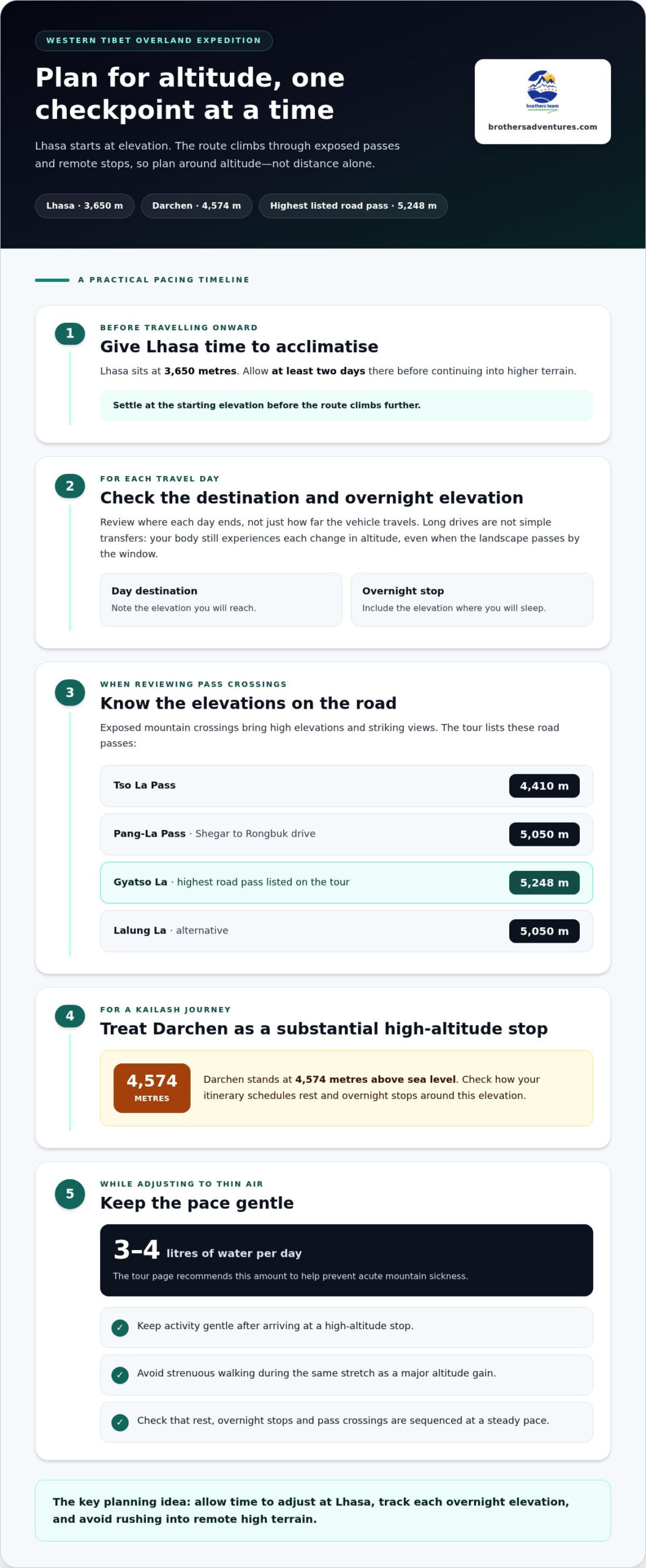
Lhasa sits at 3,650 metres, so the journey begins at altitude before the road climbs higher. Allow at least two days in Lhasa to acclimatise before travelling onward. Review each day’s destination and overnight elevation, rather than treating long drives as simple transfers. The landscape may unfold through a vehicle window, but the body still experiences each change in altitude.
High-Altitude Acclimatisation
Give your schedule room to adjust to the thin air. The route places Darchen at 4,574 metres, making it a substantial high-altitude stop. Drink 3-4 litres of water per day, as the tour page recommends to help prevent acute mountain sickness. Keep activity gentle after arriving, and avoid packing strenuous walking into the same stretch as a major altitude gain.
Passes on the Route
Expect exposed mountain roads and striking views from several high crossings. Tso La Pass reaches 4,410 metres, while Pang-La Pass on the Shegar-to-Rongbuk drive is 5,050 metres. The tour lists Gyatso La as its highest road pass at 5,248 metres, with Lalung La as an alternative at 5,050 metres. These elevations help explain why travel days can feel demanding even when you’re seated.
Plan for High-Altitude Road Travel
Check how the itinerary sequences rest, overnight stops and pass crossings. A well-paced plan gives you time to settle at Lhasa before continuing into higher terrain, rather than rushing directly toward remote destinations. Kailash journeys add another altitude challenge: Darchen stands at 4,574 metres. Keep the day’s walking modest when adjusting, and let the changing landscape set a steady pace for your expedition.
Overland route road conditions and altitude
Choose a route based on its terrain, travel time and border crossings, not distance alone. Tibet’s long highway stretches include paved roads and remote, high-altitude passes.
Kashgar to Tibet Route Options
From Kashgar, the Xinjiang-Tibet Highway runs about 2,138 kilometres to Lhatse. Around 1,700 kilometres of this journey lies above 4,000 metres, so the route demands time for altitude adjustment and long days on the road. The broader Lhasa-Kashgar overland journey takes 11-18 days, depending on the itinerary. Compare overnight stops and high sections before choosing this challenging highway.
Tibet to Kashgar Route Options
Travelling from Tibet toward Kashgar follows the same high plateau corridor in reverse, with Lhasa-Kashgar itineraries taking 11-18 days. The overland road between Lhasa and Kashgar is about 3,100 kilometres long. Look at the direction of travel, planned stops and elevation changes together; a route map alone won’t show how much time is spent above 4,000 metres. More than 90% of roads on Tibet overland routes are described as well-paved, but remote stretches still shape the pace.
Gyirong and Simikot Border Routes
For a Nepal connection, the listed road journey from Kathmandu to Lhasa via Kerung and Everest North Base Camp is approximately 1,000 kilometres. Gyirong is also the gateway toward Western Tibet, with two days of driving from Gyirong to the Kailash region. Simikot offers a different approach: travellers reach the area with two flights from Kathmandu, followed by a helicopter ride. These routes differ sharply in road time and transport, so match the crossing to your wider itinerary.
Everest and Shishapangma Routes
The overland drive from Shigatse toward Shegar via Lhatse is a substantial leg of the Everest route. Shegar to Rongbuk adds about 100 kilometres, while the route’s maximum altitude reaches 5,200 metres at Everest Base Camp North. Shishapangma is a notable feature of this high-mountain route. For a focused mountain experience instead of a long road crossing, explore an Everest Base Camp Trek.
Guge Kingdom and Far Western Tibet
Far Western Tibet adds a powerful historical dimension to an overland journey. The Guge Kingdom became an important religious and cultural centre in the 11th century, making its legacy a striking counterpoint to the region’s vast, open landscapes. Plan time for Guge as a central cultural stop, rather than treating it as a quick detour between better-known destinations.
Put Guge in context before you travel. Shigatse, Yamdrok and Everest Base Camp are familiar names on Tibet itineraries, while western sites offer a different focus: the history of a kingdom and its religious heritage. This contrast shapes the character of the trip. Decide whether you want a classic route centred on celebrated scenery or an overland adventure focused more on far-western culture.
Toling Monastery is another named landmark to consider alongside Guge. Give both places room in your plans, and think about what you want to notice: the setting, the surviving heritage, or the connections between religious sites and the kingdom’s history. A little preparation makes the visit more rewarding. Read about Guge’s 11th-century role before arriving, then approach Toling as part of the same cultural story rather than an unrelated stop.
Build your itinerary around the experience you want, not a checklist of famous places. Namtso brings lake scenery into the picture, while Everest Base Camp is known for dramatic mountain views; neither replaces Guge’s historical interest. Keep the western portion focused, with enough time to appreciate its distinctive cultural sites. That balance can make a long overland journey more than a succession of drives, connecting Tibet’s celebrated landscapes with the story of the Guge Kingdom.
What is the best time of year for a Western Tibet overland expedition?
May-June and September-October are identified as ideal seasons for overland travel in Tibet. Use these windows as a starting point, then match your dates to the places on your route. A journey through Guge or the Kailash region involves different road stages from a shorter trip around Lhasa. Allow room in your itinerary for long drives and remote stops instead of planning around arrival dates alone.
The tour operates from April to October, giving travellers a broader season to plan around. May-June and September-October remain the stated ideal periods, while April and October fall at the edges of the operating window. Consider the full route before settling on dates: conditions may differ between sections. Winter border crossings are described as unpredictable, so don’t assume the April-to-October operating season means winter access is dependable.
July-August is the rainy season in Tibet, and landslides can cause occasional delays. The southern G318 route is particularly associated with landslide and road-closure risks during these months. If you travel then, avoid packing every transfer tightly against the next. Leave flexibility around long driving days and border stages, where a road delay can affect the rest of the itinerary. This matters most when your plan connects several distant destinations.
Choose dates by weighing the season against your route, not by treating Tibet as one uniform road journey. First, identify whether your itinerary uses the southern G318 or reaches remote western destinations. Next, compare those stages with the May-June and September-October recommendations. Finally, keep some breathing room for seasonal disruption, especially during July-August. If your plans continue into Nepal, explore Nepal mountain expeditions as a way to extend your adventure beyond Tibet.
Brothers International Tours & Trading Pte Ltd: 8Days Nepal Adventure Tour
Brothers International Tours & Trading Pte Ltd offers the 8Days Nepal Adventure Tour for travellers who want to continue their wider Himalayan journey with time in Nepal. After planning a demanding Tibet route, consider whether you’d prefer a broader Nepal adventure or a walking-focused experience. The 8Days Scenic Nepal Mini Trek offers a trekking alternative, while the 5Day Nepal Luxury Tour suits travellers seeking a different style of Nepal visit. These are separate Nepal journeys, not extensions of the Tibet route.
Choose based on the pace and kind of experience you want next: cultural touring, scenic trekking or a more luxurious Nepal itinerary. For a different destination altogether, the 10Days Wonder Of Pakistan offers another regional travel option. Contact Brothers International Tours & Trading Pte Ltd or visit brothersadventures.com to explore the Nepal Adventure Tour.
Shape the Journey You Want Next
Let your next decision be about the experience you want to take away from Tibet. A Western Tibet overland expedition can be the centrepiece of a journey or one chapter in a broader exploration of the region. Think about whether your next trip should focus on Nepal’s landscapes, a scenic trek or a more leisurely style of travel.
Brothers International Tours & Trading Pte Ltd offers the 8Days Nepal Adventure Tour, the 8Days Scenic Nepal Mini Trek and the 5Day Nepal Luxury Tour. These options provide different ways to continue exploring Nepal, whether you’re drawn to active days outdoors or a more relaxed itinerary. Choose the experience that best matches your interests and preferred pace.
Ready to explore your next travel idea? Contact Brothers International Tours & Trading Pte Ltd to discuss the journey that inspires you. Your next adventure can start with a clear plan and a destination that feels right.
Frequently Asked Questions
What Makes this Tibet Trip Different?
The distinctive appeal is the combination of remote western heritage and a long, road-led Himalayan journey. Rather than focusing only on Lhasa’s landmarks, travellers can connect the Guge region with places such as Lake Manasarovar and Darchen. To shape the trip, decide whether historic sites, sacred landscapes or mountain scenery matter most, then build the route around those priorities.
What are the most popular Tibet Overland routes?
Common route choices include the southern journey from Lhasa toward Mount Kailash, the Friendship Highway between Lhasa and Kathmandu, and the long overland route between Lhasa and Kashgar. The southern Lhasa-to-Kailash route is described as the shortest and most popular approach to the mountain. For a different starting point, the Qinghai-Tibet Highway links Xining and Lhasa in a four-to-six-day road journey.
What are the road conditions like for Tibet Overland Tours?
Expect a mix of long highway drives, mountain passes and stretches where weather can affect travel. For example, the Lhasa-to-Shigatse drive via Yamdrok Tso and Gyantse is approximately 320 kilometres and takes about five hours. July-August rainfall can bring landslides and occasional delays, particularly on the southern G318 route. Keep the itinerary flexible enough to absorb a slower road day.
What is a Western Tibet overland expedition?
A Western Tibet overland expedition is a road journey through Tibet’s far-western landscapes, often planned around cultural and sacred destinations. It can connect Lhasa with places such as Saga, Lake Manasarovar, Darchen and the Guge region. Travellers seeking a trekking element may include the Mount Kailash outer circuit, a 52-kilometre route commonly arranged as a three-day Kora.
Which routes and destinations are included in Western Tibet overland tours?
Routes vary by itinerary, but a western journey can run from Lhasa toward Saga, Lake Manasarovar and Darchen, with Guge and Toling Monastery adding cultural interest. Some plans connect the western region with Everest North Base Camp or Kathmandu. Check which places are overnight stops and which are sightseeing visits, as this affects how much time you have at each destination.
How many days does a Western Tibet overland expedition take?
There isn’t one fixed duration; the schedule depends on the route, overnight stops and whether you include side trips or the Kailash Kora. As a reference, a Lhasa-Kashgar overland journey takes 11-18 days, depending on the selected itinerary. A western route with Manasarovar, Darchen or Guge needs time for those added stages, so compare destination lists rather than relying on a route label alone.

Comments are closed