


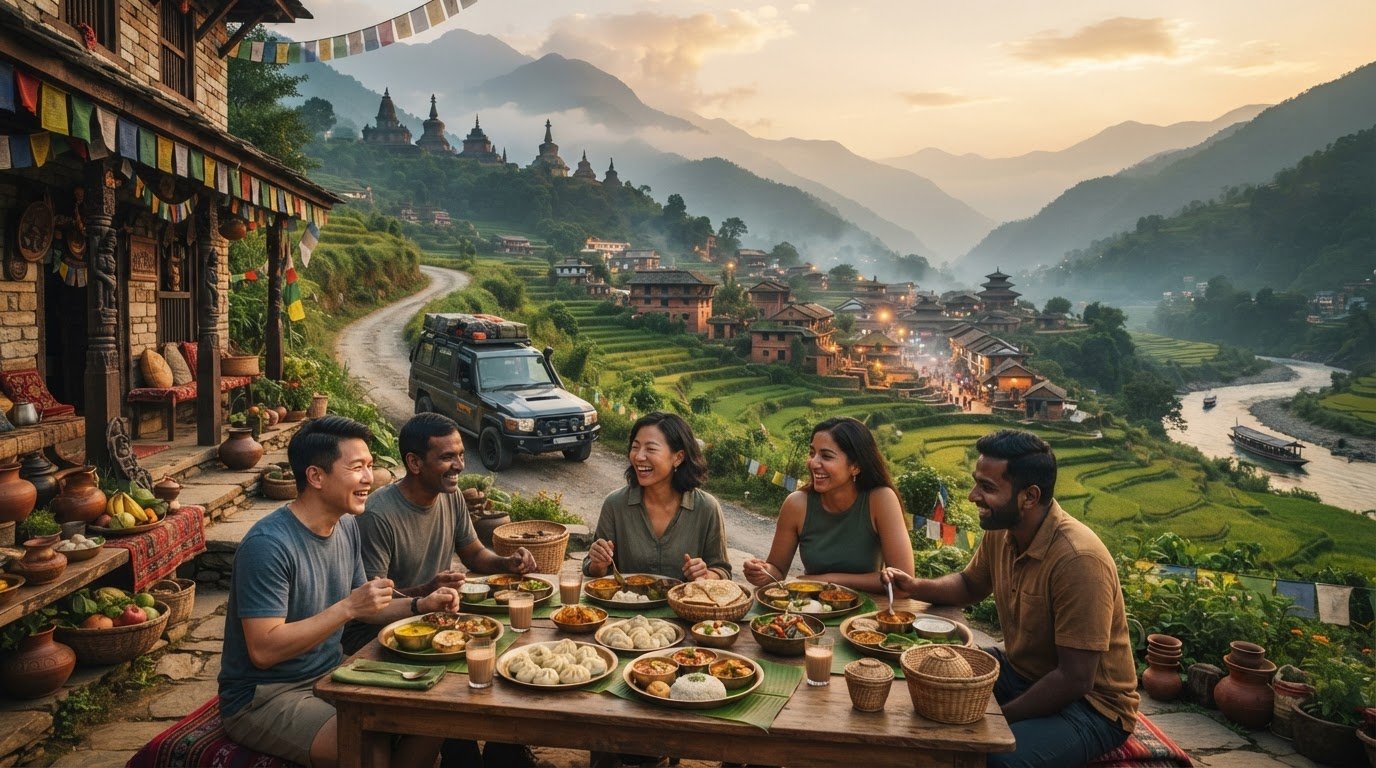
South Asia cultural adventure tour prices, meals and stays
Road transfers are the practical backbone of travel between many South Asian adventure stops, while route and terrain shape the transport plan. A South Asia cultural adventure tour can take you from lively cities to village stays and cultural sites, with each journey linking the experiences along the way.
Look beyond the itinerary: how you travel, where you stay, and which meals and activities are included all shape the trip. This guide explains how transport, homestays, local food and spiritual traditions fit into the experience, and what to consider when comparing trip lengths and tour prices. The price depends on the itinerary and is provided after a quote request. Key cost factors include transport, accommodation, meals, activities and trip length. Read on to understand the journey and choose an adventure that suits you.
Key Takeaways
- Compare how route and terrain shape transport between destinations, then consider how travel time fits the experiences you want.
- Stays can range from city hotels to village homestays and traditional junk boats, each offering a different way to experience local life.
- For Angkor’s temples, the recommended visiting period is November through March; dress respectfully at temples across Southeast Asia.
- Thailand-bound travellers need at least 6 months of passport validity from their date of entry.
- Tour duration and price depend on the itinerary’s transport, accommodation, meals and activities, so compare what each journey is designed to include.
Cultural experiences and local homestays
Local guides, community stays and respectful temple visits can bring you closer to everyday culture. Across South and Southeast Asia, experiences range from village homestays to traditional junk boats, offering different perspectives on local life.
Visa and entry rules depend on the destination and passport. For Thailand, travellers must have at least 6 months of passport validity from their date of entry.
Vaccination needs depend on your health, itinerary and planned activities, while travel insurance can help with unexpected medical or travel costs. Before departure, discuss your route with a healthcare professional, arrange suitable cover, and plan practical precautions such as securing valuables and following local guidance.
Local Guides and Immersive Experiences
A local guide can add context to a market visit, explain a temple carving, or help you understand customs during a village visit. Look for experiences that allow time for conversation and observation, not just quick photo stops. A guided walk through a neighbourhood, for instance, can reveal how food, crafts and daily routines shape local life.
Group Cultural Tours
On a group tour, a guide coordinates visits and provides shared context as the group moves between cultural sites. Check how the itinerary balances guided activities with time to explore independently. A market visit, for instance, can leave room to browse a craft stall or ask about a local dish. This blend of shared discovery and personal exploration can make cultural travel more engaging.
Accommodation can range from city hotels to village homestays and traditional junk boats. A homestay offers a closer look at household routines, while a stay in a hill tribe village calls for listening to hosts and respecting community customs. Check how the itinerary describes the accommodation, shared spaces and guest expectations. Arriving prepared helps make the visit an exchange, rather than a performance arranged for visitors.
Temple Dress Codes and Local Customs
When visiting temples in Southeast Asia, respect local dress codes. Choose clothing that covers your shoulders and knees, and follow posted instructions about footwear, photography and sacred spaces. Pause to observe local visitors before taking photos or entering a prayer area. These gestures help make your visit respectful and memorable.
Choose cultural stops with their setting in mind. Singapore’s history includes British colonialisation in the 19th century, while Cambodia’s Angkor temples are recommended for visits from November through March, during the dry period. Before entering a temple, check local signs and follow your guide’s advice. Planning around the season and site customs helps you focus on the architecture, stories and atmosphere rather than last-minute decisions.
What’s included in adventure tour meal plans?
Meal arrangements depend on the itinerary, so compare listed meals with travel days, cultural visits and outdoor activities. A clear day-by-day plan helps you see where meals are provided and where you can explore independently. For example, a guided sightseeing day may have a different meal schedule from a day spent travelling between destinations.
Nepal, Bhutan, India and Cambodia offer distinct combinations of heritage, landscapes and activities, from mountain journeys to visits to historic sites. Choose destinations based on the experiences you want, then compare how each itinerary balances cultural visits with time outdoors.
There isn’t one best time for every South Asia holiday because weather varies by country. For Cambodia’s Angkor temples, the recommended visiting period is November through March, during the dry period.
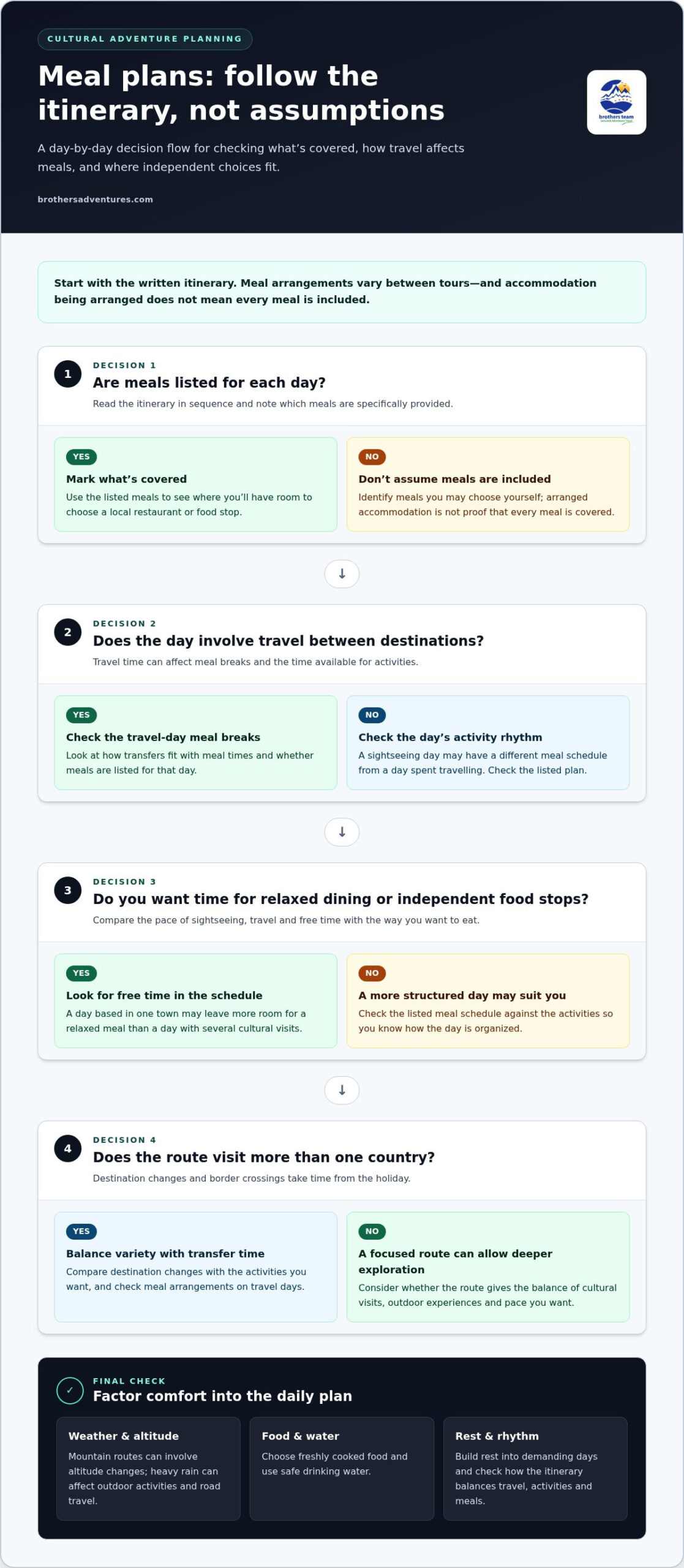
Read each day of the itinerary in sequence. Note which meals are listed, how travel time affects meal breaks, and whether free time leaves room for a local restaurant. Meal plans vary between tours: some days follow scheduled activities, while others allow more independent choices. Don’t assume every meal is included just because accommodation is arranged. Use the written itinerary to see what’s covered and plan for meals you’ll choose yourself.
An Indian cultural itinerary can combine heritage visits with outdoor activities, while a Nepal route may pair cultural stops with mountain scenery. Choose the balance that suits your holiday: more time for heritage, outdoor experiences or a slower pace between destinations. Check how meal arrangements fit the day, leaving room for regional dishes and relaxed stops instead of hurried breaks.
Pace matters as much as the list of destinations. Review the sequence of travel, sightseeing and free time, then decide whether it leaves room for a long lunch or an independent food stop. A day with several cultural visits may allow less time for relaxed dining than a day based in one town. Match the itinerary’s rhythm to your preference for structured experiences or spontaneous discoveries.
Multi-country itineraries can connect distinct cultures, but border crossings and transfers take time from your holiday. Compare destination changes with the activities you want, such as temple visits, wildlife outings or walks. A focused route through one country may allow deeper exploration, while a broader route offers more variety. Check meal arrangements on travel days as well as during stays at each destination.
Consider weather, altitude, and food and water safety when planning. Mountain routes can involve altitude changes, while heavy rain can affect outdoor activities and road travel. Choose freshly cooked food, use safe drinking water and build rest into demanding days. Climate, elevation and access to meals can all shape your comfort and the daily rhythm of the itinerary.
Adventure highlights and outdoor activities
Outdoor activities add movement and changing scenery to a cultural itinerary. In Nepal, a walk through the Himalayan foothills can lead from village paths to wide mountain views. In India, a coastal route can pair heritage visits with time outdoors. Choose activities that complement the places you want to understand, rather than treating each day as a checklist of highlights.
Water-based activities can offer a different perspective on a route. A coastal excursion may provide an open-air change of pace between visits to historic sites. For any boat trip, check where it begins, how it fits into the day, and whether you’ll have time to enjoy the landscape rather than rush to the next stop. A well-paced itinerary makes room for both movement and discovery.
Exploring cities on foot can reveal details you might miss from a vehicle. Walking between historic quarters and cultural landmarks gives you a chance to notice architecture, local crafts and the rhythm of daily life. Wear practical footwear, carry water, and leave time to pause at a courtyard or craft stall. These simple steps can make a day among heritage sites feel more vivid and less like a race.
Consider how outdoor highlights connect with local life. A guided walk through a rural area can show how paths link homes, fields and community spaces. In Bhutan, a route combining cultural stops with countryside walking can offer a sense of place and fresh air. Check whether the schedule leaves space to observe, take photographs respectfully and enjoy the setting at your own pace.
For a wider regional comparison, Vietnam offers a different landscape from Nepal’s mountains. Don’t treat every country as interchangeable: an island stay, a mountain walk and a city visit each call for different footwear, clothing and time allowances. Choose activities based on location and season, then check how transfers affect the day. This helps prevent memorable experiences from becoming hurried gaps between destinations.
Plan an outdoor day in three practical steps: review the route, consider the effort involved, and leave room for breaks. Pairing a morning walk with a relaxed afternoon in town, for example, creates contrast without stacking demanding activities. A balanced itinerary connects scenery, movement and heritage, giving you time to enjoy the journey as well as its highlights.
Buddhist and indigenous spiritual traditions
Spiritual places can add another layer to a journey through Nepal and Bhutan. Monasteries, stupas and community gathering places each have their own purpose and etiquette. A thoughtful visit leaves room to observe quietly, listen to local explanations and understand how traditions connect with everyday life. Treat each destination as a living place, not simply a backdrop for photographs.
In Nepal, Buddhist sites may sit alongside Hindu shrines and busy neighbourhood streets. A guide can explain the symbols, rituals and stories you encounter while helping you follow local expectations. At a stupa, for example, observe how visitors move through the space before joining in. Ask questions at an appropriate moment, and avoid interrupting prayer or other religious activity.
Bhutan’s monasteries and dzongs are cultural landmarks, but each site has its own rules. Local instructions may govern clothing, photography and access to particular rooms. Read signs, follow your guide’s direction and keep your voice low indoors. These simple steps show respect while giving you time to notice architectural details, artwork and the place’s role in community life.
Indigenous spiritual traditions are diverse, shaped by distinct communities, languages and landscapes. Don’t assume one village’s customs represent another’s. If your itinerary includes a community visit, learn how hosts want guests to participate, where photography is appropriate and whether any spaces are private. Listening first helps you encounter local stories on their own terms, without turning sacred practices into staged experiences.
A local guide can connect what you see at a site with its wider context. Ask about a symbol, festival or customary practice when conversation allows, and give the guide space to explain what is appropriate to share. A carved image, for example, may carry meanings that aren’t obvious to visitors. Thoughtful questions can make an encounter more insightful than collecting names or photographs alone.
Accommodation can also shape how you experience local customs. A village stay may involve shared meals or household routines, while a city hotel offers more distance from daily community life. Follow your host’s lead, ask before photographing people or private spaces, and accept that some activities aren’t for visitors. Respectful boundaries make cultural exchange more genuine and comfortable for everyone.
Before choosing a spiritual itinerary, review the destinations and the time set aside at each place. A route that rushes between monasteries may leave little space for observation or conversation. Look for a schedule that allows pauses, clear guidance and respectful visits. This balance helps you carry home more than images: the stories, setting and local perspectives that give each stop meaning.
Guided group tour prices and durations
Tour duration shapes how much time you have for guided visits, outdoor activities and unhurried discovery. A compact itinerary may focus on one region, while a longer journey can connect several destinations. Compare the day-by-day schedule, not just the total number of travel days. Check how much time is set aside for transport, guided experiences and independent exploration.
Price depends on the itinerary and is given after a quote request; key factors include route, transport, accommodation, meals, activities and trip length. For a Singapore traveller, compare tour prices in Singapore dollars and review what the quoted package covers. A route through Nepal’s mountain landscapes involves different logistics from a city-focused holiday in Thailand. The destination mix and travel arrangements shape the overall cost.
Read the inclusions carefully. Check which meals, guided visits, transfers and activities are part of the itinerary, then note what you’ll arrange independently. If airport or city connections are not bundled, international transfer services such as WazUp make it straightforward to arrange reliable private transport before or after your tour. A day with a guide-led visit to an ancient site, for example, may be structured differently from a free evening exploring street food. Clear distinctions help you plan spending without assuming every activity or meal is included.
Transport affects both the rhythm and value of a group tour. A long transfer between destinations takes time that could otherwise go toward a cultural visit or outdoor activity. Check where each day begins and ends, and consider whether the schedule allows breaks. In Nepal, a route combining city visits with mountain scenery can feel immersive when travel days and sightseeing days are balanced.
Group travel also shapes the experience. Guides provide context at scheduled stops, while shared transport helps the group follow the planned route. Check how much free time the itinerary includes and whether the group follows a fixed schedule throughout. Travellers who enjoy independent exploration may prefer a plan that leaves room for personal discoveries, such as browsing a market after a guided visit.
Use these steps to compare options:
- Match the itinerary’s length to the destinations and activities you want.
- Compare included meals, accommodation, transport and guided experiences.
- Review transfer days and free time alongside sightseeing stops.
- Check the total price in S$ and identify the factors shaping the quote.
An itinerary centred on Nepal can focus on one country’s landscapes and heritage, while a multi-country route adds variety and more transitions. Neither format is automatically better. Choose the one that allows enough time for the experiences you value, and compare the schedule as closely as the price. A clear plan makes it easier to see what each travel day contributes.
Brothers International Tours & Trading Pte: 8Days Nepal Adventure Tour
Brothers International Tours & Trading Pte offers the 8Days Nepal Adventure Tour as a starting point for travellers planning a Nepal-focused cultural adventure. Consider it when you want a defined tour duration and would like to explore a guided itinerary rather than assemble every stop independently.
If you’re comparing trip styles, the 8Days Scenic Nepal Mini Trek offers another Nepal option, while the 5Day Nepal Luxury Tour provides a shorter named itinerary. For a different destination, the 10Days Wonder Of Pakistan is an alternative to consider. Compare each tour’s route and trip length with the cultural visits, outdoor activities and pace you want. That gives you a practical basis for choosing a journey that fits your interests.
To explore the Nepal tour options, visit brothersadventures.com.
Shape the Journey Around What Matters to You
Think about the moments you want to carry home. Perhaps you’d rather linger over a conversation with a local guide than hurry between landmarks. Maybe a mountain view, a quiet spiritual site or time to explore independently matters most. Write down your priorities before choosing an itinerary. This can help you distinguish a journey that merely covers ground from one that feels meaningful to you.
A South Asia cultural adventure tour can bring together many different experiences, but your own pace and interests should guide your choices. Think about how much structure you enjoy, which cultural encounters matter to you, and what balance of activity and rest suits your holiday. Knowing your preferences gives you a stronger starting point for planning.
For a Nepal-focused next step, explore the available tour options with Brothers International Tours & Trading Pte. Contact Brothers International Tours & Trading Pte to begin shaping your travel plans. Your next memorable journey starts with choosing what matters most to you.
Frequently Asked Questions
What kind of transportation is used between adventure locations?
Local transportation connects stops, while route and terrain shape the arrangements. A city itinerary and a mountain journey have different access needs, so review each day’s plan for transfer points and time spent travelling. Check how transport connects with walks, cultural visits and accommodation changes. This helps you understand the trip’s rhythm and whether the itinerary allows enough time to enjoy each destination.
What countries are included in South Asia cultural adventure tours?
There isn’t one country list shared by every tour: routes depend on the itinerary. South Asian journeys can focus on Nepal, Bhutan, India or Pakistan, while broader regional trips may connect South Asia with Central Asia. A Nepal-focused trip, for example, follows a different route from a Pakistan journey. Read the named destinations carefully to understand which borders and cultural settings your chosen tour includes.
How much do South Asia cultural adventure tours cost from Singapore?
The price depends on the itinerary and is given after a quote request; key cost factors include route, transport, accommodation, meals, activities and trip length. For a Singapore-based budget, compare the quoted amount in Singapore dollars and review what the package covers. A route with more transfers or different accommodation choices can shape the overall cost. Check inclusions and exclusions together, rather than comparing headline amounts alone.
How long should a South Asia cultural adventure trip be?
Choose a trip length that gives enough time for your preferred destinations and activities without making every day a transfer. Available examples include the 5Day Nepal Luxury Tour and the 8Days Nepal Adventure Tour. Treat these as different itinerary formats, not a rule for every route. Consider how much time you want for cultural visits, outdoor activities and rest, then compare that with the schedule’s travel days.
How do South Asia tour operators compare on price, group size, and inclusions?
Compare the written itinerary, package inclusions and stated group size side by side. Check whether the package includes professional guides, local transportation, accommodation and permit processing, then review meals and activities separately. Group size affects the pace and feel of shared visits, so look for a clear figure in the tour details. For a useful comparison, match similar destinations and trip lengths before weighing differences in inclusions.
What local customs, dress codes, and etiquette should travelers know?
Follow posted instructions and local guidance at each religious or community site, as customs vary between places. Ask before photographing people, ceremonies or private spaces, and avoid interrupting prayer. During a hosted visit, let your guide explain when to remove footwear or where visitors may enter. A quiet voice and patient observation are practical ways to show respect while learning about local traditions.
What transport options are safest and most practical between destinations?
The practical transport option depends on distance, terrain, road access and the day’s activities; no single mode suits every route. Use the local transport arranged for connections between stops, and allow time for transfers before planning independent activities. For mountain routes, consider how access affects walking plans and rest. Clear transfer details help you understand the journey and prepare for changes in scenery, pace and daily schedule.


Comments are closed