


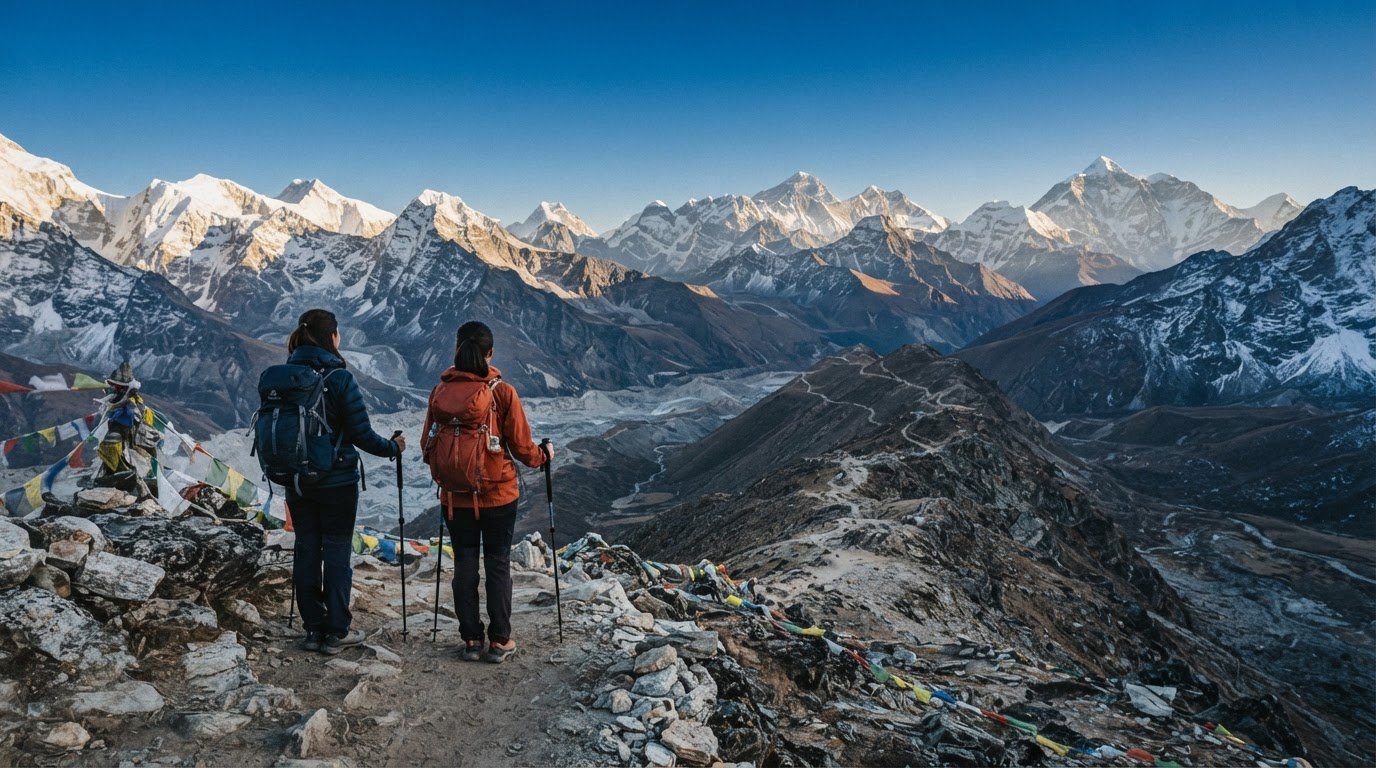
Everest Three Passes Trek Package: How to Choose the Right Himalayan Journey
The most spectacular Everest itinerary isn’t automatically the right one for you. An Everest Three Passes trek package asks more of your time, fitness and altitude readiness than the classic Everest Base Camp route, so the smartest choice isn’t simply the one with the biggest views.
It’s understandable to wonder how much tougher the Three Passes are, whether the acclimatization days are sufficient, and what support you can expect on demanding trail days. Typical itineraries run 17 to 21 days and cross Kongma La, Cho La and Renjo La, each above 5,300 metres. That’s a remarkable journey, but one that calls for thoughtful pacing and preparation.
This guide will help you compare routes and itineraries, assess the walking demands, and identify the preparation and on-trail support details that matter before booking. You’ll get a clearer picture of the trek’s high points and challenges, so you can decide whether this Himalayan adventure fits your experience and expectations.
Key Takeaways
- See how linking the three passes creates a broader circuit than an Everest Base Camp-focused out-and-back route.
- Use route order, acclimatization, itinerary clarity and stated support to compare an Everest Three Passes trek package.
- Look beyond the day count: understand how each itinerary handles the approach, circuit and departure.
- Assess whether sustained walking, steep terrain and altitude exposure match your experience and expectations.
- Plan your next steps by assessing fit, comparing itineraries and reviewing services, while keeping your food and pace preferences in view.
Everest Three Passes Trek Package: What Makes This Route Different?
The Three Passes trek is a demanding high-altitude circuit through the Everest region, defined by crossings of Kongma La, Cho La and Renjo La. Rather than following a route focused mainly on reaching Everest Base Camp and returning along a similar trail, it links distinct sections of the Khumbu into a broader journey. The result is more varied walking and a deeper sense of travelling through the mountain landscape, with each pass bringing its own climb, descent and change of perspective.
That wider circuit is the draw: rugged trails, big Himalayan views and days that feel different from one another. Some itineraries also include Everest Base Camp-area highlights, but route coverage depends on the plan. Before choosing an Everest Three Passes trek package, compare which places it visits and how the crossings fit together, not just the number of days. A longer itinerary isn’t automatically the better match if its route or walking demands don’t suit your expectations.
How the Three Passes circuit differs from an Everest Base Camp trek
An Everest Base Camp trek is centred on reaching the famous base camp, while the Three Passes route adds three high crossings and a wider circuit. That changes the rhythm: instead of focusing primarily on one destination, you take on repeated ascents and descents across varied terrain. Use the Everest Base Camp trek guide to understand the EBC-focused journey, then compare its route coverage with the circuit you’re considering. Look closely at the walking days, not just the headline duration.
Even when two plans share some landmarks, they may differ in route order, time spent on the circuit and the balance between trekking and rest. A clear itinerary should show how the journey progresses and where each crossing sits within it. That helps you judge the experience as a whole rather than treating “Three Passes” as a single fixed plan.
The three passes and the experience they shape
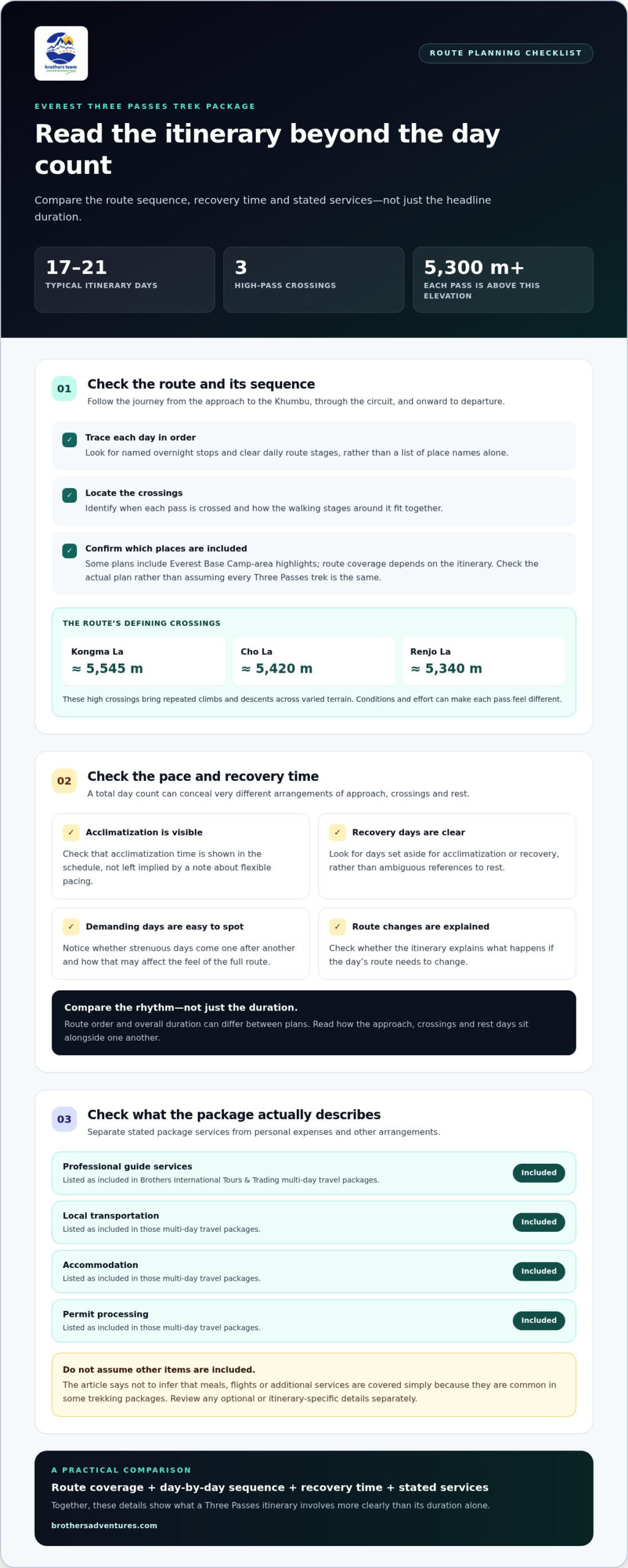
Kongma La, Cho La and Renjo La are the route’s defining challenges. Their elevations are approximately 5,545 m, 5,420 m and 5,340 m respectively, so these are high-altitude crossings, not ordinary trail days. Terrain and conditions can make each pass feel different, and the effort of reaching one may shape how prepared you feel for the next. For general background on the mountain and surrounding region, see the Mount Everest Wikipedia page.
Crossing all three passes turns an Everest trek from a journey to one celebrated destination into a demanding circuit through changing high-mountain terrain.
That distinction matters when you’re weighing the adventure against your own interests. If varied trail days and a broad circuit appeal to you, the passes are central to the experience. If your main goal is reaching Everest Base Camp, compare itineraries carefully to see whether that landmark is included and how it fits alongside the crossings. Route order, duration and highlights can vary, so let the actual itinerary guide your expectations rather than assuming every trek follows the same plan.
What an Everest Three Passes Trek Package Itinerary Should Explain
A useful itinerary is more than a sequence of place names. It should let you follow the journey from arrival and the approach to the Khumbu, through the pass-crossing circuit, and onward to departure. As you review an Everest Three Passes trek package, look for a clear route and schedule rather than assuming every itinerary follows the same order or allows the same amount of time.
How to read the day-by-day route plan
Trace each day in sequence. Note where you sleep, when the itinerary crosses each pass, and which days are set aside for acclimatization or recovery. Route order and overall duration can differ between plans, so don’t treat one sample schedule as a universal template. Focus on how demanding days sit alongside one another.
Use these questions to assess the rhythm of the trek:
- Are overnight stops and daily route stages named clearly?
- Can you identify the pass-crossing days and the walking stages around them?
- Does the schedule show acclimatization or recovery time, rather than leaving rest days ambiguous?
- Are there consecutive strenuous days that may affect how the full route feels?
A total day count can hide a lot. Two itineraries of similar length may arrange the approach, crossings and rest differently. Read the sequence closely, and notice whether the plan explains what happens if the day’s route needs to change. That gives you a more practical basis for comparing than duration alone.
What package logistics should be clearly described
Look for clear information about guide services, transport, accommodation and permit processing. Brothers International Tours & Trading’s multi-day travel packages include professional guide services, local transportation, accommodation and permit processing within the package price. Review the route plan to understand how the services are arranged across the journey, and note any optional or itinerary-specific details.
Also separate the listed package services from personal expenses or other arrangements. Don’t infer that meals, flights or additional services are included simply because they’re common in some trekking packages. For broader context about Mount Everest, the National Park Service Mount Everest information offers another perspective, though it isn’t a substitute for route-specific itinerary details.
Recovery time deserves special attention. Acclimatization should be visible in the schedule, not implied by a vague note about a flexible pace. A thoughtfully explained plan shows how rest fits around the route and helps you understand the demands ahead.
Brothers International Tours & Trading is a family-owned travel agency established in 1992, with an attentive approach to Nepal travel. Its service style includes flexibility around food preferences and pace. Explore Brothers’ Nepal trekking tours as you consider which itinerary and support approach fit your plans.
How to Compare Everest Three Passes Trek Packages
Compare the itinerary and stated services side by side, rather than relying on a headline duration or broad promises. A shorter schedule isn’t automatically the best fit: what matters is how its walking days, acclimatization time and route sequence align with your needs. Use the framework below to see what each package explains clearly and how its details fit your priorities.
| What to compare | What to look for in the description |
|---|---|
| Route order | The sequence of trail stages and pass crossings, including the direction if specified. |
| Acclimatization | Clearly identified acclimatization or recovery days and where they sit in the schedule. |
| Itinerary clarity | Named daily stages, overnight stops, demanding days and departure arrangements. |
| Stated support | Specific descriptions of guide services, accommodation, transport and permit processing. |
Compare pace, acclimatization, and route direction
Read the demanding sections in order. Check that pass-crossing days and acclimatization time are visible, then consider how strenuous days fall alongside one another. If a package describes a clockwise or anticlockwise route, compare the full sequence rather than assuming one direction is inherently more suitable. The route label alone can’t tell you how the overall pace will feel.
For example, a plan with fewer days may appeal on paper, but check whether it also allows recovery around its hardest stages. A longer itinerary may arrange those stages differently. Neither duration settles the question by itself; the day-by-day outline does.
Compare package services without assuming inclusions
Read the inclusions and exclusions as written. Look for details about guide services, accommodation, transport and permit processing, and note whether each is included, optional or specific to the itinerary. Don’t infer that meals or other arrangements are covered unless the package says so. Compare like with like, and keep listed services distinct from other expenses.
A transparent package comparison matches each itinerary’s stated services to the needs of its route, without treating assumptions as inclusions.
This approach keeps the comparison grounded in what’s actually described, not in unsupported claims that one package is safer or better. For the Everest Three Passes trek package that fits you, weigh the route sequence, acclimatization, schedule detail and support together. A clear day-by-day description makes it easier to understand how the stages connect and decide whether the plan suits your expectations.
Is the Everest Three Passes Trek Right for You?
This route is demanding, but there’s no single profile that determines who can or can’t complete it. A better starting point is an honest look at what the trek asks of you: sustained walking, steep uphill and downhill sections, exposure to high altitude, and consecutive days on the trail. Consider the full pattern of effort, not just whether you enjoy hiking.
Use the questions below as a personal reflection, not a pass-or-fail test:
- Have you recently been active for extended periods, and how do you feel after a long day on foot?
- Are you comfortable with steep, uneven terrain and the possibility that trail conditions may vary?
- Can you allow for fatigue, slower progress or changes in conditions without expecting every day to go to plan?
- Do you have health or altitude concerns that deserve professional advice before travel?
Assess your fitness and experience honestly
General fitness and prior high-altitude experience are different considerations. Regular endurance activity may help you gauge how you handle sustained effort, but it can’t predict exactly how you’ll respond to altitude. Likewise, previous hiking experience can offer useful context without guaranteeing how this particular route will feel. There’s no need to compare yourself with another trekker. Focus on your own recent activity, recovery and comfort with long days outdoors.
Set realistic expectations, too. Fatigue can build over consecutive trekking days, while weather and trail conditions may change the pace or feel of a stage. Think about how you respond when a planned day becomes more tiring than expected. That reflection can help you decide whether the itinerary’s demands suit your preferences and preparation.
Prepare for altitude and changing mountain conditions
Acclimatization planning matters on a high-altitude trek. Review how the itinerary accounts for it, and follow the plan and qualified guidance during the journey. Altitude-related symptoms deserve attention. Don’t dismiss them or assume that determination alone is the answer; communicate concerns promptly to your trekking guide and follow appropriate guidance.
General information in an article can’t assess your personal health or predict your response to altitude. Speak with a qualified medical professional before travel if you have health questions, a relevant medical history or concerns about high-altitude trekking. Discuss your plans early enough to get advice that reflects your circumstances, rather than relying on another traveller’s experience or general online recommendations.
Choosing an Everest Three Passes trek package should begin with fit, not bravado. If the sustained effort and altitude exposure sound appealing but you’re unsure about your readiness, use that uncertainty to guide your preparation and planning. Brothers’ attentive approach to Nepal travel includes flexibility around pace preferences. Explore Brothers’ Nepal trekking tours as you consider your next Himalayan journey.
Plan Your Everest Three Passes Trek with Thoughtful Support
Once you’ve considered the route and its demands, turn your research into a practical plan. A few clear priorities can make it easier to compare itineraries and understand what support matters to you. Take these steps in order, then use your notes to shape a more informed conversation about the journey.
- Assess your fit. Reflect on your recent walking and endurance activity, comfort with steep terrain, and any health or altitude concerns. Seek qualified medical advice for personal health questions.
- Compare itineraries. Review route order, daily stages, pass crossings, acclimatization time and the pattern of consecutive demanding days. Focus on how the schedule works for you, not just its total duration.
- Review stated services. Read what the package says about guide services, transport, accommodation and permit processing. Keep listed inclusions distinct from optional or itinerary-specific arrangements.
- Discuss preferences. Note your preferred pace, food preferences and travel priorities, then talk through how these fit with the route and plan.
What to have ready before planning your trek
Make a short planning note before comparing options. Include your trekking experience, what a comfortable day on foot looks like for you, the pace you prefer, and any food preferences that would help shape your trip. Add the priorities that matter most, such as route coverage, rest time or clarity about daily stages. A little preparation helps you focus on the details that affect your experience.
Also list anything you need to understand before choosing: perhaps how the route order works, where acclimatization time falls, or which services are included. Keep the questions specific to your plans. This isn’t paperwork or an eligibility checklist; it’s a way to make the itinerary easier to assess and discuss.
Explore Nepal trekking with Brothers
Brothers International Tours & Trading is a family-owned travel agency established in 1992, with experience in Nepal travel and trekking. Its multi-day package services include professional guide services, local transportation, accommodation and permit processing within the package price. These services support the practical side of a trek, from local travel and overnight stays to guidance along the route.
Attentive, flexible service is part of the agency’s approach. Food preferences and pace can be considered in planning, helping you bring your personal priorities into the conversation. Share what matters to you, and weigh it alongside the route, schedule and stated support.
Ready to explore your next Himalayan journey? Explore Brothers’ Nepal trekking tours.
Take the Next Step Toward Your Himalayan Journey
Give yourself space to imagine more than the dramatic pass-crossing moments. Picture an ordinary day on the trail: setting out, finding your rhythm, taking in the changing mountain scenery and arriving ready to rest. That everyday experience is part of what makes a trek feel right, and it can help turn a bold idea into a thoughtful travel choice.
Before deciding, write down what you want to feel during the journey, what would make a day manageable for you, and which details you still need to understand. Use those priorities to guide your planning for an Everest Three Passes trek package. You don’t need to have every answer today. A clear sense of what matters to you is a strong place to begin.
Brothers brings a warm, attentive approach to Nepal trekking and can discuss how your preferences shape the planning. Explore Brothers’ Nepal trekking tours and take the next step when you’re ready. The Himalaya is a remarkable place to discover, and your journey can begin with a plan that feels genuinely yours.
Frequently Asked Questions
Is the Everest Three Passes trek harder than the Everest Base Camp trek?
Generally, yes: the Three Passes route adds multiple high-altitude crossings, so it often demands more sustained effort than a trek focused on Everest Base Camp. A single difficulty label doesn’t tell the whole story. Compare how demanding walking days are spaced, how much ground the route covers, and where acclimatization falls. Your experience, health, trail conditions and chosen itinerary all shape how challenging the trek may feel.
How many days does an Everest Three Passes trek package take?
An Everest Three Passes trek package has no single standard duration. The schedule can change with the route, starting approach, acclimatization plan and itinerary design. Trace the plan from arrival through the final departure arrangements rather than choosing the fewest days by default. Check whether transfer or departure days are counted in the stated duration, too. This helps you compare like with like and understand how the time is allocated.
What are the three passes on the Everest Three Passes trek?
The three passes are Kongma La, Cho La and Renjo La. Crossing all three is what distinguishes this circuit and connects different sections of the Everest region into a broader trek. Their sequence can vary between itineraries, as can the other route highlights included. Follow the specific package’s daily stages to see when each crossing occurs, what the surrounding trekking days involve and how the complete route fits together.
Can beginners do the Everest Three Passes trek?
Beginner status alone can’t determine whether this demanding high-altitude trek is right for you. Consider your current fitness, experience with sustained walking and comfort on steep, uneven ground, then examine the itinerary’s acclimatization plan. Be honest about your health and how you handle extended physical effort. If you have personal health or altitude concerns, seek advice from a qualified medical professional before travel rather than relying on another trekker’s experience.
What should an Everest Three Passes trek package include?
Read the package’s written inclusions and exclusions instead of assuming every itinerary has the same arrangement. Brothers International Tours & Trading’s multi-day package services include guide services, accommodation, local transport and permit processing within the package price. Check the itinerary for how these services are arranged, and distinguish them from optional arrangements or other expenses. Don’t assume meals or flights are included unless the package says so.
When is the best time for the Everest Three Passes trek?
There’s no guaranteed best time, since weather, visibility and trail conditions can vary, even within a season. Spring and autumn are commonly cited trekking periods, but that general guidance can’t promise clear views or suitable conditions at a particular pass. Compare your intended travel dates with the planned route, and use current, reliable seasonal information when making plans. Keep expectations flexible if conditions affect the experience or schedule.
How should I prepare for the Everest Three Passes trek?
Build general endurance and leg strength gradually, and practise sustained walks to understand how your body responds to longer periods on your feet. Review the itinerary’s daily stages, rest points and acclimatization schedule so your preparation reflects the journey ahead. Fitness work can support general readiness, but it can’t remove altitude risk or predict your response at elevation. For personal health concerns, consult a qualified medical professional before travel.


Comments are closed