


Lobuche Peak Climbing Expedition: Your 2026 Planning Guide
What if the key to summit day is decided well before you reach the mountain? A Lobuche Peak climbing expedition takes more than strong legs: Lobuche East rises to 6,119 metres, and its summit route calls for acclimatisation, preparation and basic mountaineering skills. It’s a genuine step beyond a standard trek.
Before committing, consider the route, the technical demands and whether your fitness and experience suit the altitude. A carefully planned itinerary can help you move from covering distance to preparing for a considered summit attempt.
This 2026 guide explains what the climb involves, how the Everest Base Camp trail can fit into the approach, and what to consider when preparing for altitude and technical demands. You’ll also learn how to compare trip length, guiding and logistical support, equipment arrangements and inclusions, so you can plan a guided Himalayan adventure with clearer expectations.
Key Takeaways
- Understand the difference between following the trekking route and completing a guided summit attempt.
- See how an itinerary moves from the approach and acclimatisation to climbing preparation, summit day and descent.
- Assess your endurance, time at altitude and technical skills to judge whether the climb suits your experience.
- Compare itinerary, guiding, accommodation, transport, permits and equipment by what each covers, not just trip length.
- Use a clear planning sequence to shape a Lobuche Peak climbing expedition around your goals, readiness and support needs.
What a Lobuche Peak climbing expedition involves
A Lobuche Peak climbing expedition combines a guided high-altitude approach with a technical summit attempt. The approach follows trekking routes through the Khumbu, but the objective is to reach the summit of Lobuche East, not simply to arrive in the area. Trekking to the settlement of Lobuche or passing nearby on the Everest Base Camp trail doesn’t mean you’ve climbed the peak.
This distinction shapes the whole experience. Trekking days build distance and elevation on foot; the climbing phase adds time for technical preparation and an ascent using mountaineering equipment. The summit attempt depends on conditions and climber readiness, so reaching the top can’t be promised. A well-planned expedition allows room for the climb and the decisions it requires.
Lobuche East and West: why the summit name matters
The name “Lobuche Peak” can refer to two distinct summits. Lobuche East stands at 6,119 metres and is the more commonly climbed trekking peak. Lobuche West rises to 6,145 metres and is a separate, more technical expedition objective. As Wikipedia’s overview of Lobuche explains, the mountain lies close to the Khumbu Glacier and the settlement of Lobuche, a familiar stop for trekkers on the Everest Base Camp trail.
These elevations don’t make the peaks interchangeable. East and West are different objectives, and their routes and permissions shouldn’t be assumed to be identical. This guide focuses on Lobuche East, the summit most commonly meant by a trekking-peak expedition. Naming the precise objective helps you understand what the itinerary is designed to support.
How a climbing expedition differs from a trek
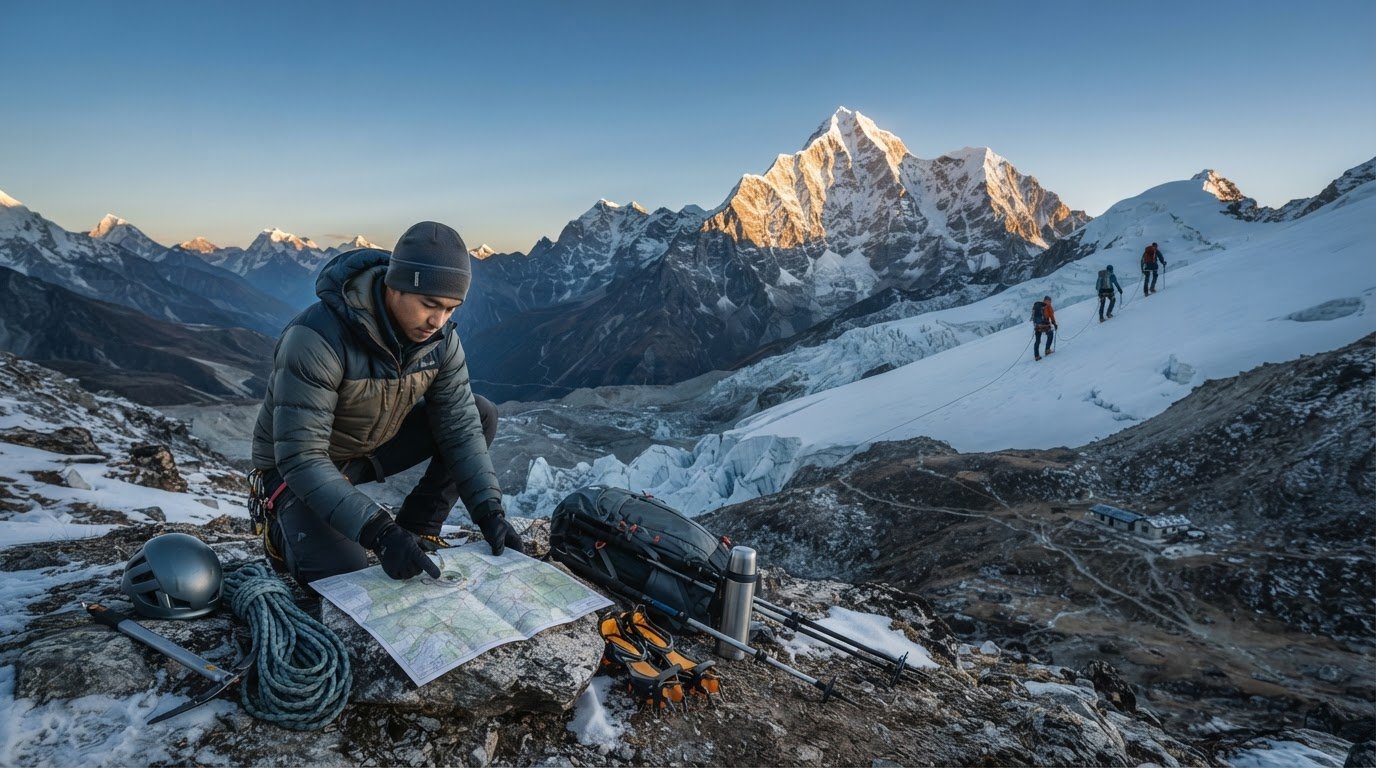
Lobuche East climbing is a high-altitude summit ascent that requires technical preparation and mountaineering equipment, not simply a trek to the mountain’s base. On the approach, you spend long days walking between stops and gaining altitude. Before the summit phase, the team prepares for climbing conditions and practises using relevant equipment, which may include crampons, an ice axe, a harness and ropes. These tools signal a real change in the demands of the trip.
Expect the summit phase to require careful movement and attention to your guide’s instructions, rather than the steady walking rhythm of the trail. The approach brings you closer to the objective and supports preparation for higher elevations. But reaching a trail junction, base camp or nearby settlement is not proof of a summit. Weather, mountain conditions and each climber’s readiness can all affect whether an attempt proceeds or changes plan.
Think of the expedition as a connected journey: trekking provides the approach, acclimatisation and climbing preparation lead towards the summit attempt, and the descent completes the objective. Keeping that distinction clear from the outset helps you choose a guided trip based on the climb you’re preparing for, not just the route you’ll walk.
Route, itinerary, and acclimatisation on a Lobuche Peak expedition
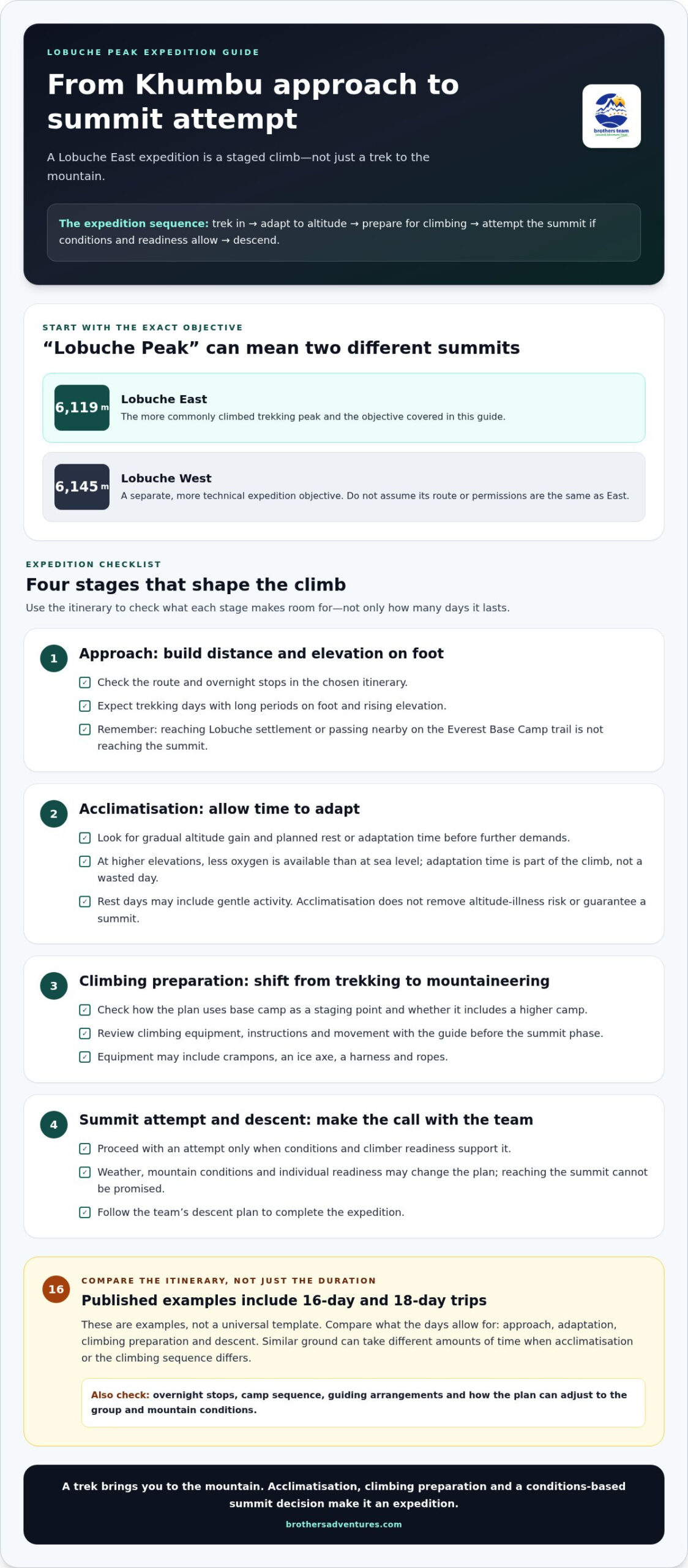
A well-designed expedition unfolds in stages rather than rushing straight from the trail to the summit. The approach builds time on foot and elevation; acclimatisation allows your body to adjust; climbing preparation introduces the summit phase; then the team makes an attempt when conditions and readiness allow, before descending. The exact route, camp locations and daily schedule depend on the itinerary and mountain conditions.
An expedition schedule is built around acclimatisation as well as distance, because time spent adapting at elevation is part of the climb, not a wasted day. That’s why two itineraries covering similar ground can differ in duration: one may allow more time for adaptation or adjust the climbing sequence to suit the group.
What the approach and summit phase may include
The trek-in leads towards the climbing terrain, with the route and overnight stops shaped by the chosen itinerary. Base camp provides a staging point for the climbing phase; a higher camp, where used, can position climbers for the summit attempt. Camp arrangements vary between itineraries, so compare the sequence of stops and how they fit into the climbing plan.
- Approach: Trek between overnight stops, building familiarity with long days on foot and rising elevation.
- Acclimatisation: Allow time at elevation for adaptation before adding further demands.
- Climbing preparation: Review equipment, instructions and movement for the summit phase with the guide.
- Summit attempt and descent: Make the attempt if conditions and readiness support it, then descend according to the team’s plan.
Why acclimatisation shapes the schedule
At higher elevations, the body has less oxygen available than at sea level. Gradual altitude gain and planned rest or adaptation days give it time to respond. The Nepal Tourism Board offers broader destination information through its official national tourism website.
Rest days aren’t necessarily days of complete inactivity. Depending on the plan, a team may keep activity gentle while avoiding a rapid push to a higher sleeping altitude. Guides can observe how participants are feeling, check in about symptoms and adjust pace or plans when needed. Acclimatisation can help manage the demands of altitude, but it doesn’t eliminate the risk of altitude illness or guarantee a summit.
Published operator itineraries provide useful comparisons, not a universal template: examples include 16-day and 18-day trips. Compare what those days make room for, including approach, adaptation, climbing preparation and descent, rather than treating the shortest schedule as the most efficient. A tailored guided climbing itinerary can bring trip logistics and mountain support together around the journey’s needs.
Is a Lobuche Peak climbing expedition right for your experience level?
A Lobuche Peak climbing expedition is a demanding high-altitude climb, not a beginner’s ordinary trek. You don’t need to arrive as an expert mountaineer, but you should be ready for sustained effort, changing conditions and a summit phase that calls for technical preparation. A guide can support decisions on the mountain, but can’t replace your fitness, preparation or honest communication about how you’re feeling.
Assess four things separately: cardiovascular endurance, your ability to walk for several consecutive days, experience with altitude, and comfort learning or using climbing skills. Being strong in one area doesn’t automatically make up for gaps in another. Use the questions below as a starting point, not a pass-or-fail test.
Fitness and previous mountain experience
Build endurance with regular uphill walks and longer sessions on uneven ground. Practise carrying the daypack you expect to use, and increase effort gradually rather than making every training session a test. The aim is to prepare for repeated walking days, not just one impressive hike. Previous time at altitude can help you understand how your body responds, but it isn’t a universal prerequisite or a guarantee of how you’ll feel on this climb.
- Can you maintain a steady pace on uphill terrain without relying on frequent long breaks?
- Can you recover between demanding walking days and continue the next day?
- Have you practised walking on uneven surfaces while carrying a daypack?
- Are you prepared to follow a measured pace instead of pushing to keep up with others?
If one answer gives you pause, treat it as useful planning information. You might build more endurance, gain experience on longer hikes, or follow structured adventure conditioning through programs like Warrior Fitness Adventure before departure. Be candid about your current activity level and past mountain experience when planning the trip; that helps shape realistic expectations and support.
Technical skills, altitude, and honest self-assessment
Depending on the route and conditions, the climbing phase may involve crampons, an ice axe, ropes or fixed lines. Previous experience with this equipment can be helpful, but the exact skills and equipment needs are route-specific. Be ready to listen closely, practise under guidance and ask for instruction when something is unfamiliar. Confidence matters, but pretending to have skills you haven’t developed can put you and others under pressure.
Altitude response varies from person to person. Headache, nausea, dizziness or unusual fatigue are reasons to tell your guide promptly, rather than hiding symptoms to protect a summit plan. The guide can use that information when making decisions, but you also have a responsibility to speak up early. No itinerary or support team can remove altitude risk or guarantee a summit.
Before travel, discuss relevant medical concerns, medications or past altitude-related problems with a qualified healthcare professional. Then make a clear personal assessment: can you prepare consistently, accept a slower pace, communicate discomfort and follow the guide’s instructions? If so, you’ll have a stronger basis for deciding whether this challenge fits your experience and readiness.
How to compare Lobuche Peak expedition itineraries and support
A useful comparison goes beyond counting days. For a Lobuche Peak climbing expedition, look at how the itinerary supports adaptation, climbing preparation and a summit attempt, then examine what the guiding and logistics actually cover. Published trip lengths are examples, not a universal standard; a longer schedule may allow more time for preparation, while a shorter one may organise the stages differently.
Use this table to compare the details side by side. Clear descriptions make it easier to spot what’s covered, what’s separate and where plans may vary.
| What to compare | What to look for |
|---|---|
| Itinerary | Approach stages, climbing preparation, summit-day contingencies and descent arrangements. |
| Acclimatisation | Planned adaptation or rest time, and how the schedule responds if someone feels unwell. |
| Guide support | Who leads trekking and climbing stages, and how daily plans and changing conditions are communicated. |
| Accommodation | Where overnight stays take place and whether arrangements differ between the trekking and climbing phases. |
| Transport | Which local transfers are part of the itinerary and how they connect with the approach. |
| Permits | Whether permit processing is covered and which permits the itinerary addresses. |
| Equipment | Which technical items are supplied, rented or prepared personally, and what the climber must bring. |
Read inclusions as carefully as the itinerary
Separate guide services, local transport, accommodation and permit processing instead of treating “included” as one broad promise. For each item, note what the wording covers and what remains a personal expense. Meals, personal gear and other trip-specific details can differ, so don’t assume they’re included unless the itinerary says so. Brothers designs itineraries for the trip, bringing planning and logistics together around the journey.
Give special attention to the acclimatisation plan and summit-day contingencies. Does the schedule explain how adaptation time fits with the route? Does it describe how plans may change if weather or a climber’s wellbeing affects the attempt? A detailed itinerary should help you understand the decision-making, not suggest that the summit is assured.
Compare support, not just the headline
Guide support is more than a name on a schedule. Look for a clear account of who provides guidance during the trekking and climbing phases, how the team shares daily plans, and how changing conditions are communicated. Equipment details matter too: know what is supplied, what may be rented and what you’re expected to prepare yourself. Route-specific requirements should be part of the expedition plan.
For another way to think about summit-trip logistics, compare the planning considerations in this Island Peak climbing package guide. You can also review this high-altitude safety and expedition preparation guide as you organise your own readiness. Explore guided Nepal expedition planning to bring itinerary, support and preparation into one considered plan.
Plan your Lobuche Peak climbing expedition with guided support
Turn the summit idea into a practical plan by matching your goals, experience and available time with the support the journey requires. A guided itinerary brings mountain planning and trip logistics together, while leaving room to prepare thoughtfully and respond to conditions. Brothers International Tours & Trading Pte Ltd is family-owned and has been operating since 1992; its adventure packages can include guiding, local transport, accommodation and permit processing.
- Define your goal. Be clear that you’re aiming for a summit climb, and note what draws you to Lobuche East. Consider whether the wider trekking approach is also part of the experience you want.
- Assess your readiness. Describe your hiking and climbing background, current training, experience at altitude and any skills you hope to develop. This gives itinerary planning a useful starting point.
- Choose a season. Spring and autumn are commonly favoured climbing periods, but conditions can vary. Think about your flexibility and the time you can set aside for the full journey.
- Compare support. Look at how guiding, transport, accommodation and permit processing fit together. Read each inclusion for its actual scope, rather than assuming similar wording means the same arrangements.
- Prepare deliberately. Build endurance for consecutive walking days, understand the equipment plan, organise travel documents and make time to discuss relevant health concerns with a qualified healthcare professional.
From summit ambition to a practical trip plan
Your experience, available time and preparation priorities help shape the itinerary. Share whether you’ve trekked at altitude, used climbing equipment or are new to technical mountaineering. A guided plan can connect the approach with climbing support and practical arrangements, while keeping the schedule suited to the trip’s needs. For a wider framework on assessing guided adventure travel, explore this specialist tour operator guide.
Logistics are part of the expedition, not an afterthought. Guiding supports the mountain journey, while local transport, accommodation and permit processing help organise the trip around its stages. The exact itinerary and inclusions depend on the plan, so use the comparison points in this guide to understand how each element fits your priorities.
Prepare for the journey beyond the itinerary
Training, equipment, documentation and insurance are separate preparation tasks. Practise sustained walking and uphill effort; understand which technical items you’ll bring or use; and organise travel documents and suitable insurance for your plans. For help thinking through the trekking approach, see the Everest Base Camp trek planning guide. Brothers’ guided Nepal climbing and trekking journeys bring these practical considerations into a wider adventure plan.
Ready to turn your mountain ambition into a considered itinerary? Explore guided Nepal climbing and trekking journeys and start shaping a trip around your experience and goals.
Make your next step a thoughtful one
A mountain goal becomes more achievable when you turn it into a series of decisions you can act on. Set aside time to review your preparation, clarify what you want from the journey and decide what support will help you travel with confidence. Start with the questions that shape the plan, then work through them one at a time.
The right Lobuche Peak climbing expedition plan should feel ambitious while still respecting your experience, pace and priorities. Keep your expectations flexible, stay open to guidance and let preparation build steadily. That balance can make the journey meaningful well beyond summit day.
Ready to take the next step? Explore guided Nepal climbing and trekking journeys with Brothers Adventures and begin shaping a Himalayan experience that fits your goals.
Frequently Asked Questions
How high is Lobuche Peak?
Lobuche East, the summit most commonly climbed, is 6,119 metres high. Lobuche West is a separate summit at 6,145 metres. The small difference in height doesn’t mean they’re the same climbing objective: the route and expedition requirements differ. Check that your itinerary names the summit you’re aiming for, since “Lobuche Peak” can be used broadly and may not specify East or West.
Is Lobuche Peak difficult to climb?
Yes, Lobuche East is a demanding high-altitude climb that combines trekking with a technical summit phase. It’s often graded PD+ on the Alpine scale, meaning “slightly difficult,” but that label shouldn’t be mistaken for an easy walk. At altitude, cold, fatigue and changing conditions add to the challenge. Judge difficulty against your fitness, mountain experience and comfort learning to use climbing equipment, not the grade alone.
Do I need mountaineering experience for Lobuche Peak?
Previous mountaineering experience is useful, but it isn’t the only measure of readiness. You should be willing to learn climbing techniques and use equipment such as crampons, an ice axe and a harness under guidance. If you’ve never used them, be honest about that while planning so preparation can address the gap. Strong hiking fitness alone doesn’t prepare you for every demand of the summit phase.
What is the best time to climb Lobuche Peak?
Spring, from March to May, and autumn, from September to November, are generally considered the best seasons for climbing Lobuche Peak. These windows are favoured for clearer skies and more stable weather, though mountain conditions can still change. Choose dates with flexibility where possible, and remember that a suitable season can’t guarantee safe conditions or a summit attempt on a particular day.
How long does a Lobuche Peak climbing expedition take?
A Lobuche Peak climbing expedition commonly takes about 14 to 21 days, especially when the approach includes trekking for acclimatisation. The exact duration depends on the route, adaptation days, climbing schedule and descent plan. Treat published itineraries as examples, not fixed standards. When planning time away from work, allow for the full journey rather than counting only the days between the trailhead and summit attempt.
What permits are required to climb Lobuche Peak?
Planning usually involves a climbing permit for Lobuche East, plus entry permissions for the protected area and local municipality along the approach. Permit rules and paperwork can change, and the status of additional trekking documents may depend on current requirements. Build permit processing into your trip preparations and use up-to-date guidance for the exact documents, issuing authority and application timing for your dates.
What equipment is needed for a Lobuche Peak expedition?
Expect to plan for both trekking essentials and technical climbing equipment. Depending on the route and conditions, the climbing kit may include mountaineering boots, crampons, an ice axe, a harness and a helmet; ropes may be used as part of the climbing setup. Warm layers, gloves, eye protection and a headlamp are also common high-altitude considerations. Review the trip-specific equipment list before packing, and distinguish personal kit from technical gear arrangements.
Can a beginner climb Lobuche Peak?
A beginner to mountaineering may be able to work towards Lobuche East, but it isn’t a beginner’s ordinary trek or a climb to approach casually. Build fitness through sustained uphill walking, prepare for consecutive days on foot and be ready to learn technical skills. A guide can support decisions and instruction, but can’t replace personal preparation. If you’re new to altitude, plan conservatively and discuss health concerns with a qualified healthcare professional.


Comments are closed