


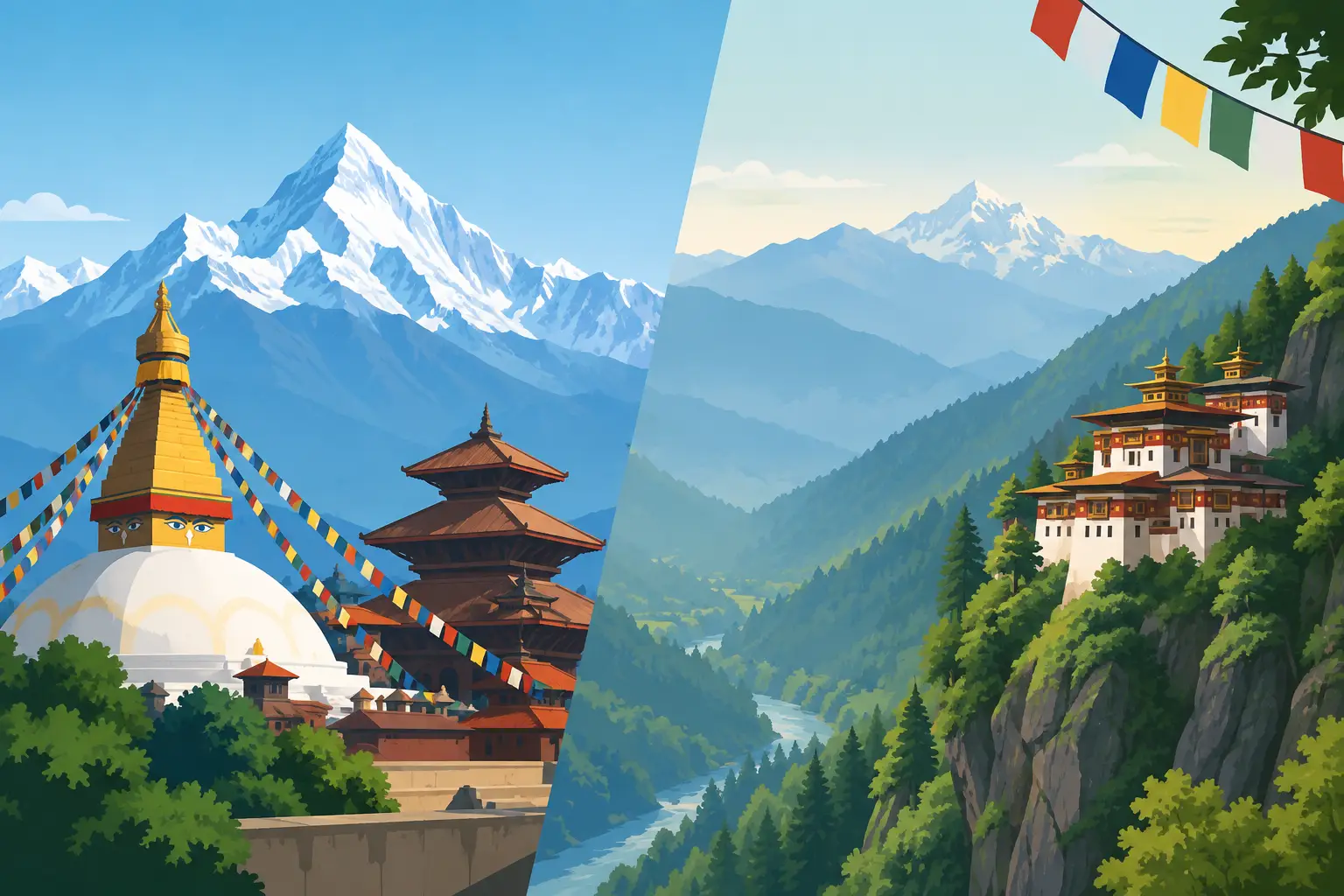
Nepal Versus Bhutan: Which Himalayan Trip?
A Himalayan holiday can mean waking before dawn for a view of Everest, or stepping quietly into a cliffside monastery as prayer flags stir in the mountain wind. In the choice of Nepal versus Bhutan, neither destination is simply ‘better’. They offer very different ways to experience the Himalayas – and the right one depends on how you like to travel, how active you want to be, and what you hope to take home beyond photographs.
Nepal is broader, busier and built for variety. It is where serious trekking ambitions sit alongside wildlife safaris, ancient cities, river rafting and mountain flights. Bhutan is smaller, more regulated and more deliberately paced. Its appeal lies in living Buddhist culture, immaculate valleys, dramatic fortress-monasteries and walks that feel peaceful rather than crowded.
Nepal versus Bhutan: the essential difference
Choose Nepal when the mountains themselves are the main reason for your journey. From the Everest and Annapurna regions to Langtang, Manaslu and lesser-known valleys, Nepal offers an extraordinary range of trekking grades and trip lengths. You can take a gentle day walk from Pokhara, trek to Poon Hill for a classic sunrise, or commit to the challenge of Everest Base Camp via Gokyo Lakes and Cho-La Pass.
Choose Bhutan when you want a closely guided cultural journey with mountain scenery woven into every day. Its high valleys and forest trails are beautiful, but the experience often centres on dzongs, monasteries, local traditions and the measured rhythm of life in Paro, Thimphu, Punakha and Bumthang. Even a short hike, such as the route to Tiger’s Nest Monastery, can be a defining moment.
The contrast is also practical. Nepal gives independent-minded travellers more choice in accommodation, restaurants, routes and spending levels. Bhutan’s tourism model is more structured, with trips arranged through a licensed operator and a daily sustainable development fee applying to most international visitors. That structure can make Bhutan wonderfully straightforward once booked, but it is generally the more expensive destination.
For trekking and outdoor challenge, Nepal leads
Nepal is one of the world’s great trekking destinations because the challenge can be tailored so effectively. First-time Himalayan trekkers can begin with Annapurna foothill routes, where comfortable tea houses, welcoming villages and magnificent views make the effort feel rewarding from the first few days. More experienced walkers can seek higher passes, remote terrain and longer acclimatisation schedules.
The country also makes it possible to build an itinerary around a personal milestone. Perhaps that is standing beneath the peaks of the Khumbu, crossing a suspension bridge above a river gorge, reaching a Himalayan viewpoint at sunrise, or completing a trek you once thought was beyond you. The physical effort is real, especially at altitude, but so is the sense of achievement.
Bhutan has excellent trekking too, including the Druk Path Trek and demanding high-altitude routes such as the Snowman Trek. However, it is less suited to travellers who want a wide menu of lodge treks at different price points. Many Bhutan treks require camping logistics, and weather, road conditions and limited infrastructure can have a greater influence on the final plan. For a trek-first holiday with the broadest choice, Nepal is usually the stronger fit.
Altitude is not a competition
Whether you travel in Nepal or Bhutan, altitude deserves respect. Nepal’s classic trekking routes can rise quickly above 3,000 metres, while Bhutan also reaches high elevations on mountain walks and treks. Fitness helps, but it does not prevent altitude illness.
A sensible itinerary includes gradual ascent, rest days where needed, hydration, realistic daily walking times and guides who monitor how everyone is feeling. Rushing to fit a famous route into too few days is rarely worth it. A well-paced itinerary gives you a safer journey and more time to enjoy villages, viewpoints and the people around you.
For culture and calm, Bhutan has a distinct character
Bhutan feels unusually cohesive. Traditional dress is still commonly worn, Bhutanese architecture shapes towns and villages, and Buddhist practice remains visible in daily life. You may see monks crossing a courtyard, families turning prayer wheels, painted wooden windows on farmhouses and prayer flags marking mountain passes.
Its cultural sites are not museum pieces. They are working places of worship and community. Visitors are expected to dress respectfully, follow their guide’s advice and recognise that photography is restricted in many temple interiors. This sense of care can make a Bhutan journey feel deeply personal, even on a relatively short itinerary.
Nepal’s culture is just as rich, but it is more layered and energetic. Kathmandu Valley alone brings together Hindu and Buddhist sacred sites, Newari architecture, centuries-old markets and a constant flow of urban life. In the mountains, each region introduces different communities and traditions, from Sherpa settlements in the Everest region to Gurung and Magar villages around Annapurna.
Travellers who enjoy contrast, colour and a little unpredictability often love Nepal. Those looking for quieter roads, a more curated pace and a strong focus on Buddhist heritage may find Bhutan especially compelling.
Cost, comfort and travel style
Budget is often the deciding factor in Nepal versus Bhutan. Nepal can be shaped around a modest or premium budget. Local guesthouses, domestic flights, private vehicles, boutique hotels, trekking lodges and guide support can be combined in many ways. The choice is extensive, although standards may vary, particularly in remote mountain regions.
Bhutan’s arrangements are typically more inclusive and controlled. Transport, guiding, hotels and meals are commonly planned as part of a full programme, which removes much of the uncertainty. The daily sustainable development fee increases the overall price, but visitors may feel the value in the quality of guiding, smaller visitor numbers and careful management of the destination.
Comfort also means different things in the Himalayas. In Kathmandu or Paro, you can enjoy excellent hotels and relaxed evenings. On a Nepal trek, accommodation becomes simpler as you climb, and hot showers or charging facilities may cost extra or be limited. On a Bhutan camping trek, the support team can provide an impressively organised camp, but you should still expect the elements to shape the day.
When should you go?
For both countries, spring and autumn are the most popular travel seasons. March to May brings rhododendron blooms, warmer conditions and increasingly hazy afternoons in some areas. October to November often brings crisp skies and excellent mountain views, particularly for trekking in Nepal.
Nepal’s monsoon usually affects travel from June to August, bringing rain, cloud and leeches on lower trails, although rain-shadow regions such as Upper Mustang can work well at this time. Winter offers quieter trails and clear days, but high passes can close and nights become cold.
Bhutan’s valleys are particularly attractive in spring, while autumn is known for clear weather and colourful festivals. Festival dates change according to the Bhutanese calendar, so travellers hoping to attend one should plan well ahead. Winter can be a lovely choice for lower-altitude cultural touring, with fewer visitors and bright daytime skies, though temperatures drop sharply after sunset.
Which journey is right for you?
Nepal is likely to suit you if you want a holiday driven by trekking, mountain achievement and variety. It works brilliantly for travellers who want to combine Kathmandu’s heritage with the Annapurna region, a jungle stay in Chitwan, or a focused Everest itinerary. It is also an excellent choice for groups with mixed interests because active and cultural days can sit comfortably together.
Bhutan is likely to suit you if you value tranquillity, cultural depth and a well-organised route through a carefully protected kingdom. It is ideal for travellers who prefer guided discovery over independent exploration, and for those whose idea of adventure includes walking through pine forest to a monastery as much as reaching a high pass.
There is also a strong case for combining them. A Nepal trek followed by several days in Bhutan can balance physical challenge with reflection, though it needs thoughtful timing and a realistic budget. As a Himalayan specialist with operational support in Kathmandu, Brothers Team can help shape the route, pacing and practical arrangements around the experience you genuinely want.
The best choice is the one that matches your travel temperament. Choose Nepal if the trail is calling you. Choose Bhutan if the quiet spaces between the mountains are calling just as loudly.

Comments are closed