


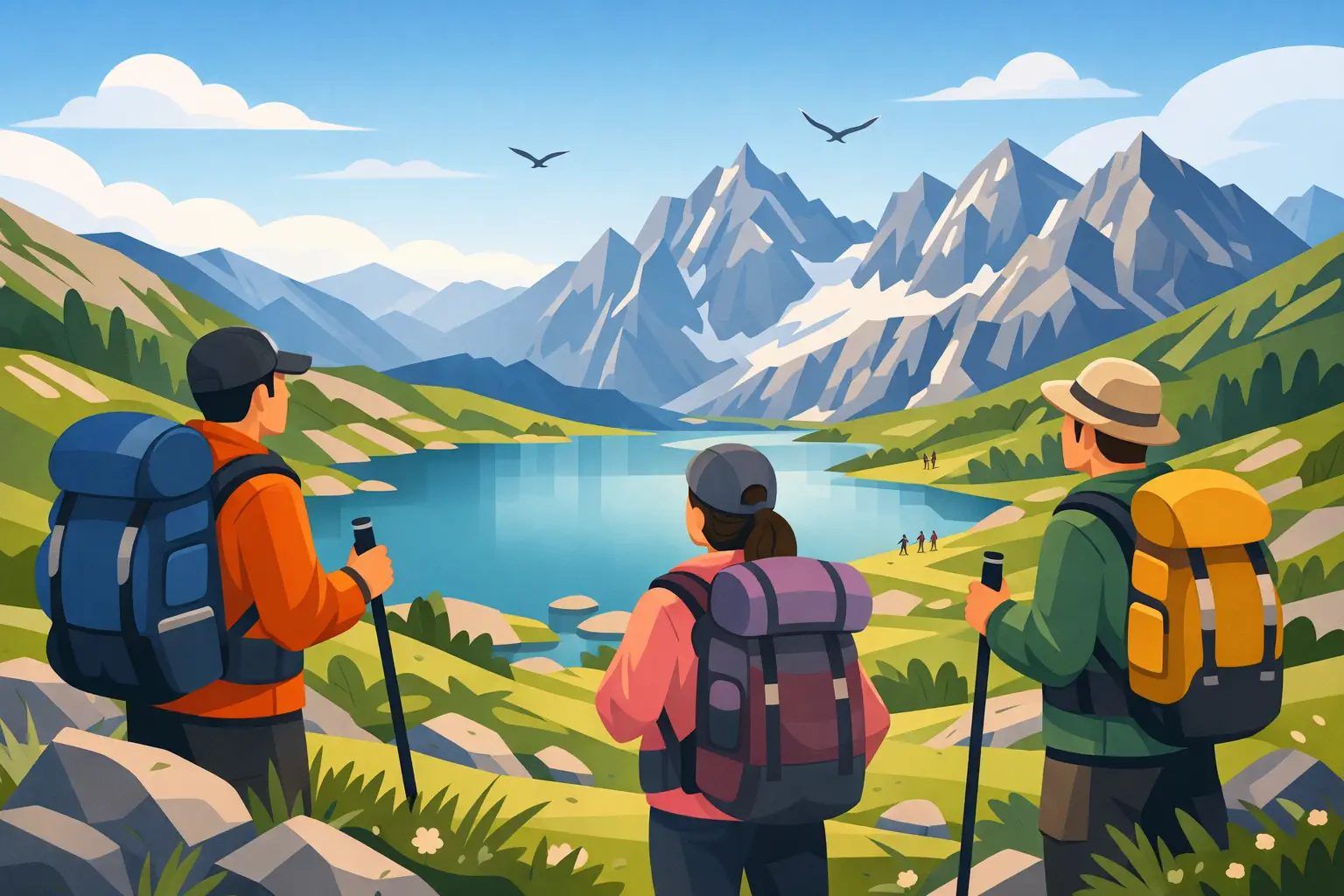
Kashmir Great Lakes Trek for First-Time Trekkers
The Kashmir Great Lakes Trek is not a trek of one dramatic summit or one famous viewpoint. Its reward arrives day after day: a high pass opens above a valley, a distant snow ridge comes into focus, then another alpine lake appears below in shades of blue, green and silver. For travellers who want a demanding but deeply scenic Himalayan journey, this is one of India’s most memorable multi-day routes.
Typically crossed from the Sonamarg side towards Naranag, the trek takes you through meadows, shepherd settlements, boulder fields, mountain passes and remote campsites in Kashmir. It requires preparation, a reliable support team and sensible respect for altitude, but it does not demand technical climbing experience. The right pace makes all the difference.
What makes the Kashmir Great Lakes Trek special
The route is often described as a chain of alpine lakes, but that only captures part of the experience. Vishansar, Kishansar, Gadsar, Satsar and Gangbal are among the lakes commonly included, although the exact campsite sequence can vary with weather, trail conditions and permit arrangements. The lakes sit in a vast mountain landscape shaped by glaciers, grazing land and high ridgelines, rather than beside busy roads or permanent hotels.
The scenery changes quickly. One morning may begin in soft grassland dotted with grazing sheep; by afternoon, the trail may be traversing a rocky slope beneath snow-streaked peaks. This variety is why the trek has such strong appeal for hikers who have already enjoyed lower-altitude walks and are ready for a proper Himalayan camping journey.
It is also a cultural landscape. Local shepherds, often with their flocks, may be encountered in the meadows during the trekking season. A good guide helps you appreciate these encounters respectfully, while keeping the group moving safely through terrain where weather can change fast.
Route, duration and daily challenge
Most Kashmir Great Lakes Trek itineraries run for around six to eight days of trekking, plus travel time before and after the route. The precise duration should not be chosen only by how many annual leave days you have. An itinerary with an extra night, a gentler ascent or a weather contingency is often a better holiday than a rushed crossing with long, exhausting days.
Days commonly involve five to eight hours of walking, though this depends on the camp location, trail condition and the group’s pace. Expect repeated ascents and descents rather than one continuous climb. Several high passes rise above 4,000 metres, and the climb to Gadsar Pass is frequently one of the most testing sections. The descents can be just as tiring, particularly when the ground is wet or loose.
You will normally sleep in tents, with a camp crew arranging meals and carrying shared equipment. This makes the trek more accessible than a self-supported expedition, but camping still asks for flexibility. Wash facilities are basic, nights can be cold, and there is little or no mobile signal once you are deep on the trail. For many travellers, that temporary distance from daily routine becomes part of the journey’s value.
Is it suitable for a first Himalayan trek?
Yes, for a fit first-time trekker who is willing to train properly and travel with an experienced operator. It is not the easiest introduction to the Himalayas because of its altitude, long walking days and changing underfoot conditions. A gentler lodge-based route may suit someone who is unsure about camping or has never walked consecutive days with sustained climbs.
On the other hand, travellers with a sound fitness base, a positive attitude and enough preparation often find the Great Lakes route a very satisfying first high-altitude trek. You do not need to be the fastest walker in the group. You do need the stamina to continue steadily, recover overnight and listen carefully when your guide recommends slowing down, drinking more or taking a rest.
Fitness preparation that pays off
Begin training at least eight to twelve weeks before departure. The most useful preparation is consistent rather than extreme: brisk uphill walking, stair climbing, cycling or jogging will build aerobic endurance, while strength work improves stability under fatigue. Focus especially on legs, hips, core and ankles.
Try to include weekend walks with a daypack and gradually increase both duration and elevation where possible. Singapore-based trekkers can use stair sessions, treadmill inclines and long walks in humid conditions, but should also practise managing heat, hydration and pacing. If you live near hills, seek out uneven trails. Your feet and balance benefit from learning to move confidently on natural ground, not only pavement.
Break in your trekking boots well before the trip. They should offer ankle support, grip and enough room around the toes for downhill walking. New boots, untested socks and a heavy pack are a reliable recipe for blisters. Even when porters carry the main luggage, you will carry water, waterproofs, warm layers, sun protection and personal essentials each day.
Altitude: the part that cannot be rushed
The trek reaches heights where altitude illness is a genuine consideration. Fitness does not make anyone immune. A marathon runner can develop symptoms while a slower walker feels completely well, which is why itinerary design, observation and open communication matter more than bravado.
Common early symptoms include headache, poor sleep, nausea, unusual tiredness and reduced appetite. These can overlap with ordinary trekking fatigue, so tell your guide promptly how you feel rather than trying to push through silently. Rest, hydration, food and a slower pace may help, but worsening symptoms require proper assessment. Descent is the most effective response to serious altitude illness, and no view is worth gambling with your health.
Build a day or two in Srinagar or Sonamarg before starting where your itinerary allows, travel gradually to the trailhead and avoid alcohol before the trek. A professionally managed trip should include guides trained to monitor altitude concerns, clear procedures for changing the plan and emergency arrangements suited to the route.
When to go and what the weather feels like
The usual trekking window is broadly from late June or July through September, depending on snowfall and trail access. Early season can bring lingering snow on passes and wetter ground. Mid-season often offers rich green meadows and fuller lakes, while later weeks may bring crisper days, cooler nights and changing autumn colours.
There is no universally perfect month. July can feel wonderfully alive but may have rain; August often provides more settled trekking days but still demands rain protection; September can be quieter and clear, yet markedly colder after sunset. Mountain forecasts are useful, but they are not a guarantee. Pack and plan for sun, wind, rain and cold on the same day.
Operational conditions in Kashmir can change. Access rules, permits, local regulations and weather-related trail decisions should always be confirmed close to departure. This is one reason specialist local coordination is valuable, particularly for international travellers arranging a point-to-point trek with multiple transfers and camps.
What to pack for comfort, not just survival
The key is a practical layering system. A breathable base layer manages sweat while walking, an insulating mid-layer keeps you warm at camp, and a waterproof outer shell protects you from rain and wind. Cotton is best avoided for active trekking because it stays damp and cold.
For this route, four items deserve particular attention:
- Waterproof hiking boots with proven grip, plus several pairs of walking socks.
- A warm down or synthetic jacket, thermal sleepwear, gloves and a woollen hat for cold camps.
- A waterproof jacket and trousers, pack cover, sunglasses and high-factor sun cream.
- Reusable water bottles or a hydration system, personal medicines, blister care and a head torch.
Keep your daypack organised so the essentials are easy to reach before the weather changes. Put waterproofs near the top, protect electronics in dry bags and carry more water than you think you will need for a short climb. Trekking poles are strongly recommended, especially for descents and stream-side trails.
Choosing the right support team
This is a route where logistics are part of the experience. Transport to and from the trailheads, camp equipment, food supplies, waste management, permits, local staff and emergency planning need to work together. The lowest price is not always the best value if it means a crowded itinerary, inadequate tents, poor meal planning or uncertain safety procedures.
Ask how the itinerary handles acclimatisation, what happens if bad weather delays a crossing, who carries group safety equipment and whether the operator employs knowledgeable local guides. Also ask about group size. Smaller, well-led groups are often easier to manage on narrow trails and allow guides to respond to individual pacing needs.
Brothers Team approaches Himalayan travel with the same principle that guides its Nepal programmes: a memorable mountain holiday should feel adventurous, while the planning behind it remains thoughtful, personal and dependable.
The Kashmir Great Lakes Trek asks you to earn its views with steady effort, cold mornings and a willingness to live simply for a few days. Arrive prepared, give yourself enough time, and let the changing light on those high mountain lakes remind you why some journeys are best experienced on foot.



Comments are closed