


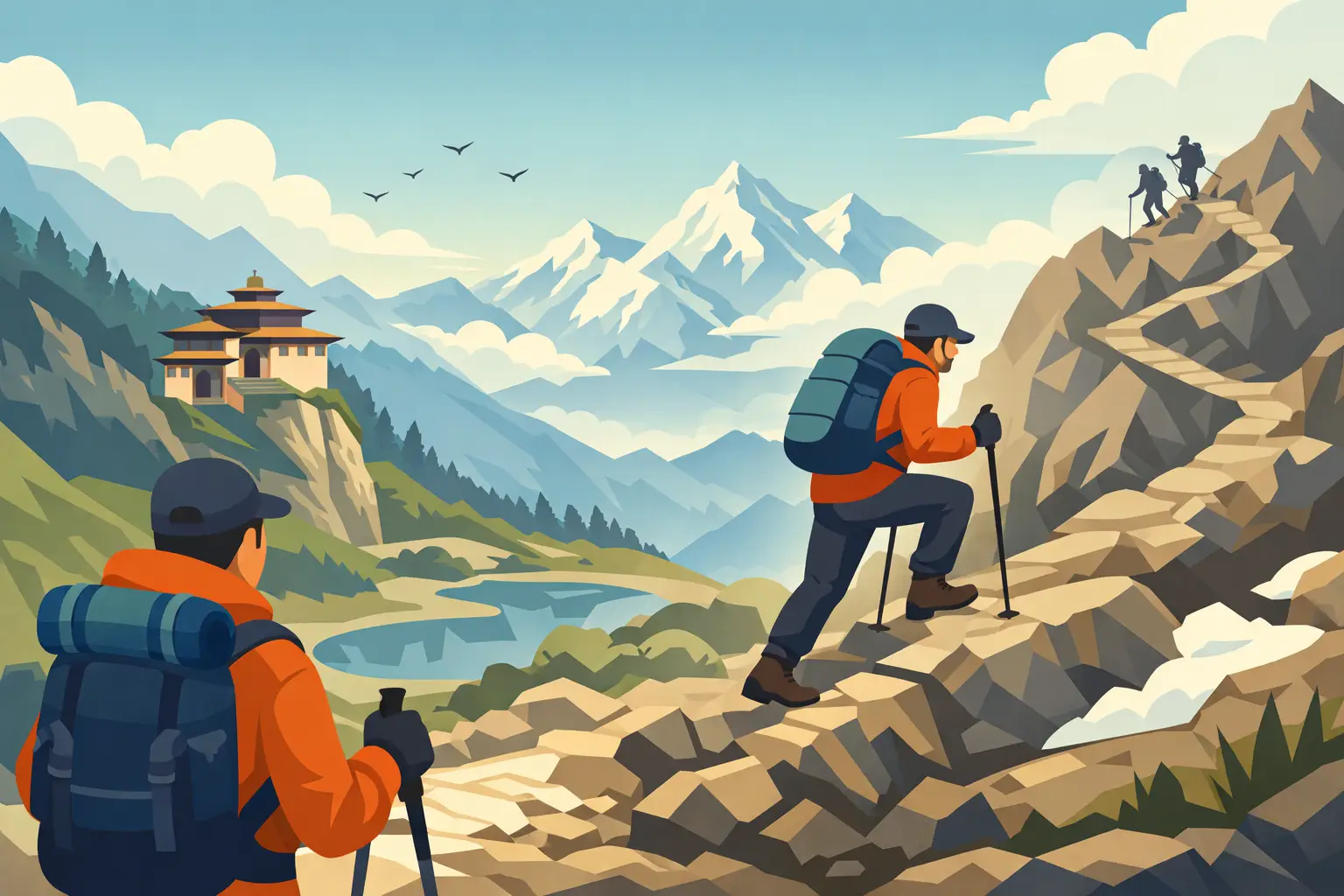
Druk Path Trek Difficulty: How Hard Is It?
The Druk Path trek difficulty is often underestimated because the route is relatively short. It is not a technical Himalayan expedition, and the daily distances are manageable for many active travellers. Yet it spends several nights above 3,500 metres, crosses a high pass, and requires you to walk well in variable mountain weather. The real challenge is the combination of altitude, consecutive days on the trail and camping comfort rather than any single steep ascent.
For travellers looking to experience Bhutan beyond its valleys and monasteries, this is a rewarding middle-ground trek. It links Paro and Thimphu through high forest, yak pasture, ridgelines and remote lakes, with broad views towards snow-covered Himalayan peaks when conditions are clear. Good preparation turns it from a tough holiday into an immensely satisfying one.
What Makes the Druk Path Trek Difficult?
Most Druk Path itineraries take five or six walking days and cover roughly 45 to 55 kilometres, depending on the camp plan and route conditions. On paper, that may sound modest. The terrain and elevation are what give the trek its character.
The route usually begins near Paro at approximately 2,400 metres and soon climbs towards camps above 3,400 metres. The high point is Labana La, generally around 4,100 to 4,200 metres. You are not rushing to extreme altitude, but sleeping high for several nights means your body has less time to recover than it would on a low-level walking holiday.
Paths alternate between forest tracks, uneven stone sections, muddy ground after rain and open slopes. Some descents can feel particularly demanding on the knees, especially with tired legs or poor footwear. There are no ropes, glaciers or climbing techniques involved, but balance, stamina and a sure footing are valuable.
Altitude is the main consideration
For most reasonably fit trekkers, altitude is the deciding factor in Druk Path trek difficulty. A person who walks regularly at sea level can still feel breathless, sleep lightly or develop a headache at 3,500 metres and above. Fitness helps, but it does not make anyone immune to altitude illness.
A sensible itinerary builds elevation progressively and avoids unnecessary rushing. Your guide should check how everyone is feeling, keep the pace controlled and make decisions based on symptoms rather than determination. Mild tiredness and a reduced appetite can occur, but a persistent headache, nausea, dizziness or unusual fatigue should be reported straight away. Descending is the most reliable response if symptoms worsen.
The route is generally suitable for travellers with no previous high-altitude experience, provided they are honest about their fitness, follow the planned pace and allow time to acclimatise before and during the trek. It is less suitable for anyone who expects to push through illness or who has a medical condition requiring specific altitude clearance.
Weather can change the experience quickly
Bhutan’s mountain weather has a strong influence on how hard the trek feels. A clear, cool morning can turn into rain, mist or wind by the afternoon. Wet trails become slippery, and low cloud can reduce visibility across exposed sections. Night temperatures at higher camps can drop close to freezing, even when daytime conditions are pleasant.
Spring and autumn are usually the most popular periods because they offer more reliable trekking conditions and clearer mountain views. Spring brings rhododendron colour and fresh green forest, while autumn often brings crisp air and wide views. Each season still has trade-offs: spring can have occasional showers, and autumn nights can be colder. The summer monsoon makes trails wetter and leech activity more likely, while winter can bring snow and icy conditions at higher points.
How Fit Do You Need to Be?
The trek is best described as moderate, with a few demanding days. You do not need to be a runner or experienced mountaineer, but you should be comfortable walking for five to seven hours on consecutive days. Expect sustained uphill sections, uneven terrain and elevations where your normal pace will naturally slow.
As a practical benchmark, aim to complete regular walks of three to five hours before departure, including hills where possible. If you live in Singapore or another flat location, use stair climbs, a treadmill on incline, or sessions on a stair machine to prepare your legs and lungs. Weekend walks with a small daypack are especially useful because they teach your shoulders, feet and knees what repeated trail days feel like.
Training should begin at least eight to ten weeks before travel if you are starting from a modest fitness base. Combine steady aerobic exercise with lower-body strength work. Squats, lunges, step-ups and calf raises are simple but effective, particularly when performed with good control. Add core work too: a stable torso makes descents more comfortable and helps you carry a daypack without straining your back.
Experienced hikers may find the walking straightforward but should not dismiss the altitude. First-time trekkers often succeed very well when they train consistently and choose a well-paced programme. The biggest mistake is assuming a short trek requires no preparation.
Camping and Daily Routine on the Trail
Unlike many Nepal treks where accommodation is in teahouses, the classic Druk Path is a supported camping journey. A local crew normally manages tents, meals and camp set-up, while pack animals carry the main equipment. You carry only your personal daypack, usually containing water, warm layers, waterproofs, sun protection and essential items.
This support makes the route far more approachable, but camping introduces its own challenges. Nights can be cold, washing facilities are basic, and sleep may be disrupted by altitude, wind or unfamiliar surroundings. A good sleeping bag and warm base layers matter as much as a quality pair of boots.
The rhythm of camp life is one of the trek’s pleasures. After a walking day, there is time for a hot meal, quiet conversation and the changing light across the hills. However, it pays to keep expectations realistic. This is remote mountain camping, not a luxury lodge experience, and a flexible attitude goes a long way when weather affects the schedule.
Preparation That Makes a Real Difference
Equipment cannot replace fitness or acclimatisation, but the right choices reduce avoidable discomfort. Break in your trekking boots well before the trip, and wear them with the socks you plan to use. Blisters can turn an otherwise manageable day into a long one.
For this route, prioritise these essentials:
- Waterproof hiking boots with supportive soles and good grip.
- A waterproof jacket and trousers, rather than relying on a poncho.
- Insulating layers, including a warm fleece or down jacket, hat and gloves.
- A reusable water bottle or hydration system, plus a way to treat water if advised.
- Sun cream, sunglasses and a cap, as high-altitude sunshine can be surprisingly strong.
- Personal medicines, blister care and any medication discussed with your doctor.
Trekking poles are optional, but many travellers appreciate them on steep descents and slippery ground. They can also take pressure off the knees late in the day. Bring them only if you practise using them beforehand; poorly adjusted poles can be more awkward than helpful.
Is the Druk Path Right for You?
Choose the Druk Path if you want a genuine Himalayan walking experience without committing to a long, high-volume expedition. It suits active travellers who enjoy being outdoors, can accept basic camping and want Bhutan’s landscapes and culture to be part of the journey rather than a backdrop seen from a vehicle.
Consider an alternative if you dislike cold nights, have little tolerance for rough trails, or cannot dedicate time to pre-trip conditioning. Bhutan also offers shorter valley walks and cultural itineraries that retain the country’s exceptional scenery without several nights at altitude. There is no prize for choosing a trek that does not match your comfort level.
For schools and organised groups, the route needs particularly careful planning around fitness screening, supervision, camp arrangements and contingency time. A smaller group size, clear expectations and experienced local leadership help make the challenge constructive rather than overwhelming.
With thoughtful pacing, reliable camp support and a guide team that treats altitude seriously, the Druk Path is achievable for well-prepared walkers. Brothers Team can help shape the itinerary around your experience, travel dates and group needs, so the high passes feel like a personal achievement, not a race against the mountains.



Comments are closed