



What Everest Operator Ratings Really Tell You
A five-star score can be reassuring when you are choosing an Everest trek, but Everest operator ratings deserve more than a quick glance at the average. A trek to Everest Base Camp is not a standard holiday purchase. Weather can disrupt flights, altitude can change a guest’s plans, and the quality of support becomes most visible when the route does not go exactly as expected.
The most useful reviews do not simply say that a trip was ‘amazing’. They show how an operator planned the journey, looked after people during difficult moments, and made the high Himalaya feel challenging yet well supported. Read with care, ratings can help you find a team that suits your pace, experience and expectations.
Why Everest operator ratings need context
A high rating is a good starting point, not a final answer. Some operators receive reviews mainly from young, fit trekkers travelling in peak season on the classic Everest Base Camp route. Others work with mixed-age private groups, first-time trekkers, school groups, or guests taking longer routes through Gokyo Lakes and Cho-La Pass. These are very different operations, with different levels of complexity.
Look at the volume and spread of feedback. Ten excellent reviews gathered over several years can reflect genuine care, but they tell you less about consistency than a healthy body of recent, detailed feedback. Equally, hundreds of ratings do not automatically mean a better trek. Large operators may run many departures, while a boutique specialist may deliberately keep groups smaller and offer more personal attention.
Dates matter too. Mountain travel changes with airline schedules, trail conditions, lodge availability and local regulations. Recent comments are especially valuable when they mention how an operator handled a delayed Lukla flight, a change in accommodation, or a guest who needed an extra acclimatisation day.
Read beyond the star rating
The strongest reviews contain specifics. They name the places visited, explain the daily walking rhythm, and describe how guides communicated. A traveller who recalls an unhurried morning at Namche Bazaar, a thoughtful adjustment after a headache, or help rearranging flights after poor weather is giving you more useful evidence than someone who offers only a score.
Look for the details that affect your trek
Safety language should be practical rather than dramatic. Reviews may mention regular health checks, guides who encourage guests to speak honestly about symptoms, sensible rest days, or a willingness to turn back when continuing is not safe. No operator can remove altitude risk, and responsible companies should never promise that they can. What they can do is build acclimatisation into the itinerary, monitor guests carefully and have clear procedures when someone becomes unwell.
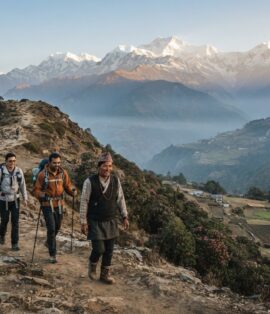
Pacing is another revealing theme. An itinerary can look similar on paper yet feel entirely different on the trail. Read for comments about manageable days, early starts, time to enjoy villages and mountain views, and whether guides adapted the pace for the group. A good Everest trek is not a race to a viewpoint. It is a gradual journey that gives your body the best possible chance to adjust.
Also notice how reviewers describe the guide team. ‘Friendly’ is welcome, but capability matters just as much. Useful reviews refer to local knowledge, clear briefings, attention to individuals, cultural insight, and calm decision-making. The best guides balance encouragement with judgement. They know when a guest needs confidence and when they need a quieter day.
What negative reviews can reveal
One poor review should not automatically rule out an operator. Travel in the Everest region involves factors beyond anyone’s control, particularly weather and flight disruption. What matters is the nature of the complaint and, where visible, how the company responded.
Be cautious if several guests mention the same issue: rushed acclimatisation, unexpected costs, poor communication before departure, unsuitable lodges, or pressure to continue despite illness. Repetition is more meaningful than a single unhappy experience.
On the other hand, a review complaining about a cancelled flight may not be a warning if it also acknowledges that the team arranged accommodation, gave regular updates and found the earliest practical alternative. The difference lies between unavoidable disruption and poor handling of disruption.
Be wary of reviews that feel unnaturally alike, whether glowing or critical. Genuine accounts tend to vary in tone and detail because each traveller notices different parts of the experience. Some care most about the scenery and cultural encounters; others focus on food, logistics or guide support.
Compare like with like
Before comparing Everest operator ratings, decide what sort of trip you actually want. The least expensive package may use a tighter schedule, provide fewer inclusions or rely on larger groups. A premium price may include stronger logistics and a more comfortable pace, but only if those benefits are clearly explained.
Ask whether the reviews relate to the same route and season you are considering. Everest Base Camp via the standard route is different from a trek via Gokyo Lakes and Cho-La Pass, where higher passes, longer days and more changeable conditions raise the demands. A reviewer delighted with a short mountain flight and a few days in the Khumbu is not assessing the same service as someone completing a two-week trek.
For groups, the comparison becomes broader. Teachers and group leaders should look for feedback about pre-departure communication, supervision, clear risk planning, flexibility around mixed abilities and coordination of meals, transport and accommodation. Individual trekkers may place more weight on small-group atmosphere and the freedom to tailor the itinerary.
Value is not the same as the lowest price
A rating that praises ‘great value’ is only meaningful when you know what was included. Check whether the trip covers permits, domestic flights, airport transfers, guide and porter arrangements, accommodation, meals, emergency planning and contingency support. Some costs vary with personal choices, but the operator should explain them plainly before you commit.
A slightly higher price can be worthwhile when it supports better acclimatisation, experienced local staff and realistic allowances for changes. Yet expensive is not automatically excellent. Ask direct questions and expect direct answers. A trustworthy team will explain the practical reasons behind its itinerary rather than relying on vague promises.
Questions ratings cannot answer on their own
Reviews are valuable, but they cannot tell you whether an itinerary fits your current fitness, medical history or appetite for discomfort. Nor can they show exactly how you will feel at altitude. Use ratings to form a shortlist, then speak with the operator.
Ask how many acclimatisation days are included and what happens if you need more time. Ask who leads the trek on the ground, how porter loads are managed, and how the team communicates if Lukla flights are delayed. If you are travelling alone, ask about group size and room arrangements. If you have dietary needs, ask how they are handled in remote lodges rather than assuming every request can be met everywhere.
Brothers Team has worked from Kathmandu and Singapore for decades, so we see that peace of mind often comes from these quieter details: a realistic briefing, a guide who notices when someone is struggling, and a team ready to adjust when mountain conditions require it.
Use ratings to choose with confidence
The right review should leave you with a clear picture of the experience, not simply a warm feeling about a star score. Look for evidence of thoughtful pacing, honest communication, capable guides and care when plans change. Those qualities are what turn an Everest ambition into a journey you can remember for the views, the villages and the personal achievement.
Choose the operator whose approach feels right for your own trek, then give yourself the time to prepare well. The Himalaya rewards patience, and a carefully supported journey leaves more room to enjoy every step.


Comments are closed