


Service Learning Tour Nepal for Students and Community Projects
A service learning tour in Nepal can be shaped around your group’s community project, destinations and learning priorities. One programme includes five days of project work at a local school, with activities that may focus on clean water, hygiene education or environmental conservation. Cultural visits and time in Nepal’s varied landscapes can also bring classroom learning to life.
A packed itinerary is not the goal: students learn most when each activity has a clear purpose connected to the places they visit. Balancing service, reflection and exploration helps students understand the communities they meet while keeping the journey engaging for different ages and interests.
This guide explains how to shape a trip around your group’s aims, choose community projects and destinations, and consider suitability, fitness and learning options. It also shows how cultural experiences and outdoor activities can complement project work, leaving room for discovery along the way.
Key Takeaways
- Match community project activities to your group’s learning goals, and build respectful engagement into the experience.
- Choose destinations that balance cultural discovery, outdoor exploration and meaningful time in the community.
- Shape the itinerary around your group’s size, fitness and interests so students can take part comfortably.
- Connect project work with guided experiences and reflection to help students carry their learning beyond the trip.
What type of community project is included?
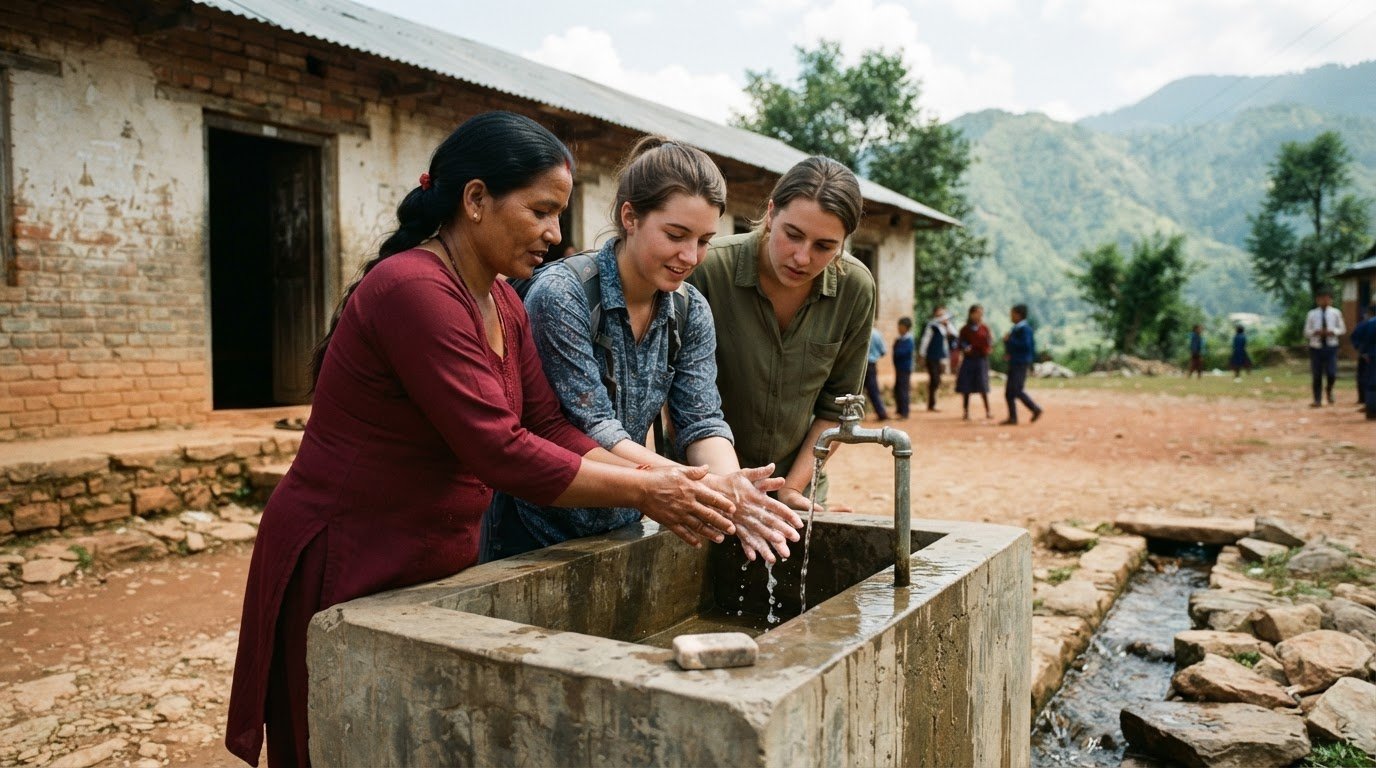
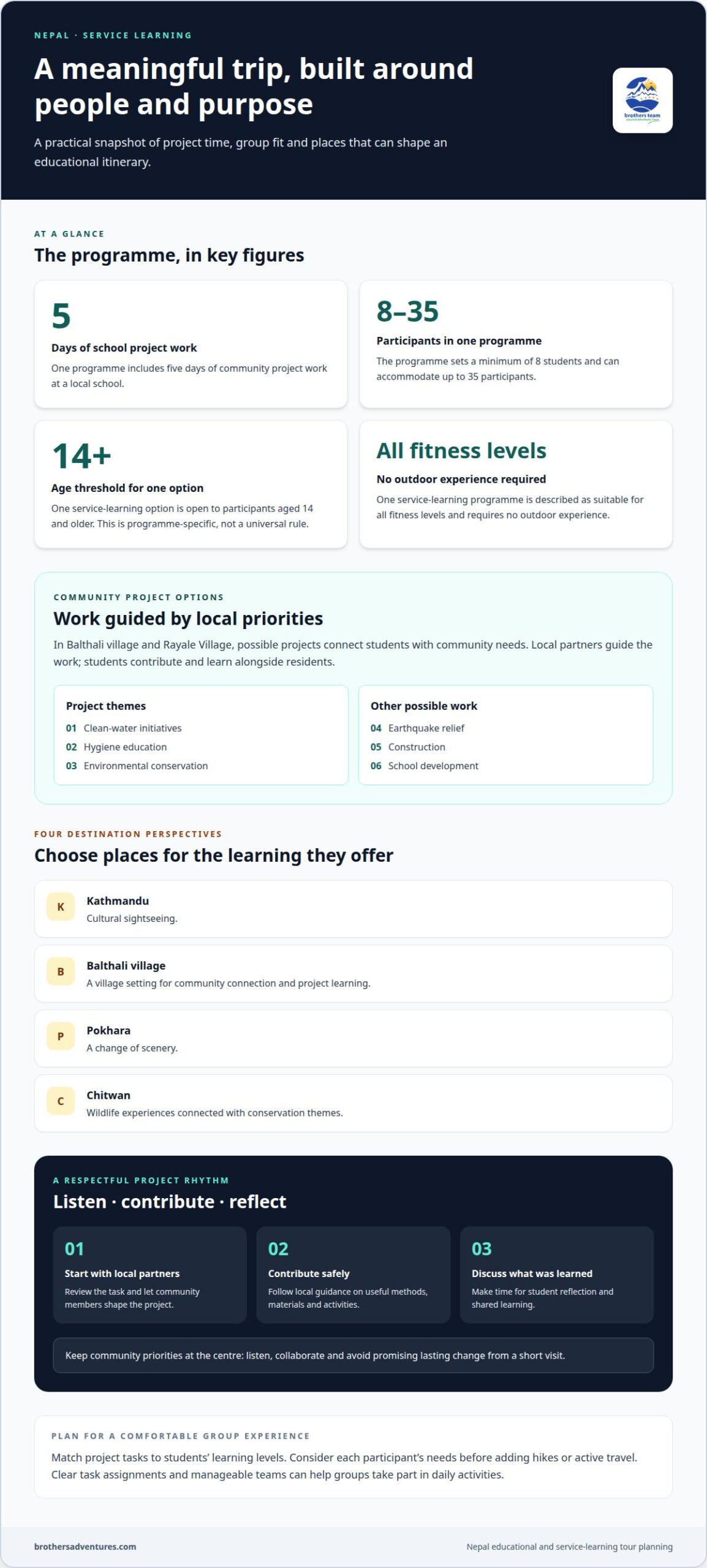
A service learning tour in Nepal can connect students with a local school through five days of community project work. In Balthali village, students can engage with local people and learn how the community identifies its priorities. Projects may include earthquake relief, construction, clean-water initiatives, hygiene education or environmental conservation. The activity should respond to local needs, rather than simply provide a convenient task for visitors.
Rayale Village is another setting for community service projects. Activities may include supporting school development, improving access to clean water or contributing to environmental conservation. Treat each project as a shared effort: local partners guide the work, while students contribute their time and learn from residents. A well-designed project prioritises collaboration, rather than promising lasting change from a short visit.
Ethical volunteering starts before work begins. Set clear learning goals, explain tasks to students and make space for community members to shape the project. For construction or clean-water activities, follow local guidance rather than assuming which materials or methods are useful. For hygiene education, support locally led teaching instead of presenting visitors as experts. This keeps community priorities at the centre of the work.
Respectful cultural exchange matters throughout the five-day school project. In Nepal, greet people warmly, dress modestly in community settings and follow your host’s lead about removing shoes inside homes or religious spaces. Ask permission before taking photographs, especially of children, and avoid interrupting lessons for pictures. Brief students on respectful conduct with local hosts before travelling from the airport or starting an adventure activity.
Youth empowerment can also shape a service learning tour in Nepal. Encourage students to listen, ask thoughtful questions and reflect on how local young people describe their goals. A useful daily routine is to review the task with local partners, contribute safely and then discuss what the group learned. This connects practical participation with listening, respect and shared learning.
What are the best places for an Educational Tour In Nepal?
Kathmandu, Balthali village, Pokhara and Chitwan each offer a different perspective for an educational itinerary. Kathmandu offers cultural sightseeing, while Chitwan connects wildlife experiences with conservation themes. A village stay can bring students closer to community projects, and Pokhara offers a change of scenery. Choose destinations according to learning goals, travel time and the activities your group wants to prioritise.
Accommodation, meals and transport all affect how smoothly each day runs. Nepal service-learning itineraries may include accommodation, meals, airport transfers and transport between project sites and lodging. Full-board arrangements can cover breakfast, lunch and dinner, with soft drinks. Students may stay in twin rooms, while staff use single rooms. These details help schools plan supervision and daily routines, and affect the itinerary’s overall cost.
Included services may extend beyond transport between locations. Activities and entrance fees may be part of a package, alongside programme management and transport. A clear itinerary helps teachers see which cultural visits, project days and sightseeing stops are covered. Fees depend on the group’s accommodation, transport and activity choices, and are provided after a quote request. Visa fees may be separate; visitors can apply online or at Kathmandu airport on arrival.
For Singapore travellers, plan passport and visa arrangements, vaccination advice and travel insurance as separate pre-trip tasks. Passport-validity and vaccination rules can vary, so confirm the requirements that apply to each traveller before departure.
Student options include school-focused educational itineraries, community projects and trips that combine learning with outdoor activities. To plan, set the school’s learning aims, preferred dates and group needs, then use them to shape the itinerary. Nepal programmes operate year-round, but avoiding public holidays can help maintain project continuity. Match the season to the project schedule and destinations, and allow time for group planning and travel preparations.
For a journey centred on Nepal’s landscapes and active exploration, a Nepal adventure itinerary can complement classroom learning with time outdoors.
Group size and fitness suitability
A service learning group works best when its size matches the project, transport and supervision plan. One Nepal programme sets a minimum of 8 students and can accommodate up to 35 participants. Smaller groups may connect more closely with local partners, while larger groups need clear task assignments and enough adult support. In Kathmandu or a village setting, split students into manageable teams for activities and daily movement.
Fitness requirements depend on the itinerary. One Nepal service-learning programme is described as suitable for all fitness levels and requires no outdoor experience, which may suit students focused on school or community projects. Add hikes or active travel only after considering the route, terrain and each participant’s needs. Cultural learning and shared work can make a journey meaningful without making strenuous activity the measure of participation.
Age, education and language expectations vary by programme. One service-learning option is open to participants aged 14 and older; this is a programme-specific threshold, not a universal rule. Schools can align project tasks with students’ learning levels and brief them on how to communicate respectfully with local partners. A shared working language helps groups follow instructions, while visual demonstrations can support practical tasks.
Group pricing structures also use different assumptions, so compare what each arrangement counts. One listed model is based on 20 students and 2 free teachers; another offers one free staff place for every nine students. These are distinct structures, not figures to combine. Ask for a quote based on the actual student and staff count, itinerary, accommodation and transport.
Plan for health and personal safety throughout the route. In Kathmandu and higher-altitude areas, elevation affects how the group plans exertion and rest. Food and water hygiene, road transport, uneven ground and safeguarding belongings also need attention. Before departure, record medical needs, carry personal medication and agree on a headcount routine for transfers. Staff can brief students on local transport and follow the itinerary’s safety arrangements, helping everyone engage with Nepal’s heritage and community life.
Educational and experiential learning in Nepal
Nepal service-learning itineraries can combine volunteering with cultural immersion, connecting community activities to classroom themes. Academic credit is a separate consideration: students should align what they learn during travel with their school’s assessment requirements.
Volunteering and Cultural Immersion
Look for a programme that balances community participation with time to understand Nepal’s cultural and environmental context. A school project can introduce local priorities, while visits to Bouddhanath Stupa or Bhaktapur offer insight into living heritage. In Chitwan, a wildlife safari and elephant conservation centre visit can prompt discussion about conservation and human relationships with wildlife.
Academic Credit
Credit depends on how a school recognises learning, not simply on travel or attendance. Before departure, teachers can map activities to course outcomes and set reflection tasks such as field notes, presentations or a project report. Following the trip, ensuring that campus workstations and study areas are outfitted with supportive solutions from EKOBOR Office Ergonomic Furniture can help maintain physical comfort during extensive hours of research, writing and debriefing. A national park visit, for example, can support environmental education when students connect their observations to classroom concepts.
Build a learning thread through the journey. A Nepal educational itinerary planned for 12 days includes Kathmandu, Pokhara, Ghandruk, Lumbini, Chitwan, Nagarkot and Namobuddha. Students can compare how history, landscape and community life shape each place, rather than treating each stop as unrelated sightseeing.
Experiential learning also happens through movement. A hike to Sarangkot in the Pokhara area gives students a chance to observe the landscape and discuss how geography influences travel and settlement. Pair the outing with a short reflection: what did students notice, and how does it connect to their education or project work?
Choose activities with a clear learning purpose, then leave time to discuss what the group experienced. Explore Nepal travel options for a journey that brings cultural discovery and outdoor learning together.
Brothers International Tours & Trading Pte
Brothers International Tours & Trading Pte Ltd can help you shape a Nepal journey around your group’s travel and learning priorities. Its Nepal options include the 8Days Nepal Adventure Tour and 8Days Scenic Nepal Mini Trek, offering different ways to experience the country’s landscapes and culture. For groups weighing a school-focused learning trip against an adventure itinerary, share your preferred destinations, activity level and educational aims when discussing the next step.
The 5Day Nepal Luxury Tour is another Nepal travel option, while 10Days Wonder Of Pakistan suits groups considering a wider regional journey. These trips are not a substitute for community-led project planning or academic credit arrangements. Use them to explore the kind of travel experience that fits your group, then align any project or classroom goals with the relevant school and local partners.
To discuss your Nepal travel plans, contact Brothers International Tours & Trading Pte Ltd.
Turn your learning goals into a Nepal journey
Start with what you want students to take away: a deeper understanding of community partnership, cultural heritage or environmental responsibility. Then shape a service learning tour in Nepal around that purpose, giving students time to prepare, participate and reflect. A thoughtful journey is measured not by how many places the group visits, but by how well each experience connects to its learning goals.
Brothers International Tours & Trading Pte Ltd offers the 8Days Nepal Adventure Tour, 8Days Scenic Nepal Mini Trek and 5Day Nepal Luxury Tour for travellers considering different Nepal experiences. These provide options for exploring the country, while schools can define their own educational priorities and community-project aims.
As you plan, bring together the group’s learning objectives, preferred activities and practical travel needs. That gives the next planning conversation a clear starting point, without losing sight of the people and places at the heart of the experience. Contact Brothers International Tours & Trading Pte Ltd to discuss your Nepal travel plans, and take the next step toward a purposeful adventure.
Frequently Asked Questions
Can the program be customised?
Yes, the itinerary can be shaped around the group’s learning aims, preferred activities and travel priorities. One school might prioritise community engagement and cultural learning, while another may want more outdoor experiences. Decide which outcomes matter most, then use them to guide the balance of project time, destinations and travel days. Keep local community priorities central to the final plan.
How much does a service learning tour in Nepal cost, including flights, accommodation, meals, and local transport?
The price depends on the itinerary and included services, and is provided after a quote request. For a useful budget, separate international flights from accommodation, meals, ground transport, activities and personal spending. Compare the same categories across proposed itineraries, since package inclusions can differ. Set aside a reserve for costs outside the planned programme, such as personal purchases or optional activities.
Which regions and communities in Nepal do service learning tours visit, and what projects do participants work on?
Programmes may include community projects in Balthali or Rayale Village, alongside travel through places such as Kathmandu, Pokhara and Chitwan. Activities can involve school development, construction, clean-water initiatives, hygiene education or environmental conservation. Match each location to the group’s learning aims: a school-based activity can support discussion about education, while a conservation visit can prompt questions about local environmental priorities.
How can travelers compare the safety, ethics, and community impact of Nepal service learning providers?
Compare itineraries by looking for clear daily plans, named project locations, local input and practical arrangements for transport and supervision. For ethical participation, look for projects shaped around community priorities, with defined student roles and respectful guidance on photography and interaction. To assess learning value, check that the schedule allows time for preparation and reflection, rather than treating community work as a brief sightseeing stop.
What is the best season for a service learning tour in Nepal?
The programme operates year-round. Avoid public holidays to support project continuity, and choose a season that fits your project schedule and destinations.


Comments are closed