


Silk Road Overland Tour Packages Across Central Asia
Is safety on a Silk Road journey mainly about the destination or the details between stops? A Silk Road overland tour package can connect China with Central Asia, with itineraries ranging from two weeks to several months. Route choice, long drives, border crossings and overnight stays all shape the experience, so understanding the itinerary matters as much as choosing the places you want to see.
It’s natural to think carefully about logistics when a trip crosses several countries. Consider how border days work, what transport and accommodation the itinerary includes, and how much structure the package provides along the way.
This guide explains how to match China and Central Asia routes to your travel style, prepare for border crossings, and compare transport, accommodation and included services. Before deciding, consider whether a classic overland crossing, a shorter regional route or a focused cultural trip suits your plans.
Key Takeaways
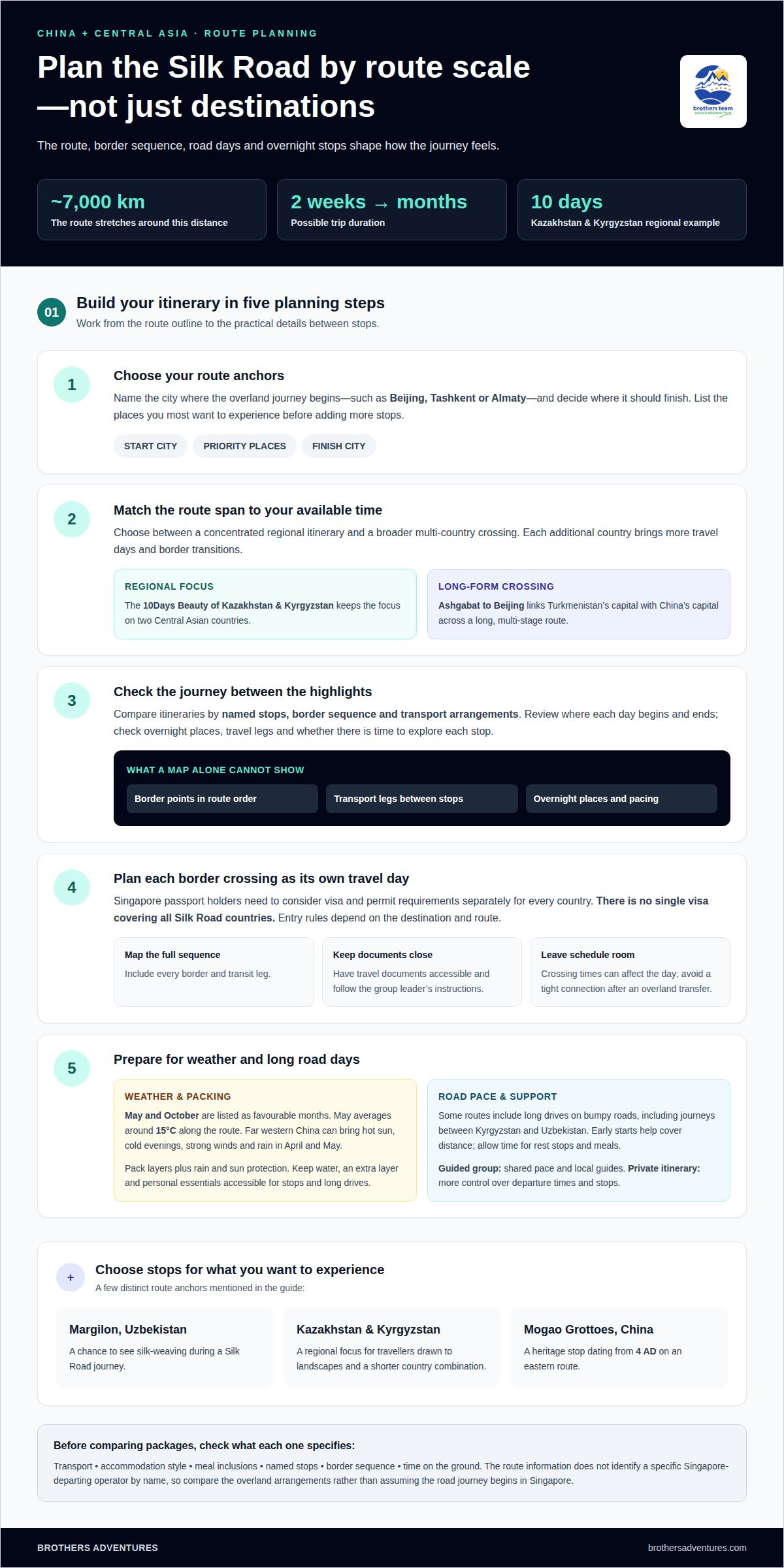
- Choose a route by balancing the countries and cultural highlights you want with the time you have for overland travel.
- Plan for changing weather and long road days, and make border crossings part of your itinerary rather than an afterthought.
- Look beyond the destination list: transport, accommodation style and meal inclusions shape the pace and feel of the journey.
- Explore the article’s route-planning guidance alongside focused regional tours to find an adventure that better fits your travel style.
Multi-country Silk Road itineraries across Central Asia
For Singapore travellers, distinguish the flight departure from the first overland city. The route information here doesn’t identify a specific Singapore-departing operator by name, so compare itineraries by their named stops, border sequence and transport arrangements, rather than assuming the road journey starts in Singapore.
A Silk Road overland tour package can focus on China, Central Asia or a longer multi-country journey. The route stretches around 7,000 kilometres, and trips can run from two weeks to several months. That range lets you choose between a concentrated regional itinerary and a broader crossing, with each additional country bringing more travel days and border transitions. Uzbekistan and Kazakhstan can anchor a Central Asian route, while China adds a distinct eastern section. Start by deciding which countries matter most, then match the itinerary length to the time you can spend on the road.
The Ashgabat-to-Beijing overland itinerary is a long-form option connecting Turkmenistan’s capital with China’s capital. Its appeal lies in the scale of the crossing, but the route’s many stages call for careful attention to where each day begins and ends. Review the overnight places, transport links and border points together; a map alone won’t show how the journey is paced. For a shorter regional example, the 10Days Beauty of Kazakhstan & Kyrgyzstan keeps the focus on two Central Asian countries, rather than spanning from Ashgabat to Beijing.
Start by choosing the city where you want the overland journey to begin, such as Beijing, Tashkent or Almaty. List the places you want to discover, then decide where the route should finish. This makes the key question practical: which section deserves your time? Check how accommodation and travel days fit between stops, and whether the itinerary leaves time to experience each place rather than simply passing through. Overnight stays and transport legs should follow the route’s actual sequence.
Traveller advice on weather, packing and border crossings
Weather, road conditions and border procedures all affect comfort on a China and Central Asia itinerary. Plan around the season, route and travel style, not just the ancient Silk Road stops.
Weather and Packing Preparation
May and October are listed as favourable months for Silk Road travel, while May averages around 15 degrees Celsius along the route. Far western China can bring hot sun, cold evenings, strong winds and rain in April and May. Pack layers, rain protection and sun protection so you can adjust between exposed daytime visits and cooler nights.
Allow for remote stretches near places such as Jiayuguan, where changing conditions make flexible layers useful. Keep essentials accessible during long drives instead of burying them in your luggage. A compact day bag can hold water, an extra layer and personal items for stops at historic Silk Road sites.
Border-Crossing and Visa Preparation
Singapore passport holders need to consider visa and permit requirements separately for every country on the itinerary. There is no single visa covering all Silk Road countries; entry rules depend on the destination and route. Map each border crossing, including transit legs, and prepare travel documents for the full sequence of countries.
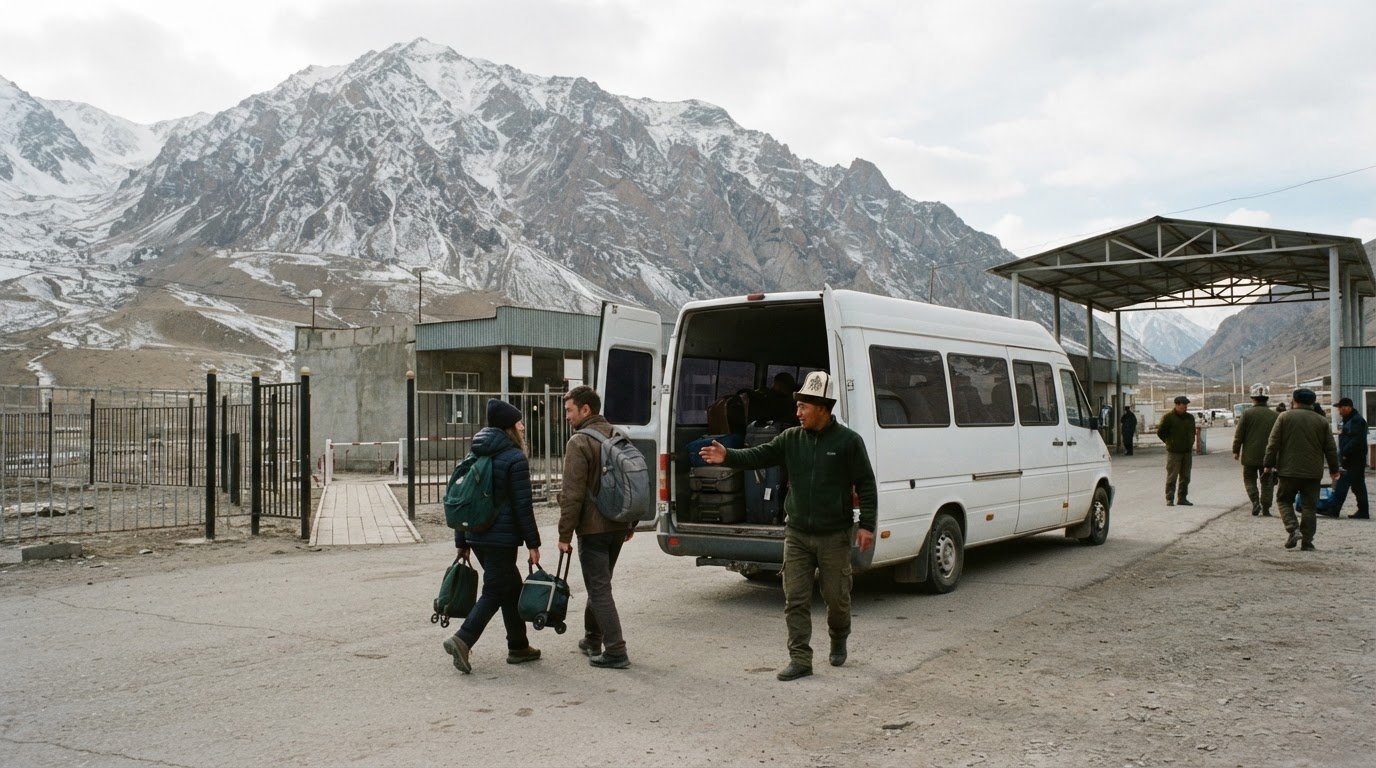
At a border, follow your group leader’s instructions and keep documents within easy reach. Crossing times can affect the day’s schedule, so avoid planning a tight connection immediately after an overland transfer.
Long road days are part of some routes, including journeys between Kyrgyzstan and Uzbekistan on bumpy roads. Early starts help cover distance, but the schedule should also allow time for rest stops and meals. Guided group travel offers a shared pace and local guides, while a private itinerary can offer more control over departure times and stops.
For health and safety, prepare personal medication and keep emergency details accessible. Travel insurance is a separate consideration for a multi-country trip; review its terms for the activities and destinations on your route. Local support can also help explain customs and daily culture, especially when plans shift around a border or remote stop. For a focused regional journey, explore Kazakhstan and Kyrgyzstan travel.
Destinations across China and Central Asia
China and Central Asia offer varied experiences, from historic sites to living craft traditions. Choose destinations based on what you want to experience, then shape the journey around them.
Central Asian Countries and Destinations
Uzbekistan, Kazakhstan, Kyrgyzstan and Turkmenistan each bring a different place into a regional itinerary. In Uzbekistan, Margilon offers a chance to see silk-weaving during a Silk Road journey. The Mogao Grottoes in China date from 4 AD, adding a remarkable heritage stop to an eastern route.
Use country guides to decide which highlights deserve time, rather than collecting stops without a clear purpose. A China-focused route can centre on Mogao, while a Central Asia journey can prioritise Uzbekistan’s craft heritage or the landscapes of Kazakhstan and Kyrgyzstan. Consider how each stop connects to the next and whether the pace leaves room to explore.
Multi-Country Central Asia Tours
A multi-country itinerary can connect Kazakhstan and Kyrgyzstan with Uzbekistan or Turkmenistan. Compare the route sequence, border crossings and time in each destination. Country guides can help you understand the character of each stop before choosing a combination. The best fit depends on whether you prefer cultural sites, open landscapes or a mix.
Caucasus and Central Asia tours bring two distinct regions into one broader journey. Treat the Caucasus as a separate part of the route, then consider how it connects with Central Asian destinations. The more regions you include, the more important it is to balance travel days with time on the ground. Look closely at accommodation and overnight locations, since they shape how much you can enjoy each day.
For a focused route, choose fewer countries and give their highlights time to shine. A wider journey can suit travellers keen to discover varied cultures, but it should still have a clear centre of interest. Use a map and country guides to trace the sequence from China through Central Asia, then check that every stop supports the experience you want.
Transport, accommodation and included services
Transport, overnight arrangements and meals shape each day on the road. Read these details alongside the route, especially for journeys through Kyrgyzstan and remote landscapes.
Transport Arrangements
Review the transport plan from city to city, including how it handles long road sections and border crossings. A journey between Kyrgyzstan and Uzbekistan can involve bumpy roads, so travel time affects when you reach your accommodation and local stops. Check which transfers connect the destinations and where the schedule leaves time for visits, rather than judging the route by its map alone.
For a departure from Ashgabat, treat arrival and pre-trip accommodation as separate itinerary details. This helps distinguish the first night in the city from overnight stays during the overland journey.
Camping Arrangements
One Silk Road itinerary describes accommodation as approximately 40% camping and 60% simple hostels, hotels or homestays. That mix means nights can shift from a tent beneath open skies to a local home or basic city stay. In Kyrgyzstan, a night with a local family in Sary Tash follows the day 15 border crossing.
Yurts and homestays offer a closer look at local hospitality, while camping brings travellers nearer to open landscapes. Read the overnight sequence to see where each style features. A route with frequent camping calls for different packing choices than one centred on hotels, so consider sleeping arrangements alongside access to your luggage.
Meals also vary by itinerary: approximately 45% are included, while approximately 55% are excluded on the referenced tour. Look at which travel days include food and where meals are independent, especially during stops in cities or near a bazaar. The package’s language and guide arrangements also shape how easily travellers engage with local customs.
For a Central Asian journey focused on Kazakhstan and Kyrgyzstan, explore the regional itinerary and its route details.
Brothers International Tours & Trading Pte
Brothers International Tours & Trading Pte offers regional adventure and cultural journeys for travellers planning beyond a single Silk Road route. If you’re comparing Central Asia with nearby destinations, its 10Days Wonder Of Pakistan offers a distinct journey through Pakistan, while Nepal options include the 8Days Nepal Adventure Tour and 5Day Nepal Luxury Tour.
These trips aren’t Silk Road overland itineraries, but they can suit a broader travel plan focused on South and Central Asia. Consider which landscapes, cultural experiences and pace appeal most, then choose the destination that fits your available time and interests. For a guided Himalayan experience, the 8Days Scenic Nepal Mini Trek offers another regional adventure.
Discuss your travel plans with Brothers International Tours & Trading Pte Ltd to explore a suitable regional journey.
Make Your Next Journey Count
Let your interests guide the next decision. Choose the places you most want to experience, a pace that suits you and how much room you want for spontaneous discoveries. Those priorities can help you decide whether a Silk Road overland tour package belongs in a wider journey or deserves your full attention.
Brothers International Tours & Trading Pte Ltd offers journeys across South and Central Asia, including cultural tours and trekking. Share the destinations and travel style you have in mind to explore a suitable direction for your next adventure.
Contact Brothers International Tours & Trading Pte Ltd to discuss your travel plans. Your next great journey can start with one clear choice.
Frequently Asked Questions
Is it safe?
Safety planning for an overland Silk Road trip should account for long drives, remote stops, changing weather and border days. Choose an itinerary with a manageable pace, keep essential medication and emergency contacts accessible, and follow local guidance at each stop. Travel insurance is a separate consideration; review its terms for your destinations and planned activities before departure.
What countries and cities are included in Silk Road overland tour packages?
Countries and stops depend on the route. A Central Asian journey may include Kazakhstan, Kyrgyzstan and Uzbekistan, while a wider itinerary can connect Ashgabat in Turkmenistan with Beijing in China. Other named stops include Kashgar, Jiayuguan, Margilon and Almaty. Review the city sequence to see whether it matches your interests, and note where the journey begins and ends.
What is the typical itinerary and trip duration for a Silk Road overland tour?
Trip duration ranges from two weeks to several months, depending on the number of countries and stops. A shorter plan can focus on one region, while a longer crossing links distant starting and finishing cities. Compare travel days with time at key places; an itinerary packed with transfers leaves less room for unhurried visits.
How much do Silk Road overland tours cost, and what is usually included?
There’s no single standard price: the cost depends on route length, countries visited, transport, accommodation and included meals or services. Compare package details using those categories, rather than the headline price alone. For a specific itinerary, the price depends on its arrangements and is given after a quote request. Optional activities and independent meals can also affect your overall travel budget.
What is the best season and weather for an overland Silk Road tour?
May and October are commonly listed as favourable months, but the best timing depends on your route and preferred conditions. A journey through China and Central Asia can pass through areas with different weather, so plan clothing for the full range of stops. Check the destination sequence against your travel dates, especially if outdoor visits are a priority.
How do Silk Road overland tours handle transport, accommodation, meals, and border crossings?
Packages vary in how they combine road transport, overnight stays, meals and border transfers. Read the day-by-day plan to distinguish scheduled transport from independent time, and identify which nights are in hotels, homestays, yurts or campsites. Meal inclusions can differ along the route. Keep travel documents accessible on crossing days and allow flexibility around transfers.


Comments are closed