


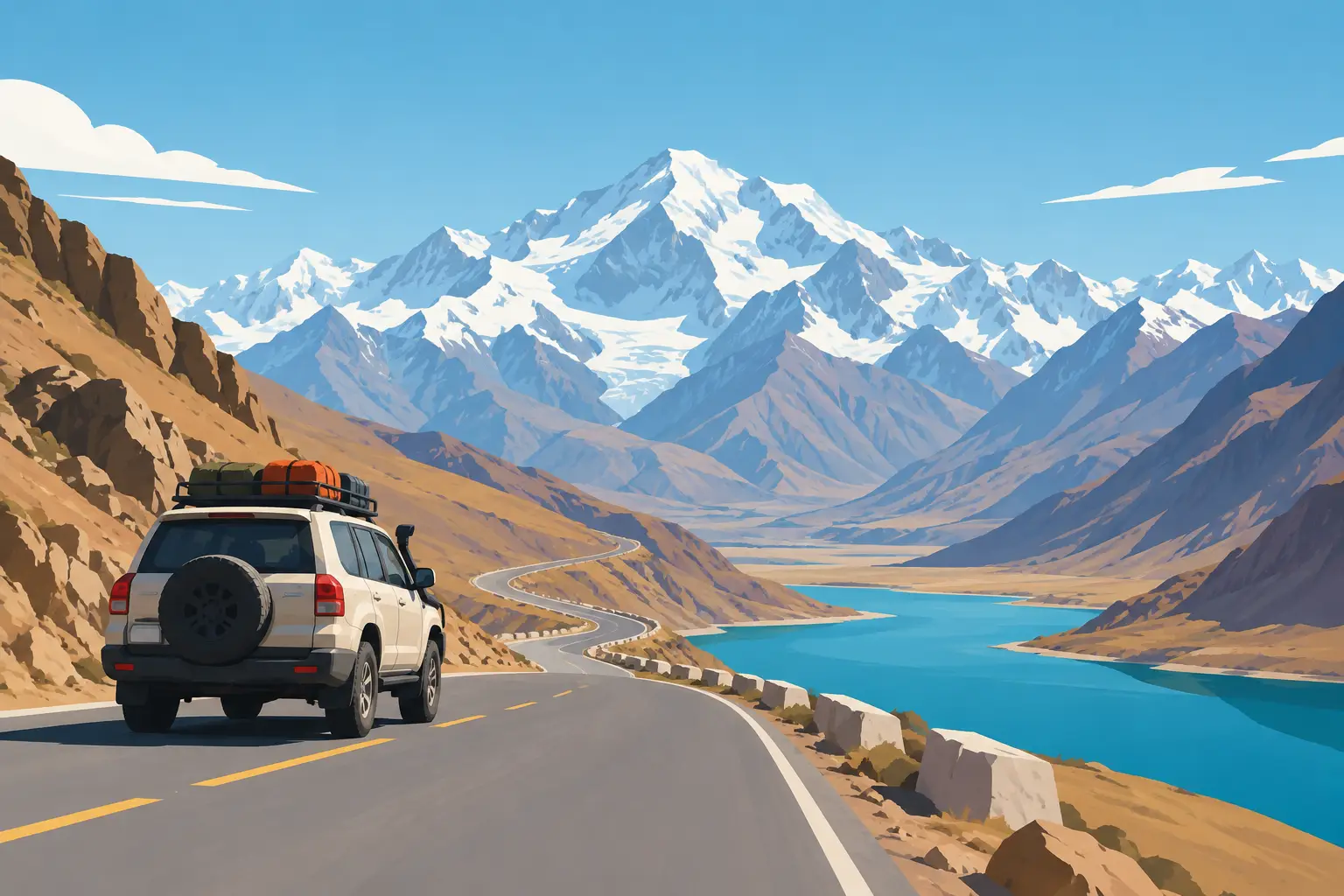
Tajikistan Pamir Highway Guide for Adventurous Travellers
The Tajikistan Pamir Highway guide begins with one essential truth: this is not an ordinary road trip. Between Dushanbe and the high Pamir plateau, the road crosses deep river valleys, remote passes, village homestays and landscapes so vast that even experienced mountain travellers pause in silence. It is an extraordinary Central Asian journey, but one that rewards careful pacing, reliable local support and respect for altitude.
For travellers drawn to the Himalaya, the Pamirs offer a different kind of mountain adventure. There are fewer trekking lodges, fewer familiar trail signs and much longer distances between settlements. In return, there is an unmatched sense of space, warm local hospitality and a route shaped as much by culture as by scenery.
Tajikistan Pamir Highway guide: choosing your route
The classic Pamir Highway follows much of the former M41 route, linking Dushanbe in western Tajikistan with Osh in southern Kyrgyzstan. Most journeys travel east from Dushanbe through Kalaikhumb and Khorog, then continue across the high plateau via Murghab and Karakul before reaching the Kyrgyz border.
This is the most direct route, and it suits travellers who want to experience the dramatic transition from fertile valleys to stark, high-altitude desert. The road surface varies considerably. Some sections are paved and reasonably smooth, while others are broken, narrow or heavily affected by weather. A capable four-wheel-drive vehicle and an experienced driver are not luxuries here – they are central to a safe, enjoyable trip.
A more scenic alternative includes the Wakhan Valley. From Khorog, the route follows the Panj River along the Afghan border, with the Hindu Kush rising beyond the water. This detour brings you closer to small Pamiri villages, ancient fortresses, hot springs and everyday rural life. It also tends to involve slower roads and longer driving days, so it is best included when you have at least 10 to 12 days available.
If time is limited, an eight-day journey can still cover the principal highlights between Dushanbe and Osh. However, it will feel like a road expedition rather than a relaxed holiday. For a more rewarding pace, allow 10 to 14 days, particularly if you wish to include Wakhan, short walks, rest time in Khorog and contingency for changing road conditions.
Dushanbe to Khorog: the river-valley approach
The first part of the journey introduces Tajikistan’s scale. Dushanbe is a useful place to rest after an international flight, organise supplies and meet your driver or guide before heading into the mountains. The route towards Khorog can follow the Panj River for long stretches, offering striking views into Afghanistan on the opposite bank.
Khorog, the administrative centre of Gorno-Badakhshan, is a valuable overnight stop rather than merely a point on the map. Its greener setting, calmer pace and local market make it a good place to recharge before gaining serious altitude. Travellers often underestimate how tiring several consecutive days in a vehicle can be, especially on rough roads.
Khorog to Murghab: Wakhan villages or the high plateau
Beyond Khorog, the route choice matters. The Wakhan Valley is culturally rich and visually dramatic, but slower. You may visit Yamchun Fortress, soak in a traditional hot spring and stay in family-run homestays where meals are simple, generous and locally prepared.
The route through the Bartang Valley is another adventurous option, though it is more remote and usually best suited to travellers comfortable with basic facilities and flexible plans. Conditions can change quickly after rain or landslides. A well-planned itinerary should never assume that every unsealed road will be passable on a fixed schedule.
Murghab sits above 3,600 metres and feels distinctly different from the lower valleys. The landscape opens into a dry, windswept plateau where mountains appear both close and impossibly distant. Accommodation is modest, heating can be limited and nights are cold even during summer, but this is part of the Pamir experience.
When to travel on the Pamir Highway
The main season runs from late May to early October. July and August usually bring the most stable access to high passes, warmer daytime temperatures and easier travel logistics. They are also the busiest months, although ‘busy’ remains a relative term in one of Central Asia’s least populated regions.
June and September are often excellent choices for travellers who prefer quieter roads and cooler conditions. September can bring beautifully clear mountain light, but temperatures at high altitude fall sharply after sunset. Snow may arrive early on the highest passes, while spring can leave roads vulnerable to snowmelt and landslides.
Winter travel is possible only with serious preparation and a highly flexible attitude. Passes may close, services become limited and the cold can be severe. For most visitors, summer or early autumn offers the best balance of access, comfort and scenery.
Altitude is the journey’s real challenge
The Pamir Highway climbs higher than many well-known Himalayan road routes. Ak-Baital Pass, one of the route’s high points, rises above 4,600 metres. Even travellers who have trekked in Nepal or Bhutan should treat this altitude with care, because the road can gain height faster than the body can adapt.
Good itinerary design is the first line of protection. Spend time at moderate elevations before sleeping above 3,500 metres where possible, avoid rushing from Dushanbe to Murghab in only a few days, drink regularly and keep alcohol to a minimum at altitude. A headache, poor sleep and reduced appetite can occur during acclimatisation, but worsening symptoms should never be ignored.
Your guide and driver should understand the signs of altitude illness and have a clear plan for descent or medical assistance. Travellers with heart, lung or other relevant medical conditions should speak with their doctor before booking. Carry personal medication in your hand luggage, along with a basic kit for stomach upsets, blisters, pain relief and sun protection.
The sun is intense on the high plateau, even when the air feels cold. Pack sunglasses, a brimmed hat, lip balm and high-factor sunscreen. Layering is more useful than one bulky jacket: mornings can be below freezing, afternoons pleasantly warm and evenings bitterly cold.
Permits, borders and practical arrangements
Foreign visitors generally need a Tajik visa or e-visa, plus a Gorno-Badakhshan Autonomous Oblast permit, commonly known as the GBAO permit, for the Pamir region. Entry requirements and border procedures can change, so these should be confirmed before travel rather than assumed from an old itinerary.
If your trip finishes in Osh, check the status and operating hours of the Tajikistan-Kyrgyzstan border well in advance. Border arrangements have changed at different times, and a route that looks straightforward on a map may require a revised plan. Carry printed copies of permits, passport details and travel insurance, as mobile coverage is unreliable outside larger settlements.
Cash is essential. ATMs are scarce beyond the main towns and cards are not widely accepted in village homestays. Bring small denominations for snacks, crafts and tips, while keeping larger notes safely stored. Internet access can be patchy for days at a time, which is worth sharing with family before departure.
Staying well on a remote road journey
Pamir hospitality is one of the route’s enduring pleasures. Homestays offer a welcome chance to meet local families, eat regional dishes and learn about life in a demanding mountain environment. Facilities are basic in places: expect shared bathrooms, occasional power cuts and limited hot water. Approach these stays with patience and curiosity, and they often become the most memorable part of the journey.
Meals commonly include bread, rice, soups, potatoes, noodles, meat and seasonal vegetables. Vegetarian travellers can be accommodated with advance planning, though options become simpler in remote areas. Carry a few familiar snacks, a reusable water bottle and water-purification tablets or a filter as a backup.
This is not a route to tackle with a tightly packed schedule or a casual hire car. Local knowledge matters when roads wash out, fuel supplies are uncertain or a guesthouse needs to be arranged at short notice. Brothers Team can help shape a paced Pamir programme with trusted drivers, practical altitude planning and the flexibility this remarkable region demands.
Set aside expectations of polished hotels and predictable driving times. Bring warm layers, a patient spirit and time to listen when your host pours tea. The Pamir Highway is at its best when you allow the road, the mountains and the people you meet to set the rhythm of the journey.

Comments are closed