



Responsible Tourism: Travel Well in the Himalayas
A Himalayan journey can stay with you for life: the first clear view of Ama Dablam, a warm meal in a family-run teahouse, the sound of prayer flags moving above a high pass. Responsible tourism is what helps make those moments possible for future travellers and worthwhile for the people who call these places home. It is not about making a perfect trip or denying yourself an adventure. It is about making considered choices before you leave, on the trail and after you return.
What responsible tourism means in practice
Responsible tourism asks a simple question: who benefits from this journey, and what does it leave behind? The answer should include local communities, the natural environment, cultural heritage and the travellers themselves.
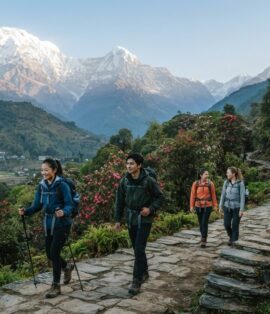
For a trek in Nepal, this can mean choosing locally owned lodges where possible, employing trained local guides and porters under fair conditions, carrying reusable water bottles and following a route paced for safe acclimatisation. On a cultural tour through Bhutan, India, Sri Lanka or Vietnam, it means arriving with curiosity rather than assumptions, respecting local customs and spending thoughtfully with small businesses.
Travel has an impact even when we take great care. Flights produce emissions, trails experience footfall and popular landmarks can become crowded. The aim is not to pretend otherwise. The aim is to reduce avoidable harm and ensure that the value created by tourism is shared fairly.
Why responsible tourism matters in mountain regions
Mountain destinations are often more vulnerable than they appear. A small settlement high in the Khumbu or Annapurna region may have limited waste collection, seasonal water shortages and supplies that must be carried long distances. What seems like one harmless plastic bottle or one rushed itinerary can be part of a much larger pressure when thousands of visitors make the same choices.
There is also a human side to every mountain route. Teahouse owners, kitchen teams, drivers, guides, porters, farmers and craftspeople all contribute to a traveller’s experience. Tourism can provide valuable income in remote areas, support families through quieter agricultural seasons and encourage young people to remain connected to their communities. But those benefits are not automatic. They depend on fair employment, realistic itineraries and operators who work with local partners over the long term.
Responsible travel also protects the quality of your own experience. A trek designed with rest days and gradual elevation gain gives you more time to notice village life, speak to your guide and enjoy the landscape. It is safer than treating altitude as an obstacle to race through. In the Himalayas, good pacing is both a health decision and a responsible one.
Plan a responsible tourism journey before you fly
The most meaningful choices are often made before departure. Start by selecting an itinerary that is suitable for your fitness, experience and available time. An overly ambitious plan can lead to rushed transport, missed acclimatisation or pressure on guides and porters to keep moving when conditions say otherwise.
Ask practical questions about how your trip is run. Who leads the trek? Are guides trained in altitude awareness and first aid? How are porter loads managed? Does the itinerary allow contingency time for weather, road conditions or a traveller who needs to descend? A trustworthy operator should welcome these questions and explain its approach plainly.
For high-altitude trekking, avoid booking solely on the lowest advertised price. A cheaper arrangement may exclude essentials such as adequate staffing, meals, permits, emergency planning or fair local wages. Price is not a perfect measure of responsibility, but it is reasonable to ask what is included and where your money goes. Brothers Team plans journeys with local operational knowledge from Kathmandu, allowing travellers to focus on the adventure while the essentials are properly coordinated.
Packing well also reduces waste and inconvenience on the trail. Bring a durable refillable bottle, a water purification method appropriate for your route, reusable snack containers and a small bag for carrying personal rubbish until it can be disposed of correctly. Pack layers you will genuinely use instead of buying disposable items at the last minute. Quality gear, maintained and used repeatedly, is usually the more thoughtful choice.
Respect culture without turning it into a performance
Cultural immersion is one of the great rewards of travelling through Asia, but it requires humility. Villages, monasteries, markets and homes are living places, not backdrops for a holiday photograph.
Before entering a religious site, follow local guidance on dress, shoes, hats and photography. Ask before photographing people, particularly monks, children, elderly residents and anyone at work. A smile and a gesture towards your camera can make the request clear when language is shared only in part. If the answer is no, accept it warmly.
Learn a few words of greeting and thanks in the local language. You do not need fluency to show respect. Be patient when service is slower than it might be in a city hotel, especially in remote regions where weather, power supply and deliveries shape daily life. These moments are not failures of efficiency. They are part of travelling in the real conditions of a place.
Shopping can be a positive contribution when purchases are made directly from local artisans and small businesses. Bargaining may be customary in some settings, but pushing hard over a small amount can feel very different when you are visiting an area with limited economic opportunity. Pay fairly for craftsmanship, meals and services that have taken time and skill.
Make better choices on the trail
Once trekking begins, responsible habits become wonderfully straightforward. Stay on established paths, even when a shortcut looks tempting. Repeated detours damage fragile vegetation and can contribute to erosion, particularly on steep slopes after rain.
Use water carefully. Hot showers, laundry and bottled drinks may be available in many lodges, but availability does not mean resources are unlimited. A brief wash, re-worn layers and refilled bottle can make a real difference over a multi-day trek. In colder, higher settlements, the energy needed to heat water may come at a significant cost.
Keep noise low around wildlife, villages and religious sites. Do not feed animals, collect natural souvenirs or leave food scraps behind. If you carry packaged snacks, carry the wrappers out. Where local waste systems are under strain, the most responsible item is often the one that never arrives on the trail.
Treat your trekking team as professional partners. Listen to your guide’s advice on weather, route conditions and altitude symptoms. Respect porter welfare by packing within agreed limits and recognising that a porter may carry equipment with far greater effort than you can see. A warm greeting, patience during delays and a fair tip at the end of a well-supported journey all matter.
Responsible tourism is not the same as doing less
Some travellers worry that travelling responsibly makes a trip restrictive. In reality, it often makes it richer. It encourages longer stays over rushed checklists, quieter routes over crowded photo stops and genuine exchanges over staged encounters.
That said, choices involve trade-offs. Flying to Nepal, Bhutan or Central Asia has an environmental cost, and not every traveller can take a longer journey or avoid peak season. If you are travelling a long way, consider staying longer, choosing an itinerary with a meaningful local element and avoiding unnecessary internal flights where a safe overland option is practical. The right decision depends on your route, time, mobility and the destination’s infrastructure.
Be cautious of broad claims such as “eco-friendly” or “sustainable” without clear detail. A responsible operator should be able to explain its local staffing, safety procedures, waste practices and community relationships. Genuine responsibility is usually visible in ordinary operational decisions, not just in polished marketing language.
A useful approach for schools and groups
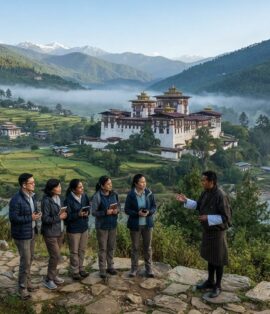
For educational groups, responsible tourism can become part of the learning rather than a rulebook. Before departure, discuss cultural etiquette, waste reduction, altitude safety and the difference between observing a community and engaging respectfully with it. Give students practical roles, such as monitoring group waste or keeping a field journal about local livelihoods and conservation.
Group leaders should also allow enough time for reflection. A conversation with a guide, a visit to a community project or an unhurried evening in a village can teach more than adding another attraction to an already full day. Well-managed travel builds confidence, but it should also build perspective.
The best journeys leave more than photographs. Travel with care, listen closely and let the mountains, communities and people you meet shape the way you move through the world.


Comments are closed