


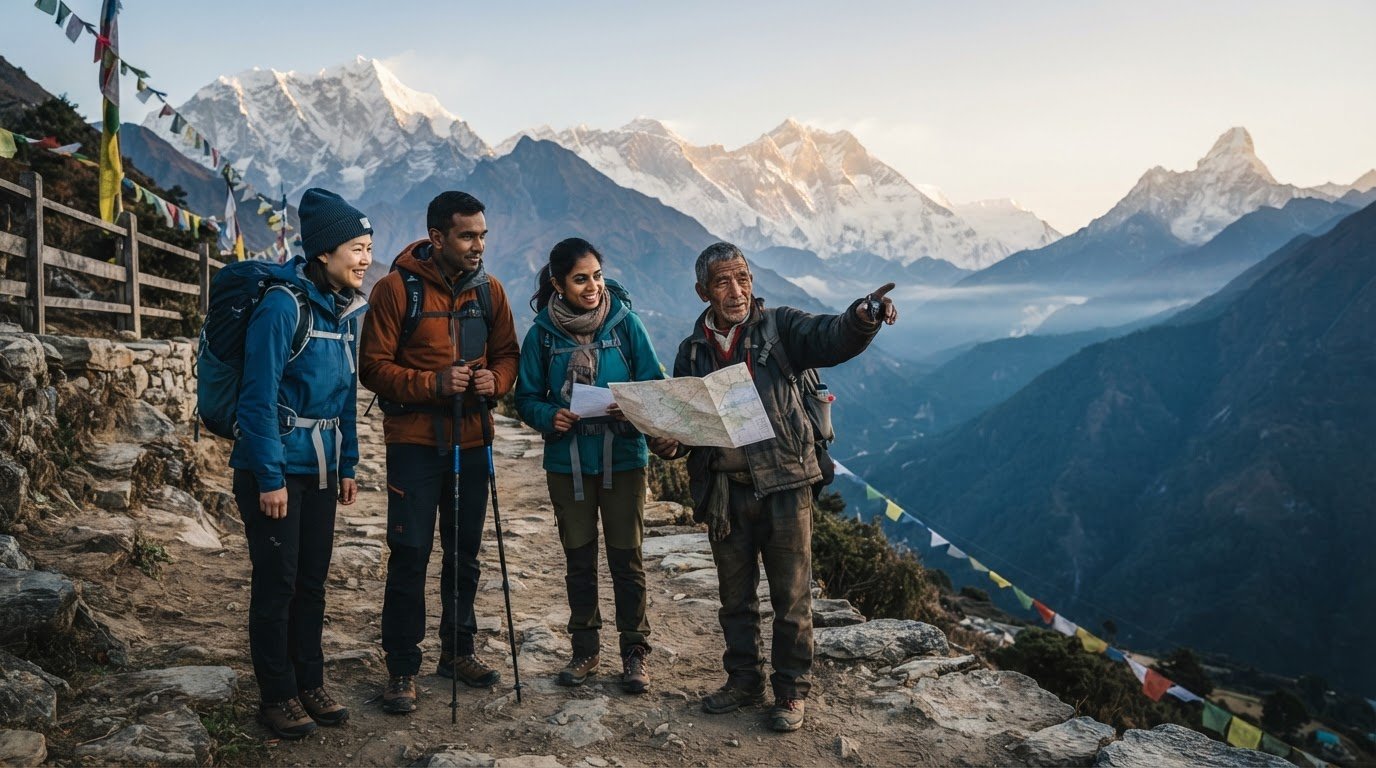
Custom Himalayan Private Trek: A 2026 Guide to Planning Your Journey
What if the right Himalayan route is the one that fits your group, not the one everyone else takes? Choosing a custom Himalayan private trek means weighing more than famous views: you’ll want a route, trip length and daily pace that suit your group’s interests and abilities. A private trek gives your group room to shape the journey, with experienced support to coordinate the practical details.
It’s natural to wonder where to start, how much flexibility you can build in and what support comes with a private trek. This guide will help you make those choices with confidence. Explore how route, season, pace, accommodation and guiding shape the experience, and where trade-offs may arise. You’ll also learn how guiding, local transport, accommodation and permit processing fit into a coordinated journey, so you can focus on the trail instead of juggling every detail. Brothers International Tours & Trading Pte Ltd plans and operates adventure travel packages across the Himalayan region, helping turn your group’s priorities into a considered itinerary.
Key Takeaways
- Choose between a private trek, fixed departure or independently organised journey by weighing flexibility, coordination and group fit.
- Use your group’s interests, accommodation preferences and available days to narrow the choices for a custom Himalayan private trek.
- Compare route options by the experience you want, then consider the time and effort each choice requires.
- Plan in a clear sequence, from shared priorities and timing to transport, guiding and permits.
- Brothers Adventures brings guiding and key trip logistics together in multi-day trekking packages.
Why choose a custom Himalayan private trek for your group?
A private trek is organised around your group’s priorities, rather than a mixed group’s set itinerary. That can make a difference when people share the adventure but have different energy levels, interests or ideas of a rewarding day. With a custom Himalayan private trek, your group can discuss those differences before settling on a route and travel style.
The setting makes those choices meaningful. The Himalayas span a vast region of varied landscapes and cultures, so the experience depends on more than choosing a famous trail. The Himalayas Wikipedia article offers geographical context for understanding the scale of the mountain range. Your group’s priorities can then guide decisions about where to go and how to spend your time.
What makes a Himalayan trek private and custom?
A custom private trek is a mountain journey planned for an individual or chosen group, with its route and travel style shaped by their preferences and practical needs. Start by identifying what matters most: a manageable daily rhythm, time for scenery and cultural experiences, or a trip length that fits your available leave. Customisation does not mean every detail is unrestricted. Route conditions, travel time, permits and the realities of mountain travel all affect what is practical, so good planning balances preferences with sound judgement.
Who benefits most from a private trek?
Friends and families often appreciate sharing the trail without having to keep pace with an unfamiliar group. A considered rhythm leaves room to enjoy a viewpoint, take a breather or move on when everyone is ready. Groups with different interests can also agree on what matters most, whether that is dramatic mountain scenery, local culture or a quieter-feeling itinerary.
Private arrangements can also suit groups who value coordinated guiding and trip logistics. Brothers International Tours & Trading Pte Ltd packages bring together guiding, local transport, accommodation and permit processing, so the journey can be planned as a connected itinerary rather than a collection of separate decisions. This lets the group focus on the experience while the practical arrangements are coordinated.
A fixed-date departure can be a strong fit if its schedule and route already suit your group. It offers a set plan, while a private trek gives you more scope to shape the experience around your priorities. Neither is automatically better. A group with limited travel days may prefer a departure whose timing fits neatly; a family with varied walking preferences may value discussing the pace and itinerary together. Start with your shared priorities, then choose the format that serves them best.
What can you customize on a Himalayan private trek?
Start with your group’s priorities, not a long wish list. Decide what matters most, such as visiting a particular area, making time for cultural experiences or keeping walking days manageable. Use those priorities to guide the route, trip length and support arrangements. A custom Himalayan private trek works best when each choice supports the same overall travel style.
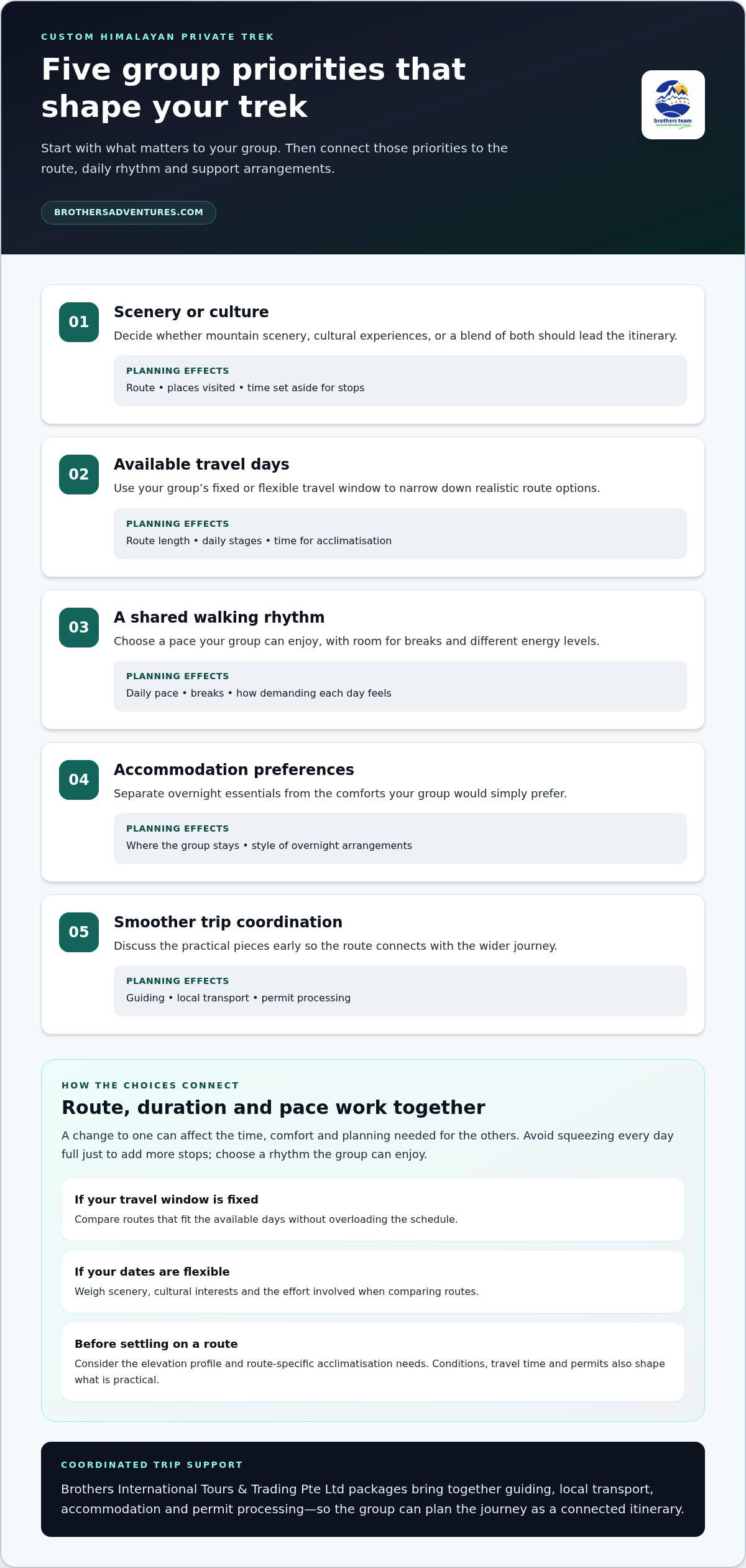
Route, pace and support work together: changing one can affect the time, comfort and planning needed for the others. Use this comparison to turn preferences into practical decisions:
| Group priority | Planning decisions it may influence |
|---|---|
| Mountain scenery or cultural experiences | Route, places visited and time set aside for stops |
| Limited or flexible travel days | Route length, daily stages and time for acclimatisation |
| A comfortable shared walking rhythm | Daily pace, breaks and how demanding each day feels |
| Accommodation preferences | Where the group stays and the style of overnight arrangements |
| Smoother trip coordination | Guiding, local transport and permit processing arrangements |
How do route, duration, and pace shape the trek?
Available days set useful boundaries. If your group has a fixed window, start there and compare routes that fit without squeezing every day full. If your dates are flexible, you have more room to weigh scenery, cultural interests and the effort involved. A destination checklist can be tempting, but extra stops may mean longer or more demanding days. Choose a pace the group can enjoy, not simply a route that looks impressive on paper.
Altitude and acclimatisation matter, too. A responsible itinerary needs route-specific planning rather than an assumption that everyone will adjust in the same way. Before settling on a route, consider its elevation profile and get guidance suited to that route. For a glimpse of varied landscapes and trekking settings, the Trekking in Lahaul & Spiti – Himachal Pradesh Tourism page offers information about a Himalayan area in India. Its details provide regional context, not guidance for a different route.
Which comfort and logistics preferences should you discuss?
Separate essentials from nice-to-haves. An essential might be a trip length that fits your leave or accommodation the group can manage; an optional comfort could be a preferred style of overnight stay. Discuss transport between travel stages, guiding and permit processing early, because these practical pieces connect the route to the wider journey. Brothers International Tours & Trading Pte Ltd packages include guiding, local transportation, accommodation and permit processing.
For Nepal trips, permit requirements depend on the route and should be considered as part of itinerary planning. The Nepal trekking permits guide can help you understand this topic. To bring route preferences and trip logistics into one conversation, explore Brothers Adventures’ Nepal trekking options.
Private trek vs. fixed departure: which Himalayan option fits?
The best format depends on what your group wants to decide for itself and what it would rather have arranged in advance. A private trek gives your chosen party more opportunity to discuss the route and rhythm together. A fixed departure follows a pre-arranged schedule, while independent travel puts more coordination in your hands. Compare the trade-offs before choosing, rather than assuming flexibility is always the top priority.
- Private trek: More scope to shape the itinerary around your group’s interests and preferences. The route and pace still need to be realistic, with guiding and logistics planned as part of the journey.
- Fixed departure: Set dates and an established itinerary can simplify planning. It suits travellers who are comfortable with the schedule and activities already laid out.
- Independently organised travel: You retain direct control over planning, but take on more coordination yourself. Consider the time and attention needed to organise route details, transport and permits.
For broader context on planning adventure travel, the specialist tour operator buying guide explores what coordinated support can mean. Use the comparison below to think through which format aligns with your group’s needs.
When does a private trek make more sense?
A private option may suit friends or family who want to travel as a chosen group, especially when members have different walking preferences or particular interests they want reflected in the itinerary. Discussing route and pace together gives the group a chance to agree on shared priorities before travel plans take shape. Flexibility has limits: mountain routes and available days call for practical decisions, and a private arrangement does not itself promise solitude or exclusive facilities.
Think about your group’s real priorities. If taking time for cultural experiences matters more than squeezing in extra stops, raise that early in planning. A custom Himalayan private trek can be shaped around those preferences while balancing them against a workable itinerary and the group’s abilities.
When might a fixed departure suit you better?
A scheduled departure can be a good fit if its dates and pre-arranged itinerary work for you. It reduces the number of planning decisions your group needs to make, which helps if everyone prefers to follow a defined plan rather than compare route variations. The trade-off is less room to tailor the schedule around individual preferences. Brothers Adventures’ guided trek in Nepal overview can help you understand what to consider in a guided journey.
Before deciding, ask your group three things: Are the dates workable? Does the proposed itinerary match your shared interests? How much planning does everyone want to take on? If the schedule fits and simplicity matters most, a fixed departure may be the natural choice. If group fit and itinerary input matter more, explore private planning. For a coordinated start, explore Brothers Adventures’ Himalayan trekking options.
How to plan a custom Himalayan private trek step by step
A clear plan begins with your group, not a route map. Gather everyone’s priorities and practical limits first, then use them to shape a journey that feels exciting and manageable. This sequence can help you compare itinerary ideas without losing sight of what matters most.
Start with your group’s priorities and practical limits
Before settling on a destination, discuss the group’s trekking experience, interests, travel dates, available trip days and comfort preferences. Be candid about fitness and any altitude-related concerns, too. These details help guide sensible route and pacing discussions. For preparation and safety considerations, see the Himalayan trekking safety and preparation guide.
- Agree on priorities. Ask each traveller what would make the journey memorable, such as mountain scenery, cultural experiences or a gentler daily rhythm. Separate must-haves from nice-to-haves so the group can make trade-offs without losing its shared vision.
- Set the time available. Work from your travel dates and the days you can dedicate to the trip. Leave room for travel between stages and a suitable pace, rather than trying to fit in every possible stop.
- Discuss group needs. Consider the group’s size, experience, fitness and comfort preferences. If these vary, identify where compromise is easy and where a particular need should shape the plan.
- Explore route and pace together. Compare routes against your priorities and available days. Consider the character of each day, not only the destination names. Altitude and acclimatisation need responsible, route-specific planning, so balance ambition with what is workable for the group.
- Choose practical arrangements. Discuss accommodation preferences, local transport and guiding as connected parts of the journey. A package also coordinates logistics such as permit processing, with requirements depending on the route.
- Review the proposed itinerary. Check each day against the group’s non-negotiables, available time and flexibility. If the plan feels too packed, decide what matters less and adjust before finalising the details.
Turn preferences into a workable itinerary
Every choice affects another. A route may fit your interests but require a different pace; accommodation preferences can influence how the days are arranged; transport and guiding connect the stages. Review the plan as a whole, rather than judging each preference in isolation. Brothers International Tours & Trading Pte Ltd packages include guiding, local transportation, accommodation and permit processing, bringing the practical arrangements into the planning conversation.
Before discussing your trip, make a quick checklist:
- Travel dates and total days available
- Group size, experience and fitness considerations
- Must-have interests and preferred pace
- Accommodation and comfort priorities
- Questions about transport, guiding and route-specific permits
Bring these notes together to make planning more focused. Start shaping your Himalayan trek with Brothers Adventures.
Plan your custom Himalayan private trek with Brothers Adventures
A memorable trek takes shape when the route and practical arrangements work together. Brothers International Tours & Trading Pte Ltd is a family-owned travel agency operating since 1992, planning and operating adventure trips across Nepal, Bhutan, India, Tibet and other Central Asian destinations. That regional experience helps connect your group’s ideas with the details involved in organising a multi-day journey.
Planning a custom Himalayan private trek is a conversation, not a one-size-fits-all checklist. Begin with what your group hopes to experience, then consider how route preferences, available time and comfort needs inform the itinerary. A clear sense of priorities gives the planning process a useful starting point, while practical choices help keep expectations grounded.
What planning support can make the journey easier?
Itinerary design brings personal preferences and travel logistics into the same plan. A scenic route or a particular group interest can influence how the days are arranged; transport and accommodation connect each stage. Guiding supports the trekking experience, while permit processing addresses an important part of route preparation. Brothers International Tours & Trading Pte Ltd packages include guiding, local transportation, accommodation and permit processing.
Thinking through these elements together is clearer than treating each as a separate decision. The route and trip duration, for example, inform how travel days fit around trekking, while accommodation preferences help define the overnight arrangements your group would like to prioritise. Permit requirements depend on the chosen route, so include them in the itinerary conversation early. The aim is a coordinated plan that reflects your group’s interests while keeping practical details in view and making trade-offs clear.
What should you have ready before starting your enquiry?
You don’t need a finished itinerary to begin. A few details give the conversation direction and help distinguish firm requirements from ideas your group can adapt. Share what you know and note where you’re open to suggestions.
- Preferred travel period: Include your likely dates or the time of year you have in mind.
- Group composition: Describe who is travelling and any relevant differences in trekking experience or fitness.
- Interests: Mention the landscapes, cultural experiences or other priorities that would make the journey meaningful.
- Trip duration: Share the days available for the trek and any broader travel plans that affect the schedule.
- Comfort and flexibility: Identify accommodation preferences, essential needs and areas where the group can be adaptable.
With these notes in hand, you can start shaping the journey with a clearer picture of what matters. Start planning your Himalayan journey with Brothers Adventures.
Let your group’s next adventure take shape
The first step doesn’t need to be a perfect itinerary. Start with one shared idea: the mountain views your group hopes to wake up to, the cultural moments you’d like to make time for, or the pace that would help everyone enjoy the trail. Those details give a custom Himalayan private trek its personal direction, while planning turns your priorities into a practical journey.
Bring your travel window, group’s interests and must-haves together, then build the conversation from there. A thoughtful plan can balance what your group hopes to experience with the realities of route, time and travel style. The result is a journey shaped around the people taking it, not simply copied from a checklist.
Ready to turn that first idea into a mountain adventure? Start planning your Himalayan journey with Brothers Adventures and take the first step towards a trek your group can look forward to sharing.
Frequently Asked Questions
What is a custom Himalayan private trek?
A custom Himalayan private trek is a guided mountain journey planned for an individual or chosen group, with decisions shaped by the travellers’ priorities. Rather than joining a set itinerary, your group can discuss what it hopes to experience and how the journey should feel. The final plan still needs to account for practical factors such as route conditions, available days and the group’s abilities.
Can I choose the route and pace on a private Himalayan trek?
You can share your route preferences and preferred pace during planning, then shape the itinerary around what is practical. If your group would rather linger over scenery than add more stops, for example, that preference can guide the discussion. Route conditions, altitude and available time matter, so flexibility does not mean every route or daily schedule will suit every group.
How do I choose between a private trek and a fixed departure?
Choose based on how much input your group wants and whether set dates and an established itinerary fit your plans. A private trek may suit a chosen party with shared priorities or particular preferences. A fixed departure can work well if its schedule already matches your travel window and interests. Compare the actual itinerary and daily demands with your group’s needs before deciding.
Is a private Himalayan trek suitable for first-time trekkers?
It can suit first-time trekkers if the route and daily demands are planned with their experience, fitness and comfort in mind. Be open about how much walking the group has done and any concerns about altitude. A private format creates room to discuss these factors during planning, but it does not remove the physical demands of trekking or replace sensible preparation.
What logistics can be arranged as part of a private trekking package?
Brothers International Tours & Trading packages include guiding, local transportation, accommodation and permit processing. These arrangements connect the trek to the wider journey, from travel between stages to overnight stays. Review the proposed itinerary and package details together so your group understands how the arrangements fit into the trip.
How far in advance should I plan a custom Himalayan trek?
Start planning as early as you can, especially if your group has fixed travel dates, a particular route in mind or limited flexibility. More time gives you room to compare itinerary options and organise route-specific logistics, including permits. Timing can also affect the choices available for your preferred travel period. Share your likely dates early, even if some details are still undecided.
Can a private trek itinerary be adapted for families or mixed-ability groups?
Planning can take different ages, trekking experience and fitness levels into account. A family might prioritise a manageable rhythm and time together, while a mixed-ability group may need to discuss how demanding each day should feel. Be specific about everyone’s needs, not only the strongest trekker’s preferences. The route and schedule still need to be realistic for the group as a whole.
What information should I share when planning a private trek?
Share your preferred travel period, group composition, trekking experience, interests and total trip duration. Mention comfort priorities, fitness considerations and must-haves, such as time for cultural experiences or a less demanding daily rhythm. It also helps to identify where your group can be flexible. You don’t need a finished route; clear preferences provide a practical starting point for planning.

Comments are closed