


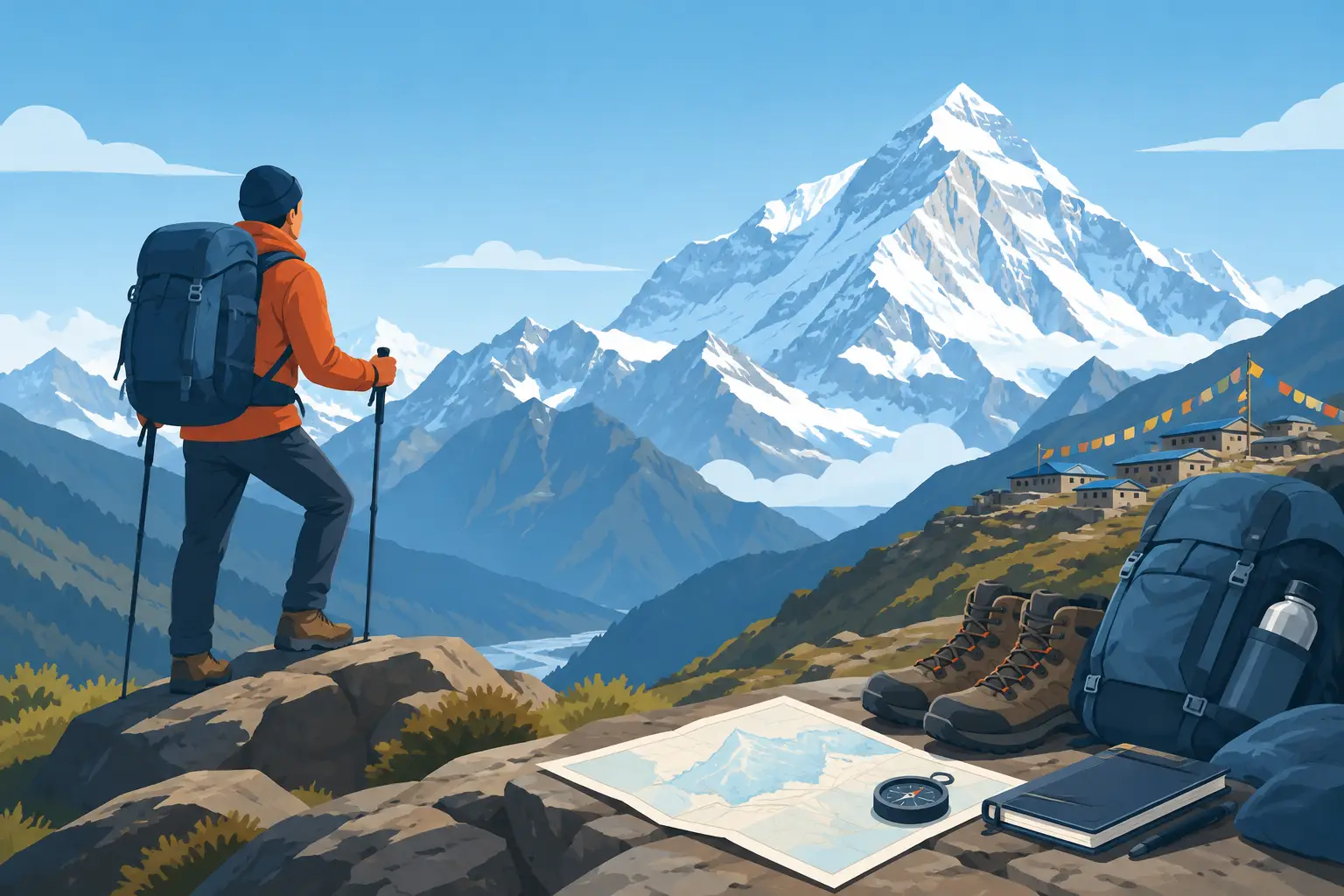
How to Prepare for an Everest Trek: A Practical Plan
The first morning above Namche Bazaar can be a surprise. The air feels thin, the trail climbs before breakfast, and even a fit traveller may need to slow down. That is why knowing how to prepare Everest trek plans properly is not about buying expensive equipment or training for a single heroic day. It is about arriving with enough fitness, time, flexibility and respect for altitude to enjoy the journey.
An Everest trek is a rare combination of mountain challenge, Sherpa culture and huge Himalayan scenery. With careful preparation, first-time trekkers can reach Everest Base Camp confidently, while experienced hikers can take on longer routes through Gokyo Lakes or over Cho-La Pass with a stronger margin of safety.
Choose the Everest route that suits your experience
“Everest trek” can describe several very different journeys. The classic Everest Base Camp trek usually takes around 12 to 14 days from Kathmandu, including acclimatisation days. It follows the Khumbu Valley through Phakding, Namche Bazaar, Tengboche, Dingboche, Lobuche and Gorak Shep before reaching Base Camp.
For many travellers, this is the right balance of challenge, scenery and time. The walking is not technically difficult, but consecutive days at altitude, uneven stone paths and cold mornings make it more demanding than a typical hill walk.
The Gokyo Lakes and Cho-La Pass route is longer and more strenuous. It adds beautiful glacial lakes, a high viewpoint at Gokyo Ri and a demanding pass that can be icy in colder periods. Choose it if you already have multi-day trekking experience, have extra time for acclimatisation and are comfortable with long, variable days.
A shorter itinerary is not automatically a better itinerary. Skipping rest days to meet a tight holiday schedule is one of the least sensible compromises on an altitude trek. Build in contingency time for weather delays around Lukla and for your body to adjust gradually.
How to prepare for an Everest trek with the right fitness
You do not need to be a marathon runner, but you should be able to walk uphill for several hours on successive days while carrying a light daypack. Start training at least eight to twelve weeks before departure. If you are currently inactive, allow longer and speak with your doctor before beginning a new exercise programme.
Prioritise regular walking. Begin with brisk walks on flat ground, then add hills, stairs or a treadmill incline. Gradually work towards one longer session each week, ideally three to six hours on uneven terrain where possible. Wear the boots you plan to take so that you can identify rubbing or fit issues well before the trek.
Strength work makes the descents easier on knees and improves stability when trails are rocky. Squats, lunges, step-ups, calf raises and core exercises are all useful. Two short sessions a week can make a real difference. Add gentle mobility work for hips, ankles and calves, particularly if you spend long days at a desk.
Fitness helps, but it does not make anyone immune to altitude illness. A very fit person can become unwell at 4,000 metres, while a slower walker may acclimatise perfectly. On the trail, a steady pace is far more valuable than trying to prove your fitness.
Plan for altitude, not just distance
The key rule of high-altitude trekking is to gain height gradually and listen early when something feels wrong. Most well-designed Everest itineraries include acclimatisation nights in Namche Bazaar and Dingboche. These are not days wasted indoors. Short, higher walks followed by sleeping lower help the body adapt, and they offer some of the finest views on the route.
Headache, unusual tiredness, poor sleep and reduced appetite can occur during acclimatisation. Tell your guide about symptoms straight away, rather than quietly hoping they disappear. Worsening headache, confusion, loss of coordination, breathlessness at rest or a persistent cough require immediate attention and descent. No viewpoint or itinerary target is worth taking a chance with altitude sickness.
Choose a trekking operator that plans conservatively, monitors guests closely and has clear procedures for changing the itinerary if needed. Experienced local guides understand that the safest decision is sometimes a rest day or descent, even when the forecast and schedule look tempting.
Hydration, regular meals and a slow walking rhythm all support acclimatisation. Avoid excessive alcohol before and during the trek, especially at higher elevations, as it can disrupt sleep and worsen dehydration.
Bring practical gear, not unnecessary weight
Weather in the Khumbu can change quickly. A sunny morning can become windy and cold by afternoon, while lodge bedrooms are often unheated. The answer is a simple layering system rather than one enormous jacket.
Your trekking clothing should include moisture-wicking base layers, a warm fleece or insulated mid-layer, a waterproof outer shell, trekking trousers, gloves, a warm hat and a sun hat. A down jacket is particularly welcome during early starts and evenings at higher lodges. Avoid cotton for walking, as it holds moisture and becomes cold.
Well-fitted, broken-in trekking boots are essential. Choose ankle support if that suits your walking style, but comfort and grip matter more than the boot’s height or brand. Take several pairs of quality walking socks and a small blister kit. Trekking poles are strongly recommended: they reduce strain on descents and provide confidence on loose ground.
A four-season sleeping bag, head torch, reusable water bottles or hydration bladder, sunglasses with good UV protection, sunscreen and lip balm are all practical essentials. Pack a personal first-aid kit with any prescription medication, pain relief you can safely use, plasters and rehydration salts. Your guide carries broader group supplies, but personal needs should remain accessible in your daypack.
Pack for the porter weight limit set by your operator. Keep valuables, documents, medication, a warm layer, water and rain protection with you during the day. The lighter your main duffel, the easier the journey is for both you and the porter supporting your trek.
Sort logistics before you land in Nepal
The Everest region requires permits, and procedures can change. A specialist operator can arrange the appropriate documentation, domestic flights, airport transfers, Kathmandu accommodation, lodge bookings and ground support. This removes a great deal of uncertainty, particularly during busy trekking seasons.
Lukla flights are weather dependent. Plan at least two spare days in Nepal after the trek before an international flight home. Helicopter options may be available during disruptions, but they are not guaranteed and can be costly. Flexibility is part of travelling in the Himalaya, not a sign that a trip is poorly organised.
Take out travel insurance that explicitly covers trekking to your maximum planned altitude, emergency helicopter evacuation and medical treatment. Read the policy rather than assuming ‘adventure cover’ includes everything. You should also have a medical check-up if you have heart, lung, blood pressure or other ongoing health concerns.
Spring, generally March to May, and autumn, usually late September to November, offer the most reliable trekking conditions. Spring brings warmer days and rhododendron colour at lower elevations; autumn often has crisp skies after the monsoon. Winter can be quieter but colder, while monsoon trekking means rain, clouds and more flight disruption. The best season depends on your tolerance for cold, crowds and changing weather.
Prepare your mindset for lodge life
An Everest trek is not a luxury resort holiday, though comfortable tea houses and warm hospitality make the route remarkably welcoming. Expect basic rooms, shared bathrooms in many lodges, limited charging facilities and intermittent mobile signal. Hot showers, charging and Wi-Fi may cost extra and become less reliable as you climb.
Meals are hearty and designed for trekkers. Dal bhat, the popular Nepali meal of rice, lentils and vegetables, is an excellent choice for sustained energy. Eat enough even if altitude reduces your appetite, and choose familiar, well-cooked food at higher elevations. Your guide can help you make sensible choices around hygiene, hydration and meal timing.
Approach the trek with patience. Thank lodge staff, greet people on the trail, give way thoughtfully to yaks and dzopkyos, and never stand on the valley side when animals pass. These small habits make travel safer and more respectful in a region where mountain communities welcome trekkers into their homes.
Brothers Team plans Everest journeys with the acclimatisation time, local guide support and practical coordination that let travellers focus on the trail rather than every moving part behind it.
The real preparation begins before Kathmandu, but the reward is felt one careful step at a time. Train steadily, pack wisely, leave room in your schedule and let the mountains set the pace. When the first view of Everest appears beyond the Khumbu valley, you will be glad you prepared for the whole journey, not only the destination.


Comments are closed